Silica Analyzer Market Size, Share Demand Report By Type (Online Silica Analyzer, Portable Silica Analyzer), By Application (Water Treatment, Power Generation, Semiconductor Manufacturing, Pharmaceuticals), By End-Use (Industrial, Environmental Monitoring, Municipal) By Region & Segment Forecasts, 2025–2034
USD 3950
Market Overview
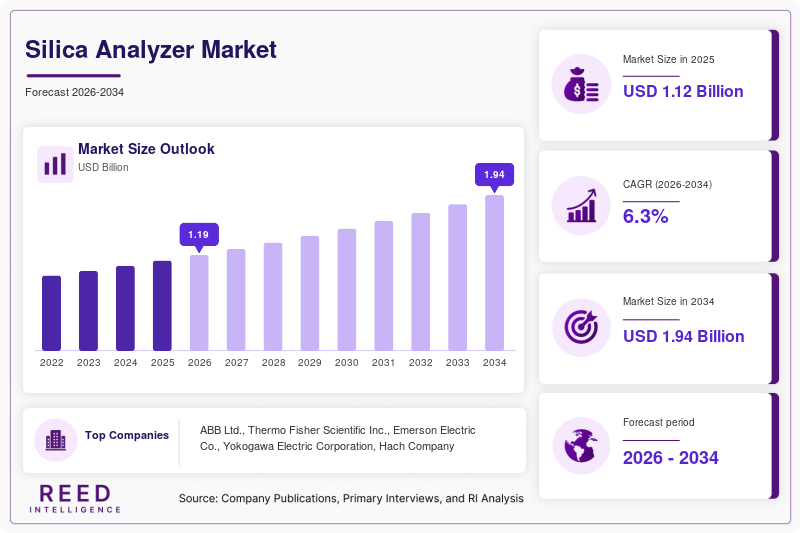
The Silica Analyzer Market size is experiencing steady expansion, driven by increasing demand for water quality monitoring across power generation, pharmaceuticals, semiconductors, and municipal water treatment sectors. In 2025, the global silica analyzer market size is estimated at USD 1.12 billion, and it is projected to reach approximately USD 1.18 billion in 2026. Over the forecast period from 2025 to 2034, the market is expected to grow at a compound annual growth rate (CAGR) of 6.3%, reaching around USD 1.95 billion by 2034. This growth trajectory reflects consistent adoption of advanced monitoring technologies and regulatory emphasis on water purity.
One of the primary growth factors is the increasing need for ultrapure water in industries such as power plants and semiconductor manufacturing. Silica contamination can lead to scaling and turbine damage, making continuous monitoring essential. Secondly, stringent environmental regulations across developed and developing economies are compelling industries to adopt precise water analysis instruments. Governments and regulatory bodies are enforcing compliance standards that require real-time monitoring, boosting demand for silica analyzers.
Key Highlights
- Market size estimated at USD 1.12 billion in 2025
- Projected to reach USD 1.95 billion by 2034
- CAGR of 6.3% from 2025 to 2034
- Rising demand from power generation and semiconductor industries
- Increasing regulatory pressure on water quality monitoring
- Advancements in automation and digital integration technologies
Market Trends
Integration of Smart and Connected Analyzer Systems
The silica analyzer market is witnessing a shift toward smart and connected devices that enable real-time data acquisition and remote monitoring. Industrial operators increasingly prefer analyzers integrated with IoT-enabled platforms, allowing seamless data transmission to centralized control systems. These solutions improve process visibility and reduce downtime by enabling predictive maintenance strategies. Smart analyzers also support automated calibration and diagnostics, minimizing manual intervention and operational errors. As industries move toward Industry 4.0 frameworks, the demand for connected silica analyzers is expected to grow steadily. This trend is particularly strong in sectors such as power generation and pharmaceuticals, where process optimization and compliance are critical.
Rising Adoption of Portable and Compact Analyzers
Another emerging trend in the silica analyzer market is the growing demand for portable and compact devices. These analyzers offer flexibility and ease of use, making them suitable for field applications and decentralized monitoring. Portable analyzers are gaining traction in municipal water treatment and environmental monitoring, where mobility is essential. Advances in miniaturization and sensor technology have improved the accuracy and reliability of these devices. Additionally, cost-effective portable solutions are enabling small and medium enterprises to adopt water quality monitoring systems. This trend is expected to support market expansion, particularly in developing regions where infrastructure limitations require flexible monitoring solutions.
Market Drivers
Increasing Demand for Ultrapure Water in Industrial Applications
The demand for ultrapure water is a significant driver of the silica analyzer market. Industries such as power generation, semiconductors, and pharmaceuticals require extremely low silica concentrations to maintain process efficiency and product quality. In power plants, silica deposition can damage turbines and reduce operational efficiency, leading to costly downtime. Similarly, semiconductor manufacturing relies on ultrapure water to prevent defects in microchips. As these industries expand globally, the need for precise and continuous silica monitoring becomes essential. This demand is further supported by the growth of high-tech manufacturing sectors, which rely heavily on stringent water quality standards.
Stringent Environmental Regulations and Compliance Requirements
Government regulations aimed at controlling water pollution and ensuring environmental safety are driving the adoption of silica analyzers. Regulatory bodies across regions are implementing strict guidelines for industrial effluent discharge and water quality monitoring. Companies are required to maintain compliance with these standards, which often necessitate the use of advanced analytical instruments. Non-compliance can result in penalties and operational restrictions, prompting industries to invest in reliable monitoring solutions. Additionally, the increasing focus on sustainable practices and resource conservation is encouraging organizations to adopt efficient water management systems, further boosting demand for silica analyzers.
Market Restraint
High Initial Investment and Maintenance Costs
One of the primary restraints in the silica analyzer market is the high initial cost associated with purchasing and installing advanced analytical systems. Modern silica analyzers equipped with automation and digital features require significant capital investment, which can be a barrier for small and medium enterprises. In addition to the upfront cost, maintenance and calibration expenses add to the total cost of ownership. These systems often require skilled personnel for operation and upkeep, increasing operational costs further.
The impact of this restraint is particularly evident in developing regions, where budget constraints limit the adoption of advanced technologies. For example, small-scale water treatment facilities may rely on traditional testing methods instead of investing in automated analyzers. This slows market penetration and restricts growth potential in price-sensitive markets. Additionally, the need for regular maintenance and replacement of components can deter end-users from adopting these systems. Despite the long-term benefits of improved accuracy and efficiency, the high cost factor remains a challenge for widespread adoption.
Market Opportunities
Expansion of Water Treatment Infrastructure in Emerging Economies
Emerging economies are investing heavily in water treatment infrastructure to address increasing pollution and water scarcity issues. Governments in regions such as Asia Pacific, Latin America, and Africa are launching initiatives to improve water quality and sanitation. This creates significant opportunities for silica analyzer manufacturers, as these systems are essential for monitoring water purity. The growing population and rapid urbanization in these regions are driving demand for efficient water management solutions. Additionally, international funding and public-private partnerships are supporting infrastructure development, further boosting market growth. Companies that offer cost-effective and scalable solutions are likely to benefit from this expanding market.
Technological Advancements in Analytical Instrumentation
Continuous innovation in analytical technologies presents a major opportunity for the silica analyzer market. Advancements such as improved sensor accuracy, automation, and digital connectivity are enhancing the performance and usability of analyzers. Manufacturers are developing systems with lower detection limits and faster response times, meeting the evolving needs of end-users. Integration with data analytics and cloud-based platforms allows for better decision-making and process optimization. These innovations are not only improving operational efficiency but also expanding the application scope of silica analyzers. As industries adopt digital transformation strategies, the demand for advanced and intelligent monitoring solutions is expected to increase significantly.
Segmental Analysis
By Type
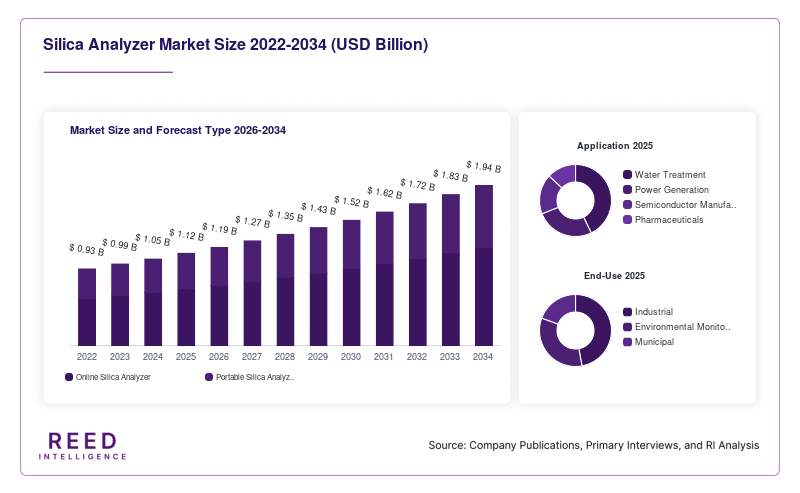
The online silica analyzer segment dominated the market in 2024, accounting for approximately 62% of the total share. These analyzers are widely used in continuous monitoring applications, particularly in power plants and industrial processes. Their ability to provide real-time data and integrate with control systems makes them highly valuable for maintaining operational efficiency. Online analyzers reduce the need for manual sampling and minimize the risk of errors. Industries prefer these systems due to their reliability and ability to ensure compliance with regulatory standards. The increasing adoption of automation in industrial operations further supports the dominance of this segment.
The portable silica analyzer segment is expected to be the fastest-growing, with a projected CAGR of 7.2% during the forecast period. The growth of this segment is driven by the increasing need for flexible and on-site monitoring solutions. Portable analyzers are particularly useful in field applications, where mobility and ease of use are essential. Advances in miniaturization and battery technology have improved the performance of these devices. Additionally, the lower cost of portable analyzers compared to online systems makes them attractive for small and medium enterprises. This segment is expected to witness strong growth in emerging markets.
By Application
The water treatment segment held the largest share in 2024, accounting for around 48% of the market. Silica analyzers are widely used in municipal and industrial water treatment facilities to monitor water quality and ensure compliance with regulatory standards. The increasing focus on water conservation and pollution control is driving the adoption of these systems. Governments are investing in upgrading water treatment infrastructure, which supports market growth. Additionally, the rising demand for clean water in urban areas further contributes to the dominance of this segment.
The power generation segment is projected to grow at the fastest rate, with a CAGR of 6.8% during the forecast period. Silica analyzers play a critical role in monitoring water quality in power plants, where silica contamination can damage equipment and reduce efficiency. The expansion of power generation capacity, particularly in emerging economies, is driving demand for these systems. Additionally, the increasing adoption of renewable energy sources requires efficient water management solutions, further supporting the growth of this segment.
By End-Use
The industrial sector dominated the silica analyzer market in 2024, accounting for approximately 55% of the total share. Industries such as power generation, chemicals, and semiconductors rely on silica analyzers for maintaining process efficiency and product quality. The increasing adoption of automation and digital monitoring systems is driving demand in this segment. Additionally, stringent regulatory requirements for water quality monitoring are encouraging industries to invest in advanced analytical instruments.
The environmental monitoring segment is expected to be the fastest-growing, with a CAGR of 7.0% during the forecast period. The growth of this segment is driven by increasing environmental awareness and government initiatives to control pollution. Silica analyzers are used to monitor water quality in natural bodies and ensure compliance with environmental standards. The expansion of environmental monitoring programs and the adoption of advanced technologies are expected to drive growth in this segment.
Regional Analysis
North America
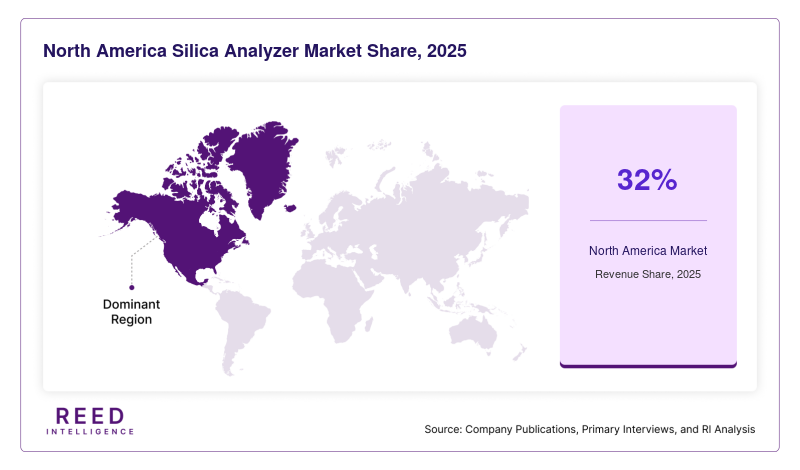
North America held a significant share of the silica analyzer market in 2025, accounting for approximately 32% of the global revenue. The region is expected to grow at a CAGR of 5.8% during the forecast period. The presence of established industries, including power generation and pharmaceuticals, supports market growth. Additionally, strict regulatory standards for water quality monitoring drive the adoption of advanced analytical instruments. Investments in upgrading aging infrastructure further contribute to the steady demand for silica analyzers across the region.
The United States dominates the North American market due to its advanced industrial base and strong regulatory framework. A unique growth factor in this region is the increasing adoption of digital monitoring systems in industrial operations. Companies are integrating silica analyzers with automation platforms to improve efficiency and compliance. This trend is expected to sustain market growth and encourage innovation among manufacturers.
Europe
Europe accounted for around 27% of the silica analyzer market share in 2025 and is projected to grow at a CAGR of 5.6% through 2034. The region’s growth is driven by stringent environmental regulations and a strong focus on sustainability. Industries are required to comply with strict water quality standards, which increases the demand for reliable monitoring solutions. Additionally, the presence of advanced manufacturing sectors supports the adoption of silica analyzers.
Germany is the leading country in the European market, supported by its strong industrial base and technological expertise. A key growth factor is the region’s emphasis on environmental sustainability and resource efficiency. Companies are investing in advanced monitoring technologies to reduce environmental impact and improve operational efficiency. This focus on sustainability is expected to drive continued market growth in Europe.
Asia Pacific
Asia Pacific is the fastest-growing region in the silica analyzer market, with a CAGR of 7.5% during the forecast period. In 2025, the region accounted for approximately 24% of the global market share. Rapid industrialization and urbanization are driving demand for water quality monitoring solutions. Governments are investing in infrastructure development, including water treatment facilities, which supports market expansion.
China leads the Asia Pacific market due to its large industrial base and significant investments in infrastructure. A unique growth factor in this region is the expansion of the semiconductor manufacturing industry. The need for ultrapure water in semiconductor production is driving the adoption of advanced silica analyzers. This trend is expected to accelerate market growth in the coming years.
Middle East & Africa
The Middle East & Africa region held a market share of around 9% in 2025 and is expected to grow at a CAGR of 6.1%. The demand for silica analyzers is driven by increasing investments in water desalination and treatment projects. Water scarcity issues in the region necessitate efficient water management solutions, supporting the adoption of monitoring technologies.
Saudi Arabia is a dominant market within this region, driven by large-scale desalination projects. A unique growth factor is the region’s reliance on desalinated water for industrial and domestic use. This creates a strong demand for accurate water quality monitoring systems, including silica analyzers. The expansion of desalination infrastructure is expected to boost market growth.
Latin America
Latin America accounted for approximately 8% of the silica analyzer market share in 2025 and is projected to grow at a CAGR of 6.0%. The region’s growth is supported by increasing investments in water treatment infrastructure and rising environmental awareness. Governments are implementing regulations to control water pollution, which drives demand for monitoring solutions.
Brazil is the leading country in the Latin American market, supported by its growing industrial sector. A unique growth factor is the increasing focus on improving wastewater treatment facilities. Industrial expansion and urbanization are creating a need for efficient water management systems. This trend is expected to drive the adoption of silica analyzers in the region.
Competitive Landscape
The silica analyzer market is moderately competitive, with several global and regional players operating in the industry. Key companies focus on product innovation, strategic partnerships, and expansion into emerging markets to strengthen their market position. The competitive landscape is characterized by continuous technological advancements and the introduction of smart and connected analyzers.
One of the leading players in the market is ABB Ltd., which holds a significant share due to its extensive product portfolio and strong global presence. The company has recently introduced advanced digital analyzers with enhanced connectivity features, supporting industrial automation. Other major players include Thermo Fisher Scientific, Emerson Electric Co., Yokogawa Electric Corporation, and Hach Company. These companies are investing in research and development to improve product performance and expand their application scope. The market is expected to witness increased competition as new entrants introduce cost-effective solutions.
Key Players
- ABB Ltd.
- Thermo Fisher Scientific Inc.
- Emerson Electric Co.
- Yokogawa Electric Corporation
- Hach Company
- Endress+Hauser Group
- Swan Analytical Instruments AG
- Mettler-Toledo International Inc.
- Shimadzu Corporation
- Xylem Inc.
- Horiba Ltd.
- Hanna Instruments
- Metrohm AG
- Analytical Technology Inc.
- Myron L Company
Recent Developments
- ABB Ltd. launched a new generation of digital silica analyzers with enhanced IoT connectivity for real-time monitoring.
- Thermo Fisher Scientific introduced an advanced portable silica analyzer designed for field applications with improved accuracy.
- Yokogawa Electric Corporation expanded its product portfolio by integrating cloud-based analytics into its silica monitoring systems.
Silica Analyzer Market Segments
Type
- Online Silica Analyzer
- Portable Silica Analyzer
Application
- Water Treatment
- Power Generation
- Semiconductor Manufacturing
- Pharmaceuticals
End-Use
- Industrial
- Environmental Monitoring
- Municipal
By Region
- North America
- Europe
- APAC
- Middle East and Africa
- LATAM