Ski Pole Market Size, Share, Growth and Industry Analysis Report By Material Type (Aluminum Ski Poles, Carbon Fiber Ski Poles, Composite Material Ski Poles, Fiberglass Ski Poles), By Skiing Type (Alpine Skiing, Cross-Country Skiing, Freestyle Skiing, Backcountry Skiing), By Distribution Channel (Specialty Sports Stores, Online Retail, Department Stores, Direct-to-Consumer Sales) and Regional Forecasts, 2026–2034
USD 3950
Market Overview
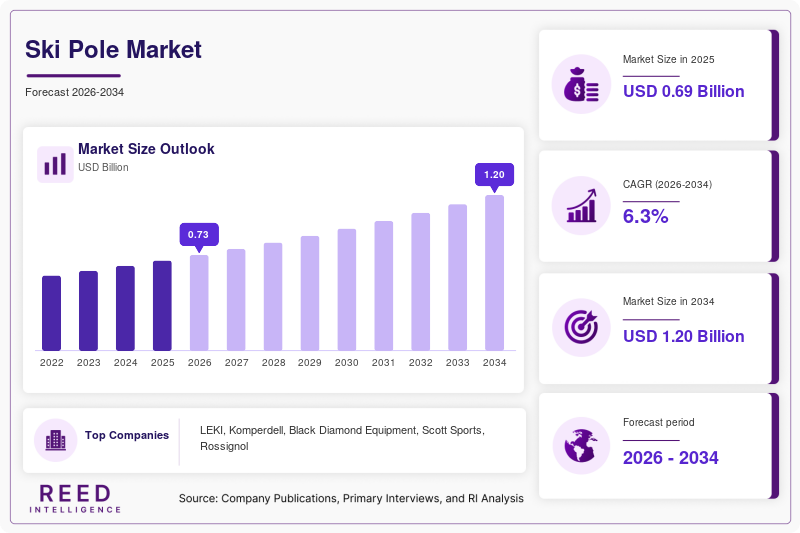
The global Ski Pole Market size was valued at approximately USD 0.685 billion in 2026 and is projected to reach USD 1.12 billion by 2034, expanding at a CAGR of 6.3% during 2026–2034. The market continues to evolve alongside broader developments in winter sports participation, outdoor recreation spending, and premium sporting equipment adoption. Ski poles remain an essential component of alpine skiing, cross-country skiing, freestyle skiing, and backcountry skiing activities, supporting balance, propulsion, rhythm, and maneuverability across varying terrain conditions.
Growing participation in winter tourism and adventure sports has created favorable conditions for sustained market expansion. Ski resorts across developed and emerging economies are investing in upgraded infrastructure, enhanced safety systems, and diversified recreational offerings, encouraging both experienced athletes and first-time participants. At the same time, manufacturers are focusing on lightweight materials, ergonomic grip technologies, shock absorption systems, and sustainable production practices to differentiate products and attract performance-focused consumers.
Key Highlights
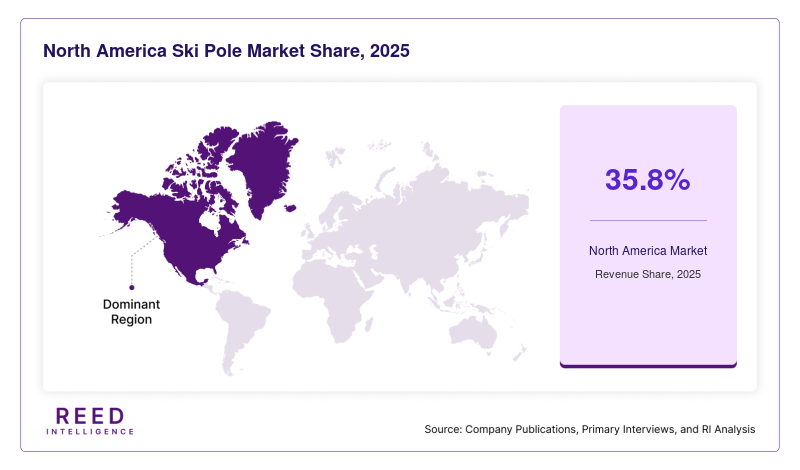
- North America dominated the market with a 35.8% share in 2025, while Asia Pacific is expected to grow at the fastest CAGR of 8.4% during 2026–2034.
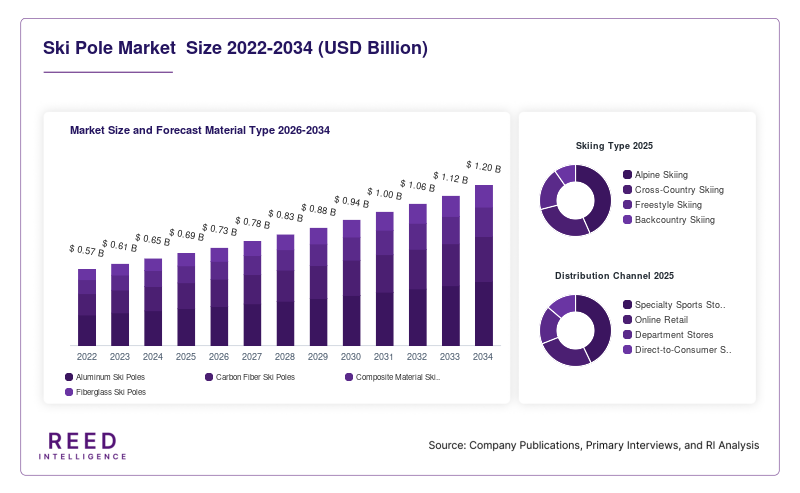
- By material type, aluminum ski poles accounted for the largest share of 42.7%, while carbon fiber ski poles are projected to grow at a CAGR of 9.1%.
- By skiing type, alpine skiing led with a 46.3% share, whereas backcountry skiing is expected to expand at a CAGR of 8.9%.
- By distribution channel, specialty sports stores held the largest share of 48.6%, while online retail is projected to grow at a CAGR of 10.2%.
- The United States remained the dominant country, with market values of USD 181.5 million in 2024 and USD 193.8 million in 2025.
Market Trends
Growing Demand for Lightweight and High-Performance Materials
The market is witnessing increasing demand for ski poles manufactured using advanced lightweight materials. Consumers are becoming more performance conscious and are seeking equipment that reduces fatigue while improving control and maneuverability. Carbon fiber composites, hybrid materials, and reinforced alloys are gaining popularity among recreational and professional skiers due to their favorable strength-to-weight ratios. Manufacturers are introducing premium product lines designed to provide greater durability, vibration reduction, and improved energy transfer during skiing activities.
The shift toward high-performance equipment is particularly evident among younger consumers and competitive athletes who prioritize efficiency and comfort. As winter sports participation becomes more experience driven, demand for technologically enhanced ski poles is expected to rise. Product differentiation through lightweight engineering and material innovation continues to influence purchasing decisions and create new opportunities for premium market growth.
Expansion of E-Commerce and Direct-to-Consumer Sales Channels
Digital retail channels are transforming the way ski equipment is marketed and sold globally. Consumers increasingly prefer online platforms that provide extensive product comparisons, customer reviews, customization options, and competitive pricing. This trend has encouraged ski pole manufacturers to strengthen their direct-to-consumer strategies while improving digital shopping experiences through virtual fitting guides and personalized recommendations.
The growth of e-commerce has expanded market reach beyond traditional ski destinations, enabling brands to access customers in regions where specialty sports stores have limited presence. Enhanced logistics networks and faster delivery services have further supported online sales growth. As consumers become more comfortable purchasing sporting goods online, digital channels are expected to represent an increasingly important revenue source throughout the forecast period.
Market Drivers
Rising Participation in Winter Sports and Recreational Skiing
Increasing participation in winter sports remains a primary driver of Ski Pole Market growth. Growing awareness of outdoor fitness activities, combined with rising interest in adventure tourism, has encouraged greater involvement in skiing across multiple age groups. Ski resorts and tourism operators are actively promoting recreational skiing experiences through training programs, beginner packages, and family-oriented offerings.
Many countries are investing in winter sports infrastructure to attract domestic and international tourists. These investments contribute to higher equipment purchases as new participants enter the market. Demand extends beyond professional athletes and includes recreational users seeking reliable and affordable equipment. As skiing becomes more accessible through expanded resort networks and improved transportation systems, ski pole sales are expected to maintain consistent growth throughout the forecast period.
Product Innovation and Technological Advancements
Technological innovation is significantly influencing purchasing behavior within the ski equipment industry. Manufacturers are introducing advanced grip systems, adjustable length mechanisms, shock absorption features, and ergonomic designs that enhance user comfort and performance. These innovations allow brands to address evolving consumer expectations while maintaining competitive differentiation.
Research and development activities are also supporting the introduction of environmentally sustainable materials and manufacturing processes. Improved durability and enhanced functionality encourage replacement purchases among existing users while attracting first-time buyers seeking premium equipment. As innovation continues to improve product quality and user experience, technological advancements are expected to remain a key growth driver for the Ski Pole Market.
Market Restraint
Seasonal Demand Patterns and Weather-Related Uncertainty
The Ski Pole Market remains heavily dependent on seasonal winter sports activity, creating fluctuations in annual demand patterns. Weather variability, shorter snow seasons, and inconsistent snowfall levels can significantly influence skiing participation rates across key markets. Regions experiencing warmer winter conditions often report lower visitor volumes at ski resorts, which directly affects equipment sales.
Manufacturers, distributors, and retailers face inventory management challenges due to the seasonal nature of the industry. Demand concentration within limited periods can create operational inefficiencies and increase storage costs. In addition, changing climate conditions have prompted some consumers to reduce winter sports spending or shift toward alternative outdoor activities. For example, ski destinations experiencing below-average snowfall frequently observe declines in equipment purchases and rentals. These factors collectively represent an ongoing challenge for market expansion despite positive long-term participation trends.
Market Opportunities
Increasing Popularity of Backcountry and Adventure Skiing
Backcountry skiing is emerging as an important growth opportunity for market participants. Consumers are increasingly seeking unique outdoor experiences that extend beyond traditional resort environments. This shift has increased demand for specialized ski poles designed for rugged terrain, adjustable lengths, lightweight construction, and enhanced durability.
Manufacturers are responding by developing products specifically targeted toward adventure enthusiasts and expedition skiers. Demand for multifunctional equipment capable of supporting diverse terrain conditions is expected to increase steadily. As outdoor recreation trends continue to favor exploration and personalized experiences, the backcountry skiing segment offers considerable growth potential for both established and emerging brands operating within the Ski Pole Market.
Expansion into Emerging Winter Sports Destinations
Emerging markets represent a significant opportunity for future revenue generation. Countries across Asia Pacific, Latin America, and parts of the Middle East are investing in winter sports infrastructure and tourism development. New ski resorts, indoor skiing facilities, and sports training centers are introducing skiing activities to broader consumer populations.
Growing disposable income and rising interest in international sporting experiences further support demand growth in these regions. Equipment manufacturers are increasingly pursuing partnerships with local distributors and sports organizations to strengthen market presence. As awareness of winter sports expands and infrastructure investments continue, emerging destinations are expected to contribute substantially to future Ski Pole Market growth and diversification.
Segmental Analysis
By Material Type
Aluminum ski poles represented the dominant subsegment and accounted for approximately 44.1% of market share in 2024. Their widespread adoption stems from affordability, durability, and suitability for recreational skiers. Aluminum products offer a practical balance between performance and cost, making them attractive across rental operations, beginner programs, and mainstream retail channels. Manufacturers continue to improve alloy compositions to enhance strength while reducing overall weight. The segment benefits from strong replacement demand and broad availability across global distribution networks, helping maintain its leadership position despite increasing competition from advanced material alternatives.
Carbon fiber ski poles are projected to register the fastest growth, expanding at a 9.1% CAGR through 2034. Demand is increasing among performance-focused consumers who value lightweight construction and superior responsiveness. Carbon fiber products reduce arm fatigue and improve maneuverability during extended skiing sessions. Technological improvements have lowered production costs and expanded accessibility beyond professional athletes. Growing consumer willingness to invest in premium equipment, combined with ongoing innovation in composite material engineering, continues to strengthen growth prospects for this rapidly expanding subsegment.
By Skiing Type
Alpine skiing held the leading position within the market and accounted for approximately 46.3% of total revenue in 2024. The segment benefits from widespread participation across established skiing destinations and strong support from resort infrastructure. Alpine skiing remains the most recognized skiing discipline globally, attracting recreational participants, tourists, and competitive athletes. Demand for specialized ski poles designed for stability, control, and performance contributes significantly to segment revenue. Consistent resort visitation and equipment replacement cycles further reinforce the segment's dominant market position.
Backcountry skiing is anticipated to emerge as the fastest-growing subsegment, advancing at a 8.9% CAGR during the forecast period. Increasing interest in outdoor adventure experiences and exploration-based recreation is driving participation growth. Skiers seeking less crowded environments and greater terrain diversity are investing in specialized equipment optimized for challenging conditions. Lightweight adjustable poles capable of supporting climbing and descent activities are experiencing rising demand. Growing awareness of backcountry tourism opportunities and improvements in safety equipment are expected to support sustained expansion of this segment.
By Distribution Channel
Specialty sports stores accounted for approximately 49.2% of market revenue in 2024, making them the dominant distribution channel. These retailers offer expert guidance, product demonstrations, and personalized fitting services that are particularly valuable for technical sporting equipment purchases. Consumers often prefer specialty stores when evaluating ski pole performance characteristics, material options, and ergonomic features. Strong relationships between manufacturers and specialty retailers contribute to effective product positioning and customer education. The channel remains highly influential despite increasing digital commerce adoption.
Online retail is projected to achieve the fastest growth, recording a 10.2% CAGR through 2034. Consumers increasingly rely on digital platforms for convenience, broader product selection, and competitive pricing. Enhanced product visualization tools, customer reviews, and direct-to-consumer sales strategies have strengthened confidence in online purchases. Manufacturers are investing heavily in e-commerce capabilities and digital marketing initiatives to expand market reach. Improvements in logistics networks and fulfillment services further support online channel growth, positioning it as a key driver of future Ski Pole Market expansion.
Regional Analysis
North America
North America accounted for approximately 35.8% of the global Ski Pole Market in 2025 and continues to represent the largest regional market. The region benefits from a well-established skiing culture, extensive resort infrastructure, and strong consumer spending on outdoor recreational equipment. Market growth is projected at a CAGR of 5.8% through 2034, supported by stable participation rates and ongoing investment in winter tourism facilities.
The United States remains the dominant country within the region. A key growth factor is the extensive network of ski resorts that consistently attract domestic and international visitors. Investments in resort modernization, digital booking systems, and year-round recreational offerings have strengthened consumer engagement while supporting demand for high-quality ski equipment, including advanced ski poles.
Europe
Europe held approximately 30.4% of global market revenue in 2025 and remains one of the most mature skiing markets worldwide. The region is expected to expand at a CAGR of 5.9% during the forecast period. Strong participation rates, established winter tourism industries, and ongoing product innovation contribute to steady market performance across major European countries.
Austria serves as a leading country market due to its strong skiing heritage and concentration of internationally recognized ski destinations. A unique growth factor is the region's emphasis on winter sports education and training programs. Early exposure to skiing activities encourages long-term participation and supports consistent demand for ski poles across recreational and competitive segments.
Asia Pacific
Asia Pacific represented approximately 18.9% of market revenue in 2025 and is projected to record the fastest CAGR of 8.4% through 2034. Rising disposable income, expanding winter sports infrastructure, and growing awareness of outdoor recreational activities are driving regional market development. Several countries are actively investing in skiing facilities and tourism initiatives to support long-term industry growth.
China dominates the regional market due to substantial investments in winter sports infrastructure and increasing consumer participation. A unique growth factor is government-backed promotion of winter sports activities through training programs and public awareness campaigns. These initiatives continue to attract new participants and stimulate demand for skiing equipment throughout the country.
Middle East & Africa
The Middle East & Africa accounted for approximately 5.6% of global market share in 2025 and is forecast to grow at a CAGR of 6.8% through 2034. Although relatively small compared to other regions, increasing interest in winter sports experiences and tourism diversification initiatives are creating new opportunities for market participants.
The United Arab Emirates represents the dominant country market within the region. A key growth factor is the development of indoor skiing facilities that provide year-round access to winter sports activities. These facilities are introducing skiing to new consumer groups and supporting demand for beginner and recreational skiing equipment, including ski poles.
Latin America
Latin America captured approximately 9.3% of global revenue in 2025 and is expected to expand at a CAGR of 6.5% during the forecast period. Growth is supported by increasing tourism activity, expanding winter sports awareness, and improving accessibility to skiing destinations in mountainous regions.
Chile remains the leading country within the regional market. A unique growth factor is the country's growing appeal as an international ski tourism destination. Investments in resort development and tourism promotion campaigns are attracting visitors from North America and Europe, creating favorable conditions for ski equipment sales and rental market expansion.
Competitive Landscape
The Ski Pole Market is characterized by the presence of established sporting goods manufacturers and specialized winter sports equipment providers competing through product innovation, material technology, and brand reputation. Market participants focus on lightweight construction, ergonomic design enhancements, sustainability initiatives, and strategic partnerships with ski resorts and sporting organizations.
LEKI maintains a leading position due to its extensive product portfolio, strong presence in competitive skiing, and continuous investment in performance technologies. The company recently introduced an updated line of carbon composite ski poles featuring enhanced grip ergonomics and improved vibration reduction characteristics, strengthening its premium market positioning.
Other significant participants include Komperdell, Black Diamond Equipment, Scott Sports, and Rossignol. These companies continue to invest in research and development, digital sales channels, and athlete sponsorship programs to strengthen market visibility. Competitive activity is expected to increase as manufacturers pursue product differentiation through advanced materials, customization options, and environmentally responsible manufacturing practices.
Key Players
- LEKI
- Komperdell
- Black Diamond Equipment
- Scott Sports
- Rossignol
- Salomon
- Atomic
- K2 Sports
- Fischer Sports
- Dynafit
- Swix
- Head Sport GmbH
- Elan
- Gabel
- One Way Sport
Recent Developments
- In 2025, LEKI introduced a new carbon composite ski pole collection featuring enhanced shock absorption systems and improved ergonomic grip technology for advanced skiers.
- In 2025, Black Diamond Equipment expanded its winter sports product portfolio with lightweight adjustable ski poles designed specifically for backcountry and touring applications.
- In 2024, Komperdell increased manufacturing capacity for premium ski poles to address growing demand from European and North American winter sports markets.
- In 2024, Scott Sports launched updated recyclable material initiatives aimed at reducing the environmental footprint of ski pole production processes.
Ski Pole Market Segments
Material Type
- Aluminum Ski Poles
- Carbon Fiber Ski Poles
- Composite Material Ski Poles
- Fiberglass Ski Poles
Skiing Type
- Alpine Skiing
- Cross-Country Skiing
- Freestyle Skiing
- Backcountry Skiing
Distribution Channel
- Specialty Sports Stores
- Online Retail
- Department Stores
- Direct-to-Consumer Sales
By Region
- North America
- Europe
- APAC
- Middle East and Africa
- LATAM