Skin Lightening Cream Market Size, Share & Trends Analysis Report By Product Type (Moisturizing & Brightening Creams, Dark Spot Corrector Creams), By Ingredient Type (Niacinamide, Vitamin C), By Skin Concern (Uneven Skin Tone, Dark Spots & Post-Inflammatory Hyperpigmentation), By End User (Women, Men and Unisex), By Distribution Channel (Online, Specialty Beauty Stores), By Price Range (Economy, Mid-Range and Premium) Forecasts, 2026–2034
USD 3950
Skin Lightening Cream Market Size
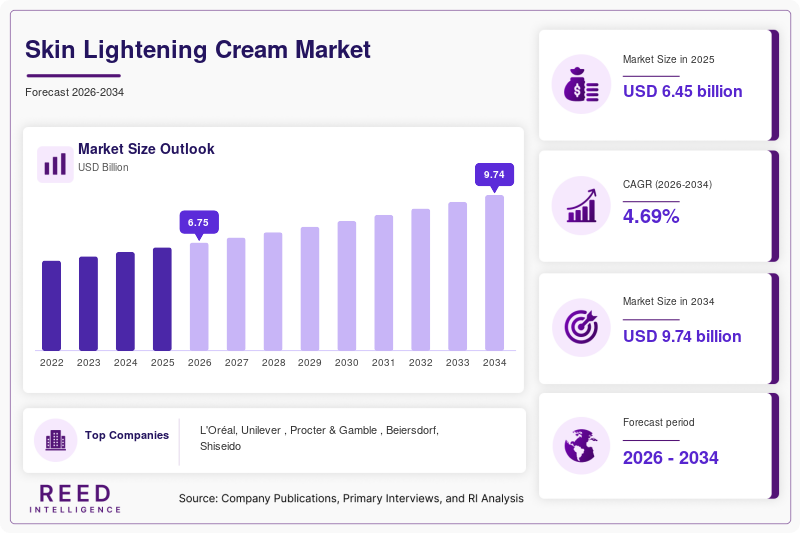
The Skin Lightening Cream Market was valued at USD 6.45 billion in 2025 and is estimated at USD 6.75 billion in 2026. Based on the supplied forecast, the market is projected to reach USD 9.74 billion by 2034, at a stated CAGR of 4.69% during 2026–2034.
Forecast validation: The supplied 2026 and 2034 market values imply a CAGR of approximately 5.3%, while the 2025 and 2034 values imply approximately 5.2% over the nine-year period. The stated CAGR of 4.69% does not reconcile with the supplied endpoints. This report retains all user-provided figures and flags the discrepancy for confirmation before publication.
Skin lightening creams are topical formulations marketed to reduce the appearance of uneven skin tone, dark spots and other forms of pigmentation, or to produce a brighter-looking complexion. The category ranges from everyday cosmetic moisturizers with brightening ingredients to targeted dark-spot products and dermatological formulations intended for specific pigmentation concerns. The market definition used here focuses on creams rather than the wider category of skin-lightening products, which also includes serums, soaps, lotions, cleansers and masks.
Consumer interest is increasingly connected to targeted skincare concerns such as post-inflammatory hyperpigmentation, sun-related discoloration and uneven tone. Products containing ingredients such as niacinamide, vitamin C derivatives and selected botanical extracts compete on formulation stability, tolerability, texture and substantiated cosmetic claims. Creams also compete with serums and other formats that may deliver similar ingredients in different concentrations or textures.
Safety and regulatory compliance are material commercial considerations. The U.S. Food and Drug Administration (FDA) warns that over-the-counter skin-lightening products containing hydroquinone are not approved for OTC sale in the United States and that mercury is prohibited in cosmetics except under narrow conditions not applicable to these products. Mercury and improperly used hydroquinone can cause serious health effects.
Skin Lightening Cream Market Drivers
Demand for Targeted Pigmentation Care Supports Product Specialization
Consumers may seek products that address visible dark spots, uneven tone, discoloration after skin inflammation and age-related pigmentation. These concerns can create demand for targeted creams alongside general moisturizers and broader skincare routines.
The commercial mechanism is product specialization. Brands can develop creams for defined skin concerns, formulate them for different skin types and position them around specific cosmetic outcomes. This can help consumers distinguish a targeted product from a general moisturizer and can support premium pricing when the claims are credible.
However, pigmentation has different causes and may require different approaches. Cosmetic creams should not be presented as universal treatments for all pigmentation conditions, and persistent or changing discoloration may require professional assessment. Product claims must reflect the available evidence and the regulatory category in which the product is marketed.
Ingredient-Led Formulation Innovation Creates Differentiation
Manufacturers compete through ingredient combinations, formulation stability, texture, tolerability and evidence supporting cosmetic claims. Ingredients such as niacinamide, vitamin C derivatives, alpha arbutin, kojic acid and selected botanical extracts may be used in products designed to improve the appearance of uneven tone, subject to applicable safety and regulatory requirements.
Ingredient-led marketing gives brands a way to explain how a product differs from competing creams. It also creates opportunities for product variants that address particular consumer preferences, including fragrance-free formulations, lightweight textures and products designed for use within multi-step skincare routines.
The commercial limitation is that an ingredient's presence alone does not establish product efficacy. Concentration, formulation, stability, use conditions and the quality of supporting evidence all matter. Brands that make strong claims without appropriate substantiation may face consumer complaints, reputational damage or regulatory scrutiny.
Dermatology-Informed Skincare Strengthens Demand for Credible Claims
Consumers increasingly encounter skincare information through dermatologists, pharmacies, online education and ingredient-focused beauty content. This can encourage buyers to compare products based on active ingredients, suitability for sensitive skin, evidence and compatibility with sun protection.
Brands can respond with transparent ingredient information, clear instructions and realistic explanations of expected cosmetic outcomes. Dermatology-informed positioning may be particularly relevant to products intended for dark spots or persistent uneven tone, where consumers may be looking for more than a general beauty claim.
The opportunity is not equivalent to medical validation. Brands should distinguish cosmetic testing from clinical evidence and avoid implying that a cosmetic cream treats a diagnosed condition unless the product is authorized for that use.
Skin Lightening Cream Market Restraints
Unsafe Ingredients and Regulatory Restrictions Increase Compliance Risk
Skin-lightening creams can face significant regulatory constraints when they contain prohibited substances, exceed permitted ingredient concentrations or make unauthorized therapeutic claims. Mercury-containing products present serious public-health concerns, and regulatory authorities continue to warn consumers about unsafe formulations.
In September 2026, India's Central Drugs Standard Control Organization (CDSCO) issued a public-health alert concerning unauthorized imported cosmetic products, including products marketed as beauty or whitening creams. The notice stated that testing had identified excessive heavy metals in the listed products.
For compliant manufacturers, these restrictions increase the importance of ingredient review, safety assessment, testing, supplier qualification, labeling and regulatory monitoring. Non-compliance can result in product removal, enforcement action, reputational damage and loss of retailer access.
Consumer Trust Can Be Damaged by Exaggerated Claims
Products promising dramatic or rapid changes in skin color can create unrealistic expectations and raise ethical concerns. If results do not match advertising, consumers may lose confidence in the brand or category.
Trust is particularly important in skincare because users apply products repeatedly and may be concerned about irritation or long-term effects. Clear labeling, realistic claims, transparent ingredient information and accessible complaint handling can help brands build credibility.
Manufacturers also face a positioning challenge: shifting toward language such as “brightening” or “radiance” does not resolve concerns if the underlying marketing still implies that lighter skin is inherently better. Responsible marketing should focus on specific skin concerns and healthy, even-looking skin without reinforcing colorist assumptions.
Product Efficacy and Tolerability Depend on Formulation
A cream's performance depends on the complete formulation, including active ingredient concentration, stability, delivery, packaging and how the product is used. A formulation that is irritating or unstable may undermine consumer satisfaction even if its ingredients have evidence supporting selected uses.
Consumers may also combine several active products, increasing the possibility of irritation or inappropriate use. Manufacturers need to provide suitable instructions and substantiated claims rather than assuming that ingredient popularity guarantees a good product experience.
The market's challenge is to balance formulation innovation with safety, usability and credible evidence. Products that require complex routines or produce irritation may struggle to maintain repeat purchases.
Skin Lightening Cream Market Opportunities
Safer Brightening Formulations with Transparent Ingredient Information
Brands can differentiate through formulations that meet applicable safety requirements and provide clear ingredient information. Products may be positioned around the appearance of uneven tone, moisturization and targeted care, with claims supported by appropriate testing.
This opportunity includes ingredient transparency, fragrance-free options, packaging that protects sensitive formulations and guidance on appropriate use. Clear product information can help consumers compare products without relying on exaggerated claims.
The opportunity depends on responsible product development. An ingredient should not be marketed as safe or effective in every formulation merely because it is used in other products; concentration, intended use and local rules remain important.
Dermatology and Pharmacy Channels for Targeted Pigmentation Products
Pharmacies and dermatology-oriented retail channels can provide an environment for products that emphasize ingredient transparency, tolerability and clear use instructions. These channels may be relevant to consumers looking for support with persistent discoloration or wanting to understand how a cosmetic product fits into a broader skincare routine.
Brands can develop educational materials and train retail partners to distinguish cosmetic products from prescription treatments. Such support can reduce confusion and improve the quality of product information.
The limitation is that commercial claims must remain within the product's authorized category. Pharmacy placement does not automatically mean that a product has been clinically validated or approved to treat a medical condition.
Digital Education and Direct-to-Consumer Sales
Brand websites and online channels can provide detailed ingredient lists, usage guidance, product comparisons and explanations of the difference between cosmetic brightening and medical treatment. Direct-to-consumer sales can also provide first-party information about repeat purchases and customer feedback.
Brands can use this feedback to refine packaging, texture, product instructions and customer service. However, digital marketing also increases the risk of misleading claims and the spread of unverified product information. Responsible brands need review processes for advertising content and effective seller oversight.
Segmental Analysis
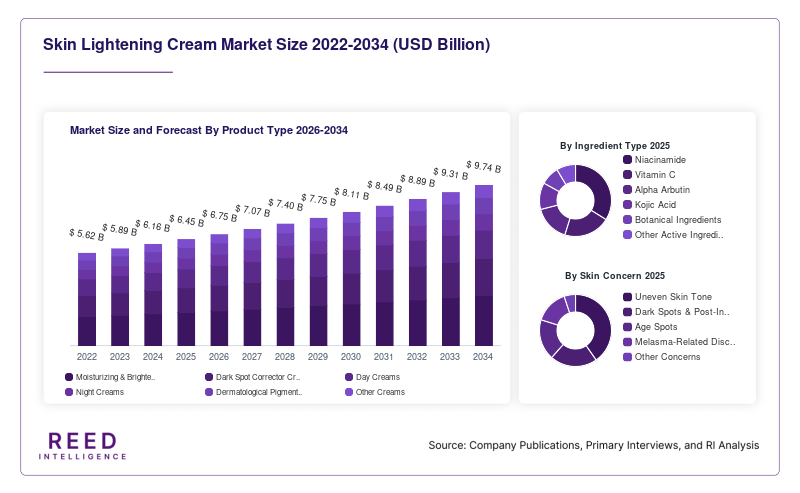
The segment shares, values, CAGRs and 2034 estimates below are internal analytical allocations, not independently published segment forecasts. Shares are modeled against the supplied 2025 global market value of USD 6.45 billion. The 2034 values allocate the supplied USD 10.20 billion forecast across each segmentation, with shares summing to 100% within each category. Indicative segment CAGRs are calculated from allocated endpoints and should be treated as analytical assumptions rather than observed industry statistics.
By Product Type
Moisturizing & Brightening Creams represent approximately 30% of the 2025 market, equivalent to about USD 1.94 billion under the internal allocation. The segment is modeled to reach approximately USD 3.06 billion by 2034, implying an indicative CAGR of about 5.2%. These products combine moisturization with cosmetic brightening claims and can fit into daily skincare routines. Their prospects depend on formulation quality, texture, brand trust and the credibility of claims about improving the appearance of uneven tone.
Dark Spot Corrector Creams represent approximately 25% of the 2025 market, equivalent to about USD 1.61 billion. The segment is modeled to reach approximately USD 2.75 billion by 2034, at an indicative CAGR of about 6.1%. The category focuses on localized discoloration and visible dark marks. Its commercial appeal depends on clear product positioning and substantiated claims, while consumers may compare creams with serums and professional skincare options.
Day Creams represent approximately 15% of the 2025 market, equivalent to about USD 0.97 billion. The segment is modeled to reach approximately USD 1.43 billion by 2034, implying an indicative CAGR of about 4.4%. Day creams can combine moisturization with brightening claims and, where properly tested and authorized, sun protection. Their value proposition rests on convenience and daily use, although sunscreen claims must be supported by appropriate testing and regulatory compliance.
Night Creams represent approximately 12% of the 2025 market, equivalent to about USD 0.77 billion. The segment is modeled to reach approximately USD 1.22 billion by 2034, at an indicative CAGR of about 5.2%. Night creams may emphasize moisturization and the use of selected cosmetic actives within an evening routine. Product tolerability, texture and compatibility with other skincare products influence repeat purchase.
Dermatological Pigmentation Creams represent approximately 13% of the 2025 market, equivalent to about USD 0.84 billion. The segment is modeled to reach approximately USD 1.43 billion by 2034, corresponding to an indicative CAGR of about 6.1%. This category covers eligible cream products positioned around more targeted pigmentation concerns, subject to local product classification. Demand depends on credible evidence, professional recommendations where relevant and compliance with ingredient and claims requirements.
Other Creams represent approximately 5% of the 2025 market, equivalent to about USD 0.32 billion. The segment is modeled to reach approximately USD 0.31 billion by 2034, reflecting a modeled decline in share as more clearly defined product categories gain ground. This is an analytical assumption, not an externally reported forecast. The category includes cream products that do not fit the principal groups above.
By Ingredient Type
Niacinamide-Based Creams represent approximately 25% of the 2025 market, equivalent to about USD 1.61 billion. The segment is modeled to reach approximately USD 2.55 billion by 2034, implying an indicative CAGR of about 5.2%. Niacinamide is used in a range of skincare formulations and may be included in products targeting the appearance of uneven tone. Product performance depends on the complete formulation, and the ingredient's presence alone does not establish the efficacy of a finished cream.
Vitamin C-Based Creams represent approximately 18% of the 2025 market, equivalent to about USD 1.16 billion. The segment is modeled to reach approximately USD 1.84 billion by 2034, at an indicative CAGR of about 5.2%. Vitamin C and its derivatives are used in cosmetic products positioned around skin radiance and the appearance of discoloration. Stability, packaging, formulation compatibility and product-specific evidence influence the credibility of these claims.
Alpha Arbutin-Based Creams represent approximately 12% of the 2025 market, equivalent to about USD 0.77 billion. The segment is modeled to reach approximately USD 1.22 billion by 2034, implying an indicative CAGR of about 5.2%. Alpha arbutin is used in selected brightening formulations. Manufacturers must account for applicable safety assessments, ingredient restrictions and product-specific formulation considerations in the markets where the creams are sold.
Kojic Acid-Based Creams represent approximately 10% of the 2025 market, equivalent to about USD 0.65 billion. The segment is modeled to reach approximately USD 1.02 billion by 2034, at an indicative CAGR of about 5.2%. The European Commission's Scientific Committee on Consumer Safety concluded that kojic acid was safe for use as a skin-lightening agent in cosmetic products at concentrations up to 1% under the conditions assessed, while noting concerns about increased absorption when the skin barrier is weakened. This opinion is not a blanket approval for every formulation or jurisdiction.
Botanical Ingredient Creams represent approximately 15% of the 2025 market, equivalent to about USD 0.97 billion. The segment is modeled to reach approximately USD 1.63 billion by 2034, corresponding to an indicative CAGR of about 6.0%. Products may use selected botanical extracts as part of a brightening or skin-conditioning formulation. Commercial differentiation depends on ingredient traceability, formulation stability and evidence supporting the finished product's claims, rather than on a “natural” label alone.
Other Active Ingredient Creams represent approximately 20% of the 2025 market, equivalent to about USD 1.29 billion. The segment is modeled to reach approximately USD 1.94 billion by 2034, implying an indicative CAGR of about 4.6%. This group includes other eligible cosmetic actives and combinations. Its performance depends on formulation design, safety requirements and the extent to which brands can demonstrate meaningful differences from established products.
By Skin Concern
Uneven Skin Tone represents approximately 35% of the 2025 market, equivalent to about USD 2.26 billion. The segment is modeled to reach approximately USD 3.57 billion by 2034, at an indicative CAGR of about 5.2%. These products are positioned around a more uniform-looking complexion rather than a specific localized spot. Demand depends on consumer expectations, product usability and realistic claims about visible results.
Dark Spots & Post-Inflammatory Hyperpigmentation represent approximately 30% of the 2025 market, equivalent to about USD 1.94 billion. The segment is modeled to reach approximately USD 3.26 billion by 2034, implying an indicative CAGR of about 6.0%. Targeted products address visible marks associated with prior skin inflammation or other pigmentation triggers. Consumers may seek more specialized formulations, but the cause and persistence of pigmentation vary, and not every concern is appropriately managed with an over-the-counter cosmetic cream.
Age Spots represent approximately 15% of the 2025 market, equivalent to about USD 0.97 billion. The segment is modeled to reach approximately USD 1.43 billion by 2034, at an indicative CAGR of about 4.4%. Creams in this category target the appearance of age-related discoloration and may be positioned alongside moisturization and sun-protection routines. The segment's development depends on the credibility of claims and the availability of alternative skincare products.
Melasma-Related Discoloration represents approximately 12% of the 2025 market, equivalent to about USD 0.77 billion. The segment is modeled to reach approximately USD 1.33 billion by 2034, corresponding to an indicative CAGR of about 6.3%. Products in this category may be marketed for cosmetic support around the appearance of uneven pigmentation. Melasma can require clinical assessment and management; cosmetic creams should not be represented as universal medical treatments.
Other Skin Concerns represent approximately 8% of the 2025 market, equivalent to about USD 0.52 billion. The segment is modeled to reach approximately USD 0.61 billion by 2034, implying an indicative CAGR of about 1.8%. The category includes other eligible pigmentation-related cosmetic uses not captured in the major groups. The lower modeled growth reflects an assumed shift toward more specific product positioning, not a published forecast.
By End User
Women represent approximately 65% of the 2025 market, equivalent to about USD 4.19 billion. The segment is modeled to reach approximately USD 6.53 billion by 2034, at an indicative CAGR of about 5.1%. The allocation reflects the report's assumed current product mix and established beauty-retail positioning. Actual purchasing behavior varies by country, age, skin concern and product format; the share should not be interpreted as a measure of inherent need or preference.
Men represent approximately 20% of the 2025 market, equivalent to about USD 1.29 billion. The segment is modeled to reach approximately USD 2.14 billion by 2034, implying an indicative CAGR of about 5.8%. Product opportunities may include simpler routines, lightweight textures and clearly explained skincare benefits. Adoption depends on brand positioning, consumer education, affordability and local preferences.
Unisex Products represent approximately 15% of the 2025 market, equivalent to about USD 0.97 billion. The segment is modeled to reach approximately USD 1.53 billion by 2034, at an indicative CAGR of about 5.2%. Unisex positioning can appeal to consumers who prioritize the product's function and ingredients over gender-specific branding. The commercial opportunity depends on inclusive marketing and formulations suited to a range of skin types.
By Distribution Channel
Online Sales represent approximately 25% of the 2025 market, equivalent to about USD 1.61 billion. The segment is modeled to reach approximately USD 3.06 billion by 2034, implying an indicative CAGR of about 7.4%. E-commerce expands product discovery and provides space for ingredient education, reviews and direct-to-consumer sales. Counterfeit products, misleading claims and unauthorized sellers remain material risks.
Specialty Beauty Stores represent approximately 25% of the 2025 market, equivalent to about USD 1.61 billion. The segment is modeled to reach approximately USD 2.55 billion by 2034, at an indicative CAGR of about 5.2%. These stores can support product discovery through staff assistance, brand displays and access to multiple skincare ranges. Their performance depends on retail traffic, assortment, pricing and the quality of product guidance.
Pharmacies & Drugstores represent approximately 20% of the 2025 market, equivalent to about USD 1.29 billion. The segment is modeled to reach approximately USD 2.14 billion by 2034, implying an indicative CAGR of about 5.8%. Pharmacies can appeal to consumers seeking ingredient transparency and guidance on pigmentation-related concerns. Brands must clearly distinguish cosmetics from medicines and avoid implying that pharmacy availability proves clinical efficacy.
Supermarkets & Hypermarkets represent approximately 20% of the 2025 market, equivalent to about USD 1.29 billion. The segment is modeled to reach approximately USD 1.84 billion by 2034, at an indicative CAGR of about 4.0%. These channels can offer broad reach and accessible price points. Shelf visibility, promotions, brand recognition and product availability influence sales.
Other Channels represent approximately 10% of the 2025 market, equivalent to about USD 0.65 billion. The segment is modeled to reach approximately USD 0.61 billion by 2034, reflecting a modeled decline in share. This category includes other eligible routes to market. The allocation is an analytical assumption rather than a published channel forecast.
By Price Range
Economy Products represent approximately 40% of the 2025 market, equivalent to about USD 2.58 billion. The segment is modeled to reach approximately USD 3.88 billion by 2034, at an indicative CAGR of about 4.6%. Economy products address consumers seeking accessible prices and basic cosmetic benefits. Product safety, reliable labeling and consistent quality remain essential regardless of price tier.
Mid-Range Products represent approximately 40% of the 2025 market, equivalent to about USD 2.58 billion. The segment is modeled to reach approximately USD 4.18 billion by 2034, implying an indicative CAGR of about 5.5%. Mid-range products can balance price, formulation complexity, packaging and brand positioning. They may appeal to consumers seeking targeted skincare without the highest premium.
Premium Products represent approximately 20% of the 2025 market, equivalent to about USD 1.29 billion. The segment is modeled to reach approximately USD 2.14 billion by 2034, at an indicative CAGR of about 5.8%. Premium positioning may emphasize formulation development, packaging, brand reputation, product testing and specialist distribution. Consumers' willingness to pay depends on credible differentiation and product experience rather than premium branding alone.
Regional Analysis
The regional shares and values below are internal analytical allocations, not independently published regional market estimates. They are designed to reconcile to the supplied global market values. Regional demand varies with consumer purchasing power, local beauty preferences, skincare routines, regulatory requirements, retail access and the availability of safe, compliant products.
North America Skin Lightening Cream Market
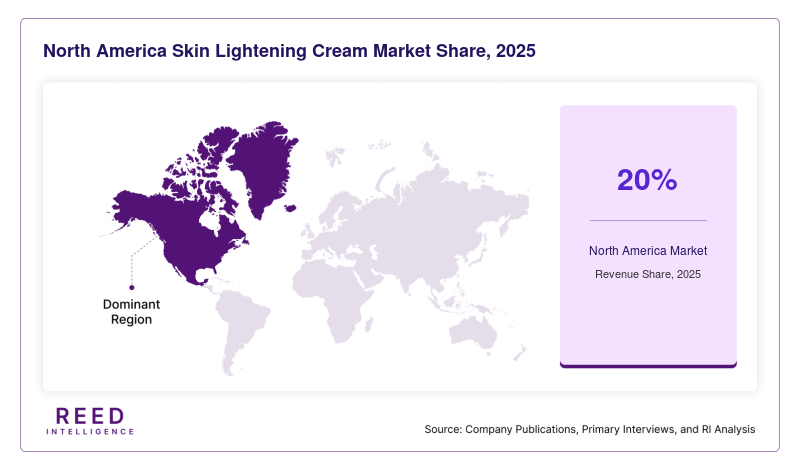
North America is modeled to represent approximately 20% of the 2025 market, equivalent to about USD 1.29 billion. It is modeled to reach approximately USD 1.94 billion by 2034, implying an indicative CAGR of about 4.6%.
The market includes creams positioned around dark spots, uneven tone and general brightening, with consumers able to choose among mass-market, specialty beauty and dermatological skincare brands. Product claims, ingredient disclosure and compliance are important to commercial credibility.
The FDA's position on OTC hydroquinone and mercury-containing products makes regulatory compliance a particularly important consideration for brands selling in the United States. Products must be evaluated according to their ingredients, claims and regulatory classification rather than being treated as interchangeable cosmetic creams.
Brands can compete through transparent formulations, targeted product positioning, distribution and credible product information. However, consumers also have access to serums, dermatological treatments and other formats that address similar concerns.
Europe Skin Lightening Cream Market
Europe is modeled to represent approximately 18% of the 2025 market, equivalent to about USD 1.16 billion. The allocation reaches approximately USD 1.84 billion by 2034, at an indicative CAGR of about 5.2%.
Demand includes creams marketed for uneven tone and visible pigmentation, with product development influenced by ingredient safety, formulation evidence and cosmetic-claims requirements. Consumers may compare products on tolerability, texture, packaging and transparency about active ingredients.
The European Commission's Scientific Committee on Consumer Safety assessed kojic acid and concluded that it was safe as a skin-lightening agent in cosmetic products at concentrations up to 1% under the conditions reviewed. The opinion also highlighted concerns about absorption when the skin barrier is weakened. Manufacturers must still consider applicable legislation and the safety of the complete finished formulation.
European market development will depend on product credibility, retail access and the ability of brands to distinguish substantiated cosmetic benefits from exaggerated whitening claims. Ingredient compliance and appropriate labeling remain important for market access.
APAC Skin Lightening Cream Market
APAC is modeled to represent approximately 38% of the 2025 market, equivalent to about USD 2.45 billion. It is modeled to reach approximately USD 4.18 billion by 2034, the largest regional value in this allocation, at an indicative CAGR of about 6.1%.
The region includes diverse beauty markets, manufacturing bases and retail environments. Demand for pigmentation-focused skincare varies by country, skin concern, income level and local product preferences. Brands compete across economy, mid-range and premium products, using both traditional retail and online channels.
The region also faces challenges from unsafe and unauthorized products. In September 2026, India's CDSCO issued a public-health alert about unauthorized cosmetics, including whitening creams, after testing found excessive heavy metals in the listed products. This reinforces the importance of product registration, quality controls, traceability and consumer education.
APAC's modeled growth reflects the size and diversity of its skincare consumer base and the potential for targeted product portfolios. Actual performance will depend on affordability, regulatory enforcement, brand trust and the ability to offer safe products suited to local requirements.
Middle East and Africa Skin Lightening Cream Market
Middle East and Africa are modeled to account for approximately 14% of the 2025 market, equivalent to about USD 0.90 billion. The region is modeled to reach approximately USD 1.43 billion by 2034, corresponding to an indicative CAGR of about 5.2%.
Demand differs substantially across countries and consumer groups. Products may be sold through pharmacies, beauty retailers, local distributors and online channels, with purchasing decisions influenced by affordability, ingredient trust and availability.
Public-health concerns are significant in markets where mercury-containing or otherwise unsafe products remain accessible. WHO and UNEP have documented the risks associated with mercury in skin-lightening products and the need for coordinated regulation and public awareness.
The commercial opportunity for compliant brands is linked to safe formulations, transparent labels and dependable distribution. Enforcement gaps, informal supply chains and counterfeit products can undermine both consumer safety and the position of legitimate manufacturers.
LATAM Skin Lightening Cream Market
LATAM is modeled to represent approximately 10% of the 2025 market, equivalent to about USD 0.65 billion. It is modeled to reach approximately USD 0.82 billion by 2034, implying an indicative CAGR of about 2.6%.
The market includes mass-market skincare and specialized creams for visible dark spots and uneven tone. Purchasing behavior depends on price, brand availability, distribution coverage and the degree to which consumers seek targeted skincare rather than general moisturizers.
Manufacturers can compete through accessible price points, ingredient transparency and products suited to local retail channels. Online distribution may improve product discovery, but it also makes seller verification and product authenticity more important.
The modeled growth rate is an analytical assumption, not an externally reported regional forecast. Currency volatility, household purchasing power, competition from other skincare formats and differences in national regulation may affect the actual trajectory.
Competitive Landscape
The Skin Lightening Cream Market includes multinational beauty companies, mass-market personal-care brands, specialist skincare manufacturers, dermatology-oriented brands and regional producers. Competition is based on formulation quality, brand credibility, ingredient transparency, price, product availability and the ability to substantiate cosmetic claims.
Large beauty companies can draw on research capabilities, established retail relationships and broad product portfolios. Specialist skincare brands may differentiate through targeted formulations, detailed ingredient information and distribution through pharmacies or dermatology-oriented channels. Regional brands can compete through local knowledge, price accessibility and distribution coverage.
The competitive landscape is shaped by a shift toward more specific skincare claims. Products that address the appearance of dark spots or uneven tone can be positioned around a defined consumer concern, while broad whitening claims may carry reputational and ethical risks. The ability to substantiate claims and explain appropriate product use is increasingly important to consumer trust.
Key Market Players
Recent Market Developments
- In September 2026, India's Central Drugs Standard Control Organization issued a public-health alert concerning unauthorized cosmetic products, including whitening creams. The agency reported that testing identified excessive heavy metals in the listed products and advised consumers not to purchase or use them. The alert highlights the commercial importance of product registration, ingredient testing, supplier verification and traceable distribution. Compliant manufacturers may need to strengthen documentation and retailer education, while unauthorized products create safety risks and undermine trust across the category.
- In July 2026, UNEP's Global Mercury Partnership published a report on mercury-laced skin-lightening products, describing test findings and enforcement action involving products identified by Maharashtra's Food and Drug Administration. The report stated that testing found mercury levels up to 20 times above the permissible limit in five products. The findings reinforce the need for effective testing, enforcement and consumer awareness. For legitimate brands, reliable sourcing and documented safety controls are important for protecting consumer confidence. The findings concern specific products and should not be generalized to all skin-lightening creams.
Skin Lightening Cream Market Segments
By Product Type
- Moisturizing & Brightening Creams
- Dark Spot Corrector Creams
- Day Creams
- Night Creams
- Dermatological Pigmentation Creams
- Other Creams
By Ingredient Type
- Niacinamide
- Vitamin C
- Alpha Arbutin
- Kojic Acid
- Botanical Ingredients
- Other Active Ingredients
By Skin Concern
- Uneven Skin Tone
- Dark Spots & Post-Inflammatory Hyperpigmentation
- Age Spots
- Melasma-Related Discoloration
- Other Concerns
By End User
- Women
- Men
- Unisex
By Distribution Channel
- Online
- Specialty Beauty Stores
- Pharmacies & Drugstores
- Supermarkets & Hypermarkets
- Other Channels
By Price Range
- Economy
- Mid-Range
- Premium
By Region
- North America
- Europe
- APAC
- Middle East and Africa
- LATAM