Small Capacity Electrolyzer Market Size, Share & Demand Report By Type (Alkaline Electrolyzer, Proton Exchange Membrane (PEM) Electrolyzer, Solid Oxide Electrolyzer), By Application (Industrial, Mobility & Transportation, Energy Storage, Others), By End-Use (Industrial, Commercial, Residential), By Region & Segment Forecasts, 2025–2034
USD 3950
Market Overview
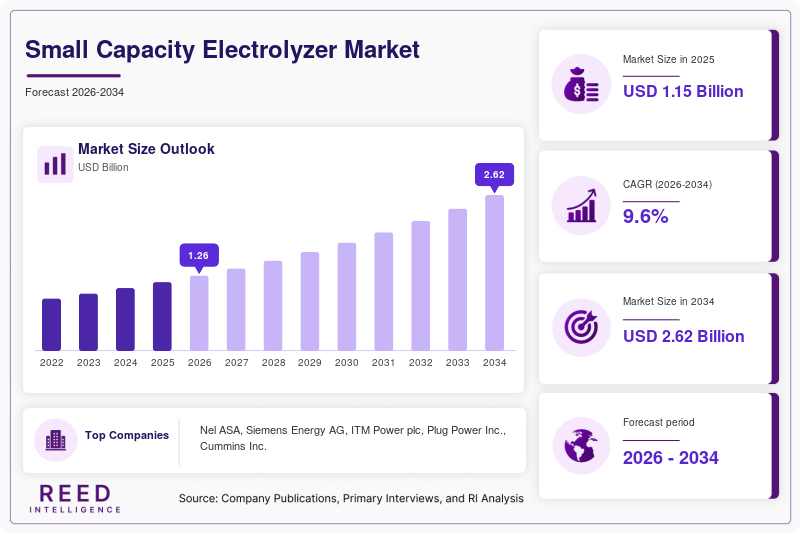
The Small Capacity Electrolyzer Market size was estimated at USD 1.15 billion in 2025 and is projected to reach approximately USD 1.28 billion in 2026. Over the forecast period from 2025 to 2034, the market is expected to grow at a CAGR of 9.6%, reaching an estimated value of USD 2.85 billion by 2034. This growth trajectory reflects increasing investments in green hydrogen infrastructure, especially in distributed and small-scale applications such as on-site hydrogen generation for industrial facilities, laboratories, and fueling stations.
One of the primary growth factors is the rising demand for green hydrogen across multiple sectors, including mobility, chemicals, and power storage. Small capacity electrolyzers offer flexibility and cost advantages for localized hydrogen production, reducing reliance on centralized systems. Another key factor is technological advancements in proton exchange membrane (PEM) and alkaline electrolyzer systems, which have improved efficiency, durability, and scalability. Additionally, supportive government policies, subsidies, and carbon neutrality targets are accelerating adoption, particularly in developed and emerging economies.
Key Highlights
- Market size estimated at USD 1.15 billion in 2025 and USD 1.28 billion in 2026
- Forecasted to reach USD 2.85 billion by 2034
- CAGR of 9.6% from 2025 to 2034
- Rising demand for decentralized hydrogen production solutions
- Increasing integration of renewable energy with small-scale electrolyzers
Market Trends
Increasing Adoption of Renewable-Integrated Electrolyzers
A significant trend in the Small Capacity Electrolyzer Market is the integration of electrolyzers with renewable energy systems such as solar photovoltaic and wind power installations. Small capacity units are well suited for decentralized applications where energy generation is intermittent and localized. These systems enable efficient utilization of excess renewable electricity for hydrogen production, thereby enhancing energy storage capabilities and reducing curtailment losses. Industries and commercial facilities are increasingly deploying such systems to achieve sustainability targets and reduce carbon footprints. Moreover, advancements in smart energy management systems are facilitating seamless integration, improving operational efficiency, and supporting real-time monitoring of hydrogen production.
Growing Use in Mobility and Refueling Infrastructure
Another emerging trend is the rising deployment of small capacity electrolyzers in hydrogen refueling stations and mobility applications. With the expansion of hydrogen fuel cell vehicles, there is a growing need for on-site hydrogen generation to ensure supply reliability and reduce transportation costs. Small electrolyzers provide an efficient solution for producing hydrogen directly at fueling stations, particularly in urban and semi-urban areas. This trend is gaining traction as governments and private players invest in hydrogen mobility infrastructure. Additionally, the compact design and modular nature of these systems allow for scalability, making them ideal for pilot projects and early-stage hydrogen ecosystems.
Market Drivers
Rising Demand for Green Hydrogen Across Industries
The increasing demand for green hydrogen as a clean energy carrier is a major driver for the Small Capacity Electrolyzer Market. Industries such as chemicals, refining, and food processing are actively transitioning toward low-carbon hydrogen solutions to meet environmental regulations and sustainability goals. Small capacity electrolyzers enable on-site hydrogen production, reducing dependency on fossil fuel-based hydrogen sources. This shift is particularly beneficial for small and medium enterprises that require flexible and cost-effective solutions. Furthermore, growing awareness about environmental impact and corporate commitments to carbon neutrality are encouraging industries to adopt electrolyzer technologies, thereby supporting market growth.
Supportive Government Policies and Incentives
Government initiatives and policy frameworks aimed at promoting hydrogen economies are significantly driving market expansion. Many countries have introduced subsidies, tax incentives, and funding programs to encourage the adoption of electrolyzer technologies. These policies are focused on reducing carbon emissions and accelerating the transition to renewable energy systems. Small capacity electrolyzers benefit from these initiatives as they are often used in pilot projects and decentralized applications. Additionally, regulatory support for clean energy integration and emission reduction targets is creating a favorable environment for market growth, attracting investments from both public and private sectors.
Market Restraint
High Initial Capital Costs and Limited Economies of Scale
One of the key restraints affecting the Small Capacity Electrolyzer Market is the high initial investment required for system installation and integration. Despite technological advancements, the cost of electrolyzer components, including membranes, catalysts, and power electronics, remains relatively high. This poses a challenge for small-scale users and limits widespread adoption, particularly in price-sensitive markets. Additionally, small capacity systems often lack the economies of scale associated with larger installations, resulting in higher per-unit hydrogen production costs.
The impact of this restraint is evident in developing regions where budget constraints and limited access to financing hinder market growth. For example, small industrial units may prefer conventional hydrogen sources due to lower upfront costs, even if long-term benefits favor electrolyzers. While ongoing research and development efforts aim to reduce costs, achieving cost parity with traditional hydrogen production methods remains a challenge, potentially slowing market expansion in the near term.
Market Opportunities
Expansion in Distributed Energy Systems
The growing focus on distributed energy systems presents a significant opportunity for the Small Capacity Electrolyzer Market. As energy systems become more decentralized, there is an increasing need for localized hydrogen production and storage solutions. Small capacity electrolyzers are ideally suited for these applications, enabling users to generate hydrogen on-site using renewable energy sources. This approach enhances energy resilience, reduces transmission losses, and supports grid stability. Moreover, the adoption of microgrids and off-grid energy systems is creating new avenues for electrolyzer deployment, particularly in remote and underserved areas where centralized infrastructure is limited.
Emerging Applications in Commercial and Residential Sectors
Another promising opportunity lies in the adoption of small electrolyzers in commercial and residential settings. With advancements in technology and cost reductions, these systems are becoming more accessible to a wider range of users. Applications such as backup power generation, heating, and energy storage are gaining traction, particularly in regions with high renewable energy penetration. Additionally, the development of compact and user-friendly systems is enabling integration into buildings and small facilities. This trend is expected to expand the market beyond traditional industrial applications, opening new revenue streams and driving long-term growth.
Segmental Analysis
By Type
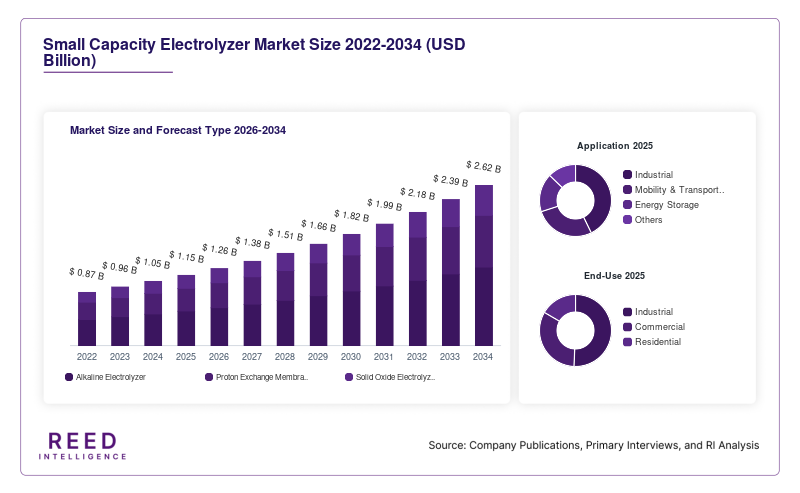
The alkaline electrolyzer segment dominated the market in 2024, accounting for approximately 55% of the total share. This dominance is attributed to its established technology, lower cost compared to other types, and widespread use in industrial applications. Alkaline electrolyzers are known for their reliability and scalability, making them suitable for small capacity installations. Additionally, continuous improvements in efficiency and durability have enhanced their adoption across various sectors. The availability of mature supply chains and lower material costs further contribute to their market leadership.
The proton exchange membrane (PEM) electrolyzer segment is expected to be the fastest-growing, with a projected CAGR of 10.8% during the forecast period. This growth is driven by its advantages, including higher efficiency, compact design, and ability to operate under variable power conditions. PEM electrolyzers are particularly suitable for integration with renewable energy systems, making them ideal for decentralized applications. Increasing investments in research and development are further improving their performance and reducing costs, supporting their rapid adoption.
By Application
Industrial application dominated the market in 2024, holding around 48% of the total share. Small capacity electrolyzers are widely used in industries for on-site hydrogen production, reducing transportation costs and ensuring supply reliability. Applications include chemical processing, metal treatment, and food processing. The growing need for clean hydrogen in industrial operations is driving the adoption of these systems. Additionally, regulatory pressure to reduce emissions is encouraging industries to transition to electrolyzer-based hydrogen production.
The mobility and transportation segment is expected to grow at the fastest CAGR of 11.2% during the forecast period. This growth is driven by the increasing adoption of hydrogen fuel cell vehicles and the expansion of refueling infrastructure. Small electrolyzers play a crucial role in producing hydrogen at fueling stations, supporting the development of hydrogen mobility ecosystems. Government incentives and investments in clean transportation are further boosting this segment’s growth.
By End-Use
The industrial end-use segment held the largest share of approximately 50% in 2024, driven by the widespread use of electrolyzers in manufacturing and processing industries. These systems provide a reliable and cost-effective solution for on-site hydrogen generation, supporting various industrial processes. The increasing focus on sustainability and emission reduction is further driving adoption in this segment. Additionally, advancements in technology are enhancing system efficiency and reducing operational costs.
The commercial segment is projected to grow at the highest CAGR of 10.6% during the forecast period. This growth is driven by the increasing adoption of electrolyzers in commercial buildings, data centers, and small facilities for energy storage and backup power applications. The rising demand for clean energy solutions and the development of compact, user-friendly systems are supporting this segment’s expansion. Furthermore, the integration of renewable energy sources in commercial settings is creating new opportunities for electrolyzer deployment.
Regional Analysis
North America
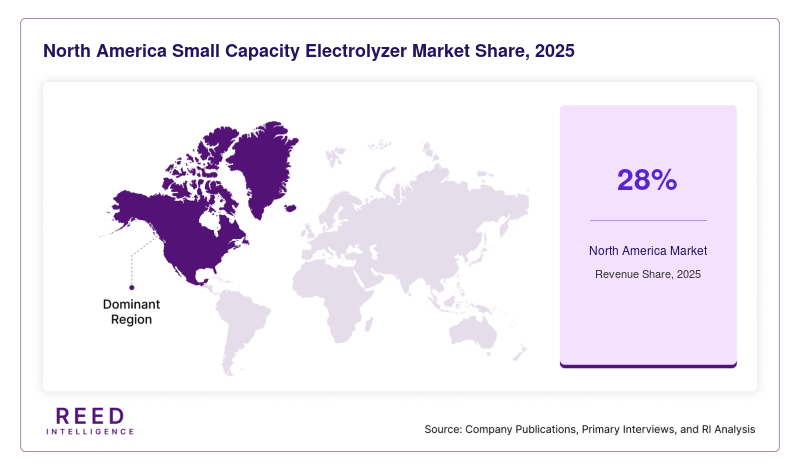
North America accounted for approximately 28% of the global Small Capacity Electrolyzer Market share in 2025 and is expected to grow at a CAGR of 9.2% during the forecast period. The region’s growth is driven by strong investments in hydrogen infrastructure and increasing adoption of renewable energy technologies. Government initiatives aimed at promoting clean energy and reducing carbon emissions are further supporting market expansion. Additionally, the presence of established industry players and advanced research capabilities contributes to technological advancements and market competitiveness.
The United States dominates the regional market, supported by its robust industrial base and focus on clean energy transition. A key growth factor is the increasing deployment of hydrogen refueling stations, which require on-site hydrogen production solutions. This demand is driving the adoption of small capacity electrolyzers across the country, particularly in transportation and industrial applications.
Europe
Europe held around 30% of the market share in 2025 and is projected to grow at a CAGR of 9.8% through 2034. The region’s strong commitment to achieving climate neutrality and reducing greenhouse gas emissions is a major driver of market growth. European countries are actively investing in hydrogen technologies as part of their energy transition strategies. Additionally, supportive regulatory frameworks and funding programs are encouraging the adoption of electrolyzer systems.
Germany is the leading country in the European market, driven by its focus on renewable energy integration and industrial decarbonization. A unique growth factor is the country’s emphasis on green hydrogen production for industrial use, which is increasing demand for small capacity electrolyzers in localized applications.
Asia Pacific
Asia Pacific accounted for approximately 25% of the global market share in 2025 and is expected to witness the highest CAGR of 10.5% during the forecast period. Rapid industrialization, increasing energy demand, and growing investments in renewable energy are key factors driving market growth in the region. Governments are also introducing policies to support hydrogen adoption, further boosting market expansion.
China dominates the Asia Pacific market due to its large-scale manufacturing capabilities and strong focus on clean energy technologies. A key growth factor is the country’s investment in hydrogen production infrastructure, including small-scale systems for industrial and commercial use, which is driving demand for electrolyzers.
Middle East & Africa
The Middle East & Africa region held around 9% of the market share in 2025 and is projected to grow at a CAGR of 8.7% during the forecast period. The region’s growth is supported by increasing investments in renewable energy projects and the development of hydrogen-based economies. Countries in the region are exploring electrolyzer technologies to diversify their energy mix and reduce dependence on fossil fuels.
Saudi Arabia leads the regional market, driven by its strategic initiatives to develop green hydrogen projects. A unique growth factor is the country’s focus on large-scale renewable energy integration, which is creating opportunities for small capacity electrolyzers in distributed applications.
Latin America
Latin America accounted for approximately 8% of the global market share in 2025 and is expected to grow at a CAGR of 8.9% over the forecast period. The region’s growth is driven by increasing adoption of renewable energy and the need for sustainable energy solutions. Governments are also promoting clean energy initiatives, supporting market development.
Brazil dominates the Latin American market, supported by its abundant renewable energy resources and growing focus on hydrogen production. A key growth factor is the country’s investment in decentralized energy systems, which is driving demand for small capacity electrolyzers in various applications.
Competitive Landscape
The Small Capacity Electrolyzer Market is moderately fragmented, with several global and regional players competing to enhance their market presence. Key companies are focusing on technological innovation, strategic partnerships, and capacity expansion to gain a competitive edge. The market leader is Nel ASA, known for its strong product portfolio and extensive experience in hydrogen technologies. The company continues to invest in research and development to improve efficiency and reduce costs.
Other major players are actively expanding their operations and entering new markets to capitalize on growth opportunities. For instance, companies are forming collaborations with renewable energy providers and industrial firms to develop integrated solutions. Recent developments include the launch of compact electrolyzer systems designed for decentralized applications, reflecting the growing demand for small capacity solutions. Overall, the competitive landscape is characterized by innovation and strategic initiatives aimed at strengthening market position.
Key Players List
- Nel ASA
- Siemens Energy AG
- ITM Power plc
- Plug Power Inc.
- Cummins Inc.
- Air Liquide
- Linde plc
- Toshiba Energy Systems & Solutions
- McPhy Energy S.A.
- Enapter S.r.l.
- Sunfire GmbH
- Hydrogenics (Cummins)
- Green Hydrogen Systems
- Next Hydrogen
- Ohmium International
Recent Developments
- In 2024, Nel ASA launched a new compact electrolyzer system designed for decentralized hydrogen production, improving efficiency and reducing installation costs.
- In 2025, Siemens Energy AG partnered with a renewable energy firm to develop integrated hydrogen production solutions using small capacity electrolyzers.
- In 2025, ITM Power introduced an advanced PEM electrolyzer with enhanced performance and modular design for small-scale applications.
Small Capacity Electrolyzer Market Segments
Type
- Alkaline Electrolyzer
- Proton Exchange Membrane (PEM) Electrolyzer
- Solid Oxide Electrolyzer
Application
- Industrial
- Mobility & Transportation
- Energy Storage
- Others
End-Use
- Industrial
- Commercial
- Residential
By Region
- North America
- Europe
- APAC
- Middle East and Africa
- LATAM