Smart Windows Materials Market Size, Share & Demand Report By Material Type (Electrochromic Materials, Thermochromic Materials, Photochromic Materials, Suspended Particle Device Materials, Liquid Crystal Materials), By Application (Commercial Buildings, Residential Buildings, Automotive, Aerospace, Marine Transportation), By End Use (Construction and Infrastructure, Transportation, Healthcare, Industrial Facilities, Hospitality and Retail), By Region & Segment Forecasts, 2026–2034
USD 3950
Market Overview
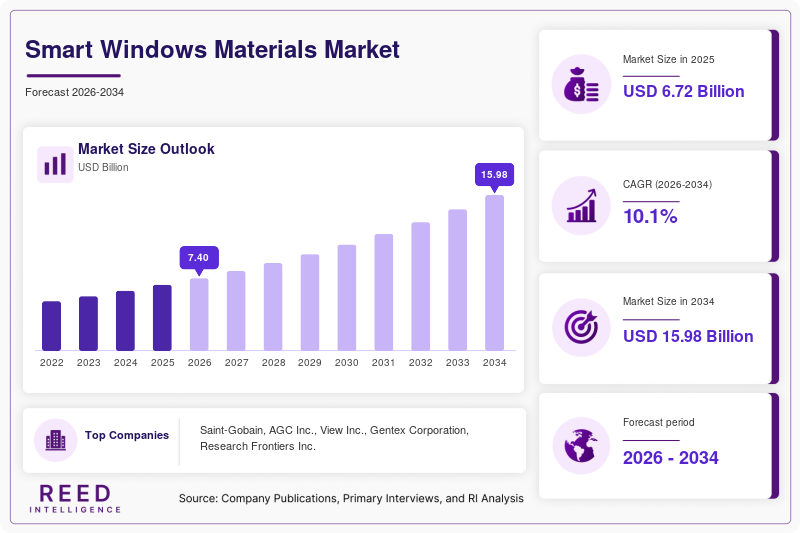
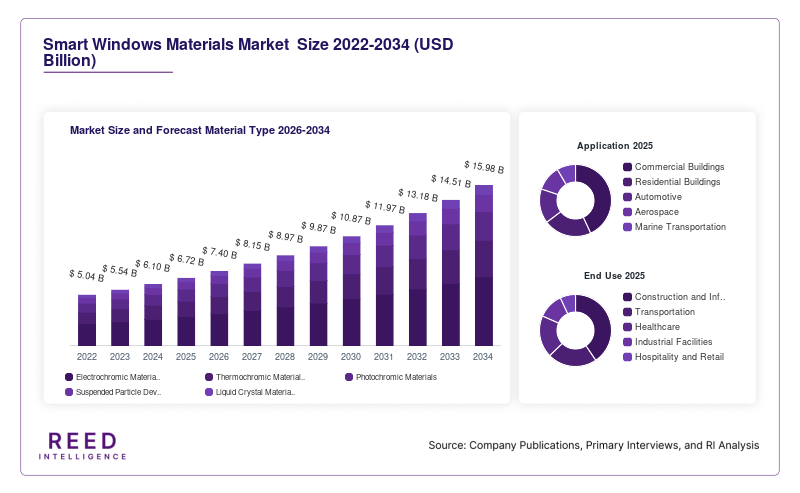
The global Smart Windows Materials Market size was valued at approximately USD 7.4 billion in 2026 and is projected to reach nearly USD 15.9 billion by 2034, expanding at a compound annual growth rate of 10.1% during the forecast period from 2026 to 2034. The market is gaining steady traction due to the increasing adoption of energy-efficient building technologies across commercial, residential, and transportation sectors. Smart window materials are widely used to regulate light transmission, improve thermal insulation, and reduce energy consumption associated with heating, ventilation, and air conditioning systems. Rising urbanization and stricter environmental regulations are encouraging governments and infrastructure developers to integrate intelligent glazing technologies into modern construction projects.
One of the primary global factors supporting market growth is the rising emphasis on sustainable infrastructure development. Countries across North America, Europe, and Asia Pacific are implementing green building standards that encourage the use of dynamic glazing materials capable of reducing electricity consumption and enhancing indoor comfort. In addition, the rapid expansion of smart city projects and the growing preference for connected building systems are increasing the deployment of electrochromic, thermochromic, and photochromic materials. Automotive manufacturers are also integrating smart glass materials into sunroofs, side windows, and rear-view mirrors to improve passenger comfort and fuel efficiency.
Key Highlights
- North America dominated the market with a 35.1% share in 2025.
- Asia Pacific is expected to grow at the fastest CAGR of 11.8% during 2026–2034. By material type, electrochromic materials accounted for the largest share of 42.6%, while suspended particle device materials are projected to grow at a CAGR of 12.3%.
- By application, commercial buildings led with a 44.8% share, whereas automotive applications are expected to expand at a CAGR of 11.6%.
- By end use, construction and infrastructure held the dominant share of 48.9%, while transportation is forecast to grow at a CAGR of 11.1%.
- The United States remained the dominant country, with market values of USD 1.72 billion in 2024 and USD 1.89 billion in 2025.
Market Trends
Integration of Smart Window Materials in Green Buildings
The integration of smart window materials into green buildings is becoming a major trend shaping the global market. Commercial developers and architects are increasingly selecting dynamic glazing technologies to improve building energy efficiency and comply with environmental standards. Electrochromic and thermochromic materials help regulate solar heat gain and indoor lighting conditions, reducing dependence on artificial cooling and lighting systems. This trend is especially visible in office towers, airports, hospitals, and educational institutions where energy management has become a strategic priority. Building owners are also recognizing the long-term operational savings associated with smart glazing technologies, leading to increased adoption in renovation projects as well as new construction developments.
The trend is further supported by the expansion of smart building ecosystems integrated with automated sensors and building management platforms. Smart windows can now respond automatically to weather conditions, sunlight intensity, and occupancy levels, improving user comfort while lowering electricity consumption. In developed economies, government incentives for sustainable construction are accelerating product demand. Emerging economies are also witnessing higher awareness regarding energy-efficient architecture, creating favorable conditions for the adoption of advanced window materials in residential and mixed-use infrastructure projects.
Rising Adoption of Smart Materials in Automotive Applications
Automotive manufacturers are increasingly adopting smart windows materials to improve passenger comfort, vehicle efficiency, and interior aesthetics. Electrochromic and suspended particle device materials are widely being integrated into sunroofs, side windows, and rear-view mirrors in premium and electric vehicles. These materials help reduce heat penetration, glare, and ultraviolet radiation, improving cabin temperature control and reducing the load on air conditioning systems. The automotive industry is focusing on lightweight and energy-efficient vehicle designs, making intelligent glazing technologies an attractive solution for both conventional and electric vehicles.
Another factor supporting this trend is the rapid expansion of electric vehicle production across Europe, North America, and Asia Pacific. Electric vehicle manufacturers are investing in innovative interior technologies that enhance driving comfort and battery efficiency. Smart window materials contribute to lower energy consumption by reducing cooling requirements, which can improve vehicle driving range. In addition, luxury vehicle brands are using advanced smart glazing systems as a differentiating feature to strengthen product positioning. As automotive technology evolves toward connected and autonomous mobility, the use of adaptive smart materials is expected to become increasingly common across multiple vehicle categories.
Market Drivers
Increasing Demand for Energy-Efficient Infrastructure
The growing demand for energy-efficient infrastructure is one of the strongest drivers supporting the expansion of the Smart Windows Materials Market. Governments and private developers are prioritizing technologies that reduce carbon emissions and improve building performance. Smart window materials offer dynamic light and heat control, enabling buildings to lower energy consumption associated with air conditioning and lighting systems. As electricity prices continue to rise in many countries, commercial property owners are investing in advanced glazing systems to reduce long-term operational expenses. The technology is particularly attractive for office complexes, hospitals, retail centers, and public infrastructure projects where energy management directly impacts operating costs.
In addition, global climate initiatives and environmental regulations are encouraging the adoption of sustainable construction materials. Several countries are introducing stricter building efficiency standards that support the use of intelligent glazing technologies. Smart city projects across Asia Pacific and the Middle East are also creating new opportunities for manufacturers of electrochromic and thermochromic materials. The growing emphasis on net-zero buildings and environmentally responsible infrastructure is expected to sustain strong demand for smart window materials throughout the forecast period.
Advancements in Smart Glass and Nanotechnology Materials
Continuous advancements in smart glass technologies and nanomaterials are significantly contributing to market growth. Manufacturers are developing innovative conductive coatings and adaptive materials that provide improved durability, faster response time, and higher transparency control. Technological improvements are helping reduce manufacturing complexity and lowering installation costs, making smart windows more accessible across residential and commercial applications. Electrochromic materials with enhanced switching capabilities are increasingly being used in high-rise buildings and luxury transportation systems due to their superior energy management performance.
Nanotechnology is also enabling the development of advanced coatings capable of improving optical clarity and solar control efficiency. Research institutions and manufacturers are investing in next-generation materials that offer enhanced lifespan and compatibility with automated building systems. The integration of artificial intelligence and sensor-based controls with smart windows is creating additional value for end users. These advancements are strengthening consumer confidence and encouraging wider adoption across automotive, aerospace, marine, and healthcare industries where thermal regulation and occupant comfort are important operational considerations.
Market Restraint
High Initial Installation and Manufacturing Costs
High installation and manufacturing costs remain a significant restraint for the Smart Windows Materials Market. Advanced materials such as electrochromic coatings, suspended particle devices, and liquid crystal technologies require specialized production processes and sophisticated manufacturing infrastructure. These costs are often higher than conventional glazing systems, limiting adoption among cost-sensitive consumers and small-scale construction projects. Commercial developers in emerging economies may delay smart window installations due to budget limitations and uncertainty regarding long-term return on investment. The requirement for electrical integration and automated control systems can also increase total project expenses.
The cost challenge is particularly evident in residential applications where consumers often prioritize affordability over advanced energy management features. Although smart windows can reduce energy consumption over time, the payback period may appear lengthy for some buyers. In addition, maintenance and replacement costs for certain smart glazing systems remain relatively high due to limited technical expertise in several regional markets. For example, smaller construction firms in developing economies may prefer low-emissivity or tinted glass alternatives instead of dynamic smart materials because of lower upfront investment requirements. These financial barriers could slow market penetration in price-sensitive regions despite growing awareness regarding sustainable building technologies.
Market Opportunities
Expansion of Smart City and Sustainable Infrastructure Projects
The rapid expansion of smart city and sustainable infrastructure projects presents a major opportunity for the Smart Windows Materials Market. Governments across Asia Pacific, the Middle East, and Europe are investing heavily in intelligent urban infrastructure designed to improve energy efficiency and environmental sustainability. Smart window materials align closely with these initiatives because they support temperature regulation, daylight optimization, and reduced electricity consumption. Large-scale infrastructure projects such as airports, metro stations, government buildings, and commercial complexes are increasingly integrating adaptive glazing technologies to achieve energy performance targets.
The opportunity is also supported by the rising adoption of integrated building management systems. Smart windows can work alongside sensors, lighting controls, and climate management systems to improve operational efficiency. Emerging economies are focusing on urban modernization programs that encourage the use of innovative construction materials. Public and private investments in green commercial spaces are creating long-term demand for electrochromic and thermochromic materials. As urban populations continue to rise globally, infrastructure developers are expected to adopt intelligent glazing solutions more extensively to improve building sustainability and occupant comfort.
Growing Penetration Across Aerospace and Transportation Industries
The increasing use of smart window materials across aerospace and transportation industries is creating substantial market opportunities. Airlines and rail operators are adopting intelligent glazing systems to improve passenger comfort and reduce energy consumption. Electrochromic windows are becoming common in aircraft cabins because they allow adjustable light control without traditional window shades. This technology improves passenger experience while reducing aircraft weight and maintenance requirements. Rail transportation companies are also integrating smart glazing materials into premium train cabins and high-speed transit systems to enhance temperature control and visibility.
The transportation sector is further benefiting from the growing focus on fuel efficiency and sustainable mobility solutions. Smart window materials help regulate cabin temperatures, reducing the need for excessive air conditioning and improving overall energy efficiency. Luxury yachts and marine vessels are also adopting advanced glazing systems to improve comfort and aesthetics. In the automotive industry, electric vehicle manufacturers are integrating panoramic smart roofs and adaptive windows to improve battery performance and passenger convenience. As transportation technologies evolve toward greater efficiency and automation, demand for advanced smart materials is expected to increase steadily.
Segmental Analysis
By Material Type
Electrochromic materials accounted for the largest share of the Smart Windows Materials Market in 2024, representing nearly 42.6% of total revenue. The segment’s dominance is supported by its ability to dynamically regulate light and heat transmission while maintaining high energy efficiency. Electrochromic technologies are widely used in commercial buildings, luxury residential properties, and transportation systems because they offer adjustable transparency and reduced glare. These materials are increasingly integrated into office complexes, airports, healthcare facilities, and educational institutions where energy management and occupant comfort are important operational priorities. The segment also benefits from continuous technological advancements that improve switching speed, durability, and compatibility with automated building systems.
Suspended particle device materials are expected to witness the fastest growth during the forecast period, registering a CAGR of 12.3% from 2026 to 2034. The rapid expansion of this subsegment is linked to rising adoption across automotive and aerospace applications where instant light control and enhanced passenger comfort are important features. Suspended particle device technologies allow users to adjust transparency levels quickly, making them attractive for premium vehicles, aircraft cabins, and luxury marine transportation. Manufacturers are increasingly focusing on improving product performance and reducing production costs to expand commercial adoption. The growing popularity of panoramic smart roofs and adaptive automotive glazing systems is expected to further strengthen segment growth.
By Application
Commercial buildings represented the dominant application segment in 2024, accounting for approximately 44.8% of the global Smart Windows Materials Market. The widespread use of smart glazing technologies in office spaces, retail centers, hospitals, airports, and educational institutions contributed significantly to segment leadership. Commercial infrastructure operators are increasingly adopting intelligent window materials to reduce electricity consumption associated with cooling and lighting systems. Smart windows also improve occupant comfort by minimizing glare and optimizing daylight exposure. Growing demand for sustainable office buildings and environmentally responsible commercial developments continues to support strong adoption of electrochromic and thermochromic materials across developed and emerging economies.
Automotive applications are projected to register the fastest CAGR of 11.6% during the forecast period due to increasing integration of smart glazing technologies into passenger vehicles and electric cars. Vehicle manufacturers are using advanced smart materials in sunroofs, side windows, and rear-view mirrors to improve thermal comfort and reduce cabin energy consumption. The transition toward electric mobility is further accelerating adoption because intelligent glazing systems can help improve battery efficiency by lowering air conditioning requirements. Luxury automotive brands are also using adaptive glass technologies as premium features that enhance aesthetics and passenger convenience. Continued innovation in lightweight and durable glazing materials is expected to drive long-term segment expansion.
By End Use
Construction and infrastructure remained the leading end-use segment in 2024, holding approximately 48.9% of total market revenue. The segment’s dominance is closely associated with rising investment in green commercial buildings, smart city projects, and sustainable residential infrastructure. Smart window materials are increasingly incorporated into modern architectural designs because they improve energy performance and support compliance with environmental regulations. Governments and private developers are prioritizing adaptive glazing technologies in office complexes, public infrastructure, healthcare facilities, and educational institutions. The integration of automated climate control systems and connected building management technologies is also strengthening demand for intelligent glazing materials within the construction sector.
Transportation is expected to emerge as the fastest-growing end-use segment, expanding at a CAGR of 11.1% during 2026–2034. Growth is primarily driven by increasing adoption of smart glazing systems across automotive, aerospace, marine, and railway industries. Transportation operators are focusing on passenger comfort, energy efficiency, and lightweight material integration, creating favorable conditions for advanced smart window technologies. Electrochromic and suspended particle device materials are becoming more common in aircraft cabins, luxury yachts, electric vehicles, and high-speed trains. In addition, the growing shift toward electric mobility and connected transportation systems is encouraging manufacturers to develop intelligent glazing solutions capable of improving thermal regulation and reducing overall energy consumption.
Regional Analysis
North America
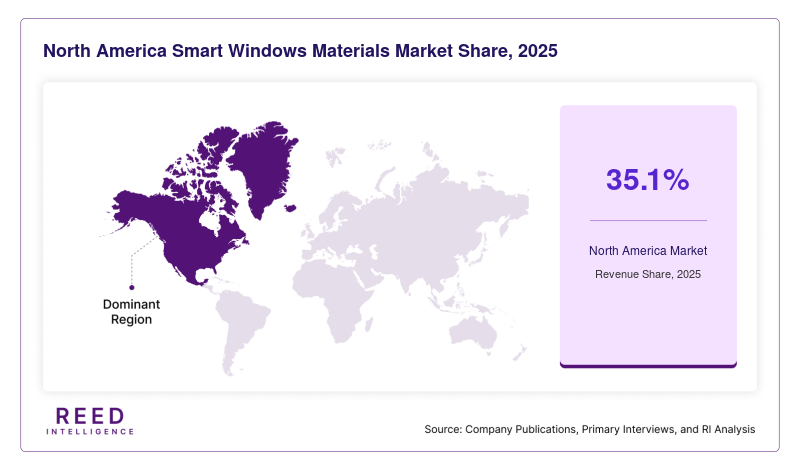
North America accounted for the largest share of the Smart Windows Materials Market in 2025, representing approximately 35.1% of global revenue. The region is projected to expand at a CAGR of 9.7% during the forecast period due to strong adoption of energy-efficient construction technologies and increasing investment in smart infrastructure. Commercial office spaces, healthcare facilities, and educational institutions are major consumers of electrochromic and thermochromic materials. Regulatory policies promoting sustainable buildings and carbon emission reduction are also encouraging wider adoption of intelligent glazing systems across the United States and Canada.
The United States remained the dominant country within the regional market due to the high concentration of smart building projects and advanced manufacturing capabilities. A major growth factor supporting the country’s expansion is the rising modernization of commercial infrastructure in urban areas. Real estate developers are increasingly incorporating smart glass materials into high-rise buildings and mixed-use developments to improve energy management and occupant comfort. Growing adoption of electric vehicles with smart glazing systems is also contributing to sustained market demand.
Europe
Europe held a significant share of the Smart Windows Materials Market in 2025 and is expected to witness steady growth at a CAGR of 9.4% through 2034. The region benefits from strong environmental regulations and widespread adoption of green construction standards. Countries across Western Europe are investing heavily in sustainable infrastructure projects that prioritize energy-efficient building materials. Commercial buildings and public infrastructure facilities are increasingly using electrochromic and liquid crystal technologies to reduce energy consumption and improve indoor comfort.
Germany emerged as the dominant country in the European market due to its advanced automotive manufacturing sector and strong focus on sustainable architecture. One unique growth factor supporting the country’s expansion is the integration of smart window technologies into premium automotive production. German automakers are increasingly incorporating adaptive glazing systems into luxury and electric vehicles to improve cabin efficiency and passenger experience. In addition, government support for energy-efficient retrofitting projects is encouraging broader use of intelligent window materials in commercial properties.
Asia Pacific
Asia Pacific is anticipated to record the fastest growth in the Smart Windows Materials Market, expanding at a CAGR of 11.8% from 2026 to 2034. The region is experiencing rapid urbanization, industrialization, and infrastructure development, particularly across China, India, Japan, and Southeast Asia. Rising investment in smart city projects and modern commercial buildings is significantly increasing demand for advanced glazing materials. Construction companies are adopting smart windows to improve building efficiency and align with evolving environmental regulations.
China dominated the regional market due to its large-scale construction activities and strong manufacturing ecosystem. A major growth factor supporting the country’s leadership is the rapid expansion of energy-efficient commercial real estate projects in urban centers. Government initiatives promoting green infrastructure and low-carbon construction are encouraging the adoption of smart glazing technologies in office buildings, airports, and transportation hubs. In addition, domestic manufacturers are investing in local production capabilities, helping reduce product costs and improve regional supply chain efficiency.
Middle East & Africa
The Middle East & Africa market is witnessing gradual expansion due to increasing investments in premium infrastructure and sustainable construction projects. The region is projected to grow at a CAGR of 9.1% during the forecast period as governments continue diversifying their economies through smart city initiatives and tourism-focused developments. Countries across the Gulf Cooperation Council are integrating advanced glazing technologies into hotels, airports, and commercial towers to improve indoor climate management in hot environmental conditions.
The United Arab Emirates remained the dominant country in the regional market because of extensive investment in luxury real estate and innovative urban development projects. A unique factor supporting growth is the high demand for temperature-control technologies in extreme climatic conditions. Smart windows help reduce solar heat gain and cooling costs, making them suitable for commercial and hospitality infrastructure. Mega projects focused on sustainable tourism and modern urban planning are expected to increase the adoption of smart window materials across the country.
Latin America
Latin America accounted for a moderate share of the Smart Windows Materials Market in 2025 and is forecast to grow at a CAGR of 8.8% through 2034. The region is gradually adopting energy-efficient construction practices, particularly in commercial and institutional infrastructure projects. Rising awareness regarding sustainable building technologies and increasing urbanization are supporting demand for smart glazing materials. Governments and private developers are investing in modern office complexes and public infrastructure that incorporate intelligent energy management systems.
Brazil emerged as the leading country in the regional market due to expanding construction activities and increasing investment in commercial real estate modernization. One important growth factor is the growing focus on reducing energy consumption in urban office buildings and retail centers. Developers are integrating smart windows into premium projects to improve thermal insulation and occupant comfort. In addition, the rising presence of multinational corporations in Brazil is encouraging the development of technologically advanced commercial facilities that support the use of adaptive glazing systems.
Competitive Landscape
The Smart Windows Materials Market is moderately consolidated, with several international and regional companies competing through product innovation, strategic partnerships, and expansion of manufacturing capabilities. Leading market participants are focusing on advanced electrochromic and suspended particle device technologies to strengthen their competitive positioning. Companies are also investing in research and development activities aimed at improving switching speed, durability, and energy performance while reducing production costs. Strategic collaborations with automotive manufacturers, construction firms, and smart building technology providers are becoming increasingly common.
Saint-Gobain maintained a leading position in the global market due to its extensive product portfolio, strong global distribution network, and focus on sustainable construction materials. The company continues to expand its smart glazing solutions for commercial and transportation applications. View Inc., AGC Inc., Gentex Corporation, and Research Frontiers are also among the key participants driving technological innovation within the industry. In 2025, AGC Inc. announced the expansion of its smart glass production facility in Asia to address rising regional demand for energy-efficient glazing materials. Several companies are additionally investing in nanotechnology-based coatings and automated smart window systems to improve long-term market competitiveness.
Key Players
- Saint-Gobain
- AGC Inc.
- View Inc.
- Gentex Corporation
- Research Frontiers Inc.
- PPG Industries Inc.
- Nippon Sheet Glass Co. Ltd.
- Corning Incorporated
- Polytronix Inc.
- Smartglass International Ltd.
- Gauzy Ltd.
- Pleotint LLC
- RavenWindow
- Kinestral Technologies Inc.
- Merck KGaA
Recent Developments
- In March 2026, View Inc. introduced an upgraded electrochromic smart glass platform designed to improve switching speed and reduce power consumption in commercial office buildings.
- In November 2025, Saint-Gobain announced a strategic partnership with a European construction technology company to integrate intelligent glazing systems into smart commercial infrastructure projects.
- In July 2025, Gentex Corporation expanded its automotive smart glazing production capacity in North America to support rising demand from electric vehicle manufacturers.
- In January 2026, Gauzy Ltd. launched a next-generation suspended particle device material aimed at luxury transportation and aerospace applications with enhanced light control capabilities.
- In September 2025, AGC Inc. invested in advanced nanocoating research to improve the durability and thermal performance of smart window materials used in high-rise commercial buildings.
Smart Windows Materials Market Segments
Material Type
- Electrochromic Materials
- Thermochromic Materials
- Photochromic Materials
- Suspended Particle Device Materials
- Liquid Crystal Materials
Application
- Commercial Buildings
- Residential Buildings
- Automotive
- Aerospace
- Marine Transportation
End Use
- Construction and Infrastructure
- Transportation
- Healthcare
- Industrial Facilities
- Hospitality and Retail
By Region
- North America
- Europe
- APAC
- Middle East and Africa
- LATAM