Sneaker Market Size, Share & Demand Report By Product Type (Lifestyle Sneakers, Performance Sneakers, Basketball Sneakers, Running Sneakers, Sustainable Sneakers), By Distribution Channel (Offline Retail Stores, Online Retail), By End User (Men, Women, Kids), By Region & Segment Forecasts, 2026–2034
USD 3950
Market Overview
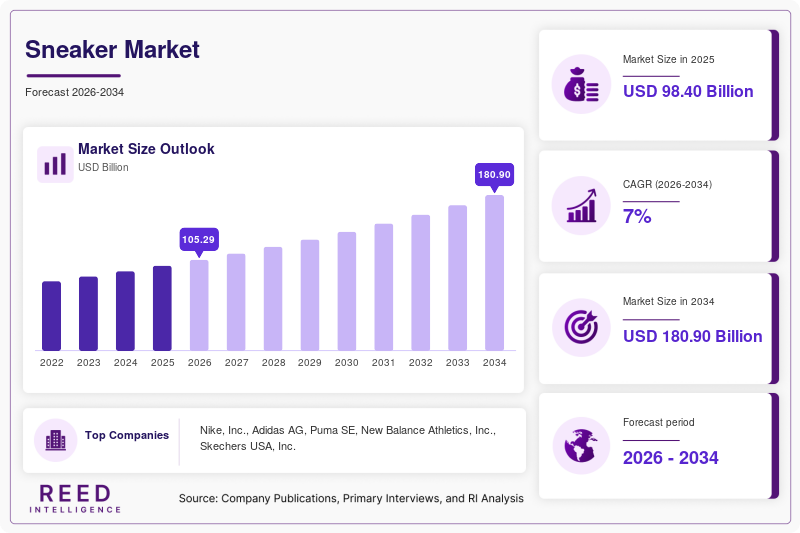
The global Sneaker Market size was valued at USD 98.4 billion in 2026 and is projected to reach USD 168.9 billion by 2034, expanding at a CAGR of 7.0% during 2026–2034. The market continues to evolve from a sports-focused footwear segment into a lifestyle-driven industry supported by fashion trends, celebrity endorsements, technological innovation, and growing consumer preference for comfort-oriented footwear. Sneakers have become an essential part of daily apparel across multiple age groups, creating sustained demand in developed and emerging economies.
One of the most significant factors supporting market expansion is the growing integration of athletic footwear into casual and professional lifestyles. Consumers increasingly prefer versatile footwear that combines comfort, durability, and style. The rise of athleisure fashion has encouraged sneaker adoption beyond sports activities, leading to broader usage across workplaces, educational institutions, travel, and social occasions. In addition, increasing urbanization and higher disposable incomes have encouraged consumers to purchase premium and limited-edition sneakers.
Key Highlights
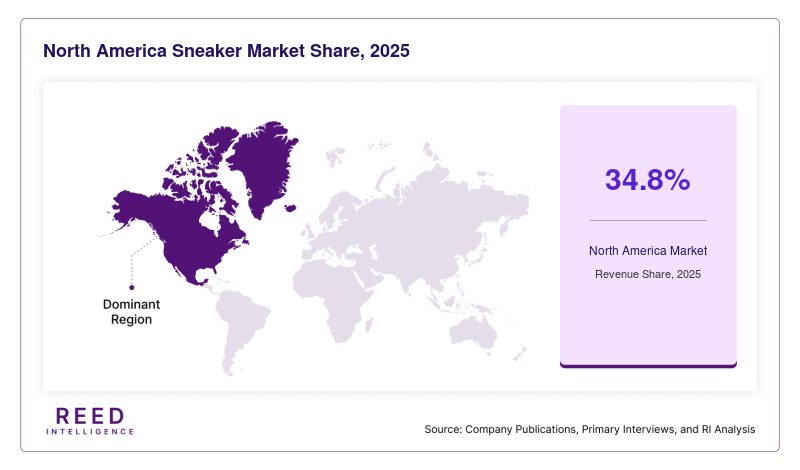
- North America dominated the market with a 34.8% share in 2025, while Asia Pacific is expected to grow at the fastest CAGR of 8.9% during 2026–2034.
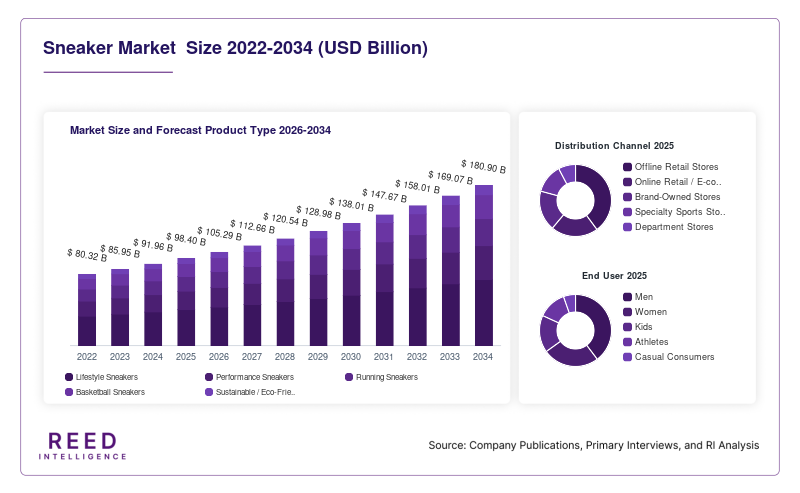
- By product type, Lifestyle Sneakers accounted for the largest share of 44.3%, while Sustainable Sneakers are projected to grow at a CAGR of 10.2%.
- By distribution channel, Offline Retail Stores held the largest share of 58.7%, whereas Online Retail is expected to expand at a CAGR of 11.4%.
- By end user, Men represented the leading share of 47.9%, while the Women segment is projected to grow at a CAGR of 8.8%.
- The United States remained the dominant country, with market values of USD 18.9 billion in 2024 and USD 20.1 billion in 2025.
Market Trends
Growing Demand for Sustainable and Eco-Friendly Sneakers
Sustainability has emerged as a major trend shaping the Sneaker Market. Consumers are becoming increasingly aware of environmental issues associated with footwear manufacturing, including carbon emissions, waste generation, and excessive resource consumption. As a result, brands are introducing sneakers made from recycled plastics, organic cotton, plant-based materials, and biodegradable components. Sustainability-focused collections are gaining strong traction among younger consumers who prioritize environmentally responsible purchasing decisions. Companies are also adopting circular economy initiatives, including recycling programs and take-back schemes, to strengthen environmental commitments. This trend is expected to influence product innovation strategies and marketing campaigns throughout the forecast period, creating a competitive advantage for brands that successfully integrate sustainability into their operations.
Expansion of Digital Commerce and Sneaker Customization
Digital transformation continues to reshape consumer purchasing behavior across the global sneaker industry. Online platforms enable customers to access a broader range of products, compare prices, participate in exclusive launches, and purchase limited-edition collections. In addition, customization technologies are gaining popularity as consumers seek personalized footwear designs that reflect individual preferences. Brands are investing in artificial intelligence, augmented reality fitting tools, and interactive customization platforms that allow users to select materials, colors, and design elements. Social commerce and influencer marketing further enhance online engagement and product visibility. The increasing integration of technology into retail experiences is strengthening customer relationships while expanding global market reach.
Market Drivers
Rising Popularity of Athleisure Fashion
The growing popularity of athleisure fashion remains a major driver of the Sneaker Market. Consumers increasingly prefer clothing and footwear that provide comfort while maintaining a stylish appearance. Sneakers have become a central component of everyday fashion, transcending their traditional role as sports footwear. This trend is particularly visible among urban populations, younger consumers, and working professionals seeking versatile footwear options. Fashion brands and sportswear manufacturers are responding through collaborations, limited-edition releases, and innovative designs that appeal to lifestyle-oriented buyers. The expanding influence of social media and celebrity endorsements further accelerates sneaker adoption, contributing to steady market growth across multiple regions.
Continuous Product Innovation and Performance Enhancement
Advancements in footwear technology continue to drive consumer interest and replacement demand. Manufacturers are introducing lightweight materials, enhanced cushioning systems, breathable fabrics, and performance-focused features designed to improve comfort and durability. These innovations appeal to both athletic and non-athletic consumers seeking superior footwear experiences. Research and development investments have enabled brands to create products that combine performance functionality with fashion aesthetics. Smart manufacturing techniques, digital design tools, and advanced material engineering are also reducing production inefficiencies while supporting product differentiation. Continuous innovation encourages repeat purchases and strengthens brand competitiveness within the global sneaker industry.
Market Restraint
Volatility in Raw Material Costs and Supply Chain Challenges
The Sneaker Market faces challenges related to fluctuating raw material prices and complex global supply chains. Manufacturing sneakers requires various materials, including rubber, synthetic fabrics, foam compounds, leather alternatives, and specialized textiles. Price fluctuations in these materials can significantly impact production costs and profit margins. Supply chain disruptions caused by geopolitical tensions, transportation constraints, labor shortages, and trade regulations can further affect inventory availability and delivery schedules. Smaller manufacturers are particularly vulnerable because they often have limited bargaining power and supplier diversification. For example, delays in sourcing performance materials or shipping finished products can lead to product shortages during peak demand periods. These challenges may limit operational efficiency and create uncertainty for market participants despite strong long-term demand fundamentals.
Market Opportunities
Emerging Consumer Demand Across Developing Economies
Developing economies present substantial growth opportunities for sneaker manufacturers. Rising disposable incomes, expanding middle-class populations, and increasing urbanization are encouraging consumers to spend more on branded footwear. Countries across Asia Pacific, Latin America, and parts of Africa are witnessing growing interest in global fashion trends and athletic lifestyles. Retail infrastructure improvements and broader internet access are making premium sneaker products more accessible to consumers in these regions. International brands are expanding local operations, establishing regional partnerships, and introducing market-specific product portfolios. These developments create significant opportunities for revenue expansion and long-term market penetration.
Growth of Direct-to-Consumer Business Models
Direct-to-consumer sales channels represent another important opportunity within the Sneaker Market. Brands increasingly seek stronger relationships with customers by reducing reliance on third-party retailers and utilizing proprietary online platforms. Direct engagement enables manufacturers to collect valuable consumer data, improve marketing effectiveness, and enhance customer experiences through personalized recommendations. Direct-to-consumer strategies also provide greater control over pricing, inventory management, and product launches. Exclusive releases, membership programs, and digital communities further strengthen consumer loyalty. As digital adoption continues to increase globally, direct sales channels are expected to generate substantial growth opportunities for both established brands and emerging market entrants.
Segmental Analysis
By Product Type
Lifestyle Sneakers emerged as the dominant product type, accounting for approximately 44.3% of market revenue in 2024. These products benefit from widespread adoption among consumers seeking versatile footwear suitable for daily activities, travel, and casual wear. Lifestyle sneakers have successfully expanded beyond traditional athletic applications, becoming an essential component of modern fashion trends. Manufacturers continue introducing innovative designs, premium materials, and celebrity collaborations that enhance consumer appeal. Strong demand among younger demographics and working professionals has contributed significantly to segment growth. The integration of comfort-focused technologies and fashionable aesthetics further strengthens the position of lifestyle sneakers within the global market.
Sustainable Sneakers represent the fastest-growing product type and are projected to expand at a CAGR of 10.2% through 2034. Growth is supported by increasing environmental awareness and consumer demand for responsible products. Manufacturers are incorporating recycled materials, renewable resources, and low-impact production methods to reduce environmental footprints. Regulatory pressure and corporate sustainability commitments are also encouraging investment in eco-friendly footwear solutions. Consumers increasingly evaluate products based on environmental credentials alongside performance and style considerations. As sustainability becomes a mainstream purchasing factor, this segment is expected to achieve substantial growth throughout the forecast period.
By Distribution Channel
Offline Retail Stores accounted for the largest market share of approximately 58.7% in 2024. Physical stores continue to play an important role because many consumers prefer trying footwear before purchase to assess comfort, fit, and design. Brand-owned outlets, department stores, specialty footwear retailers, and sportswear stores contribute significantly to market revenue. Retail environments also provide opportunities for experiential marketing and direct customer engagement. Premium sneaker launches and exclusive in-store events further strengthen consumer interest. Despite increasing online adoption, physical retail channels remain highly relevant due to their ability to deliver personalized shopping experiences and immediate product availability.
Online Retail is projected to register the fastest CAGR of 11.4% during the forecast period. Growth is driven by increasing internet penetration, smartphone usage, and consumer preference for convenient purchasing options. Digital platforms offer broader product selections, competitive pricing, and access to exclusive releases that attract sneaker enthusiasts worldwide. Advanced recommendation systems, virtual fitting technologies, and streamlined logistics have improved customer satisfaction. Brands are increasingly prioritizing direct-to-consumer digital strategies to strengthen profitability and customer relationships. The continued evolution of e-commerce infrastructure is expected to accelerate segment growth significantly.
By End User
Men represented the dominant end-user segment, capturing approximately 47.9% of global revenue in 2024. The segment benefits from strong demand for athletic, casual, and premium sneaker products across multiple age groups. Men frequently participate in sports activities, fitness programs, and sneaker collecting communities, contributing to high purchase volumes. Manufacturers actively target this consumer base through athlete endorsements, performance-oriented innovations, and limited-edition product launches. Strong engagement with sports culture and lifestyle fashion trends continues to support sustained segment leadership. Furthermore, premium sneaker demand remains particularly strong among male consumers in developed markets.
Women constitute the fastest-growing end-user segment and are expected to expand at a CAGR of 8.8% through 2034. Increasing female participation in sports, fitness activities, and lifestyle fashion trends supports rising sneaker consumption. Brands are expanding product portfolios to include designs specifically tailored to women's preferences regarding comfort, aesthetics, and performance. Marketing campaigns emphasizing inclusivity and empowerment have strengthened consumer engagement. Growing demand for athleisure apparel and fashion-forward footwear solutions further supports segment growth. As purchasing power and brand awareness continue to increase, the women's segment is expected to create substantial opportunities for manufacturers worldwide.
Regional Analysis
North America
North America accounted for approximately 34.8% of the global Sneaker Market in 2025, making it the leading regional market. The region benefits from strong consumer purchasing power, high sneaker adoption rates, and significant brand presence. Demand remains robust across lifestyle, athletic, and premium sneaker categories. Market participants continue investing in innovative product launches and digital retail capabilities. The regional market is expected to register a CAGR of 6.5% through 2034, supported by strong consumer engagement and continued product innovation.
The United States remains the dominant country within North America. A key growth factor is the strong influence of sneaker culture and collector communities that drive demand for limited-edition releases and premium products. Celebrity collaborations, sports partnerships, and social media campaigns continue to shape consumer purchasing behavior. High participation in fitness activities and strong e-commerce penetration further contribute to sustained market growth across the country.
Europe
Europe represented approximately 26.1% of the global market in 2025 and continues to be a significant contributor to industry revenue. The region benefits from strong fashion awareness, premium product demand, and increasing consumer preference for sustainable footwear solutions. Major urban centers support high sneaker consumption among younger demographics. The European market is projected to grow at a CAGR of 6.8% during the forecast period due to ongoing product innovation and retail modernization initiatives.
Germany remains the dominant country in the European sneaker industry. A unique growth factor is the strong consumer focus on environmentally responsible products. Demand for recycled materials, sustainable manufacturing processes, and transparent supply chains continues to rise. Leading brands are responding through eco-friendly product lines and sustainability-focused marketing strategies, helping strengthen regional market growth and consumer engagement.
Asia Pacific
Asia Pacific held approximately 24.3% of global market revenue in 2025 and is expected to register the fastest CAGR of 8.9% through 2034. Rapid urbanization, growing disposable incomes, and expanding digital retail infrastructure support market expansion across the region. Increasing participation in sports activities and strong demand for lifestyle footwear contribute to rising sneaker consumption. International and domestic brands are actively investing in distribution networks and localized product offerings to capture emerging opportunities.
China dominates the Asia Pacific Sneaker Market due to its large consumer base and expanding middle-class population. A unique growth factor is the widespread adoption of digital commerce platforms that facilitate convenient purchasing experiences and nationwide product accessibility. Social commerce, live-stream shopping, and influencer-driven marketing campaigns play significant roles in shaping consumer preferences and accelerating market growth throughout the country.
Middle East & Africa
The Middle East & Africa region accounted for approximately 7.1% of the global market in 2025. Although relatively smaller than other regions, demand continues to increase due to changing fashion preferences and growing awareness of global footwear trends. Urban development and retail expansion support market penetration across major cities. The regional market is anticipated to grow at a CAGR of 7.2% during the forecast period as consumer spending on lifestyle products gradually increases.
Saudi Arabia represents the dominant market within the region. A distinctive growth factor is the increasing popularity of sports participation and fitness-focused lifestyles. Government initiatives encouraging physical activity and wellness have contributed to rising demand for athletic and lifestyle sneakers. Growing retail investments and international brand expansion further strengthen the country's position within the regional market.
Latin America
Latin America captured approximately 7.7% of global sneaker revenue in 2025 and continues to demonstrate stable growth potential. Rising urban populations, increasing brand awareness, and improving retail accessibility support market development. Consumers are showing greater interest in fashionable and performance-oriented footwear products. The regional market is forecast to expand at a CAGR of 7.4% between 2026 and 2034, driven by evolving consumer lifestyles and digital commerce growth.
Brazil remains the dominant country in the Latin American market. A unique growth factor is the country's strong sports culture and widespread participation in recreational activities. Consumers increasingly seek footwear products that combine athletic functionality with modern design. Expanding online retail channels and increasing exposure to international fashion trends continue to support market growth throughout Brazil.
Competitive Landscape
The global Sneaker Market is characterized by intense competition among established sportswear brands, lifestyle footwear companies, and emerging direct-to-consumer players. Market participants focus on product innovation, sustainability initiatives, celebrity partnerships, and digital commerce strategies to strengthen competitive positioning. Companies are increasingly investing in advanced manufacturing technologies, personalized shopping experiences, and exclusive product launches to enhance consumer engagement.
Nike remains the market leader due to its extensive product portfolio, strong brand recognition, and global distribution network. The company recently expanded its sustainability-focused footwear offerings through new recycled-material product lines. Other leading competitors continue to pursue strategic collaborations with athletes, designers, and entertainment personalities to increase brand visibility and demand. Competitive differentiation increasingly depends on innovation, sustainability performance, and direct consumer relationships. As consumer expectations evolve, companies are expected to intensify investments in technology-driven retail experiences and environmentally responsible production methods.
Key Players
- Nike, Inc.
- Adidas AG
- Puma SE
- New Balance Athletics, Inc.
- Skechers USA, Inc.
- ASICS Corporation
- Under Armour, Inc.
- Converse Inc.
- Vans
- Reebok International Ltd.
- Fila Holdings Corp.
- Li Ning Company Limited
- Anta Sports Products Limited
- On Holding AG
- Hoka
Recent Developments
- In 2025, Nike expanded its sustainable manufacturing initiatives by increasing the use of recycled polyester and bio-based materials across multiple sneaker production lines to reduce environmental impact and strengthen its circular design strategy.
- In 2025, Adidas enhanced its digital direct-to-consumer platform by integrating AI-driven personalization and virtual try-on features, improving online sneaker shopping experiences and boosting customer engagement globally.
- In 2024, Puma launched a strategic collaboration with global fashion influencers and designers to introduce limited-edition sneaker collections targeting younger demographics and expanding its lifestyle footwear portfolio.
- In 2024, New Balance increased investments in regional manufacturing and supply chain diversification to improve production efficiency, reduce lead times, and strengthen product availability across key markets.
- In 2025, Skechers introduced upgraded cushioning and performance-enhancing midsole technologies across its lifestyle and athletic sneaker ranges, aiming to improve comfort and support for everyday consumers and athletes.
Sneaker Market Segments
Product Type
- Lifestyle Sneakers
- Performance Sneakers
- Running Sneakers
- Basketball Sneakers
- Sustainable / Eco-Friendly Sneakers
Distribution Channel
- Offline Retail Stores
- Online Retail / E-commerce
- Brand-Owned Stores
- Specialty Sports Stores
- Department Stores
End User
- Men
- Women
- Kids
- Athletes
- Casual Consumers
Price Range
- Economy
- Mid-Range
- Premium
- Luxury / Limited Edition
By Region
- North America
- Europe
- APAC
- Middle East and Africa
- LATAM