Snow Scooter Market Size, Share & Demand Report By Type (Recreational Snow Scooters, Electric Snow Scooters, Professional Snow Scooters), By Application (Tourism & Rental Services, Personal Use, Sports & Competition), By Material (Aluminum, Steel, Composite Materials), By Distribution Channel (Online, Offline) By Region & Segment Forecasts, 2025–2034
USD 3950
Market Overview
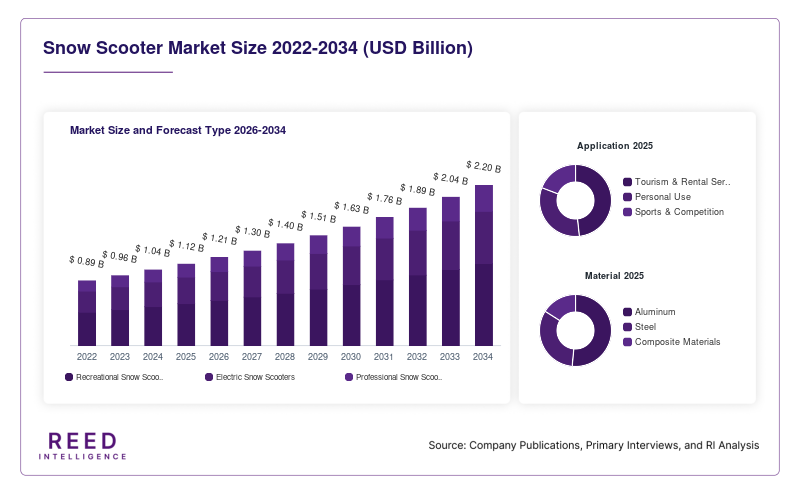
The global Snow Scooter Market size was valued at approximately USD 1.12 billion in 2025 and is projected to reach USD 2.18 billion by 2034, expanding at a CAGR of 7.8% during the forecast period (2025–2034). The market has experienced steady growth due to increasing participation in winter recreational activities and rising consumer preference for lightweight, cost-effective alternatives to traditional snowmobiles. Snow scooters offer a unique blend of accessibility, affordability, and ease of use, making them popular among both beginners and experienced riders.
A key global factor supporting market growth is the expansion of winter tourism infrastructure across major cold-climate destinations. Governments and private stakeholders are investing in ski resorts, snow parks, and adventure tourism facilities, which has increased the adoption of snow scooters as a recreational and rental product. Additionally, product innovations such as foldable designs, electric-powered variants, and improved suspension systems have enhanced user experience and broadened consumer appeal.
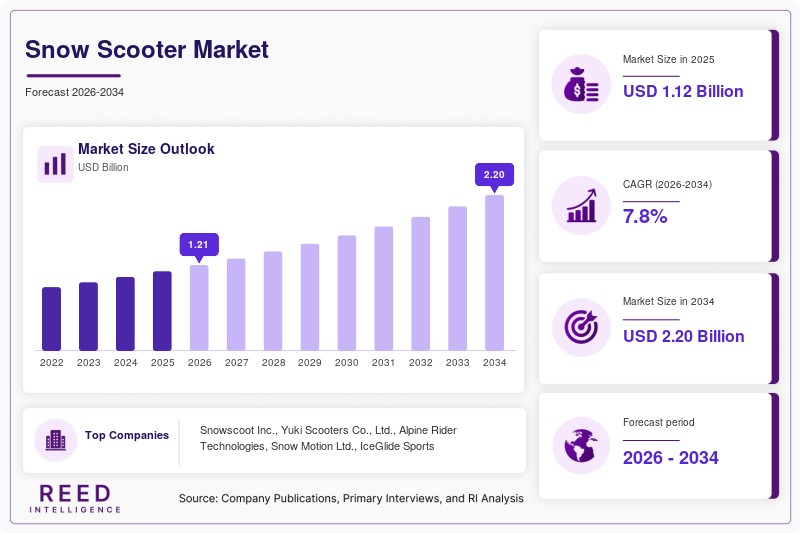
Key Highlights
- Europe dominated the market with a 38.6% share in 2025, while Asia Pacific is expected to grow at the fastest CAGR of 9.4% through 2034.
- In the type segment, recreational snow scooters led with a 54.2% share, while electric snow scooters are projected to grow fastest at a CAGR of 10.1%.
- By application, tourism and rental services held the largest share, whereas personal use is expected to grow at a CAGR of 8.6%.
- The United States accounted for USD 312 million in 2025 and is estimated to reach USD 335 million in 2026.
Market Trends
Rising Adoption of Electric Snow Scooters
The shift toward sustainable mobility has influenced the Snow Scooter Market significantly. Manufacturers are increasingly introducing electric snow scooters equipped with lithium-ion batteries and efficient motor systems. These models reduce noise pollution and emissions, aligning with environmental regulations in ski resorts and protected landscapes. As a result, electric variants are gaining traction among eco-conscious consumers and rental operators.
Integration of Lightweight and Foldable Designs
Design innovation is a prominent trend shaping the Snow Scooter Market. Companies are focusing on lightweight materials such as aluminum alloys and reinforced polymers to enhance portability. Foldable snow scooters are becoming popular, particularly among travelers who seek compact equipment for easy transportation. This trend is also driving demand in urban markets where storage space is limited.
Market Drivers
Growth in Winter Adventure Tourism
The increasing popularity of winter sports and adventure tourism has been a primary driver for the Snow Scooter Market. Tourists are seeking diverse and engaging experiences beyond skiing and snowboarding. Snow scooters provide a user-friendly alternative that requires minimal training, making them accessible to a wider demographic. This growing demand has encouraged resorts to include snow scooter rentals in their offerings.
Cost Efficiency Compared to Snowmobiles
Snow scooters are significantly more affordable than traditional snowmobiles, both in terms of initial cost and maintenance. This affordability makes them an attractive option for individuals and small rental businesses. Lower fuel consumption and simplified mechanical components further enhance their appeal, contributing to steady market growth.
Market Restraint
Seasonal Dependency and Limited Usage Duration
A major challenge for the Snow Scooter Market is its strong dependence on seasonal snowfall. Demand is largely concentrated in winter months, limiting year-round revenue generation for manufacturers and rental operators. Regions with inconsistent snowfall patterns face fluctuating demand, which affects inventory planning and profitability. Additionally, climate change and rising global temperatures are reducing the duration of snow seasons in some areas, further constraining market expansion.
Market Opportunities
Expansion into Emerging Winter Tourism Destinations
Emerging economies are investing in winter tourism infrastructure, creating new opportunities for the Snow Scooter Market. Countries in Asia Pacific and Eastern Europe are developing ski resorts and snow parks, which will increase demand for recreational equipment. Market players can capitalize on these developments by establishing distribution networks and partnerships with local operators.
Product Innovation and Customization
There is growing demand for customized snow scooters tailored to specific user needs, such as children, professional riders, and extreme sports enthusiasts. Innovations in materials, suspension systems, and digital integration (e.g., GPS tracking) present opportunities for differentiation. Manufacturers focusing on product diversification are likely to gain a competitive edge in the evolving market landscape.
Segmental Analysis
By Type
Recreational snow scooters dominated the Snow Scooter Market in 2025, accounting for 54.2% of the total share. Their popularity was driven by ease of use and suitability for casual riders. These scooters are widely used in tourism settings and rental services, contributing to their dominant position.
Electric snow scooters are expected to grow at the fastest CAGR of 10.1% during the forecast period. The increasing focus on sustainability and technological advancements in battery systems will drive their adoption. Enhanced performance and reduced environmental impact will further support growth.
By Application
Tourism and rental services held the largest share of 48.7% in 2025. The widespread availability of snow scooter rentals at ski resorts and tourist destinations contributed to this dominance. Rental operators benefit from the affordability and low maintenance of snow scooters.
Personal use is projected to grow at a CAGR of 8.6%. Rising disposable income and interest in recreational activities will encourage individual ownership. Consumers are increasingly investing in personal snow scooters for convenience and flexibility.
By Material
Aluminum-based snow scooters dominated the market with a 46.3% share in 2025. Their lightweight nature and durability make them ideal for recreational use. Manufacturers prefer aluminum for its balance of strength and cost efficiency.
Composite materials are expected to grow at a CAGR of 9.2%. These materials offer improved strength-to-weight ratios and enhanced performance. Their adoption will increase as manufacturers focus on innovation and product differentiation.
By Distribution Channel
Offline channels accounted for 62.5% of the market share in 2025. Specialty sports stores and retail outlets played a significant role in product sales, offering customers the advantage of physical inspection and expert guidance.
Online channels are anticipated to grow at a CAGR of 9.8%. The expansion of e-commerce platforms and increasing consumer preference for convenient shopping will drive this growth. Competitive pricing and wider product availability will further boost online sales.
Regional Analysis
North America
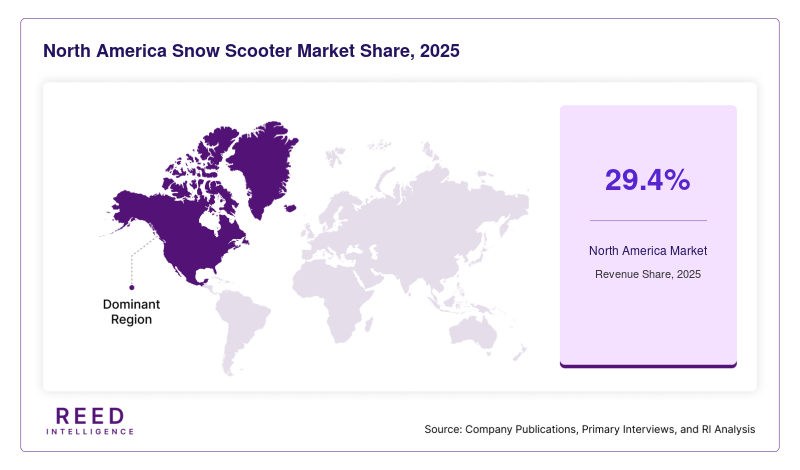
North America accounted for 29.4% of the Snow Scooter Market share in 2025 and is expected to grow at a CAGR of 7.2% during the forecast period. The region’s established winter sports culture and well-developed tourism infrastructure contributed to its strong market position.
The United States dominated the regional market due to high consumer spending on recreational activities. The presence of extensive ski resorts and snow parks has supported the adoption of snow scooters, particularly in rental applications.
Europe
Europe held the largest share of 38.6% in 2025 and is projected to grow at a CAGR of 7.5% through 2034. The region’s dominance is attributed to its strong winter tourism industry and favorable climatic conditions.
Germany emerged as a key contributor, driven by increasing participation in outdoor recreational activities. The country’s focus on eco-friendly transportation solutions has also encouraged the adoption of electric snow scooters.
Asia Pacific
Asia Pacific captured 18.7% of the market share in 2025 and is anticipated to grow at the fastest CAGR of 9.4%. Rapid development of winter tourism infrastructure has been a key factor driving growth in the region.
China led the regional market due to significant investments in ski resorts and winter sports facilities. The government’s initiatives to promote winter sports have increased consumer awareness and adoption of snow scooters.
Middle East & Africa
The Middle East & Africa region held a smaller share of 6.1% in 2025 and is expected to grow at a CAGR of 6.8%. Growth is primarily driven by the development of artificial snow parks and indoor skiing facilities.
The United Arab Emirates dominated the regional market, supported by innovative indoor winter tourism projects. These facilities have created niche demand for snow scooters despite the region’s warm climate.
Latin America
Latin America accounted for 7.2% of the market share in 2025 and is projected to grow at a CAGR of 7.0%. The region’s growth is supported by increasing tourism in mountainous areas.
Chile emerged as the leading country due to its well-known ski resorts and favorable geographical conditions. The growing popularity of winter sports among tourists has boosted demand for snow scooters.
Competitive Landscape
The Snow Scooter Market is moderately fragmented, with several regional and global players competing based on product innovation and pricing strategies. Companies are focusing on expanding their product portfolios and enhancing distribution networks to strengthen their market presence.
Snowscoot Inc. is considered a market leader due to its extensive product range and strong brand recognition. The company recently introduced a new line of electric snow scooters with improved battery performance, targeting environmentally conscious consumers.
Other key players are investing in research and development to introduce advanced designs and materials. Strategic collaborations with ski resorts and rental operators are also common, enabling companies to expand their customer base and increase market penetration.
Key Players List
- Snowscoot Inc.
- Yuki Scooters Co., Ltd.
- Alpine Rider Technologies
- Snow Motion Ltd.
- IceGlide Sports
- Blizzard Mobility Inc.
- WinterRide Equipment
- FrostEdge Innovations
- Polar Motion Gear
- Glacier Scoot Corp.
- Nordic Ride Systems
- Summit Snow Scooters
- Arctic Glide Ltd.
- SnowRush Industries
- Peak Mobility Solutions
Recent Developments
- In 2024, Snowscoot Inc. launched an advanced electric snow scooter with extended battery life and fast-charging capability.
- In 2023, Alpine Rider Technologies partnered with ski resorts to expand rental services across Europe.
- In 2024, FrostEdge Innovations introduced a foldable snow scooter model targeting urban consumers.
- In 2023, Glacier Scoot Corp. expanded its distribution network in Asia Pacific to tap into emerging markets.
- In 2024, Nordic Ride Systems developed a high-performance model designed for competitive sports applications.
Snow Scooter Market Segments
Type
- Recreational Snow Scooters
- Electric Snow Scooters
- Professional Snow Scooters
Application
- Tourism & Rental Services
- Personal Use
- Sports & Competition
Material
- Aluminum
- Steel
- Composite Materials
Distribution Channel
- Online Retail
- Specialty Sports Stores
- Department Stores
- Outdoor Equipment Retailers
- Direct Sales & Rental Operators
By Region
- North America
- Europe
- APAC
- Middle East and Africa
- LATAM