Snow Shoes Market Size, Share & Demand Report By Type (Recreational Snow Shoes, Performance Snow Shoes), By Application (Recreational Use, Professional Use), By Distribution Channel (Online Retail, Offline Retail), By Region & Segment Forecasts, 2025–2034
USD 3950
Market Overview
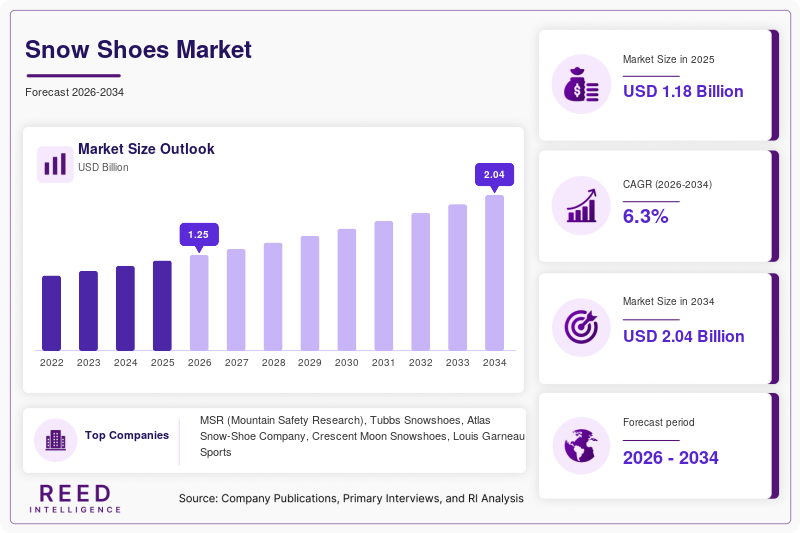
The global Snow Shoes Market size was estimated at USD 1.18 billion in 2025 and is projected to reach USD 1.26 billion in 2026, with expectations to grow significantly to USD 2.05 billion by 2034, registering a compound annual growth rate (CAGR) of 6.3% from 2025 to 2034. This growth reflects a combination of lifestyle changes, tourism trends, and product innovation within the snow sports equipment industry.
One of the primary growth factors is the increasing popularity of winter tourism in regions with established snow-covered landscapes. Countries across North America and Europe are seeing higher tourist inflows, which directly boosts demand for snow shoes as essential gear for trekking and exploration. Additionally, the rise in eco-tourism has contributed to the market, as snowshoeing is considered a low-impact activity compared to other winter sports.
Key Highlights
- The market size is projected to reach USD 2.05 billion by 2034, reflecting steady expansion across global regions. This growth is supported by increasing consumer interest in winter recreational equipment and improved product availability.
- The market is expected to register a CAGR of 6.3% from 2025 to 2034, indicating consistent long-term growth. Stable demand patterns and expanding participation in snow-based activities are contributing to this upward trend.
- Rising winter tourism is significantly driving product demand, particularly in regions with established snow destinations. Increased travel spending and organized adventure packages are further supporting market expansion.
- The growing adoption of outdoor fitness activities is encouraging consumers to engage in snowshoeing as a health-focused exercise. This shift toward active lifestyles is boosting demand across both recreational and professional segments.
Market Trends
Growing Preference for Lightweight and Ergonomic Snow Shoes
Consumers are increasingly favoring lightweight snow shoes that offer better mobility and reduced fatigue during long treks. Manufacturers are incorporating advanced materials such as aluminum alloys and composite plastics to reduce weight without compromising durability. Ergonomic binding systems and improved traction designs are also gaining traction among users. This trend is particularly evident among recreational users who prioritize comfort and ease of use over heavy-duty performance. Additionally, product customization, including adjustable sizing and modular components, is becoming more common. These developments reflect a broader industry shift toward user-centric design, enhancing overall satisfaction and encouraging repeat purchases.
Expansion of Rental and Experience-Based Services
The Snow Shoes Market is witnessing a shift toward rental-based and experience-driven business models. Tourism operators and adventure companies are offering snowshoeing packages that include equipment rentals, guided tours, and safety training. This trend is especially prominent in popular winter destinations where tourists prefer short-term access rather than ownership. Rental services reduce the entry barrier for new users and contribute to market growth by increasing overall participation. Furthermore, digital booking platforms are simplifying access to these services, enabling consumers to plan activities seamlessly. This trend is expected to strengthen as experiential travel continues to gain importance globally.
Market Drivers
Rising Participation in Winter Outdoor Activities
The increasing popularity of winter outdoor activities is a major driver of the Snow Shoes Market. Snowshoeing is gaining recognition as an accessible and low-skill sport, making it appealing to a wide demographic. Unlike skiing or snowboarding, it requires minimal training and equipment, which encourages first-time participants. Governments and tourism boards are also promoting winter sports through infrastructure development and marketing campaigns. These initiatives are expanding the reach of snowshoeing activities and driving demand for related equipment. Additionally, social media influence and outdoor lifestyle trends are motivating individuals to explore winter landscapes, further boosting market growth.
Growth in Adventure Tourism Industry
The expansion of the global adventure tourism sector is significantly impacting the Snow Shoes Market. Travelers are increasingly seeking unique and immersive experiences, including snowshoe trekking in remote and scenic locations. Tour operators are integrating snowshoeing into their offerings, which drives equipment demand. The availability of guided tours and safety measures enhances consumer confidence, encouraging participation. Moreover, the rise in disposable income in emerging economies is enabling more individuals to engage in adventure travel. This driver is expected to sustain long-term growth as tourism continues to evolve toward experience-based activities.
Market Restraint
Seasonal Dependency and Climate Variability
A key restraint in the Snow Shoes Market is its strong dependence on seasonal conditions and climate patterns. Snowshoeing requires consistent snowfall, limiting its applicability to specific geographic regions and time periods. Unpredictable weather conditions, including reduced snowfall due to climate change, can significantly impact demand. For instance, regions experiencing shorter winter seasons may see reduced participation in snowshoeing activities, directly affecting equipment sales. This variability creates challenges for manufacturers in managing inventory and forecasting demand. Additionally, businesses relying on winter tourism may face revenue fluctuations, which can hinder long-term investments in the market. Despite these challenges, companies are exploring diversification strategies to mitigate seasonal risks.
Market Opportunities
Expansion into Emerging Markets
Emerging markets present significant growth opportunities for the Snow Shoes Market. Countries in Asia Pacific and Latin America are gradually developing winter tourism infrastructure, creating new demand for snow sports equipment. Increasing urbanization and rising disposable incomes are enabling consumers to explore recreational activities previously limited to developed regions. Manufacturers can capitalize on this opportunity by introducing affordable and entry-level products tailored to new users. Strategic partnerships with tourism operators and local distributors can further enhance market penetration. As awareness of snowshoeing grows, these regions are expected to contribute substantially to future market expansion.
Product Innovation and Sustainability Initiatives
Innovation in sustainable materials and eco-friendly manufacturing processes offers a promising opportunity for market players. Consumers are becoming more environmentally conscious and prefer products with minimal ecological impact. Companies are exploring recyclable materials, biodegradable components, and energy-efficient production methods to meet this demand. Additionally, integrating smart features such as GPS tracking and performance monitoring can differentiate products in a competitive market. These innovations not only attract environmentally aware consumers but also enhance brand reputation. As sustainability becomes a key purchasing criterion, companies investing in green technologies are likely to gain a competitive advantage.
Segmental Analysis
By Type
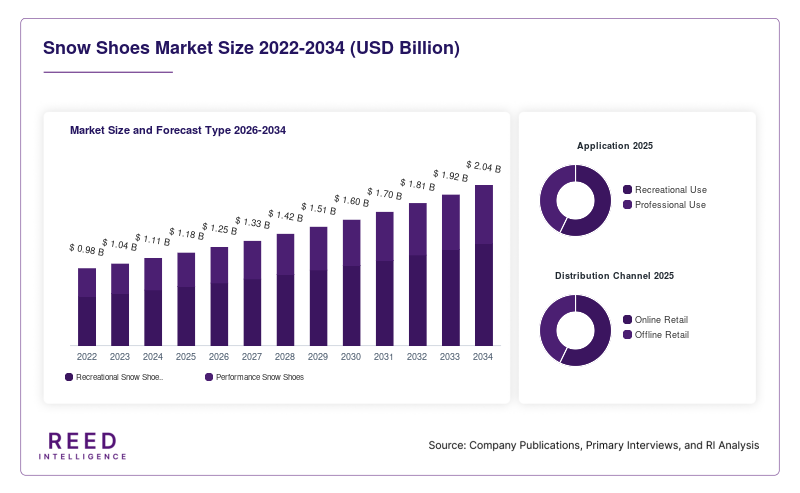
The recreational snow shoes segment dominated the market in 2024, accounting for approximately 52% of total share. These products are widely used by beginners and casual users due to their affordability and ease of use. Recreational snow shoes are designed for moderate terrain and shorter durations, making them ideal for leisure activities. The growing popularity of outdoor recreation and family-friendly winter activities is driving demand for this segment. Additionally, manufacturers are focusing on lightweight designs and user-friendly features to enhance accessibility. This dominance is expected to continue as more consumers engage in snowshoeing as a recreational activity.
The performance snow shoes segment is projected to be the fastest-growing, with a CAGR of 7.1% during the forecast period. These products are designed for advanced users and challenging terrains, offering enhanced traction and durability. The growth of this segment is driven by increasing participation in adventure sports and professional trekking activities. Consumers seeking high-performance gear are willing to invest in premium products, supporting revenue growth. Technological advancements, including improved binding systems and materials, are further boosting adoption. This segment is expected to gain traction among experienced users and enthusiasts.
By Application
The recreational use segment held the largest market share in 2024, contributing around 60% of total revenue. This segment includes casual users participating in snowshoeing for leisure and fitness purposes. The increasing emphasis on outdoor wellness and family-oriented activities is driving demand. Recreational applications benefit from lower entry barriers, making snowshoeing accessible to a broad audience. Manufacturers are targeting this segment with affordable and easy-to-use products, further supporting its dominance. The segment’s growth is also influenced by tourism activities and guided tours.
The professional use segment is expected to grow at the highest CAGR of 6.8% during the forecast period. This includes applications in rescue operations, military training, and professional trekking. The need for reliable and durable equipment in challenging environments is driving demand. Governments and organizations are investing in specialized gear to ensure safety and efficiency. Additionally, the expansion of adventure tourism is increasing the use of professional-grade snow shoes. This segment is likely to witness steady growth due to its critical applications and technological advancements.
By Distribution Channel
The offline retail segment dominated the market in 2024, accounting for approximately 55% of total share. Physical stores allow consumers to assess product quality and fit before purchase, which is crucial for snow shoes. Specialty sports stores and outdoor equipment retailers play a significant role in this segment. The presence of knowledgeable staff and personalized services enhances the shopping experience. Despite the growth of e-commerce, offline channels remain preferred for high-involvement purchases. This segment continues to benefit from strong consumer trust and established retail networks.
The online retail segment is projected to grow at the fastest CAGR of 7.5% during the forecast period. The convenience of online shopping and availability of a wide product range are key growth drivers. E-commerce platforms offer competitive pricing and detailed product information, attracting tech-savvy consumers. The increasing penetration of smartphones and internet connectivity is further supporting this trend. Additionally, direct-to-consumer strategies by manufacturers are boosting online sales. This segment is expected to gain significant traction as digital adoption continues to rise globally.
Regional Analysis
North America
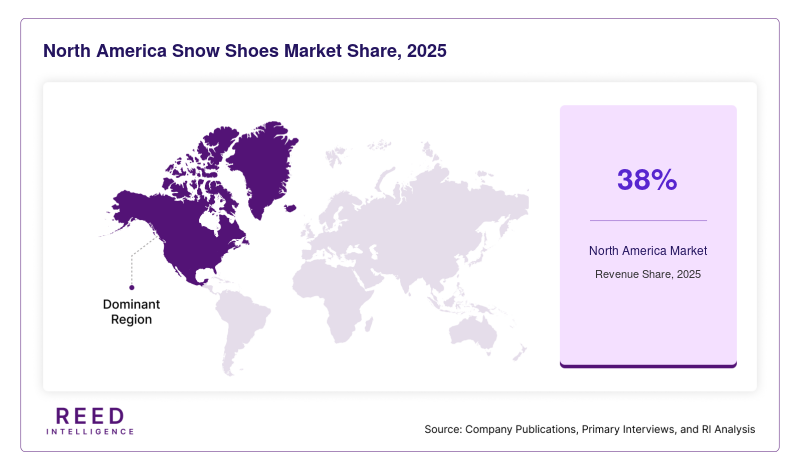
North America held the largest share of the Snow Shoes Market in 2025, accounting for approximately 38% of global revenue, with a projected CAGR of 5.8% through 2034. The region benefits from well-established winter sports infrastructure and high participation rates in outdoor recreational activities. The presence of national parks and snow-covered trails supports consistent demand. Additionally, strong consumer purchasing power enables widespread adoption of premium snowshoe products.
The United States dominates the regional market due to its extensive network of winter tourism destinations and organized recreational programs. A unique growth factor is the integration of snowshoeing into fitness and wellness routines, supported by community initiatives and outdoor clubs. This trend is driving repeat participation and sustained product demand across various consumer segments.
Europe
Europe accounted for around 27% of the Snow Shoes Market share in 2025 and is expected to grow at a CAGR of 6.1% during the forecast period. The region’s diverse alpine landscapes and established tourism sector contribute to steady demand. Countries such as France, Switzerland, and Austria are key contributors due to their popularity as winter travel destinations.
Germany leads the regional market, supported by strong consumer interest in outdoor sports and eco-tourism. A unique growth factor is the emphasis on sustainable tourism practices, encouraging low-impact activities like snowshoeing. This aligns with regional environmental policies and drives adoption among environmentally conscious travelers.
Asia Pacific
Asia Pacific held a 19% market share in 2025 and is projected to grow at the fastest CAGR of 7.2% through 2034. The region is experiencing rapid development in winter tourism infrastructure, particularly in countries investing in ski resorts and recreational facilities. Rising disposable incomes and increasing awareness of outdoor activities are key growth contributors.
China dominates the regional market, driven by government initiatives to promote winter sports. A unique growth factor is the expansion of winter sports events and training programs, which are increasing participation rates. This is creating a strong foundation for long-term market growth in the region.
Middle East & Africa
The Middle East & Africa accounted for approximately 8% of the Snow Shoes Market in 2025, with a CAGR of 5.5% expected during the forecast period. The market is relatively niche, with demand concentrated in specific regions with suitable climates or tourism activities. Growth is supported by international tourism and specialized adventure offerings.
South Africa leads the region due to its growing adventure tourism sector. A unique growth factor is the increasing popularity of international travel packages that include snow-based activities abroad. This indirectly drives demand for snowshoe equipment through outbound tourism trends.
Latin America
Latin America held an 8% share of the Snow Shoes Market in 2025 and is projected to grow at a CAGR of 6.0% through 2034. The region is gradually developing its winter tourism capabilities, particularly in mountainous areas. Increasing awareness of snow sports is contributing to market expansion.
Chile dominates the regional market due to its favorable geography and growing tourism industry. A unique growth factor is the development of eco-adventure tourism programs that include snowshoeing as a key activity. This is attracting both domestic and international tourists, supporting steady demand growth.
Competitive Landscape
The Snow Shoes Market is moderately fragmented, with several established players competing on product innovation, pricing, and distribution networks. The top five companies include MSR (Mountain Safety Research), Tubbs Snowshoes, Atlas Snow-Shoe Company, Crescent Moon Snowshoes, and Louis Garneau Sports. Among these, MSR is considered a market leader due to its strong product portfolio and focus on high-performance snow shoes.
Companies are investing in research and development to enhance product durability and user comfort. Strategic partnerships with tourism operators and retailers are also common to expand market reach. A recent development includes the launch of advanced lightweight snow shoes by MSR, designed for improved traction and mobility. Competitive strategies are increasingly centered on innovation and sustainability, reflecting evolving consumer preferences.
Key Players List
- MSR (Mountain Safety Research)
- Tubbs Snowshoes
- Atlas Snow-Shoe Company
- Crescent Moon Snowshoes
- Louis Garneau Sports
- TSL Outdoor
- Faber Snowshoes
- Yukon Charlie’s
- Northern Lites Snowshoes
- Redfeather Snowshoes
- Dion Snowshoes
- GV Snowshoes
- Komperdell
- Salomon Group
- Decathlon
Recent Developments
- MSR introduced a new series of ultralight snow shoes with enhanced traction systems in 2024.
- Tubbs Snowshoes expanded its distribution network across Asia Pacific to strengthen regional presence.
- Decathlon launched affordable snow shoe models targeting beginner-level users in emerging markets.
Snow Shoes Market Segments
Type
- Recreational Snow Shoes
- Performance Snow Shoes
Application
- Recreational Use
- Professional Use
Distribution Channel
- Online Retail
- Offline Retail
By Region
- North America
- Europe
- APAC
- Middle East and Africa
- LATAM