Snow Shovel Market Size, Share & Trends Analysis Report By Product Type (Standard Snow Shovels, Ergonomic Snow Shovels, Electric Snow Shovels, Snow Pushers, Snow Scoops), By Material (Plastic, Aluminum, Steel, Composite), By Application (Residential, Commercial, Municipal), By Distribution Channel (Direct Sales, Specialty Stores, Hardware Stores, Online Channels) and By Region (North America, Europe, Asia-Pacific, Latin America, Middle East & Africa) Forecasts, 2026–2034
USD 3950
Snow Shovel Market Size
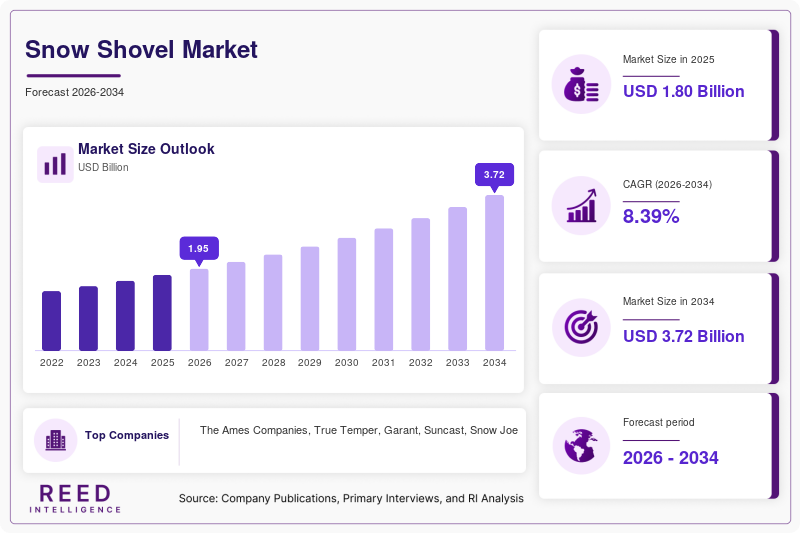
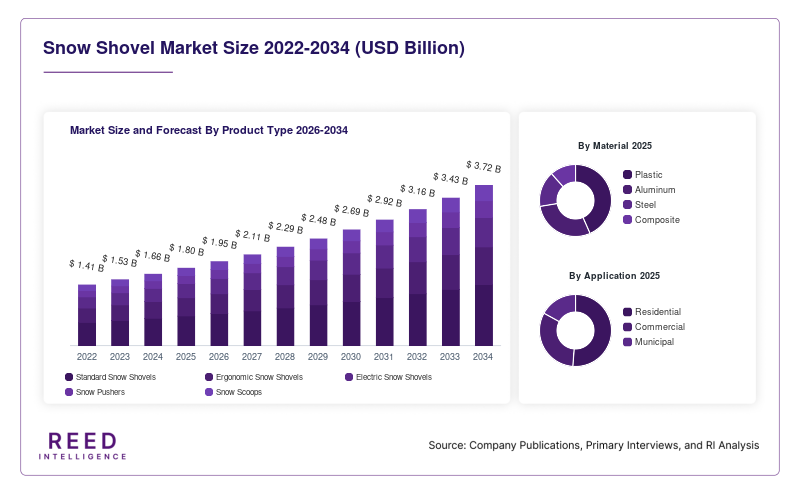
The global snow shovel market was valued at USD 1.80 billion in 2025 and is projected to grow from USD 1.95 billion in 2026 to USD 3.60 billion by 2034, registering a CAGR of 8.39% during the forecast period from 2026 to 2034.
The snow shovel market is primarily shaped by seasonal snowfall, residential snow removal, commercial property maintenance, municipal clearing requirements, and consumer demand for products that reduce physical effort during snow removal. The market includes conventional hand-operated shovels as well as ergonomic, push-style and powered snow-clearing products.
Weather conditions create the immediate demand mechanism. Snow accumulation can rapidly increase the need for clearing driveways, sidewalks, entrances, parking areas and other pedestrian or vehicle-access routes. This produces highly seasonal purchasing patterns, with demand concentrated before and during periods of significant snowfall.
Snow Shovel Market Drivers
Recurring Snowfall Creates a Seasonal Replacement and Emergency-Purchase Market
Snow accumulation directly creates the need for manual snow-removal equipment across residential and commercial properties. Households purchase shovels for driveways, walkways and entrances, while businesses and property managers require equipment for maintaining access around buildings. Demand is particularly concentrated in regions where snow occurs repeatedly during winter, creating both planned purchases before the season and replacement purchases after intensive use. The market mechanism is therefore closely linked to snowfall frequency and the size of the property-maintenance base. Municipal and commercial users can also maintain inventories across multiple locations. However, warmer winters and year-to-year variation in snowfall can reduce unit demand in individual seasons.
Ergonomic Designs Increase Product Replacement and Premiumization
Traditional snow shovels require repeated lifting, pushing and twisting, creating demand for designs that reduce physical strain. Ergonomic handles, curved shafts, lightweight blades and adjustable configurations allow manufacturers to target users who prioritize handling comfort and efficiency. This creates a premiumization mechanism because consumers can replace functional but basic shovels with products offering improved ergonomics. Commercial snow-removal operators can also value designs that reduce fatigue during repeated clearing. The opportunity is strongest in mature markets where households already own basic equipment and replacement purchases depend on perceived improvements rather than first-time adoption. Higher prices and the relatively short duration of the snow season can nevertheless limit willingness to upgrade.
Online Retail Expands Access to Seasonal Snow-Removal Equipment
Online distribution allows consumers to compare blade dimensions, materials, handle designs and product specifications before winter conditions arrive. This is particularly useful for seasonal products because retailers can rapidly expand selection without requiring equivalent physical shelf space. E-commerce also allows manufacturers and specialized brands to reach customers outside their traditional retail territories. The commercial mechanism is an increase in product visibility and purchasing convenience, particularly for specialized ergonomic and electric models. Seasonal weather forecasts can further influence purchase timing. Shipping costs, however, can become significant for oversized snow-removal equipment, while urgent snowfall events may still favor local hardware and home-improvement retailers.
Snow Shovel Market Restraints
Weather Variability Creates Uneven Seasonal Demand
Snow shovel demand depends heavily on the occurrence, duration and intensity of snowfall. A winter with limited snow can reduce purchases and delay replacement cycles, while severe snowfall can produce unusually high demand over a short period. This variability makes inventory planning difficult for manufacturers and retailers because excess inventory can remain unsold after a mild season. The effect is particularly significant in regions close to the geographic boundary of regular snowfall, where annual weather conditions can differ substantially. Product diversification into ice scrapers, snow pushers and other outdoor winter-maintenance tools can partially reduce this exposure, but snow-removal equipment remains fundamentally seasonal.
Snow Blowers and Powered Equipment Substitute for Manual Shoveling
Snow blowers and other powered snow-removal equipment compete with manual shovels, particularly among homeowners with larger driveways and commercial users managing larger areas. The substitution mechanism is strongest where snow depth and clearing area make manual removal labor-intensive. Battery-powered outdoor equipment can further expand the alternatives available to consumers seeking reduced physical effort. Snow shovels retain advantages in affordability, storage requirements, maneuverability and suitability for steps and narrow walkways. Nevertheless, greater availability of powered alternatives can constrain premium manual-shovel demand among higher-income and commercial users.
Snow Shovel Market Opportunities
Lightweight Composite and Ergonomic Products Create a Premium Replacement Segment
A significant opportunity exists in combining low weight, structural durability and ergonomic handling. Repeated snow removal creates physical demands that make handle geometry, blade weight and balance important product attributes. Composite materials and improved handle designs can address these requirements while allowing manufacturers to differentiate from low-cost standard shovels. The commercial opportunity is strongest among homeowners who regularly clear snow and users who value reduced fatigue. Manufacturers can also offer product families with different blade widths and handle configurations. Adoption may be constrained if consumers perceive limited functional improvement over inexpensive conventional shovels.
Electric Snow Shovels Expand the Market Beyond Conventional Manual Tools
Electric snow shovels can address consumers who want powered assistance without the size and cost associated with conventional snow blowers. Their compact form makes them potentially suitable for sidewalks, decks, entrances and smaller driveways where maneuverability matters. Battery technology also allows cordless operation, reducing dependence on extension cords. The opportunity depends on consumers accepting higher upfront prices in exchange for reduced manual effort. Battery runtime, snow depth capability, charging requirements and competition from larger snow blowers can limit adoption, particularly among users who experience heavy or prolonged snowfall.
Product Type Analysis
By Product Type
Standard Snow Shovels accounted for approximately 38% of the global market in 2025. Their leading position is associated with low purchase cost, simple operation, minimal maintenance and broad suitability for household snow clearing. Standard models can address driveways, sidewalks, entrances and smaller outdoor areas without requiring batteries, fuel or mechanical systems. Their low replacement cost also makes them accessible to occasional users who experience snowfall only during part of the winter. The main risk to the segment is substitution by ergonomic and powered alternatives. Consumers who clear large areas frequently can justify higher-priced products that reduce physical effort, while commercial operators may prioritize productivity over the low initial cost of conventional models.
Electric Snow Shovels accounted for approximately 14% of the market in 2025 and are projected to grow at about 11.2% CAGR through 2034. Their growth is associated with demand for compact powered snow removal without the size and operating requirements of conventional snow blowers. Battery-powered designs are particularly relevant to users clearing sidewalks, decks, steps and smaller driveways. The segment can also benefit from the broader adoption of cordless outdoor power equipment. Expansion is constrained by battery runtime, higher purchase prices, limited performance in very deep snow and competition from snow blowers for larger areas.
Other product-type growth: Ergonomic Snow Shovels are projected to grow at approximately 9.1% CAGR, Snow Pushers at 7.8%, and Snow Scoops at approximately 7.2% through 2034.
Material Analysis
By Material
Plastic Snow Shovels accounted for approximately 44% of the market in 2025. Plastic blades provide low weight, corrosion resistance and relatively low manufacturing cost, making them suitable for residential consumers and occasional snowfall. The material also allows manufacturers to produce broad blades and molded ergonomic designs. Plastic products can therefore address both price-sensitive consumers and users seeking lightweight equipment. However, performance can vary with temperature, impact and snow conditions, creating opportunities for aluminum and composite alternatives.
Composite materials accounted for approximately 16% of the market in 2025 and are projected to grow at about 10.0% CAGR through 2034. Composite construction can combine low weight with improved structural performance, supporting premium snow shovels designed for repeated use. The material is particularly relevant to manufacturers attempting to reduce shovel weight while retaining durability. The principal constraints are higher production costs and limited consumer willingness to pay for material improvements in markets dominated by inexpensive conventional shovels.
Other material growth: Aluminum is projected to grow at approximately 8.4% CAGR, while Steel is projected to grow at approximately 6.9% CAGR through 2034.
Application Analysis
By Application
Residential applications accounted for approximately 68% of the global market in 2025. Households represent the broadest customer base because individual properties require clearing of driveways, sidewalks, entrances and other access areas. The relatively low price of manual shovels makes household ownership common in snow-prone regions. Replacement demand also occurs when blades, handles or shafts become damaged through repeated seasonal use.
Commercial applications accounted for approximately 22% of the market in 2025 and are projected to grow at about 9.0% CAGR through 2034. Retail properties, offices, hotels, warehouses and other facilities need pedestrian and vehicle access maintained during snowfall. Commercial buyers can purchase multiple units and may favor ergonomic or heavy-duty products that withstand repeated use. Snow-removal contractors also create demand for durable equipment. Labor costs, property-access requirements and the need to maintain customer-facing premises can encourage investment in equipment that improves clearing productivity.
Other application growth: Municipal applications are projected to grow at approximately 7.4% CAGR through 2034.
Distribution Channel Analysis
By Distribution Channel
Hardware Stores accounted for approximately 39% of the market in 2025. Their position reflects the need for immediate access to seasonal snow-removal products, particularly when snowfall creates urgent household and commercial demand. Hardware retailers also allow consumers to physically compare blade sizes, handle configurations and product weight before purchase. Local availability is especially valuable during major snow events when customers may require equipment immediately.
Online Channels accounted for approximately 24% of the market in 2025 and are projected to grow at about 10.3% CAGR through 2034. Online platforms provide broader product selection and allow customers to compare specifications, prices and reviews. The channel is particularly suitable for ergonomic, composite and electric models that require consumers to evaluate several technical attributes. The main constraint is shipping cost and delivery time for oversized products, especially during sudden snowfall events when immediate local availability is more valuable.
Other distribution-channel growth: Direct Sales is projected to grow at approximately 7.6% CAGR, while Specialty Stores are projected to grow at approximately 8.1% CAGR through 2034.
Snow Shovel Market Regional Analysis
North America Represents the Largest and Fastest-Growing Regional Market Due to Extensive Snow-Prone Areas
North America accounted for approximately 46% of the global market in 2025 and is projected to grow at about 9.1% CAGR through 2034. The region's large snow-prone population, extensive residential housing stock and established outdoor-equipment retail infrastructure create a broad customer base. The United States and Canada are the principal markets, with demand concentrated in northern and interior areas that experience recurring winter snowfall. Residential purchases form the largest demand pool, while commercial property owners and municipalities generate recurring institutional demand. The region also provides a strong market for ergonomic and electric snow-removal equipment because consumers have access to a wide range of outdoor power products. Weather variability remains the principal counterbalance, while powered snow blowers compete with shovels for larger properties.
Europe Maintains a Significant Market Through Northern and Central European Snowfall
Europe accounted for approximately 29% of the market in 2025 and is projected to grow at about 8.0% CAGR through 2034. Demand is concentrated in northern and central European countries where seasonal snow creates recurring residential and commercial clearing requirements. The Nordic countries, Germany, Austria, Switzerland and parts of Eastern Europe provide important demand centers. Urban density also creates demand for compact products suitable for sidewalks, entrances and confined outdoor areas. Ergonomic designs can gain relevance where users need to clear pedestrian areas without relying exclusively on larger powered machines. Warmer winters and regional variation in snowfall can create volatility in annual sales.
Asia-Pacific Represents a Smaller but Expanding Market as Snow-Clearing Demand Concentrates in Specific Countries
Asia-Pacific accounted for approximately 13% of the market in 2025 and is projected to grow at about 8.6% CAGR through 2034. Demand is geographically concentrated rather than evenly distributed because large parts of the region experience limited snowfall. Japan, South Korea and northern areas of China provide important demand centers, alongside mountainous tourism destinations. Hospitality facilities, transportation infrastructure and residential properties in snow-prone locations create demand for manual clearing equipment. Growth can be supported by winter tourism and urban development in cold-weather regions. Limited snowfall across much of the region, however, keeps the overall addressable market below that of North America and Europe.
Latin America Has a Limited Addressable Market Because Snowfall Is Geographically Concentrated
Latin America accounted for approximately 7% of the market in 2025 and is projected to grow at about 6.9% CAGR through 2034. Demand is concentrated in high-altitude areas and winter tourism locations rather than the region as a whole. Commercial properties, ski resorts, mountain communities and specialized outdoor-service operators form the principal customer groups. The smaller residential snow-removal base limits volume compared with northern markets. Import dependence for specialized equipment can also influence product availability and pricing.
Middle East & Africa Remains a Specialized Market Focused on High-Altitude and Tourism Applications
Middle East & Africa accounted for approximately 5% of the market in 2025 and is projected to grow at about 6.5% CAGR through 2034. Snow-removal demand is highly localized around high-altitude areas, winter tourism destinations and selected cold-weather locations. Commercial and hospitality facilities are more relevant customer groups than the general residential population. The region's limited recurring snowfall restricts the overall addressable market, while specialized tourism development can generate localized demand for snow-clearing equipment.

Snow Shovel Market Competitive Landscape
The snow shovel market is relatively fragmented, with competition based on blade design, material selection, ergonomics, durability, product weight, price, seasonal availability and distribution reach. Manufacturers increasingly differentiate through lightweight construction, ergonomic handles and powered compact models rather than relying solely on conventional shovel designs.
Large outdoor-tool manufacturers benefit from established hardware and home-improvement distribution, while specialized snow-equipment companies can compete through product innovation and powered equipment. Retail availability is particularly important because snowfall can create sudden demand surges. Companies with diversified winter-product portfolios can also reduce dependence on a single shovel format.
Key Market Players
- The Ames Companies
- True Temper
- Garant
- Suncast
- Snow Joe
- Fiskars
- Bully Tools
- Emsco Group
- Razor-Back
- D-Handle
Snow Shovel Market Recent Developments
- Snow Joe has continued developing battery-powered snow-removal equipment within its broader cordless outdoor-tool portfolio. The development is relevant to the snow shovel market because battery-powered products provide an alternative between traditional manual shovels and larger snow blowers. The competitive mechanism is greater product differentiation around convenience, maneuverability and reduced manual effort.
- Fiskars maintains a portfolio of snow tools incorporating ergonomic design principles and lightweight construction. This product positioning is relevant to the market because ergonomic differentiation allows manufacturers to target consumers who are willing to pay for improved handling rather than selecting products solely on purchase price.
Snow Shovel Market Segments
By Product Type
- Standard Snow Shovels
- Ergonomic Snow Shovels
- Electric Snow Shovels
- Snow Pushers
- Snow Scoops
By Material
- Plastic
- Aluminum
- Steel
- Composite
By Application
- Residential
- Commercial
- Municipal
By Distribution Channel
- Direct Sales
- Specialty Stores
- Hardware Stores
- Online Channels
By Region
- North America
- Europe
- APAC
- Middle East and Africa
- LATAM