Snowboard Bag Market Size, Share & Demand Report By Type (Padded Snowboard Bags, Non-Padded Snowboard Bags, Wheeled Snowboard Bags), By Material (Polyester, Nylon, Recycled Materials), By Distribution Channel (Online Retail, Offline Retail), By End-Use (Individual Consumers, Commercial Users), By Region & Segment Forecasts, 2025–2034
USD 3950
Market Overview
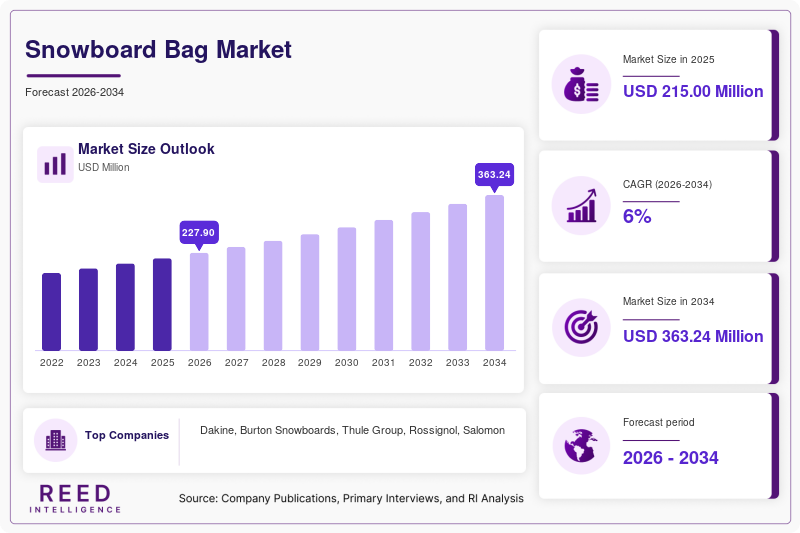
The Snowboard Bag Market size was valued at approximately USD 215 million in 2025 and is projected to reach USD 362 million by 2034, expanding at a CAGR of 6.0% during 2025–2034. The steady rise in winter sports participation across developed and emerging economies has supported market growth. Increased tourism in snow-based destinations and the growing popularity of recreational snowboarding among younger demographics have created sustained demand for protective and travel-friendly snowboard gear.
One major global factor driving expansion is the growth of winter sports tourism infrastructure. Ski resorts, snow parks, and adventure tourism hubs are investing in facilities that encourage snowboarding activities, leading to increased purchases of related accessories, including snowboard bags. Additionally, consumers are becoming more conscious of protecting high-value snowboards during travel, boosting demand for durable and feature-rich bags.
Key Highlights
- North America dominated with 38% market share in 2025, while Asia Pacific is projected to grow at a CAGR of 7.4%.
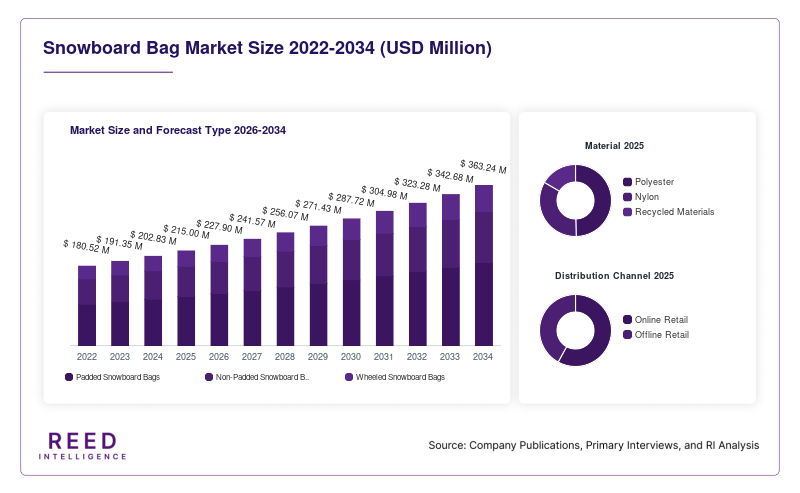
- By type, padded snowboard bags led with 62% share, while wheeled snowboard bags are expected to grow at a CAGR of 7.1%.
- By distribution channel, offline retail dominated, whereas online channels will expand at a CAGR of 8.0%.
- The U.S. market was valued at USD 68 million in 2024 and reached USD 72 million in 2025.
Market Trends
Increasing Demand for Multi-Functional Travel Gear
Consumers are increasingly seeking snowboard bags that serve multiple purposes beyond basic storage. Modern products now include compartments for boots, helmets, and accessories, reducing the need for multiple bags. This trend is driven by frequent travelers who prioritize convenience and compact packing. Manufacturers are incorporating wheels, adjustable straps, and modular storage designs to meet these evolving preferences.
Rising Adoption of Sustainable Materials
Sustainability has emerged as a key trend in the Snowboard Bag Market. Brands are introducing eco-friendly materials such as recycled polyester and biodegradable fabrics to reduce environmental impact. Environmentally conscious consumers, particularly in Europe and North America, are favoring products with sustainable certifications. This shift is encouraging companies to invest in green manufacturing processes and transparent supply chains, influencing long-term market dynamics.
Market Drivers
Growth in Winter Sports Participation
The increasing number of individuals participating in winter sports activities has significantly boosted demand for snowboard accessories. Snowboarding is gaining traction as both a recreational and competitive sport, supported by rising awareness and exposure through global sporting events. This has led to consistent demand for protective equipment, including snowboard bags.
Expansion of Adventure Tourism Industry
The expansion of adventure tourism has been a key contributor to the Snowboard Bag Market. Travel packages that include snowboarding experiences are becoming more accessible, attracting a broader audience. Tourists often require reliable and durable bags to transport their equipment, driving product demand. The integration of winter sports into mainstream tourism offerings has amplified the need for specialized travel gear.
Market Restraint
Seasonal Demand Fluctuations
A major restraint affecting the Snowboard Bag Market is its strong dependence on seasonal demand. Sales are typically concentrated during winter months, leading to uneven revenue cycles for manufacturers and retailers. This seasonality creates challenges in inventory management, production planning, and cash flow stability.
In regions with shorter winter seasons or inconsistent snowfall, demand can be unpredictable. Climate variability further intensifies this issue, as reduced snowfall directly impacts snowboarding activities. As a result, businesses must rely on limited peak seasons to generate a significant portion of their annual revenue. This constraint limits market expansion in certain geographies and increases operational risks for stakeholders.
Market Opportunities
Growth in E-commerce Platforms
The rapid expansion of e-commerce platforms presents a significant opportunity for the Snowboard Bag Market. Online retail enables manufacturers to reach a global customer base, offering a wide variety of products and price points. Digital channels also allow consumers to compare features, read reviews, and make informed purchasing decisions. This accessibility is expected to drive higher sales volumes, particularly in emerging markets.
Product Customization and Premiumization
The rising demand for personalized and premium products offers new growth avenues. Consumers are increasingly willing to invest in high-quality snowboard bags with customized designs, branding, and advanced features. Premium offerings such as reinforced padding, waterproof materials, and smart storage solutions are gaining traction. This trend enables manufacturers to differentiate their products and improve profit margins while catering to niche consumer segments.
Segmental Analysis
By Type
Padded snowboard bags dominated the market with a 62% share in 2024. These bags offered enhanced protection against impacts and scratches, making them a preferred choice among consumers transporting expensive equipment. Their ability to safeguard snowboards during air travel and long-distance trips contributed to their widespread adoption.
Wheeled snowboard bags are expected to be the fastest-growing subsegment, with a projected CAGR of 7.1%. The convenience of mobility, especially in airports and transit hubs, will drive their demand. Travelers seeking ease of transport and reduced physical strain will increasingly opt for wheeled options, supporting segment growth.
By Material
Polyester-based snowboard bags accounted for the largest share of 55% in 2024. These materials offered durability, water resistance, and cost-effectiveness, making them suitable for a wide range of consumers. Their lightweight nature also contributed to ease of handling.
Recycled materials are anticipated to be the fastest-growing segment, expanding at a CAGR of 7.6%. Growing environmental awareness and regulatory pressures will encourage manufacturers to adopt sustainable materials. Consumers will increasingly prefer eco-friendly products, driving this segment’s growth.
By Distribution Channel
Offline retail channels held a dominant share of 64% in 2024. Specialty sports stores and retail outlets allowed consumers to physically inspect products, assess quality, and receive expert guidance before purchasing. This factor contributed to the dominance of offline channels.
Online distribution channels are projected to grow at a CAGR of 8.0%. The convenience of online shopping, combined with competitive pricing and a wide product range, will drive growth. Digital platforms will also enable brands to reach untapped markets and enhance customer engagement.
By End-Use
Individual consumers represented the largest share of 70% in 2024. Recreational snowboarders and hobbyists formed the primary customer base, driving consistent demand for snowboard bags. Their preference for durable and stylish products contributed to segment growth.
Commercial users, including rental services and sports organizations, are expected to grow at a CAGR of 6.8%. These users require bulk purchases and durable products for repeated use, creating opportunities for manufacturers to cater to institutional demand.
Regional Analysis
North America
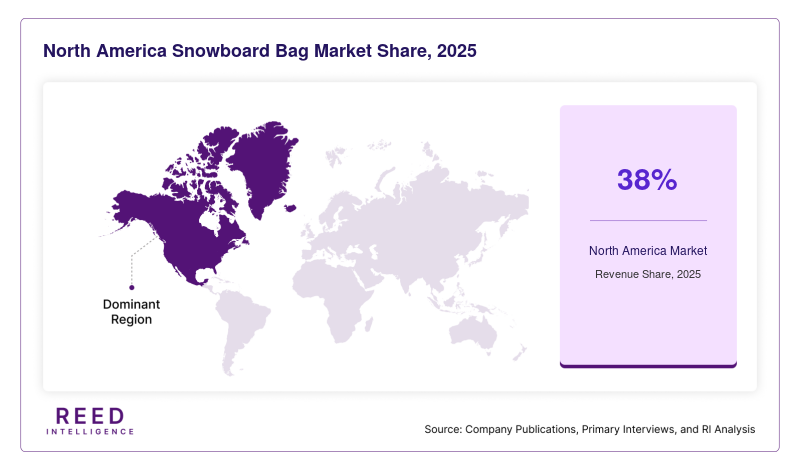
North America accounted for 38% of the Snowboard Bag Market share in 2025 and is expected to grow at a CAGR of 5.8% during the forecast period. The region has a well-established winter sports culture supported by advanced infrastructure and high consumer spending on recreational activities. The presence of numerous ski resorts and snowboarding destinations contributed to strong product demand.
The United States remained the dominant country due to its extensive network of ski resorts and a large base of snowboarding enthusiasts. High disposable income and a preference for premium gear drove consistent sales. Additionally, consumers in the U.S. showed a strong inclination toward technologically advanced and durable snowboard bags, supporting market expansion.
Europe
Europe held approximately 27% market share in 2025 and will expand at a CAGR of 5.6% through 2034. The region benefits from a long-standing tradition of winter sports and a high influx of tourists to alpine destinations. Countries such as Switzerland, Austria, and France have well-developed skiing and snowboarding facilities, contributing to steady demand.
Germany emerged as the dominant country due to its strong consumer base and access to nearby winter sports destinations. The country’s focus on quality and sustainability influenced purchasing decisions, encouraging the adoption of eco-friendly snowboard bags. Local manufacturers also contributed to product innovation.
Asia Pacific
Asia Pacific captured 20% of the market share in 2025 and is projected to grow at the fastest CAGR of 7.4%. The region is experiencing rapid growth in winter sports participation, supported by rising disposable incomes and increasing awareness. Governments are investing in winter sports infrastructure to promote tourism and international events.
China dominated the regional market due to its growing interest in winter sports and significant investments in related facilities. The expansion of ski resorts and training centers has encouraged more individuals to engage in snowboarding, driving demand for accessories such as snowboard bags.
Middle East & Africa
The Middle East & Africa accounted for 7% of the Snowboard Bag Market in 2025 and is expected to grow at a CAGR of 4.9%. Although winter sports are less prevalent in this region, niche demand exists among affluent consumers who travel internationally for snowboarding experiences.
The United Arab Emirates led the market due to its high-income population and strong outbound tourism. Consumers in the UAE frequently travel to Europe and North America for winter sports, creating demand for high-quality snowboard bags designed for long-distance travel.
Latin America
Latin America represented 8% of the market share in 2025 and is projected to grow at a CAGR of 5.2%. The region has a developing winter sports industry, particularly in countries with mountainous terrains.
Chile emerged as the dominant country due to its well-known ski resorts and increasing participation in snowboarding. The country’s favorable geography and growing tourism sector supported the demand for snowboard bags. Rising awareness and improved access to winter sports facilities are expected to further drive growth.
Competitive Landscape
The Snowboard Bag Market is moderately fragmented, with several global and regional players competing on product quality, pricing, and innovation. Leading companies are focusing on product differentiation through advanced materials, ergonomic designs, and added functionalities.
Dakine emerged as a market leader due to its strong brand recognition and extensive product portfolio. The company recently introduced a new line of eco-friendly snowboard bags made from recycled materials, aligning with sustainability trends. Other players are investing in e-commerce expansion and strategic partnerships to strengthen their market presence.
Continuous innovation and customer-centric strategies are expected to shape the competitive landscape over the forecast period.
Key Players List
- Dakine
- Burton Snowboards
- Thule Group
- Rossignol
- Salomon
- Atomic
- K2 Sports
- Nitro Snowboards
- Ride Snowboards
- Jones Snowboards
- Decathlon
- Black Diamond Equipment
- Mammut Sports Group
- The North Face
- Osprey Packs
Recent Developments
- In 2024, several manufacturers launched eco-friendly snowboard bags using recycled fabrics to meet sustainability goals.
- In 2025, brands expanded their online presence through direct-to-consumer platforms, improving global reach.
- New product launches featured enhanced padding, waterproof coatings, and integrated storage compartments.
- Strategic collaborations between sports brands and travel gear companies led to innovative multi-purpose designs.
Snowboard Bag Market Segments
Type
- Padded Snowboard Bags
- Non-Padded Snowboard Bags
- Wheeled Snowboard Bags
Material
- Polyester
- Nylon
- Recycled Materials
Distribution Channel
- Online Retail
- Offline Retail
End-Use
- Individual Consumers
- Commercial Users
By Region
- North America
- Europe
- APAC
- Middle East and Africa
- LATAM