Sodium Cocoyl Glutamate Market Size, Share & Demand Report By Type (Powder, Liquid), By Application (Personal Care, Hair Care, Baby Care, Skin Care), By End Use (Cosmetics Manufacturers, Dermatological Product Manufacturers, Contract Manufacturers), By Region & Segment Forecasts, 2025–2034
USD 3950
Market Overview
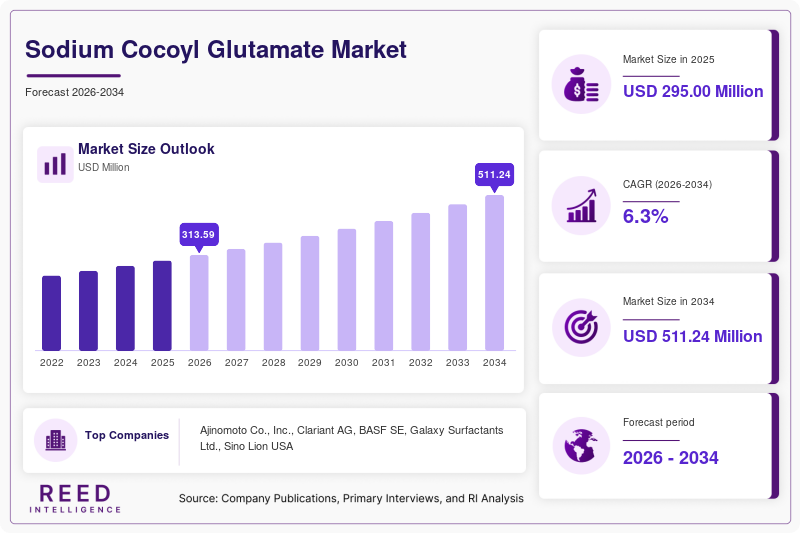
The global Sodium Cocoyl Glutamate Market size was valued at approximately USD 295 million in 2025 and is projected to reach around USD 512 million by 2034, expanding at a compound annual growth rate (CAGR) of 6.3% from 2025 to 2034. Sodium cocoyl glutamate, a mild amino acid–based surfactant derived from coconut fatty acids and glutamic acid, is widely used in personal care formulations such as facial cleansers, shampoos, body washes, and baby care products. The ingredient is recognized for its gentle cleansing ability, skin compatibility, and biodegradable nature, making it suitable for modern cosmetic formulations focused on mildness and sustainability.
A key global factor supporting the growth of the Sodium Cocoyl Glutamate Market is the rising consumer shift toward sulfate-free and naturally derived surfactants in personal care products. Cosmetic manufacturers are increasingly replacing traditional surfactants with amino acid–based alternatives that deliver effective cleansing while maintaining skin barrier integrity. As regulatory bodies and consumer groups advocate safer ingredient profiles, the adoption of sodium cocoyl glutamate in premium and dermatologically tested products continues to expand. In addition, the increasing availability of plant-based ingredients and advancements in green chemistry have improved production efficiency and scalability.
Key Highlights
- Asia Pacific dominated the Sodium Cocoyl Glutamate Market with a 39% share in 2025, while Latin America is expected to register the fastest CAGR of 7.4% during the forecast period.
- Powder type held the leading share of 46% in 2024, whereas liquid form is projected to grow at a CAGR of 6.9% through 2034.
- Personal care application accounted for the largest share of 62% in 2024, while baby care formulations are expected to grow at a CAGR of 7.2%.
- China remained the dominant country, with market values rising from USD 54 million in 2024 to USD 58 million in 2025.
Market Trends
Expansion of Amino Acid–Based Surfactants in Cosmetic Formulations
One of the notable trends in the Sodium Cocoyl Glutamate Market is the growing integration of amino acid–based surfactants in cosmetic and personal care formulations. Cosmetic brands are focusing on developing mild cleansing products that maintain the skin’s natural moisture balance. Sodium cocoyl glutamate is increasingly used as a primary surfactant in facial cleansers, foaming gels, and shampoos due to its ability to produce stable foam while remaining gentle on the skin. This trend is particularly visible in premium and dermatological skincare brands that emphasize ingredient transparency and mild formulations.
Growth of Eco-Friendly and Biodegradable Ingredients
Another emerging trend in the Sodium Cocoyl Glutamate Market is the increasing demand for environmentally friendly cosmetic ingredients. As sustainability becomes a central focus in the beauty industry, manufacturers are incorporating biodegradable surfactants that align with green product standards. Sodium cocoyl glutamate is derived from renewable sources such as coconut oil and amino acids, making it suitable for eco-conscious formulations. Companies are increasingly promoting biodegradable surfactant systems to meet consumer expectations and environmental regulations.
Market Drivers
Increasing Demand for Sulfate-Free Personal Care Products
The rising preference for sulfate-free personal care products is a significant driver of the Sodium Cocoyl Glutamate Market. Traditional surfactants such as sodium lauryl sulfate have been associated with skin irritation in certain formulations, prompting cosmetic companies to adopt milder alternatives. Sodium cocoyl glutamate provides effective cleansing without stripping natural oils, making it suitable for daily-use products such as face washes, body washes, and shampoos. The growing popularity of dermatologically tested skincare products has further supported demand.
Growth of Premium and Natural Cosmetic Brands
Another important driver influencing the Sodium Cocoyl Glutamate Market is the expansion of premium and natural cosmetic brands worldwide. These brands emphasize ingredient safety, plant-derived components, and gentle formulations. Sodium cocoyl glutamate fits well into clean-label product strategies because it is derived from naturally occurring amino acids. As consumers increasingly prefer high-quality skincare products with transparent ingredient lists, manufacturers are incorporating amino acid surfactants to differentiate their formulations.
Market Restraint
Higher Production Costs Compared to Conventional Surfactants
One of the primary restraints affecting the Sodium Cocoyl Glutamate Market is the relatively higher production cost compared to traditional surfactants. The manufacturing process involves specialized raw materials and processing steps that increase overall formulation costs. For mass-market personal care products, manufacturers often prefer lower-cost surfactants to maintain competitive pricing. Additionally, fluctuations in the supply of coconut-derived raw materials can influence production expenses. These cost considerations can limit the adoption of sodium cocoyl glutamate in certain price-sensitive product segments, particularly in emerging markets where affordability remains a critical factor.
Market Opportunities
Increasing Adoption in Baby Care and Sensitive Skin Products
A major opportunity in the Sodium Cocoyl Glutamate Market lies in its expanding use in baby care and sensitive skin formulations. The ingredient’s mildness and compatibility with delicate skin make it suitable for products such as baby shampoos, body washes, and facial cleansers designed for sensitive skin. Manufacturers are increasingly focusing on hypoallergenic formulations that avoid harsh chemicals. This shift is expected to create new growth opportunities for sodium cocoyl glutamate across pediatric and dermatological skincare categories.
Rising Demand for Green and Clean Beauty Products
The growth of clean beauty and environmentally responsible cosmetics presents another opportunity for the Sodium Cocoyl Glutamate Market. Consumers are paying closer attention to ingredient sourcing, sustainability, and environmental impact. Sodium cocoyl glutamate aligns with these preferences due to its biodegradable profile and plant-derived origin. Cosmetic brands focusing on eco-conscious product development are expected to increase the use of amino acid surfactants in the coming years.
Segmental Analysis
By Type
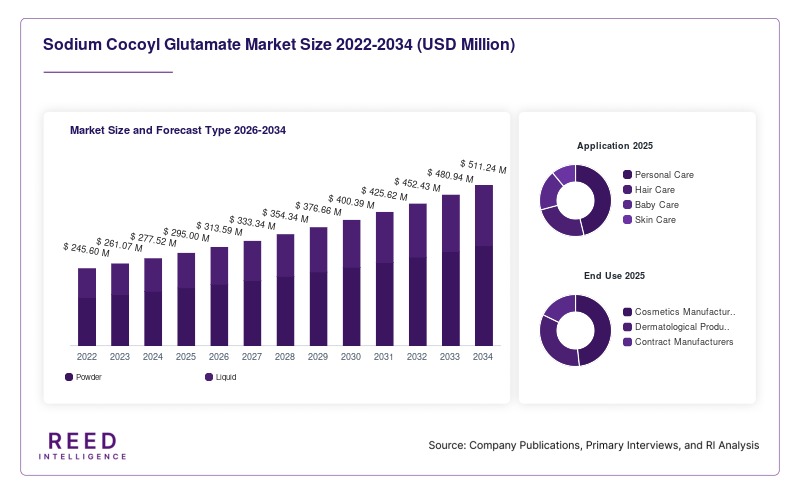
The powder segment dominated the Sodium Cocoyl Glutamate Market in 2024, accounting for 46% share. Powder-based sodium cocoyl glutamate is widely used in cosmetic formulations due to its stability and ease of transportation. Manufacturers prefer powder form for large-scale production of personal care products because it allows precise formulation and longer shelf life.
The liquid segment is projected to grow at a CAGR of 6.9% through 2034. Liquid sodium cocoyl glutamate offers improved solubility and ease of blending with other surfactants. Cosmetic formulators are increasingly adopting liquid variants to streamline production processes and reduce formulation complexity.
By Application
The personal care segment held the largest share of 62% in 2024 in the Sodium Cocoyl Glutamate Market. The ingredient is widely used in facial cleansers, body washes, and shampoos because of its mild cleansing properties. Cosmetic manufacturers use it as a primary surfactant to create gentle foaming formulations suitable for daily use.
The baby care segment is expected to expand at a CAGR of 7.2% through 2034. Growing demand for mild and hypoallergenic baby products will support this growth. Sodium cocoyl glutamate is increasingly used in baby shampoos and body washes due to its compatibility with sensitive skin.
By End Use
The cosmetics manufacturers segment accounted for 55% share in 2024 within the Sodium Cocoyl Glutamate Market. Large cosmetic brands rely on specialized surfactant ingredients to create advanced cleansing formulations. The increasing demand for sulfate-free skincare products has supported this segment’s growth.
The dermatological product manufacturers segment will grow at a CAGR of 6.8% through 2034. The use of mild surfactants in dermatology-focused skincare products is expected to increase as manufacturers develop products designed for sensitive and damaged skin.
Regional Analysis
North America
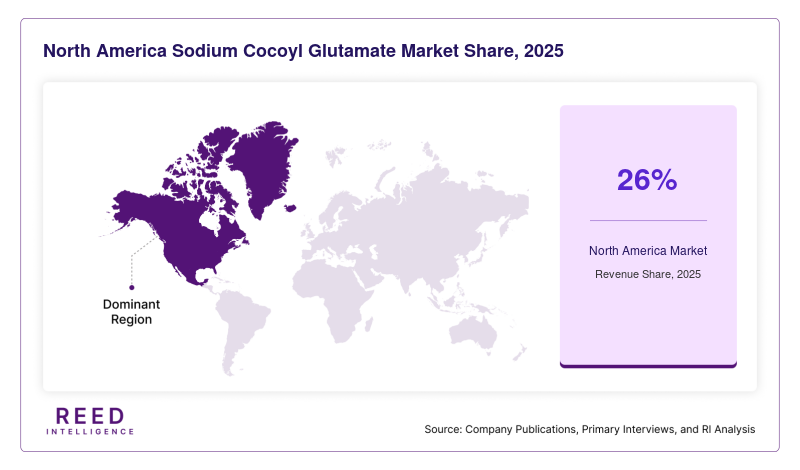
North America accounted for 26% of the global Sodium Cocoyl Glutamate Market share in 2025, reflecting a mature personal care and cosmetic manufacturing industry. The region’s market will likely expand at a CAGR of 5.8% from 2025 to 2034. The presence of established cosmetic manufacturers and a strong consumer preference for premium skincare products contributed to the region’s significant market share. Additionally, regulatory standards related to cosmetic safety and ingredient transparency have encouraged the adoption of mild surfactants.
The United States dominated the regional market due to the strong presence of skincare and haircare brands focusing on sulfate-free formulations. The country’s cosmetic manufacturers increasingly integrate amino acid surfactants into facial cleansers and dermatological products. In addition, the rising popularity of minimalist skincare routines and dermatologist-recommended products has supported demand for gentle cleansing ingredients.
Europe
Europe held approximately 24% share of the Sodium Cocoyl Glutamate Market in 2025 and is expected to grow at a CAGR of 5.9% through 2034. The region’s cosmetics industry is characterized by strict regulatory frameworks governing ingredient safety and environmental sustainability. These regulations have supported the adoption of biodegradable anhat focus on developing advanced surfactant systems. The increasing demand for eco-certified cosmetics and organic skincare products has also supported market growth.
Asia Pacific
Asia Pacific represented the largest regional share of 39% in 2025 within the Sodium Cocoyl Glutamate Market and will likely expand at a CAGR of 6.7% during the forecast period. Rapid growth in personal care manufacturing and the presence of large ingredient suppliers have contributed to the region’s market leadership. In addition, the increasing popularity of skincare routines across several Asian countries has encouraged the use of mild surfactants in cleansing products.
China led the regional market due to its large-scale cosmetic manufacturing sector and expanding domestic skincare industry. The country has seen strong growth in local cosmetic brands that prioritize gentle cleansing ingredients. Furthermore, increasing consumer awareness about ingredient safety and product quality has accelerated the adoption of amino acid surfactants in facial cleansers and shampoos.
Middle East & Africa
The Middle East & Africa accounted for approximately 6% of the Sodium Cocoyl Glutamate Market in 2025. The region is expected to witness a CAGR of 6.1% through 2034. Growth in the regional cosmetics industry and increasing consumer interest in skincare products are supporting demand for advanced surfactant ingredients.
The United Arab Emirates dominated the regional market due to its expanding beauty and personal care retail sector. The country serves as a hub for premium cosmetic brands and specialty beauty stores. Rising consumer spending on high-quality skincare products has supported the adoption of mild surfactants in various formulations.
Latin America
Latin America represented 5% share of the Sodium Cocoyl Glutamate Market in 2025 and will likely register the fastest CAGR of 7.4% through 2034. Growth in the regional cosmetics industry and increasing consumer interest in gentle personal care products have supported the expansion of the market.
Brazil emerged as the leading country in the region due to its large cosmetics manufacturing sector and strong domestic demand for haircare and skincare products. The country’s beauty industry continues to expand, supported by increasing product innovation and growing consumer awareness regarding ingredient quality.
Competitive Landscape
The Sodium Cocoyl Glutamate Market is moderately consolidated, with several global chemical and specialty ingredient manufacturers competing through product innovation and strategic partnerships. Companies focus on expanding production capacity and developing sustainable surfactant solutions to strengthen their market position.
One of the leading companies in the market is Ajinomoto Co., Inc., which has developed a wide portfolio of amino acid–based surfactants used in cosmetic formulations. The company recently expanded its production capabilities to support increasing demand from skincare and haircare manufacturers.
Other companies in the Sodium Cocoyl Glutamate Market emphasize research and development to create advanced surfactant systems that improve foam stability, mildness, and biodegradability. Strategic collaborations with cosmetic brands and distributors remain common approaches for expanding global presence.
Key Players
- Ajinomoto Co., Inc.
- Clariant AG
- BASF SE
- Galaxy Surfactants Ltd.
- Sino Lion USA
- Innospec Inc.
- Croda International Plc
- Stepan Company
- Solvay SA
- Zschimmer & Schwarz
Recent Developments
- Ajinomoto expanded its amino acid–based surfactant production capacity to meet increasing global demand for mild cosmetic ingredients.
- Galaxy Surfactants introduced new formulations of amino acid surfactants designed for sulfate-free shampoos.
- Clariant developed biodegradable surfactant solutions aimed at sustainable personal care formulations.
- BASF strengthened its specialty surfactant portfolio through research initiatives focusing on mild cleansing ingredients.
- Croda International expanded its plant-derived cosmetic ingredient portfolio targeting clean beauty formulations.
Sodium Cocoyl Glutamate Market Segments
Type
- Powder
- Liquid
Application
- Personal Care
- Hair Care
- Baby Care
- Skin Care
End Use
- Cosmetics Manufacturers
- Dermatological Product Manufacturers
- Contract Manufacturers
By Region
- North America
- Europe
- APAC
- Middle East and Africa
- LATAM