Softball Equipment Market Size, Share & Demand Report By Equipment Type (Bats, Gloves, Balls, Protective Gear, Footwear, Training Accessories), By Distribution Channel (Offline Retail, Online Retail), By End User (Professional and Institutional Players, Youth Recreational Players, Amateur Adult Players), By Region & Segment Forecasts, 2026–2034
USD 3950
Market Overview
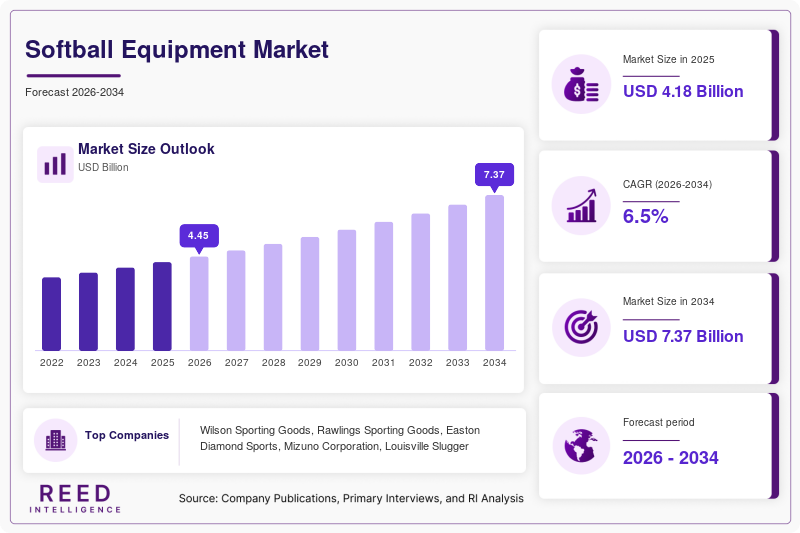
The global Softball Equipment Market size was valued at USD 4.18 billion in 2026 and is projected to reach USD 6.94 billion by 2034, expanding at a CAGR of 6.5% during the forecast period from 2026 to 2034. The market continues to experience stable growth due to rising participation in recreational sports activities, increasing school-level softball programs, and growing investments in women’s sports infrastructure across developed and emerging economies. Equipment manufacturers are also introducing lightweight, durable, and performance-oriented products that improve player safety and comfort, which continues to strengthen consumer demand across amateur and professional leagues.
The expansion of organized softball tournaments and international sports associations has played an important role in supporting market growth. Educational institutions, community sports clubs, and youth development programs are increasingly adopting structured softball training initiatives, which is creating consistent demand for bats, gloves, helmets, protective gear, footwear, and training accessories. In addition, digital retail channels have improved product accessibility for consumers by offering customization features, product comparison tools, and direct-to-consumer pricing models. The market is also benefiting from growing media coverage of women’s athletics and collegiate sports competitions, particularly in North America and Asia Pacific.
Key Highlights
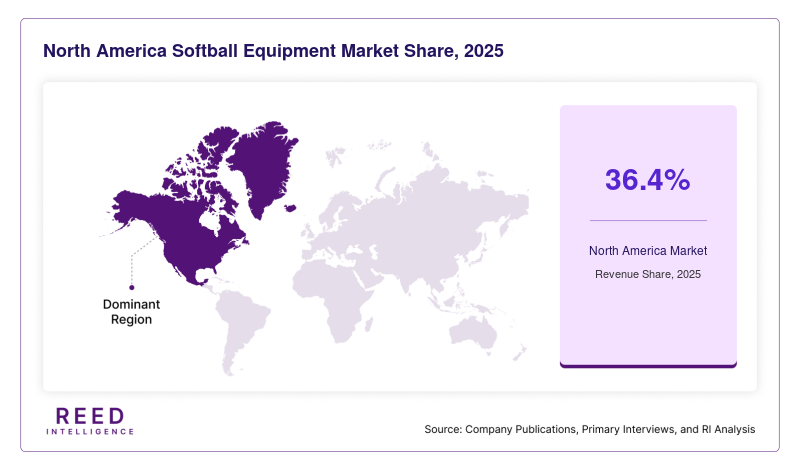
- North America dominated the market with a 36.4% share in 2025, while Asia Pacific is expected to grow at the fastest CAGR of 8.4% during 2026–2034.
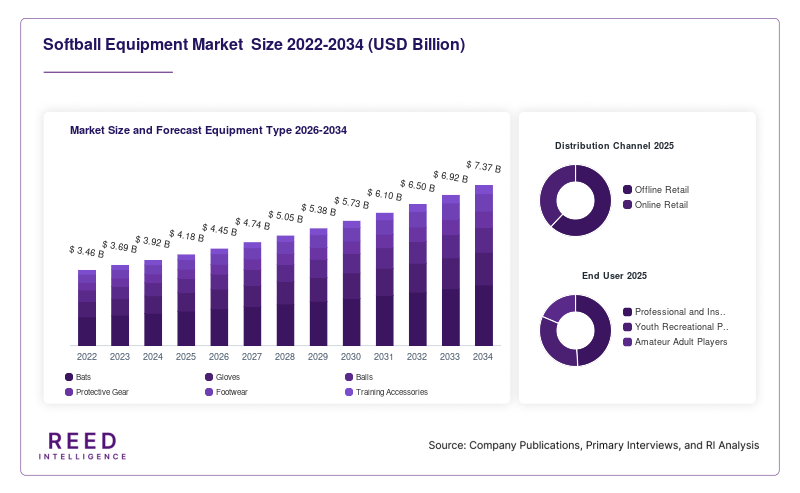
- By equipment type, bats accounted for the largest share of 29.7%, while protective gear is projected to grow at a CAGR of 8.9%.
- By distribution channel, offline retail led with a 61.8% share, whereas online retail is expected to expand at a CAGR of 9.3%.
- By end user, professional and institutional players held a 44.6% share, while youth recreational players are projected to grow at a CAGR of 8.1%.
- The United States remained the dominant country, with market values of USD 1.18 billion in 2024 and USD 1.27 billion in 2025.
Market Trends
Rising Adoption of Smart and Customized Sports Equipment
The Softball Equipment Market is witnessing growing demand for smart and customized products designed to improve player performance, comfort, and training efficiency. Manufacturers are introducing bats with vibration reduction technologies, sensor-enabled training accessories, and customized gloves tailored to individual hand sizes and playing styles. Consumers are increasingly preferring products that combine durability with data-driven performance analysis. Digital fitting systems available through online retail platforms are also helping players select equipment based on skill level, age group, and position-specific requirements. This trend is particularly visible among professional athletes and competitive youth leagues where training accuracy and performance monitoring are becoming essential. The integration of technology into sports accessories is helping brands differentiate their product portfolios while increasing average selling prices across premium equipment categories.
Expansion of Women’s and Youth Sports Participation
Growing participation in women’s softball leagues and youth development programs is becoming a major trend shaping market demand worldwide. Governments, educational institutions, and private sports organizations are increasing investments in school-level sports infrastructure and athletic scholarship programs. This expansion is encouraging consistent purchases of beginner and intermediate-level equipment sets. Parents are also increasingly supporting extracurricular sports activities for physical fitness and social development, which is contributing to stable consumer demand. International softball tournaments and regional championships are receiving broader media exposure, which is encouraging participation among younger demographics. Sports brands are responding by launching affordable product ranges, lightweight equipment, and youth-specific safety gear designed to improve accessibility and reduce injury risks for first-time players.
Market Drivers
Increasing Investment in Organized Sports Infrastructure
The growth of organized sports infrastructure across schools, universities, and community training centers is driving the expansion of the Softball Equipment Market. Governments and sports authorities are investing in recreational facilities, training academies, and local tournaments to encourage participation in team sports activities. These developments are increasing the procurement of bats, helmets, gloves, catcher equipment, footwear, and training accessories across institutional buyers. Collegiate softball leagues in North America and emerging sports academies in Asia Pacific are creating long-term demand for professional-grade equipment. Corporate sponsorships and sports partnerships are also improving accessibility to advanced training resources. As more institutions establish structured softball programs, demand for replacement equipment and protective gear is expected to rise steadily throughout the forecast period.
Growth of E-Commerce and Direct-to-Consumer Retail Channels
The rapid expansion of digital retail platforms is significantly contributing to market growth by improving product availability and consumer engagement. Online sports retailers and direct-to-consumer brand platforms allow customers to compare equipment specifications, access reviews, and customize products based on performance needs. These platforms are helping manufacturers reach consumers in smaller cities and emerging economies where physical sports retail infrastructure remains limited. Seasonal discounts, athlete endorsements, and social media marketing campaigns are also influencing purchasing decisions among younger consumers. In addition, online retail channels support quick inventory rotation and product launches, enabling brands to respond efficiently to changing consumer preferences. The increasing convenience of online purchasing and home delivery services continues to strengthen global market penetration.
Market Restraint
High Cost of Premium Equipment and Limited Accessibility in Developing Markets
The relatively high cost of advanced softball equipment remains a major challenge limiting broader market penetration in developing economies. Premium bats manufactured with composite materials, specialized gloves, and certified protective gear often carry higher prices that are not affordable for entry-level players or small sports organizations. In several low-income regions, softball participation remains limited due to inadequate sports infrastructure and reduced awareness compared to more established sports such as soccer or cricket. Import duties and transportation costs also increase product prices in international markets, affecting retail affordability. Smaller schools and recreational clubs frequently rely on low-cost or shared equipment, which reduces replacement demand. In addition, counterfeit products and unregulated local manufacturers create pricing pressure for established brands, limiting revenue opportunities for premium equipment providers. These factors collectively restrict the pace of market expansion in cost-sensitive regions.
Market Opportunities
Growing Demand for Eco-Friendly and Sustainable Equipment Materials
The increasing consumer preference for environmentally sustainable products is creating new opportunities for manufacturers operating in the Softball Equipment Market. Sports brands are exploring recyclable materials, biodegradable packaging, and sustainably sourced fabrics to align with changing consumer expectations. Eco-friendly gloves, reusable training accessories, and low-emission manufacturing practices are becoming important competitive differentiators among premium brands. Younger consumers and institutional buyers are increasingly evaluating environmental responsibility before making purchasing decisions. This trend is encouraging manufacturers to invest in sustainable product development and transparent supply chain practices. Companies adopting environmentally conscious production strategies are expected to strengthen brand reputation and expand customer loyalty in both developed and emerging markets.
Expansion of Softball Programs in Emerging Economies
Emerging economies across Asia Pacific, Latin America, and the Middle East are creating strong growth opportunities for the global softball equipment industry. Governments and sports associations are promoting participation in international sports activities to improve athletic development and tourism opportunities. Regional tournaments, youth exchange programs, and school-level competitions are gradually increasing awareness about softball in non-traditional markets. International sports brands are expanding distribution partnerships and localized marketing campaigns to improve product visibility in these regions. The development of affordable equipment lines and entry-level training kits is also helping attract new participants. As urban populations continue to adopt recreational fitness activities, demand for accessible and durable softball equipment is expected to increase steadily over the forecast period.
Segmental Analysis
By Equipment Type
Bats represented the dominant subsegment within the Softball Equipment Market and accounted for approximately 29.7% of global revenue in 2024. The segment benefits from frequent product replacement cycles and continuous technological innovation in materials and performance design. Composite and aluminum bats remain widely preferred among professional and amateur players due to their durability, lightweight construction, and improved swing efficiency. Manufacturers are focusing on vibration control technologies, balanced weight distribution, and certified league compliance to strengthen product demand. Institutional buyers including schools, colleges, and sports academies also contribute significantly to bat sales through bulk procurement programs. Rising participation in competitive tournaments continues to increase demand for high-performance bats across professional and semi-professional player categories.
By Distribution Channel
Offline retail remained the dominant distribution channel in the Softball Equipment Market and captured 61.8% of global revenue in 2024. Sporting goods stores, specialty sports retailers, and institutional distributors continue to play a major role in product sales due to the importance of physical equipment inspection and personalized fitting assistance. Consumers often prefer visiting retail stores to test bat grip, glove flexibility, helmet comfort, and footwear sizing before making purchasing decisions. Large retail chains also provide access to multiple brands, promotional discounts, and professional consultation services that strengthen customer trust. Institutional purchases by schools, universities, and sports clubs are frequently managed through offline distribution partnerships that ensure product consistency and after-sales support.
By End User
Professional and institutional players accounted for the largest share of the Softball Equipment Market in 2024, representing approximately 44.6% of total revenue. This segment includes schools, universities, sports academies, professional clubs, and organized league participants that regularly invest in high-quality equipment for training and competition purposes. Institutional buyers generally procure equipment in bulk quantities, contributing to stable market demand throughout the year. Professional players also prefer premium products that offer enhanced durability, performance optimization, and league certification compliance. Manufacturers are increasingly collaborating with training academies and collegiate sports programs to strengthen brand visibility and expand institutional partnerships. Growing sponsorship investments and structured training programs are expected to maintain strong demand within this segment.
Regional Analysis
North America
North America accounted for the largest share of the Softball Equipment Market in 2025, representing approximately 36.4% of global revenue. The region is projected to maintain stable growth at a CAGR of 5.9% during the forecast period due to the strong presence of organized softball leagues, collegiate sports programs, and professional training facilities. Consumer demand remains high for premium bats, catcher gear, and customized gloves across the United States and Canada. Sports participation initiatives supported by schools and community associations continue to generate consistent equipment replacement demand. The presence of established sports brands and mature retail networks also contributes to the region’s market leadership.
The United States remains the dominant country in North America due to its extensive collegiate softball ecosystem and strong participation in youth sports activities. National championships, university athletic programs, and local recreational leagues create recurring demand for high-performance equipment. Another unique growth factor is the increasing visibility of women’s sports through digital broadcasting platforms and sponsorship agreements. These developments are encouraging greater participation among younger athletes while improving sales of specialized protective gear and premium training accessories. Canada is also experiencing moderate market expansion through community-level sports investments and youth fitness programs.
Europe
Europe held a significant share of the global Softball Equipment Market in 2025 and is expected to expand at a CAGR of 5.7% during the forecast period. Market growth is supported by increasing participation in recreational sports and rising awareness of international softball competitions across countries such as the United Kingdom, Germany, Italy, and the Netherlands. Regional sports clubs and educational institutions are gradually incorporating softball programs into training activities, which is increasing demand for beginner and intermediate-level equipment. Retailers are also expanding online product availability, enabling consumers to access international sports brands more efficiently.
Germany remains the dominant country within the European market due to its growing network of sports clubs and recreational athletic programs. The country has experienced increasing participation in youth sports activities supported by municipal sports initiatives and fitness campaigns. A unique growth factor in Germany is the integration of multi-sport training facilities that encourage participation in less traditional sports activities, including softball. The United Kingdom and Italy are also witnessing steady growth as educational institutions and amateur sports organizations expand tournament participation and equipment procurement.
Asia Pacific
Asia Pacific is projected to record the fastest CAGR of 8.4% during the forecast period, supported by increasing sports participation rates, urbanization, and rising investments in youth athletic development. Countries such as Japan, China, South Korea, and Australia are witnessing expanding softball programs across educational institutions and recreational clubs. Growing disposable incomes and rising awareness about fitness-oriented lifestyles are also supporting equipment purchases among middle-income households. International sports brands are strengthening regional distribution partnerships while launching affordable product lines tailored for first-time users and youth players.
Japan remains the dominant country in the Asia Pacific Softball Equipment Market due to its long-standing participation in softball competitions and strong school-level sports culture. Educational institutions across Japan maintain structured athletic programs that encourage early participation in team sports. A unique growth factor in the country is the widespread integration of softball into extracurricular student activities, which creates recurring demand for training equipment and replacement gear. China is also emerging as a promising market as sports authorities continue investing in recreational sports infrastructure and youth athletic development programs.
Middle East & Africa
The Middle East & Africa region represented a smaller share of the global Softball Equipment Market in 2025 but is expected to grow at a CAGR of 6.3% during the forecast period. Increasing investments in sports infrastructure, youth recreation programs, and international sporting events are gradually supporting market expansion across the region. Countries within the Gulf Cooperation Council are investing in sports academies and community recreational facilities as part of broader tourism and wellness strategies. Growing urban populations and rising awareness about organized sports participation are contributing to demand for affordable equipment and beginner-level training accessories.
Saudi Arabia remains the dominant country within the regional market due to its increasing focus on sports diversification and recreational development initiatives. National programs promoting women’s participation in athletics are encouraging broader interest in team sports activities. A unique growth factor is the government-supported expansion of school sports facilities and international sports partnerships, which are increasing exposure to softball and similar recreational games. South Africa is also witnessing moderate market development through community sports organizations and youth engagement initiatives supported by local associations.
Latin America
Latin America is experiencing gradual growth in the Softball Equipment Market and is projected to register a CAGR of 6.1% during the forecast period. The region is benefiting from increasing participation in recreational sports activities and expanding access to affordable sporting goods through regional distributors. Countries including Mexico, Brazil, and Argentina are investing in school-level athletics and community sports infrastructure to encourage physical fitness and youth engagement. Online retail channels are improving product accessibility in semi-urban locations where specialized sports stores remain limited.
Mexico remains the dominant country within the Latin American market due to its strong baseball and softball culture in several regional communities. Local leagues, youth tournaments, and cross-border sports exchanges with the United States continue to support equipment demand. A unique growth factor in Mexico is the rising popularity of mixed-gender recreational sports programs organized by educational institutions and local municipalities. Brazil is also showing increasing interest in softball participation through sports academies and urban wellness initiatives aimed at expanding recreational activities among younger populations.
Competitive Landscape
The Softball Equipment Market is characterized by the presence of several international and regional manufacturers competing through product innovation, athlete endorsements, distribution expansion, and pricing strategies. Leading companies are focusing on lightweight materials, enhanced durability, and ergonomic product designs to strengthen consumer engagement across professional and recreational sports segments. Strategic partnerships with schools, sports academies, and collegiate leagues continue to support long-term brand visibility and recurring institutional sales.
Wilson Sporting Goods remains one of the leading companies in the market due to its extensive product portfolio and strong distribution network across North America and international markets. The company continues investing in advanced bat technologies and customized glove manufacturing solutions to maintain its competitive position. Easton Diamond Sports recently introduced a new range of composite softball bats designed to improve swing speed and impact durability for professional athletes. Other major companies are also expanding online retail operations and launching youth-focused equipment collections to improve accessibility in emerging markets. Competitive intensity is expected to increase further as brands focus on sustainability initiatives, smart training accessories, and direct-to-consumer sales models.
Key Players
- Wilson Sporting Goods
- Rawlings Sporting Goods
- Easton Diamond Sports
- Mizuno Corporation
- Louisville Slugger
- Marucci Sports
- Under Armour Inc.
- Nike Inc.
- Adidas AG
- Franklin Sports
- All-Star Sporting Goods
- DeMarini Sports
- Akadema Inc.
- Champro Sports
- Worth Sports
Recent Developments
- Wilson Sporting Goods expanded its premium softball glove lineup in 2025 with enhanced moisture-resistant leather materials designed for extended outdoor performance.
- Mizuno Corporation introduced lightweight protective helmets with advanced ventilation systems in 2024 to improve player comfort during long training sessions.
- Rawlings Sporting Goods partnered with regional youth sports academies in 2025 to increase distribution of beginner softball equipment kits across emerging markets.
- Easton Diamond Sports launched a digitally customized bat fitting platform in 2024 that allows consumers to select equipment based on player height, swing speed, and competition level.
Softball Equipment Market Segments
Equipment Type
- Bats
- Gloves
- Balls
- Protective Gear
- Footwear
- Training Accessories
Distribution Channel
- Offline Retail
- Online Retail
End User
- Professional and Institutional Players
- Youth Recreational Players
- Amateur Adult Players
By Region
- North America
- Europe
- APAC
- Middle East and Africa
- LATAM