Soil Release Polymers Market Size, Share, Demand Report By Type (Fluorocarbon-Based Polymers, Bio-Based Polymers, Hybrid Polymer Systems), By Application (Textile Finishing, Laundry Detergents, Industrial Cleaning, Functional Fabrics), By End-Use Industry (Apparel, Hospitality, Healthcare, Industrial Laundry Services), By Region & Segment Forecasts, 2026–2034
USD 3950
Market Overview
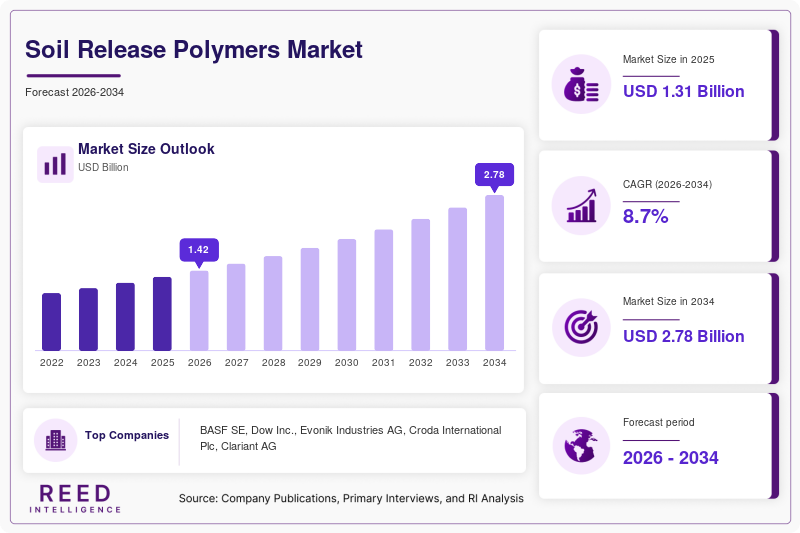
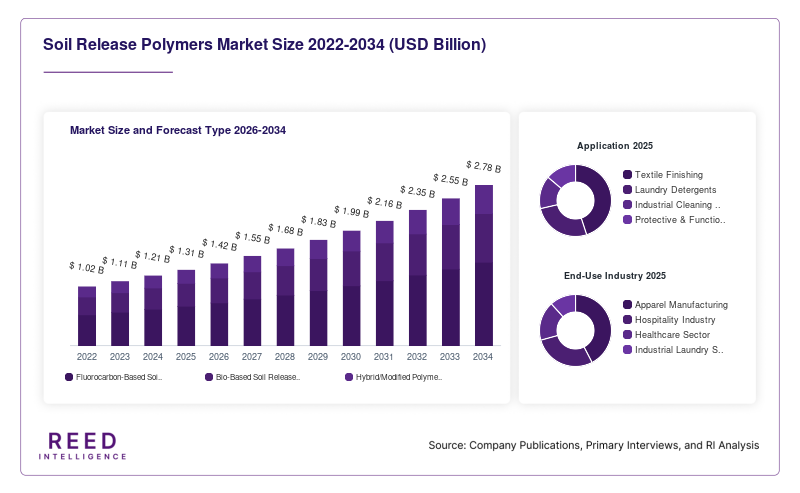
The Soil Release Polymers Market size estimated at USD 1.42 billion in 2026 and expected to reach USD 2.78 billion by 2034, growing at a CAGR of 8.7% during the forecast period (2026–2034). Soil release polymers are specialized chemical compounds used in textile finishing to improve fabric cleanliness by preventing soil adhesion and enhancing stain removal during washing. Their growing adoption in detergents, industrial laundry systems, and performance textiles is shaping market expansion across developed and emerging economies.
One of the primary global factors supporting market growth is the rising demand for sustainable and high-performance textile care solutions. Increasing urbanization, coupled with higher consumer spending on premium apparel and home textiles, has driven the need for advanced fabric treatment technologies. Additionally, environmental regulations encouraging reduced water and energy consumption in laundry processes have accelerated the use of soil release polymers as eco-efficient additives in detergent formulations.
Key Highlights
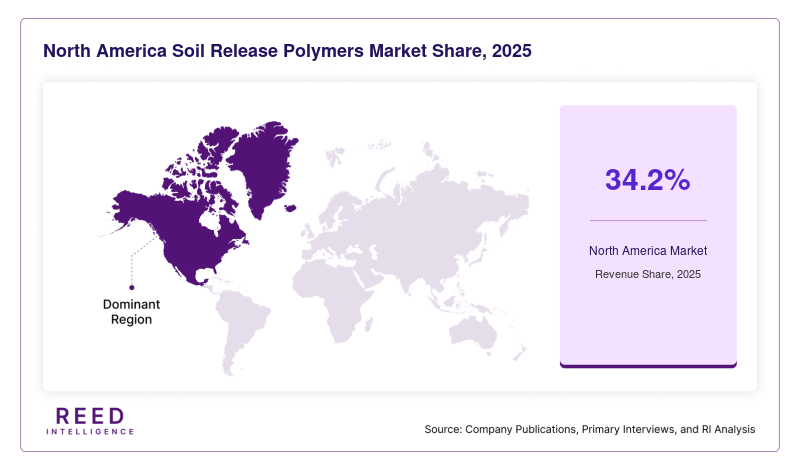
- North America dominated the market with a 34.2% share in 2025.
- Asia Pacific is expected to grow at the fastest CAGR of 11.2% during 2026–2034.
- By type, fluorocarbon-based polymers accounted for the largest share of 39.1%, while bio-based soil
- release polymers are projected to grow at a CAGR of 12.6%.
- By application, textile finishing led with a 44.3% share, whereas laundry detergents are expected to
- expand at a CAGR of 10.9%.
- The United States remained the dominant country, with market values of USD 410 million in 2024 and USD 445 million in 2025.
Market Trends
Rising Shift Toward Eco-Friendly Textile Treatment Solutions
The Soil Release Polymers Market is witnessing a strong transition toward environmentally sustainable chemical solutions used in textile processing and laundry applications. Manufacturers are increasingly focusing on developing non-toxic, biodegradable, and water-efficient polymer systems to comply with tightening environmental regulations across Europe and North America. This trend is further reinforced by growing consumer awareness regarding sustainable fashion and eco-labeled textile products. Brands are adopting soil release polymer coatings that reduce the need for harsh detergents, thereby lowering wastewater pollution. The integration of bio-based raw materials into polymer formulations is also gaining traction, as companies aim to reduce reliance on fluorinated chemicals and petrochemical derivatives while maintaining fabric performance and durability.
Technological Advancements in Functional Textile Finishes
Another significant trend shaping the Soil Release Polymers Market is the advancement in functional textile finishing technologies. Innovations in polymer chemistry have enabled the development of multifunctional coatings that not only provide soil release properties but also offer wrinkle resistance, anti-static behavior, and moisture management. These advancements are particularly relevant in performance apparel, sportswear, and hospitality textiles, where durability and ease of maintenance are critical. Nanotechnology-based formulations are being increasingly integrated into soil release systems to improve fabric protection at a microscopic level. As textile manufacturers invest in smart fabrics and high-performance materials, the demand for advanced soil release polymers continues to expand globally.
Market Drivers
Expanding Textile and Apparel Industry Demand
The growth of the global textile and apparel industry is a key driver fueling the Soil Release Polymers Market. Rising consumer demand for easy-care, stain-resistant clothing has significantly increased the adoption of functional finishing agents in fabric production. Industrial laundry services, hospitality sectors, and healthcare facilities are also major end users, requiring efficient cleaning solutions that reduce operational costs and water usage. Additionally, fast fashion trends have accelerated production cycles, prompting manufacturers to use soil release polymers to enhance garment longevity and maintain appearance after multiple washes. Emerging economies in Asia Pacific are witnessing strong textile manufacturing growth, further supporting market expansion.
Increasing Adoption in Industrial Laundry Applications
Industrial laundry operations are increasingly adopting soil release polymers to improve cleaning efficiency and reduce chemical usage. These polymers enhance soil detachment from fabrics during washing cycles, resulting in lower detergent consumption and energy savings. Large-scale facilities in hospitals, hotels, and commercial laundries are integrating these solutions to meet hygiene standards while optimizing operational costs. The demand is particularly strong in regions with high tourism activity and healthcare infrastructure expansion. Moreover, regulatory pressure to reduce wastewater contamination has encouraged industrial laundries to switch to advanced polymer-based cleaning systems, further driving market penetration.
Market Restraint
High Production Costs and Raw Material Dependency
The Soil Release Polymers Market faces a significant restraint due to the high production costs associated with advanced polymer formulations. Many high-performance soil release agents rely on specialized chemical inputs, including fluorinated compounds and engineered surfactants, which are expensive and subject to supply chain fluctuations. This cost burden limits adoption among small and medium-sized textile manufacturers, particularly in price-sensitive regions. Additionally, volatility in petrochemical raw material prices impacts manufacturing stability and profit margins. The need for continuous innovation and compliance with environmental regulations further increases R&D expenditure, creating additional financial pressure on industry participants and slowing widespread commercialization in developing markets.
Market Opportunities
Expansion of Sustainable Bio-Based Polymer Innovations
The increasing focus on sustainability presents a major opportunity for the Soil Release Polymers Market, particularly in the development of bio-based alternatives. Manufacturers are investing in plant-derived and biodegradable polymer systems that offer similar performance characteristics to synthetic variants while reducing environmental impact. These innovations align with global sustainability goals and circular economy initiatives, encouraging adoption across textile and detergent industries. Governments and regulatory bodies are also supporting green chemistry research, providing incentives for companies developing eco-friendly formulations. As consumer demand for sustainable products continues to rise, bio-based soil release polymers are expected to gain significant traction in both developed and emerging markets.
Growth in Smart and Functional Textile Applications
The expansion of smart textiles and functional fabrics presents another significant growth opportunity. Soil release polymers are increasingly being integrated into advanced textiles used in sportswear, medical garments, and protective clothing. These applications require fabrics that maintain cleanliness, resist stains, and perform under extreme conditions. The rising popularity of wearable technology and performance-enhancing apparel is driving demand for multifunctional coatings that combine soil release properties with additional benefits such as antimicrobial protection and thermal regulation. As textile innovation accelerates, the integration of soil release polymers into next-generation fabrics is expected to expand substantially.
Segmental Analysis
By Type
Fluorocarbon-based polymers accounted for 39.1% share in 2025, driven by their superior stain resistance and durability. These polymers are widely used in premium textile applications and industrial laundry systems where long-lasting performance is essential.
Bio-based soil release polymers are projected to grow at a CAGR of 12.6%, supported by rising environmental concerns and regulatory push for sustainable chemical alternatives. Increasing investments in green chemistry are accelerating innovation in this segment.
By Application
Textile finishing dominated the market with a 44.3% share in 2025, supported by large-scale adoption in apparel and home textiles. Manufacturers rely on soil release polymers to enhance fabric longevity and improve washing performance.
Laundry detergents are expected to grow at a CAGR of 10.9%, driven by increasing demand for high-efficiency cleaning products in residential and commercial sectors. Rising urbanization and hygiene awareness are key supporting factors.
By End-Use Industry
Apparel manufacturing held 41.8% share in 2025, driven by global demand for easy-care clothing. Textile producers are increasingly integrating soil release technologies to enhance product value.
Hospitality and healthcare are projected to grow at a CAGR of 11.3%, supported by stringent hygiene standards and increasing use of industrial laundry services in hotels and hospitals.
Regional Analysis
North America
North America accounted for approximately 34.2% market share in 2025, with a projected CAGR of 8.1% during 2026–2034. The region remains one of the most mature markets for soil release polymers due to its well-established textile processing industry and high adoption of premium laundry and fabric care products. Strong demand from commercial laundry services, hospitality, and healthcare sectors continues to support steady consumption of advanced polymer formulations designed for high-performance stain resistance and fabric durability. Regulatory emphasis on sustainable chemical usage also plays a significant role in shaping regional demand patterns.
The United States dominates the North American market, supported by its advanced chemical manufacturing ecosystem and high consumer awareness regarding eco-friendly cleaning solutions. A key growth factor is the increasing shift toward cold-water washing technologies and energy-efficient laundry systems, which significantly enhance the effectiveness of soil release polymers. Additionally, widespread use of synthetic and performance apparel in sportswear and workwear segments further accelerates product adoption across residential and industrial applications.
Europe
Europe held nearly 27.6% share in 2025, growing at a CAGR of 7.9% from 2026 to 2034. The region’s market is strongly influenced by strict environmental regulations and a high preference for sustainable textile processing solutions. The presence of advanced detergent manufacturers and textile finishing industries supports consistent demand for eco-friendly and high-efficiency soil release polymer formulations. Increasing focus on circular economy practices and biodegradable chemical solutions further strengthens market growth across major European economies.
Germany leads the regional market due to its strong chemical industry base and leadership in technical textile innovation. A key growth factor is the enforcement of stringent EU regulations such as REACH, which encourages manufacturers to develop safer and more sustainable polymer systems. France and the United Kingdom also contribute significantly, driven by rising demand for premium laundry care products and increased consumer preference for environmentally responsible textile solutions.
Asia Pacific
Asia Pacific represented approximately 23.8% market share in 2025, and is expected to register the fastest CAGR of 11.2% during 2026–2034. Rapid industrialization, expanding textile manufacturing hubs, and increasing disposable income levels are driving strong demand for soil release polymers across the region. Countries such as China, India, and Bangladesh are major contributors due to their large-scale textile production and growing export-oriented apparel industries. Rising urbanization and lifestyle changes are further boosting demand for advanced laundry and fabric care solutions.
China dominates the regional market due to its massive textile production capacity and strong domestic consumption of detergents and performance fabrics. A key growth factor is the expansion of technical textile manufacturing, supported by government initiatives and foreign investments in industrial modernization. India is also emerging as a high-growth market, driven by rising middle-class consumption, increasing detergent penetration, and growth in organized retail and hospitality sectors.
Middle East & Africa
The Middle East & Africa region accounted for around 7.4% market share in 2025, with a projected CAGR of 8.6% during 2026–2034. Market growth in this region is supported by expanding hospitality, tourism, and healthcare infrastructure, which require large-scale industrial laundry services. Increasing urbanization and rising disposable incomes are also contributing to the gradual adoption of premium textile care products and advanced detergent formulations containing soil release polymers.
Saudi Arabia leads the regional market, driven by economic diversification initiatives under Vision 2030, which are promoting industrial development including textile and chemical manufacturing. A key growth factor is the expansion of hospitality and tourism infrastructure, particularly in large-scale hotel developments and commercial cleaning services. The United Arab Emirates also contributes significantly due to its strong retail sector and demand for high-quality fabric care solutions.
Latin America
Latin America held approximately 6.2% market share in 2025, growing at a CAGR of 8.3% during 2026–2034. The region is experiencing steady expansion supported by increasing textile production, rising consumer awareness of fabric care products, and gradual urbanization. Growing middle-class populations in countries such as Brazil and Mexico are driving demand for modern laundry solutions and stain-resistant textile treatments. The expansion of organized retail and detergent manufacturing industries further supports regional growth.
Brazil dominates the Latin American market due to its strong apparel manufacturing base and expanding domestic consumption of cleaning and laundry products. A key growth factor is the rising adoption of premium textile care solutions in urban households, driven by improving living standards and increased awareness of fabric longevity. Mexico also plays a significant role due to its export-oriented textile industry and proximity to North American supply chains, which encourages the use of advanced soil release polymer technologies
Competitive Landscape
The Soil Release Polymers Market is moderately consolidated, with key players focusing on product innovation, sustainability, and strategic partnerships. Leading companies include BASF SE, Dow Inc., Evonik Industries AG, Croda International Plc, and Clariant AG. These players are investing heavily in R&D to develop bio-based and high-performance polymer solutions.
BASF SE remains a prominent leader, supported by its extensive chemical portfolio and global distribution network. A recent development includes its expansion of sustainable polymer production capabilities to support textile applications in Asia and Europe.
Key Players List
- BASF SE
- Dow Inc.
- Evonik Industries AG
- Croda International Plc
- Clariant AG
- Arkema Group
- Solvay S.A.
- Lubrizol Corporation
- Huntsman Corporation
- Wacker Chemie AG
- Eastman Chemical Company
- Steinbeck Chemicals
- Omnova Solutions Inc.
- Indorama Ventures
- Formulator Inc.
Recent Developments
- BASF announced expansion of its sustainable polymer production facility to support growing demand for eco-friendly textile solutions.
- Dow Inc. introduced a new generation of low-temperature soil release polymers aimed at reducing energy consumption in laundry processes.
- Croda International launched a bio-based polymer line targeting premium apparel manufacturers focused on sustainable fabric care solutions.
Soil Release Polymers Market Segments
Type
- Fluorocarbon-Based Soil Release Polymers
- Bio-Based Soil Release Polymers
- Hybrid/Modified Polymer Systems
Application
- Textile Finishing
- Laundry Detergents
- Industrial Cleaning Systems
- Protective & Functional Fabrics
End-Use Industry
- Apparel Manufacturing
- Hospitality Industry
- Healthcare Sector
- Industrial Laundry Services
By Region
- North America
- Europe
- APAC
- Middle East and Africa
- LATAM