Sorghum And Millet-Based Beer Market Size, Share & Demand Report By Product Type (Sorghum-Based Beer, Millet-Based Beer), By Flavor (Unflavored, Flavored), By Alcohol Content (Low Alcohol, Standard Alcohol, High Alcohol), By Distribution Channel (On-Trade, Off-Trade, Online Retail), By Packaging (Bottles, Cans, Draft), By Region & Segment Forecasts, 2025–2034
USD 3950
Market Overview
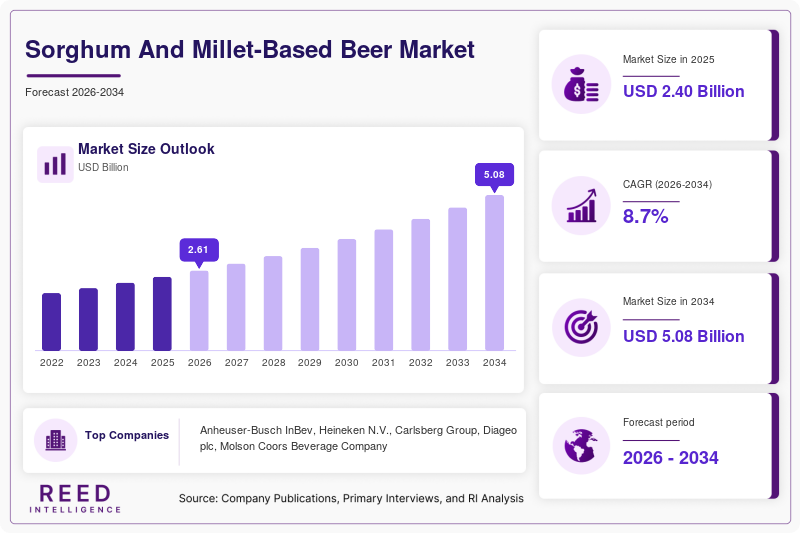
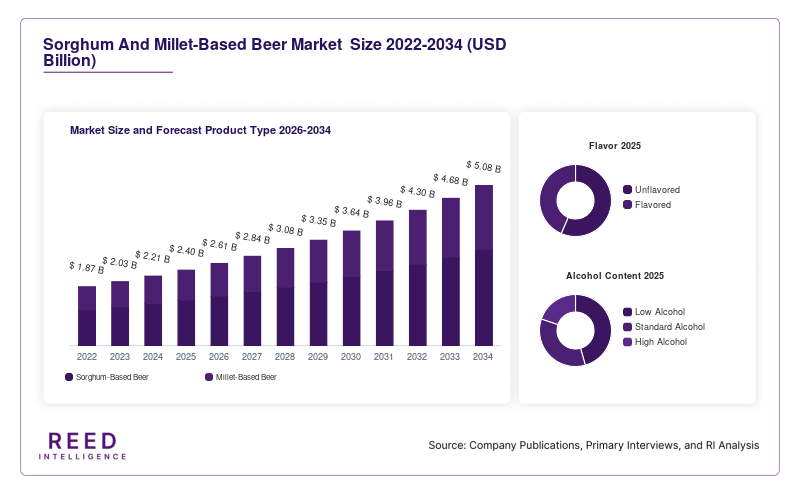
The global Sorghum And Millet-Based Beer Market size was valued at approximately USD 2.4 billion in 2025 and is projected to reach USD 5.1 billion by 2034, expanding at a CAGR of 8.7% during the forecast period (2025–2034). The market has witnessed steady expansion due to increasing consumer inclination toward alternative grains and traditional brewing methods, particularly in regions where sorghum and millet are staple crops.
A key global factor supporting market growth is the rising demand for gluten-free and allergen-conscious alcoholic beverages. As consumers become more aware of dietary sensitivities, sorghum and millet-based beers have gained attention as viable substitutes for barley-based beers. This shift has been further supported by product innovations and expanding distribution networks across emerging and developed markets.
Additionally, the growing popularity of craft brewing and local heritage beverages has driven the adoption of non-conventional grains in beer production. Sorghum and millet beers are increasingly being positioned as premium artisanal products, appealing to niche consumer segments seeking authenticity and unique flavor profiles.
Key Highlights:
- North America dominated the market with a 32.5% share, while Asia Pacific is expected to register the fastest CAGR of 10.2% during the forecast period.
- In product type, sorghum-based beer held the largest share at 58.4%, while flavored millet beer is projected to grow at the fastest CAGR of 9.6%.
- In distribution, on-trade channels led with 54.1% share, whereas online retail is expected to expand at a CAGR of 11.3%.
- The U.S. remained the dominant country, with market values of USD 620 million in 2024 and USD 665 million in 2025.
Market Trends
Rising Popularity of Gluten-Free Craft Beers
The increasing demand for gluten-free beverages has significantly influenced the Sorghum And Millet-Based Beer Market. Consumers with gluten intolerance or those adopting gluten-free lifestyles are actively seeking alternatives to conventional beers. Craft breweries are leveraging sorghum and millet as core ingredients to develop innovative product lines. These beers are being marketed not only for their health benefits but also for their distinct taste profiles, leading to wider consumer acceptance.
Integration of Indigenous and Traditional Brewing Techniques
Another notable trend shaping the market is the revival and commercialization of traditional brewing methods. In regions such as Africa and Asia, millet and sorghum beers have deep cultural roots. Manufacturers are modernizing these traditional recipes while maintaining authenticity, enabling them to cater to both local and international markets. This fusion of tradition and modern production techniques has enhanced product differentiation and strengthened brand identity, contributing to sustained market growth.
Market Drivers
Expansion of Specialty Alcoholic Beverage Segments
The rapid expansion of specialty alcoholic beverages has contributed to the growth of the Sorghum And Millet-Based Beer Market. Consumers are increasingly exploring niche beverage categories that offer unique ingredients and brewing processes. Sorghum and millet beers, often perceived as premium and artisanal, align well with this trend. Breweries are introducing limited-edition variants and region-specific flavors, which has increased product visibility and demand across diverse consumer groups.
Growing Investment in Local Grain Supply Chains
Increased investment in local agriculture and grain processing infrastructure has also driven market growth. Governments and private players are promoting the use of indigenous crops such as sorghum and millet to support rural economies. This has improved the availability and quality of raw materials for brewers, reducing dependency on imported barley. As a result, manufacturers are able to maintain cost efficiency while promoting sustainability, thereby strengthening market expansion.
Market Restraint
Limited Consumer Awareness in Developed Markets
Despite its growth potential, the Sorghum And Millet-Based Beer Market faces challenges related to limited consumer awareness, particularly in developed regions. Many consumers are unfamiliar with the taste, texture, and benefits of sorghum and millet-based beers, leading to slower adoption rates. Additionally, these beers often compete with well-established barley-based brands that dominate shelf space and marketing channels.
The lack of widespread promotional campaigns and limited product availability in mainstream retail outlets further restrict market penetration. Smaller breweries producing these beers may also face challenges in scaling production and distribution, which affects their ability to compete with larger players.
Overcoming this restraint requires targeted marketing strategies, consumer education initiatives, and collaborations with distributors to improve product visibility. Addressing these challenges will be critical for unlocking the full potential of the market.
Market Opportunities
Expansion into Functional and Health-Oriented Beverages
The growing demand for functional beverages presents a significant opportunity for the Sorghum And Millet-Based Beer Market. Manufacturers are exploring the incorporation of additional nutrients, probiotics, and natural ingredients to enhance the health profile of these beers. This approach aligns with consumer preferences for beverages that offer both enjoyment and perceived health benefits, opening new avenues for product innovation and differentiation.
Emerging Markets and Urbanization Trends
Rapid urbanization and rising disposable incomes in emerging economies create favorable conditions for market expansion. Urban consumers are increasingly exposed to diverse beverage options and are more willing to experiment with new products. Sorghum and millet-based beers, with their cultural relevance and unique positioning, are well-suited to capitalize on this trend. Expanding distribution networks and strategic partnerships in these regions can significantly boost market growth.
Segmental Analysis
By Type
Sorghum-based beer dominated the market in 2024, accounting for 58.4% of the total share. Its widespread availability and familiarity among consumers contributed to its leading position.
Millet-based beer is expected to grow at the fastest CAGR of 9.4% during the forecast period, driven by increasing product innovation and rising demand for diverse flavor profiles.
By Flavor
Unflavored beer held the largest share at 62.7% in 2024, as it caters to traditional preferences and offers a more authentic taste experience.
Flavored beer is projected to expand at a CAGR of 9.8%, supported by the introduction of fruit-infused and herbal variants that appeal to younger consumers.
By Alcohol Content
Standard alcohol content beers (4%–6%) accounted for 55.9% of the market in 2024, reflecting consumer preference for balanced beverages.
Low-alcohol variants are expected to grow at a CAGR of 10.1%, driven by increasing health consciousness and demand for lighter drinking options.
By Distribution Channel
On-trade channels dominated the market with a 54.1% share in 2024, benefiting from strong sales in bars, pubs, and restaurants.
Online retail is anticipated to grow at the fastest CAGR of 11.3%, supported by the expansion of e-commerce platforms and changing consumer purchasing behavior.
By Packaging
Bottled beer accounted for 60.3% of the market share in 2024 due to its convenience and longer shelf life.
Canned beer is expected to grow at a CAGR of 9.7%, driven by its portability and increasing adoption among younger consumers.
Regional Analysis
North America
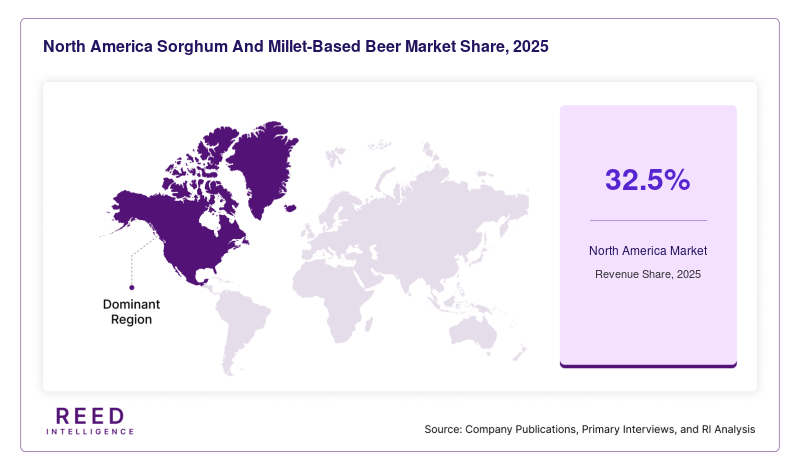
North America accounted for 32.5% of the Sorghum And Millet-Based Beer Market share in 2025 and is projected to grow at a CAGR of 7.9% during the forecast period. The region’s growth will be driven by increasing consumer demand for alternative and specialty alcoholic beverages.
The United States dominated the regional market due to the presence of a well-established craft brewing industry. Breweries in the country have been experimenting with non-traditional grains to cater to evolving consumer preferences, leading to increased adoption of sorghum-based beers.
Europe
Europe held a 24.3% market share in 2025 and is expected to expand at a CAGR of 8.1% through 2034. The region’s growth will be supported by a strong culture of beer consumption and rising interest in sustainable brewing practices.
Germany emerged as the dominant country, driven by its advanced brewing infrastructure and focus on product innovation. Brewers are incorporating millet and sorghum to diversify their offerings and meet changing consumer expectations.
Asia Pacific
Asia Pacific represented 21.7% of the market in 2025 and is anticipated to register the fastest CAGR of 10.2%. Growth in the region will be fueled by increasing urbanization and rising disposable incomes.
China led the regional market, supported by a large consumer base and growing interest in traditional and locally sourced beverages. The country’s expanding middle class has contributed to higher demand for premium and specialty beers.
Middle East & Africa
The Middle East & Africa accounted for 13.8% of the market share in 2025 and is expected to grow at a CAGR of 9.1%. The region’s growth will be driven by the cultural significance of sorghum and millet-based beverages.
Nigeria dominated the market due to its long-standing tradition of brewing with local grains. The availability of raw materials and established consumption patterns have supported steady market growth.
Latin America
Latin America held a 7.7% share in 2025 and is projected to expand at a CAGR of 8.5%. The region’s growth will be influenced by increasing awareness of alternative grains and expanding craft beer culture.
Brazil emerged as the dominant country, driven by a growing number of microbreweries and increasing consumer interest in unique beer varieties. The country’s dynamic beverage market has facilitated the introduction of sorghum and millet-based beers.
Competitive Landscape
The Sorghum And Millet-Based Beer Market is characterized by the presence of both global and regional players focusing on product innovation and market expansion. Key companies are investing in research and development to enhance flavor profiles and improve production efficiency.
One leading player, Anheuser-Busch InBev, has strengthened its market position by introducing new gluten-free beer variants and expanding its distribution network. The company’s focus on sustainability and use of alternative grains has contributed to its leadership in the market.
Other prominent players are adopting strategies such as mergers, acquisitions, and partnerships to enhance their market presence. Regional breweries are also playing a significant role by leveraging local ingredients and traditional brewing techniques to cater to niche consumer segments.
Key Players
- Anheuser-Busch InBev
- Heineken N.V.
- Carlsberg Group
- Diageo plc
- Molson Coors Beverage Company
- SABMiller (historical operations)
- United Breweries Limited
- China Resources Snow Breweries
- Castel Group
- BGI Ethiopia
Recent Developments
- In 2024, major breweries expanded their gluten-free beer portfolios using sorghum as a primary ingredient.
- In 2025, several craft brewers launched millet-based flavored beer variants targeting urban consumers.
- Strategic partnerships between breweries and local farmers increased the supply of high-quality sorghum and millet.
- Investments in sustainable brewing technologies enhanced production efficiency and reduced environmental impact.
- Expansion of e-commerce platforms enabled wider distribution of specialty beers globally.
Sorghum And Millet-Based Beer Market Segments
Product Type
- Sorghum-Based Beer
- Millet-Based Beer
Flavor
- Unflavored
- Flavored
Alcohol Content
- Low Alcohol
- Standard Alcohol
- High Alcohol
Distribution Channel
- On-Trade
- Off-Trade
- Online Retail
Packaging
- Bottles
- Cans
- Draft
By Region
- North America
- Europe
- APAC
- Middle East and Africa
- LATAM