Spa Market Size, Share & Demand Report By Spa Type (Hotel and Resort Spas, Medical Spas, Day Spas, Destination Spas, Mineral Spring Spas, Club Spas), By Service Type (Massage Therapies, Skincare and Anti-Aging Treatments, Body Treatments, Salon Services, Hydrotherapy, Wellness Therapies), By End User (Women, Men, Teenagers), By Region & Segment Forecasts, 2026–2034
USD 3950
Market Overview
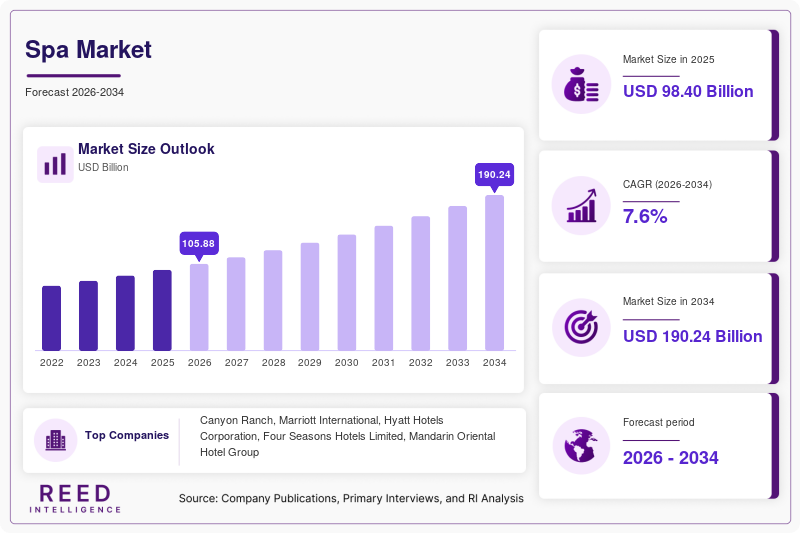
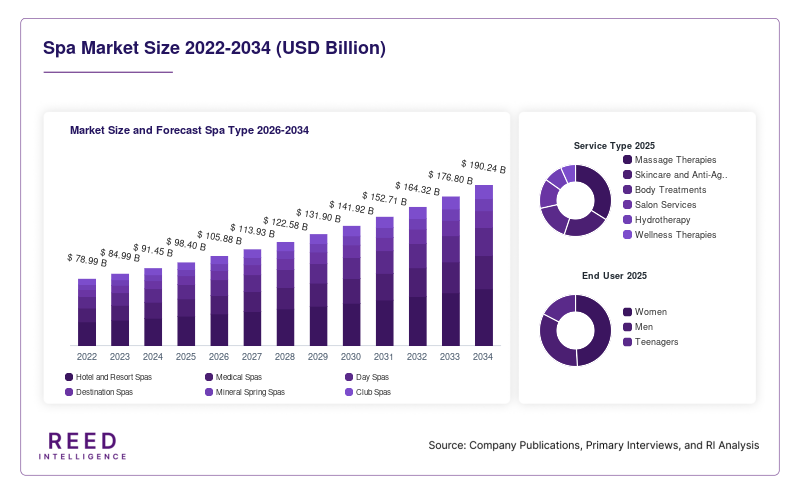
The global Spa Market size was valued at USD 98.4 billion in 2026 and is projected to reach USD 176.8 billion by 2034, expanding at a CAGR of 7.6% during the forecast period of 2026–2034. The market continues to evolve as consumers increasingly prioritize preventive wellness, relaxation therapies, stress management, and holistic healthcare solutions. Rising urbanization, demanding work schedules, and growing awareness regarding mental wellness have significantly increased the demand for spa therapies across luxury resorts, wellness retreats, medical spas, and standalone spa centers worldwide.
The integration of personalized wellness programs and digital appointment platforms has further improved customer engagement and operational efficiency within the industry. In addition, tourism recovery across major economies has strengthened the hospitality sector, directly supporting spa service demand in hotels and destination resorts. Consumers are increasingly spending on premium self-care experiences, including aromatherapy, hydrotherapy, body massage, detox programs, and skincare treatments. The expansion of wellness tourism and rising disposable income among middle-income populations are also contributing to sustained market growth.
Key Highlights
- North America dominated the Spa Market with a 35.4% share in 2025, while Asia Pacific is expected to grow at the fastest CAGR of 10.9% during 2026–2034.
- By spa type, hotel and resort spas accounted for the largest share of 39.1% in 2024, while medical spas are projected to grow at a CAGR of 11.6% during the forecast period.
- By service type, massage therapies led the market with a 36.8% share, whereas skincare and anti-aging treatments are expected to expand at a CAGR of 10.8% through 2034.
- By end user, women represented the largest share of 61.3% in 2024, while male consumers are anticipated to grow at a CAGR of 9.7% during the forecast period.
- The United States remained the dominant country, with market values of USD 18.9 billion in 2024 and USD 20.1 billion in 2025.
Market Trends
Rising Adoption of Wellness Tourism and Destination Spa Experiences
The growing popularity of wellness tourism is emerging as a major trend shaping the Spa Market. Consumers are increasingly combining leisure travel with wellness-focused experiences that include therapeutic massages, detoxification programs, meditation retreats, hydrotherapy sessions, and holistic healing services. Luxury hotels and resort operators are expanding their spa offerings to attract high-spending travelers seeking relaxation and mental rejuvenation. Countries with established tourism sectors are investing heavily in integrated wellness destinations that combine hospitality, healthcare, and recreational services. This trend is especially prominent among millennials and working professionals who view wellness travel as part of long-term lifestyle management. The increasing influence of social media and wellness influencers is also encouraging travelers to explore premium spa experiences, further strengthening global market demand.
Integration of Technology and Personalized Spa Treatments
Digital transformation is becoming increasingly visible across the Spa Market as businesses adopt technology-driven customer engagement models. Spa operators are implementing AI-based consultation systems, online scheduling platforms, and personalized wellness analytics to improve customer satisfaction and operational efficiency. Consumers are showing stronger interest in customized treatments tailored to individual skin conditions, stress levels, and health goals. Wearable wellness devices and mobile health applications are enabling spas to deliver targeted therapies supported by real-time data insights. Advanced skincare technologies, LED therapy systems, and non-invasive cosmetic equipment are also gaining adoption in medical spas. The integration of digital customer management systems is helping businesses improve repeat visits and loyalty retention while enhancing overall service personalization and profitability.
Market Drivers
Increasing Consumer Focus on Mental Wellness and Stress Reduction
The growing awareness regarding mental health and emotional well-being is significantly driving Spa Market growth. Modern lifestyles characterized by long working hours, digital fatigue, and high stress levels have increased the demand for relaxation therapies and wellness services. Consumers are increasingly seeking spa treatments to improve sleep quality, reduce anxiety, and support overall mental wellness. Corporate wellness programs are also contributing to higher spa utilization as employers encourage stress-management activities to improve workforce productivity. Massage therapy, aromatherapy, meditation sessions, and wellness counseling are becoming popular among urban populations seeking preventive healthcare solutions. This shift toward holistic wellness is encouraging spa operators to expand service portfolios and create immersive wellness environments that support long-term customer engagement.
Expanding Demand for Non-Invasive Beauty and Anti-Aging Treatments
The increasing preference for non-surgical cosmetic procedures is another major factor supporting the expansion of the Spa Market. Consumers are actively seeking minimally invasive skincare and anti-aging solutions that provide aesthetic improvement without lengthy recovery periods. Medical spas are witnessing strong demand for treatments such as laser therapy, skin resurfacing, injectable procedures, and collagen-enhancing therapies. The growing aging population across developed economies is further increasing interest in rejuvenation treatments and wellness-based skincare solutions. Additionally, social media exposure and beauty-conscious consumer behavior are influencing younger demographics to invest in professional skincare services. Spa operators are introducing advanced equipment and dermatology-supported procedures to meet evolving customer expectations and enhance treatment outcomes.
Market Restraint
High Operational Costs and Skilled Workforce Limitations
The Spa Market faces operational challenges associated with high infrastructure investment, rising labor costs, and limited availability of skilled therapists. Establishing premium spa facilities requires significant capital expenditure for interior design, treatment rooms, advanced wellness equipment, and compliance with health and safety standards. Smaller businesses often struggle to maintain profitability due to increasing operational expenses and competitive pricing pressures. In addition, the industry depends heavily on trained professionals capable of delivering specialized treatments and personalized customer experiences. The shortage of certified therapists in several developing regions can negatively impact service quality and customer retention. Seasonal tourism fluctuations also create revenue instability for resort-based spas. Furthermore, luxury spa services are often considered discretionary spending, making the market vulnerable to economic uncertainty and reduced consumer confidence during financial downturns.
Market Opportunities
Expansion of Medical Spa Services Across Emerging Economies
The increasing healthcare awareness and growing middle-class population in emerging economies are creating substantial opportunities for medical spa providers. Consumers in countries across Asia Pacific, Latin America, and the Middle East are showing stronger interest in aesthetic treatments, preventive skincare, and wellness-focused cosmetic procedures. Medical spas are expanding beyond traditional urban centers into secondary cities where disposable income and beauty consciousness are increasing rapidly. The adoption of advanced skincare technologies and international wellness standards is helping operators attract new consumer groups. Partnerships between dermatology clinics and spa centers are also improving access to medically supervised treatments. As healthcare tourism expands globally, medical spa operators are expected to benefit from increasing cross-border demand for cost-effective wellness and cosmetic procedures.
Growing Demand for Sustainable and Organic Wellness Experiences
Consumer preference for environmentally responsible wellness services is generating new opportunities within the Spa Market. Customers are increasingly choosing spa centers that utilize organic skincare products, sustainable architecture, herbal therapies, and eco-friendly operational practices. Luxury wellness brands are incorporating locally sourced ingredients, biodegradable packaging, and water-efficient systems to strengthen brand positioning and attract environmentally conscious consumers. Sustainable spa concepts are gaining popularity in destination resorts and wellness retreats where consumers seek authentic natural experiences. Businesses adopting green certifications and wellness sustainability initiatives are likely to improve customer loyalty and long-term profitability. This trend is encouraging innovation in organic treatment formulations, plant-based therapies, and environmentally friendly spa infrastructure development across global markets.
Segmental Analysis
By Spa Type
Hotel and resort spas accounted for the largest share of the Spa Market in 2024, representing approximately 39.1% of global revenue. The dominance of this subsegment is primarily supported by the expansion of luxury tourism, integrated wellness hospitality services, and increasing consumer preference for premium relaxation experiences during travel. International hotel chains are investing heavily in spa infrastructure to improve customer retention and strengthen competitive positioning within the hospitality sector. Destination resorts offering holistic wellness packages, including hydrotherapy, massage therapy, meditation programs, and fitness services, continue to attract affluent travelers seeking immersive wellness experiences. The growing popularity of wellness vacations and weekend relaxation retreats has further contributed to the strong performance of hotel and resort spas across major tourism destinations worldwide.
Medical spas are projected to witness the fastest CAGR of 11.6% during the forecast period due to increasing consumer demand for non-invasive cosmetic procedures and technologically advanced skincare treatments. These facilities combine medical expertise with traditional wellness services, creating a strong value proposition for beauty-conscious consumers. Treatments such as laser therapy, skin rejuvenation, anti-aging procedures, and aesthetic dermatology services are gaining rapid popularity among both aging and younger demographics. Rising social media influence and increasing awareness regarding professional skincare are supporting market expansion. Furthermore, advancements in cosmetic technology and growing partnerships between healthcare providers and wellness centers are encouraging the establishment of specialized medical spas in urban markets across developed and emerging economies.
By Service Type
Massage therapies held the dominant share of the Spa Market in 2024, accounting for approximately 36.8% of total revenue. This segment continues to lead due to widespread consumer awareness regarding the therapeutic benefits of massage treatments for stress reduction, pain management, and muscle relaxation. Swedish massage, deep tissue therapy, hot stone treatments, and aromatherapy massage remain highly popular across luxury spas, wellness retreats, and standalone centers. Corporate professionals and urban consumers increasingly seek massage services to manage stress and improve overall mental wellness. Additionally, hospitality operators frequently position massage therapies as essential components of wellness tourism packages. The relatively broad consumer acceptance and availability of massage services across price ranges have further strengthened the segment’s global market position.
Skincare and anti-aging treatments are expected to grow at the fastest CAGR of 10.8% through 2034 due to increasing beauty consciousness and demand for minimally invasive cosmetic solutions. Consumers are actively seeking professional skincare services to improve skin texture, reduce signs of aging, and address dermatological concerns. Medical spas and premium wellness centers are adopting advanced equipment for treatments such as chemical peels, LED therapy, collagen induction, and facial rejuvenation procedures. Younger consumers are also entering the segment as preventive skincare becomes part of routine wellness habits. Rising disposable income and expanding access to advanced cosmetic technologies are enabling spa operators to diversify skincare treatment portfolios and improve profitability through premium service offerings.
By End User
Women represented the largest share of the Spa Market in 2024, accounting for approximately 61.3% of total revenue. Female consumers continue to dominate demand for beauty enhancement services, wellness therapies, skincare treatments, and relaxation programs. The growing influence of wellness culture, social media beauty trends, and preventive self-care routines has encouraged higher spending on spa experiences among women across multiple age groups. Spa operators are increasingly offering customized packages focused on skincare, detoxification, anti-aging therapies, and holistic wellness to address evolving consumer preferences. In addition, bridal wellness programs, maternity therapies, and luxury beauty treatments continue to generate substantial demand within premium and mid-range spa facilities globally.
Male consumers are projected to register the fastest CAGR of 9.7% during the forecast period as awareness regarding grooming, wellness, and stress management continues to increase. Men are increasingly adopting spa services including massage therapy, facial treatments, body therapies, and fitness-oriented wellness programs. Corporate professionals and younger urban consumers are contributing significantly to segment growth due to rising interest in preventive healthcare and personal appearance management. Spa operators are responding by launching male-focused wellness packages and gender-neutral treatment environments designed to improve customer comfort and engagement. The increasing normalization of wellness spending among male demographics is expected to create long-term growth opportunities for service providers across both developed and emerging markets.
Regional Analysis
North America
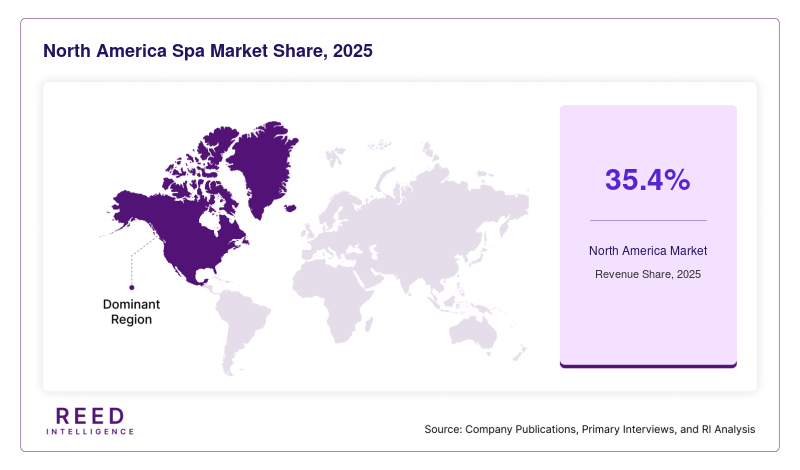
North America accounted for 35.4% of the global Spa Market share in 2025 and maintained its leadership position due to strong consumer spending on wellness services and premium self-care experiences. The region is projected to expand at a CAGR of 6.8% during the forecast period. The United States and Canada continue to witness increasing demand for medical spas, luxury wellness retreats, and anti-aging skincare services. Rising awareness regarding stress management and preventive healthcare is encouraging consumers to incorporate spa therapies into routine wellness practices. Strong presence of established wellness brands and advanced service infrastructure further supports regional market growth.
The United States remained the dominant country within North America due to high consumer expenditure on beauty and wellness services. The country benefits from a mature wellness tourism industry and a strong network of luxury hospitality operators offering integrated spa services. The expansion of medical spa chains and increasing adoption of advanced skincare technologies are supporting business growth. Rising demand for personalized treatments, combined with growing acceptance of minimally invasive cosmetic procedures, continues to strengthen the national market outlook across urban and suburban areas.
Europe
Europe represented a significant share of the Spa Market in 2025 and is expected to grow at a CAGR of 6.5% through 2034. The region benefits from a long-standing wellness culture supported by thermal spa traditions, luxury tourism, and holistic healthcare practices. Countries across Western Europe are investing in premium wellness resorts, destination retreats, and sustainable spa infrastructure to attract domestic and international travelers. Demand for natural therapies, hydrotherapy treatments, and organic wellness products continues to rise among consumers seeking long-term health improvement and relaxation experiences.
Germany emerged as the dominant country in the European Spa Market due to its extensive wellness tourism network and strong consumer awareness regarding preventive healthcare. The country has a well-established spa culture supported by thermal bath facilities, rehabilitation centers, and luxury wellness hotels. Growing demand for medical wellness services and anti-aging treatments is encouraging operators to expand technologically advanced offerings. Additionally, the increasing popularity of eco-conscious wellness experiences is driving investments in sustainable spa operations and environmentally friendly hospitality developments across the country.
Asia Pacific
Asia Pacific is projected to register the fastest CAGR of 10.9% during the forecast period due to rapid urbanization, increasing disposable income, and growing wellness awareness among middle-income consumers. The region is experiencing rising demand for luxury spa resorts, beauty therapies, and wellness tourism experiences. Expanding hospitality infrastructure and strong tourism recovery across Southeast Asia are contributing significantly to regional growth. Consumers are increasingly spending on stress-relief therapies, skincare treatments, and holistic wellness programs as lifestyle-related health concerns become more prevalent in densely populated urban centers.
China dominated the Asia Pacific Spa Market owing to rising consumer spending on beauty, wellness, and personal care services. The country is witnessing rapid expansion of premium wellness centers, medical spas, and luxury hospitality brands targeting affluent urban consumers. Digital wellness platforms and mobile appointment applications are improving customer accessibility and service personalization. In addition, the popularity of traditional healing therapies integrated with modern spa treatments is supporting market differentiation and helping businesses attract both domestic and international wellness tourists.
Middle East & Africa
The Middle East & Africa Spa Market is experiencing steady growth supported by luxury tourism expansion and increasing investments in premium hospitality infrastructure. The region is expected to grow at a CAGR of 7.1% during 2026–2034. Gulf countries are investing heavily in wellness resorts, destination spas, and high-end recreational facilities to diversify tourism revenue streams. Rising awareness regarding beauty treatments and wellness lifestyles among affluent consumers is also supporting demand for premium spa services. International hotel chains are increasingly integrating wellness programs into luxury hospitality offerings across major tourism destinations.
The United Arab Emirates emerged as the leading market within the region due to strong tourism activity and continuous luxury infrastructure development. Dubai and Abu Dhabi have become important wellness tourism hubs offering premium spa experiences, medical wellness programs, and luxury resort services. Increasing inflow of international tourists and high-income expatriate populations are supporting consistent market demand. Furthermore, government initiatives promoting tourism diversification and lifestyle-focused economic development continue to encourage investments in wellness-oriented hospitality projects across the country.
Latin America
Latin America accounted for a moderate share of the global Spa Market in 2025 and is projected to grow at a CAGR of 6.9% during the forecast period. Rising middle-class income levels and growing consumer interest in beauty and wellness services are supporting regional market expansion. Spa operators across the region are introducing affordable wellness packages and modern skincare treatments to attract younger consumers. Tourism recovery and increasing investment in resort infrastructure are also contributing to stronger demand for destination spa experiences and wellness-focused hospitality services.
Brazil dominated the Latin American Spa Market due to strong beauty-conscious consumer culture and increasing demand for aesthetic treatments. The country has a large consumer base interested in skincare therapies, massage services, and body rejuvenation treatments. Growth in domestic tourism and wellness-focused hospitality developments are supporting spa service adoption across urban and coastal regions. Additionally, the growing popularity of natural and organic beauty products is encouraging spa businesses to incorporate locally sourced ingredients and sustainable wellness solutions into their treatment portfolios.
Competitive Landscape
The Spa Market remains moderately fragmented with the presence of international wellness brands, luxury hotel operators, regional spa chains, and independent wellness centers competing across different service categories. Companies are focusing on service personalization, digital customer engagement, sustainable operations, and strategic expansion to strengthen market positioning. Leading businesses are increasingly integrating advanced skincare technologies, AI-enabled wellness consultations, and premium organic product lines to enhance customer experiences and improve retention rates.
Canyon Ranch emerged as one of the leading players in the global Spa Market due to its strong wellness retreat portfolio and integrated health-focused programs. The company continues to expand holistic wellness offerings that combine nutrition, fitness, therapeutic treatments, and preventive healthcare services. Marriott International, through its luxury hospitality brands, has also strengthened its spa service network across global resort properties. Hyatt Hotels Corporation and Four Seasons Hotels Limited continue to invest in wellness tourism infrastructure to capture growing demand for destination spa experiences.
Key Players
- Canyon Ranch
- Marriott International
- Hyatt Hotels Corporation
- Four Seasons Hotels Limited
- Mandarin Oriental Hotel Group
- Hilton Worldwide Holdings
- InterContinental Hotels Group
- OneSpaWorld Holdings Limited
- Massage Envy
- Hand & Stone Massage and Facial Spa
- Six Senses Hotels Resorts Spas
- Kempinski Hotels
- Lanserhof Group
- Chiva-Som International Health Resort
- Banyan Tree Holdings Limited
Recent Developments
- In March 2026, Marriott International expanded its luxury wellness portfolio by launching integrated spa and mindfulness programs across selected resort properties in Southeast Asia.
- In October 2025, OneSpaWorld Holdings Limited introduced AI-enabled customer personalization technology designed to improve treatment recommendations and enhance client retention rates.
- In January 2026, Mandarin Oriental Hotel Group announced the launch of advanced longevity wellness therapies combining biometric assessments with personalized spa treatment plans.
- In August 2025, Six Senses Hotels Resorts Spas introduced new sustainability-focused wellness centers utilizing renewable energy systems and organic treatment products across Middle Eastern properties.
- In November 2025, Massage Envy expanded its membership-based wellness services in North America through the introduction of recovery-focused therapy programs targeting corporate professionals.
Spa Market Segments
Spa Type
- Hotel and Resort Spas
- Medical Spas
- Day Spas
- Destination Spas
- Mineral Spring Spas
- Club Spas
Service Type
- Massage Therapies
- Skincare and Anti-Aging Treatments
- Body Treatments
- Salon Services
- Hydrotherapy
- Wellness Therapies
End User
- Women
- Men
- Teenagers
By Region
- North America
- Europe
- APAC
- Middle East and Africa
- LATAM