Spay and Neuter Market Size, Share & Demand Report By Animal Type (Dogs, Cats, Other Companion Animals), By Service Provider (Veterinary Hospitals, Veterinary Clinics, Mobile Veterinary Clinics, Animal Welfare Organizations), By Procedure Type (Surgical Sterilization, Laparoscopic Sterilization, Chemical Sterilization), By Region & Segment Forecasts, 2026–2034
USD 3950
Market Overview
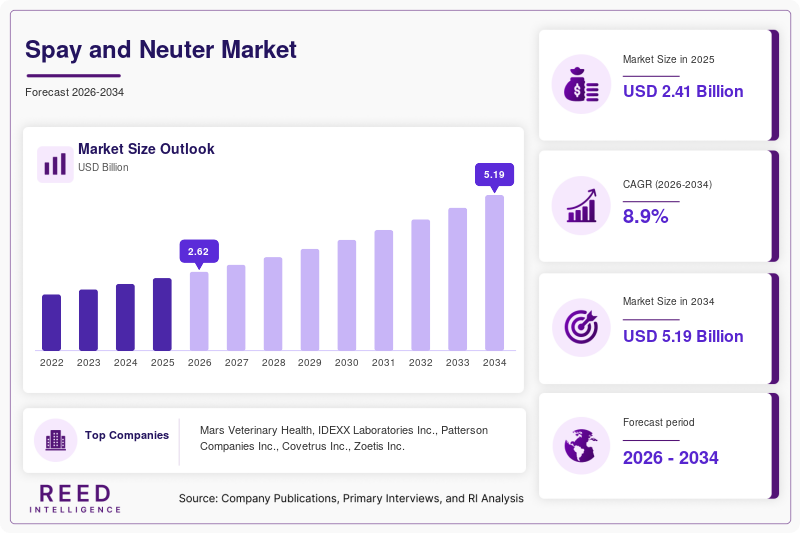
The global Spay and Neuter Market size was valued at USD 2.41 billion in 2026 and is projected to reach USD 4.76 billion by 2034, expanding at a CAGR of 8.9% during the forecast period from 2026 to 2034. The market is gaining momentum as governments, veterinary associations, and animal welfare organizations continue to promote population control programs for companion animals. Rising pet ownership across urban and semi-urban regions has increased the demand for affordable sterilization services, veterinary surgical equipment, and post-operative animal care solutions. In addition, growing awareness regarding animal health management and the long-term benefits of sterilization procedures is supporting sustained industry expansion.
The increasing adoption of companion animals globally remains a major factor driving the demand for spay and neuter procedures. Households are increasingly investing in preventive veterinary care to reduce the risk of reproductive diseases, unwanted litters, and behavioral issues among pets. Public campaigns focused on responsible pet ownership are also contributing to higher procedure volumes across veterinary hospitals, clinics, and mobile animal care units. The integration of advanced surgical instruments, minimally invasive techniques, and improved anesthesia monitoring systems has further strengthened the efficiency and safety of sterilization procedures.
Key Highlights
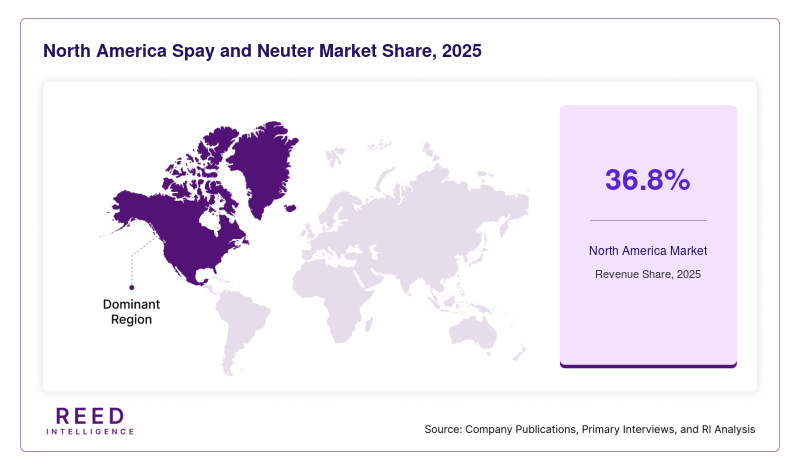
- North America dominated the market with a 36.8% share in 2025, while Asia Pacific is expected to grow at the fastest CAGR of 10.8% during 2026–2034.
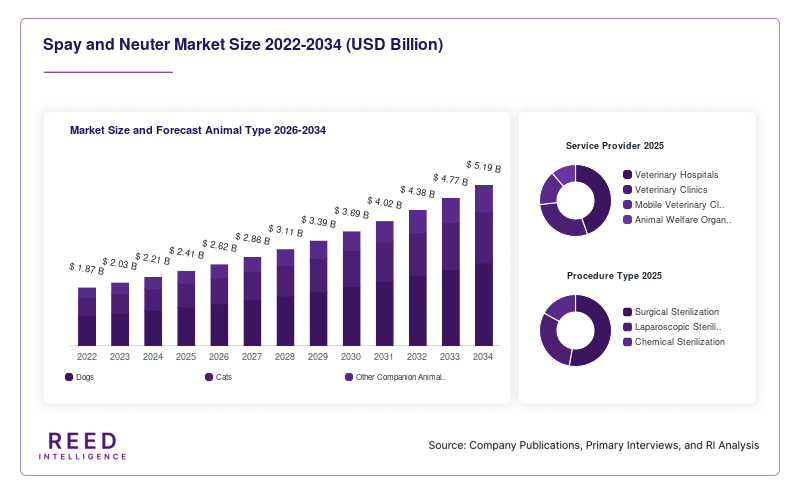
- By animal type, dogs accounted for the largest share of 58.4%, while cats are projected to grow at a CAGR of 9.7%.
- By service provider, veterinary hospitals led with a 44.2% share, whereas mobile veterinary clinics are expected to expand at a CAGR of 11.1%.
- By procedure type, surgical sterilization held the leading share of 73.5%, while laparoscopic sterilization is anticipated to grow at a CAGR of 12.3%.
- The United States remained the dominant country, with market values of USD 620 million in 2024 and USD 682 million in 2025.
Market Trends
Expansion of Mobile Veterinary Sterilization Services
Mobile veterinary sterilization programs are becoming an important trend within the Spay and Neuter Market as animal welfare organizations attempt to improve service accessibility in underserved regions. Mobile clinics equipped with surgical tools, anesthesia systems, and recovery units are increasingly deployed across rural communities and densely populated urban districts where veterinary infrastructure remains limited. These services reduce transportation barriers for pet owners and enable local authorities to conduct large-scale sterilization campaigns efficiently. Veterinary service providers are also partnering with municipalities and nonprofit organizations to organize low-cost sterilization drives that address rising stray animal populations.
The growing use of mobile service units is improving operational flexibility and procedure volumes. Clinics can perform multiple surgeries within a single day while reducing infrastructure costs associated with permanent facilities. In addition, mobile sterilization units are being integrated with digital registration platforms and electronic health monitoring systems to streamline appointment scheduling and post-operative follow-up. As awareness regarding animal welfare continues to improve, the demand for affordable and accessible sterilization services is expected to strengthen the role of mobile veterinary programs across emerging and developed economies.
Adoption of Minimally Invasive Surgical Technologies
Veterinary professionals are increasingly adopting minimally invasive sterilization procedures to improve surgical precision and reduce animal recovery time. Laparoscopic spay techniques are gaining traction in veterinary hospitals and specialty clinics due to lower tissue trauma, smaller incisions, and reduced post-operative discomfort for companion animals. The demand for advanced visualization systems, surgical cameras, and energy-based instruments is rising as clinics attempt to enhance patient outcomes and operational efficiency.
Pet owners are becoming more informed regarding advanced veterinary treatment options and are willing to spend more on procedures that support faster healing and lower complication risks. Veterinary training institutions are also expanding educational programs related to laparoscopic and minimally invasive surgeries, increasing the availability of skilled professionals in the market. Furthermore, manufacturers are developing compact and cost-efficient surgical equipment specifically designed for small veterinary practices. These technological advancements are expected to accelerate the adoption of advanced sterilization procedures across the global veterinary healthcare industry.
Market Drivers
Rising Companion Animal Ownership Worldwide
The increasing adoption of companion animals across households is one of the primary factors driving the Spay and Neuter Market. Urbanization, changing family structures, and growing emotional attachment between owners and pets have significantly increased the global pet population. As pet ownership expands, veterinary visits for preventive healthcare services are becoming more common. Sterilization procedures are increasingly viewed as an essential part of responsible pet management because they help control unwanted reproduction and reduce the risk of reproductive diseases.
Pet owners are also recognizing the behavioral and long-term health advantages associated with spaying and neutering. Sterilized animals often demonstrate lower aggression levels and reduced roaming behavior, improving household management and public safety. Insurance providers and veterinary wellness plans are additionally covering sterilization procedures as part of preventive care packages, encouraging greater participation. The expansion of pet adoption programs and animal rescue organizations is further supporting demand for routine sterilization procedures across developed and emerging markets.
Government and Nonprofit Population Control Initiatives
Government authorities and animal welfare organizations are implementing sterilization campaigns to reduce the number of stray and abandoned animals. These initiatives are significantly contributing to the growth of the Spay and Neuter Market by increasing awareness and subsidizing procedure costs for low-income households. Municipal authorities are increasingly allocating funds toward animal population management programs to reduce shelter overcrowding and lower the spread of zoonotic diseases associated with unmanaged stray populations.
Nonprofit organizations are partnering with veterinary clinics to conduct high-volume sterilization drives across urban and rural communities. Several countries are also introducing mandatory sterilization guidelines for adopted shelter animals, further increasing procedure demand. Public-private collaborations are supporting the development of community outreach programs that educate pet owners regarding the importance of sterilization and preventive veterinary care. These coordinated efforts are expected to maintain steady market expansion while improving animal welfare outcomes globally.
Market Restraint
High Procedure Costs and Limited Veterinary Access in Developing Regions
The relatively high cost associated with veterinary sterilization procedures remains a major restraint for the Spay and Neuter Market, particularly across low-income and developing regions. Although many animal welfare organizations provide subsidized programs, a substantial portion of pet owners still face affordability challenges related to surgical fees, anesthesia costs, medications, and post-operative care. Advanced sterilization procedures such as laparoscopic surgeries involve specialized equipment and trained veterinary professionals, further increasing overall treatment expenses.
Limited access to veterinary infrastructure also affects market penetration in rural and economically weaker areas. Several countries continue to experience shortages of licensed veterinarians, surgical facilities, and animal healthcare funding, restricting the availability of sterilization services. In remote regions, transportation barriers and lack of awareness regarding preventive animal healthcare further reduce procedure adoption rates. Small veterinary clinics may also struggle to invest in modern surgical technologies because of high equipment acquisition and maintenance costs. These factors collectively slow market growth and create disparities in sterilization access between developed and developing economies.
Market Opportunities
Growing Demand for Community-Based Animal Welfare Programs
Community-driven animal welfare initiatives are creating strong growth opportunities for the Spay and Neuter Market. Municipal authorities, nonprofit organizations, and veterinary associations are increasingly collaborating to establish localized sterilization programs aimed at controlling stray animal populations. These initiatives are generating demand for affordable surgical services, mobile clinics, and veterinary outreach campaigns. Community-based programs are particularly expanding in densely populated urban centers where unmanaged animal populations place pressure on public health systems and municipal shelters.
The expansion of public awareness campaigns is encouraging pet owners to participate in preventive healthcare programs for companion animals. Educational efforts emphasizing disease prevention, behavioral improvement, and long-term cost savings are improving procedure acceptance rates. Veterinary service providers are also benefiting from partnerships with adoption agencies and rescue shelters that require sterilization before pet placement. As governments continue to prioritize humane population management strategies, community-focused programs are expected to create sustainable market opportunities for veterinary clinics and service providers.
Technological Integration in Veterinary Surgical Practices
The integration of advanced technologies into veterinary healthcare systems is opening new opportunities for market participants. Veterinary clinics are increasingly adopting digital patient management platforms, AI-assisted diagnostic tools, and automated anesthesia monitoring systems to improve surgical efficiency and animal safety. These innovations are enhancing the quality of sterilization procedures while reducing recovery complications and procedure times.
Manufacturers are also developing compact surgical devices designed for high-volume sterilization centers and mobile veterinary units. Improved laparoscopic instruments, portable imaging systems, and digital monitoring equipment are supporting the transition toward minimally invasive surgeries. In addition, telemedicine platforms are enabling veterinarians to conduct remote consultations and post-operative monitoring, improving treatment continuity for pet owners in remote areas. The combination of digital healthcare integration and advanced surgical technologies is expected to create long-term growth opportunities across the global veterinary sterilization industry.
Segmental Analysis
By Animal Type
Dogs accounted for the dominant share of the Spay and Neuter Market in 2024, representing approximately 58.4% of total revenue. The high share is attributed to the large global population of domesticated dogs and growing awareness regarding preventive healthcare practices among dog owners. Veterinary professionals often recommend sterilization procedures for dogs to reduce the risk of reproductive disorders, aggressive behavior, and uncontrolled breeding. Governments and animal welfare organizations also prioritize canine sterilization programs to reduce stray dog populations in urban environments. In addition, dog adoption rates from rescue shelters continue to rise across developed economies, with many shelters implementing mandatory sterilization requirements before adoption. The increasing availability of veterinary wellness plans and insurance support for canine surgical procedures is further contributing to segment growth.
By Service Provider
Veterinary hospitals held the largest share of the Spay and Neuter Market in 2024, accounting for nearly 44.2% of global revenue. These facilities remain the preferred choice for sterilization procedures because they provide comprehensive surgical infrastructure, experienced veterinarians, advanced anesthesia systems, and emergency care capabilities. Veterinary hospitals are increasingly adopting modern monitoring technologies and minimally invasive surgical tools to improve patient outcomes and reduce recovery times. Pet owners often prefer hospital-based procedures for high-risk animals or complex surgeries requiring intensive post-operative observation. The expansion of multi-specialty veterinary hospitals across urban regions is also supporting market growth. Furthermore, hospitals frequently collaborate with animal shelters and nonprofit organizations to conduct subsidized sterilization campaigns that improve access to preventive animal healthcare services.
By Procedure Type
Surgical sterilization accounted for the dominant share of the Spay and Neuter Market in 2024, representing approximately 73.5% of total market revenue. Traditional surgical spaying and neutering procedures continue to be widely adopted because they provide permanent reproductive control and long-term health benefits for companion animals. Veterinary clinics and hospitals across developed and emerging economies rely heavily on conventional surgical methods due to established clinical protocols and widespread professional expertise. Public animal welfare campaigns and shelter adoption programs also support the continued use of surgical sterilization as a primary population control strategy. The availability of standardized surgical instruments, anesthesia solutions, and post-operative care procedures further strengthens the dominance of this segment. Increasing awareness regarding reproductive disease prevention and responsible pet ownership is expected to sustain demand for surgical sterilization procedures.
Regional Analysis
North America
North America accounted for the largest share of the Spay and Neuter Market in 2025, representing approximately 36.8% of global revenue. The region is projected to expand at a CAGR of 8.1% during the forecast period due to high companion animal ownership and strong veterinary healthcare infrastructure. The increasing availability of pet insurance coverage and wellness plans is encouraging pet owners to invest in preventive sterilization procedures. Veterinary hospitals and nonprofit animal welfare organizations across the region are also conducting extensive awareness programs to promote responsible pet ownership and reduce shelter overcrowding.
The United States remains the dominant country within the North American market because of its large pet population and well-established veterinary care network. The country continues to invest in municipal animal control programs and subsidized sterilization campaigns that support large-scale procedure adoption. Rising expenditure on companion animal healthcare and growing acceptance of minimally invasive veterinary surgeries are additionally driving market expansion. Increasing collaboration between veterinary universities and animal welfare organizations is improving access to trained professionals and advanced surgical technologies.
Europe
Europe represented a significant share of the global Spay and Neuter Market in 2025 and is expected to maintain steady growth at a CAGR of 7.9% through 2034. The region benefits from strict animal welfare regulations and widespread public awareness regarding pet population management. Countries across Western Europe continue to support sterilization campaigns for stray animals while promoting preventive veterinary healthcare among pet owners. The expansion of animal rescue shelters and adoption programs is also increasing demand for mandatory sterilization procedures.
Germany remains the leading country within the European market due to its advanced veterinary healthcare system and high expenditure on companion animal care. The country has experienced increased adoption of minimally invasive sterilization technologies in specialty veterinary clinics and hospitals. Growing emphasis on animal welfare standards and preventive healthcare education is further supporting procedure demand. In addition, partnerships between municipal authorities and nonprofit organizations are expanding low-cost sterilization initiatives across urban and suburban communities.
Asia Pacific
Asia Pacific is projected to register the fastest CAGR of 10.8% during the forecast period as companion animal ownership rises rapidly across emerging economies. The region accounted for a considerable share of global market revenue in 2025 due to increasing urbanization, rising disposable income levels, and expanding awareness regarding animal healthcare. Governments and nonprofit organizations are also strengthening stray animal control initiatives in densely populated cities. Veterinary infrastructure development and increasing investment in pet healthcare services are supporting sustained market growth.
China dominates the Asia Pacific market owing to its large urban pet population and expanding network of veterinary clinics. The country is witnessing rapid growth in pet adoption among younger consumers, increasing demand for sterilization services and preventive animal healthcare. E-commerce platforms and digital veterinary consultation services are improving access to information related to pet wellness and surgical procedures. In addition, rising investments in veterinary education and advanced surgical technologies are enhancing the quality and availability of sterilization services across the country.
Middle East & Africa
The Middle East & Africa region is experiencing moderate growth in the Spay and Neuter Market, supported by increasing awareness regarding animal welfare and public health management. The region accounted for a smaller share of global revenue in 2025 but is expected to expand at a CAGR of 7.2% during the forecast period. Governments and municipal authorities are gradually introducing sterilization initiatives to manage stray animal populations and reduce disease transmission risks. The growing presence of nonprofit animal welfare organizations is also contributing to increased adoption of sterilization services.
South Africa remains the dominant market within the region due to its comparatively developed veterinary infrastructure and active animal welfare programs. Veterinary associations and rescue organizations are increasingly organizing community sterilization campaigns across urban and semi-urban areas. Rising companion animal adoption and growing awareness regarding preventive veterinary care are also supporting market expansion. Furthermore, international collaborations and funding support for animal welfare projects are helping improve access to veterinary surgical services in underserved communities.
Latin America
Latin America continues to demonstrate stable growth in the Spay and Neuter Market due to rising pet ownership and increasing focus on animal population management. The region accounted for a notable market share in 2025 and is projected to expand at a CAGR of 8.4% through 2034. Several countries are strengthening public awareness initiatives focused on responsible pet ownership and preventive veterinary healthcare. Expanding veterinary clinic networks and increasing adoption of companion animals in urban areas are supporting demand for sterilization procedures.
Brazil remains the leading country within the Latin American market because of its large pet population and expanding veterinary healthcare sector. Municipal authorities and nonprofit organizations are conducting large-scale low-cost sterilization drives to address growing stray animal populations in major cities. The country is also witnessing increased investment in veterinary diagnostic and surgical technologies, improving procedural efficiency and treatment quality. Rising consumer spending on pet healthcare and wellness services is expected to further strengthen market growth.
Competitive Landscape
The Spay and Neuter Market is moderately fragmented, with veterinary service providers, nonprofit organizations, and medical equipment manufacturers competing to strengthen their market presence. Leading companies are focusing on expanding veterinary clinic networks, improving surgical technologies, and forming partnerships with animal welfare organizations. Market participants are also investing in minimally invasive surgical solutions, digital healthcare platforms, and mobile veterinary services to improve accessibility and operational efficiency.
Mars Veterinary Health remains one of the leading players in the market due to its extensive veterinary hospital network and broad preventive care offerings. The company has expanded its companion animal wellness programs and invested in advanced surgical technologies to improve sterilization procedure outcomes. IDEXX Laboratories recently introduced upgraded veterinary diagnostic and monitoring solutions designed to enhance surgical precision and post-operative care management. Patterson Companies has also strengthened its veterinary product distribution capabilities to support growing demand for sterilization equipment and anesthesia systems.
Key Players
- Mars Veterinary Health
- IDEXX Laboratories Inc.
- Patterson Companies Inc.
- Covetrus Inc.
- Zoetis Inc.
- Vetcor
- PetIQ Inc.
- Thrive Pet Healthcare
- CVS Group plc
- Southern Veterinary Partners
- National Veterinary Associates
- Greencross Limited
- Elanco Animal Health Incorporated
- Animal Humane Society
- BluePearl Specialty and Emergency Pet Hospital
Recent Developments
- In February 2026, Mars Veterinary Health expanded its community veterinary outreach program across North America by adding new mobile sterilization units focused on rural pet care access.
- In September 2025, IDEXX Laboratories launched an upgraded veterinary anesthesia monitoring platform designed to improve surgical safety during companion animal sterilization procedures.
- In June 2025, PetIQ Inc. partnered with regional animal shelters in the United States to increase access to affordable spay and neuter services through mobile clinic initiatives.
- In January 2026, Covetrus Inc. introduced advanced laparoscopic surgical instruments aimed at improving minimally invasive veterinary sterilization procedures for specialty clinics.
- In November 2025, Thrive Pet Healthcare expanded its preventive pet wellness plans to include discounted sterilization procedures and post-operative care support services.
Spay and Neuter Market Segments
Animal Type
- Dogs
- Cats
- Other Companion Animals
Service Provider
- Veterinary Hospitals
- Veterinary Clinics
- Mobile Veterinary Clinics
- Animal Welfare Organizations
Procedure Type
- Surgical Sterilization
- Laparoscopic Sterilization
- Chemical Sterilization
By Region
- North America
- Europe
- APAC
- Middle East and Africa
- LATAM