Specialty Surfactants Bio Surfactants Market Size, Share Demand Report By Product Type (Glycolipids, Lipopeptides, Fatty Acids, Polymeric Bio Surfactants, Particulate Bio Surfactants), By Application (Personal Care Products, Industrial Cleaners, Food Processing, Agricultural Chemicals, Oilfield Chemicals), By End-Use Industry (Agriculture, Pharmaceuticals, Industrial Manufacturing) By Region & Segment Forecasts, 2026–2034
USD 3950
Market Overview
The global Specialty Surfactants Bio Surfactants Market size was valued at USD 8.4 billion in 2026 and is projected to reach USD 18.9 billion by 2034, expanding at a CAGR of 10.7% during the forecast period of 2026–2034. The market continues to gain momentum due to the rising preference for sustainable and biodegradable surfactant solutions across industrial and consumer applications. Specialty bio surfactants are increasingly used in personal care products, household detergents, industrial cleaners, agrochemicals, and food processing applications because of their low toxicity and enhanced environmental compatibility. Growing concerns regarding petrochemical-based surfactants and stricter environmental regulations have encouraged manufacturers to invest in plant-derived and microbial surfactants.
A major global factor supporting market expansion is the increasing implementation of sustainability targets across manufacturing industries. Consumer goods companies are focusing on reducing carbon emissions and replacing synthetic ingredients with renewable alternatives. This transition has accelerated the use of rhamnolipids, sophorolipids, alkyl polyglucosides, and methyl ester sulfonates in commercial formulations. In addition, improvements in fermentation technologies and feedstock optimization have lowered production costs, making bio surfactants more commercially viable for large-scale industrial use.
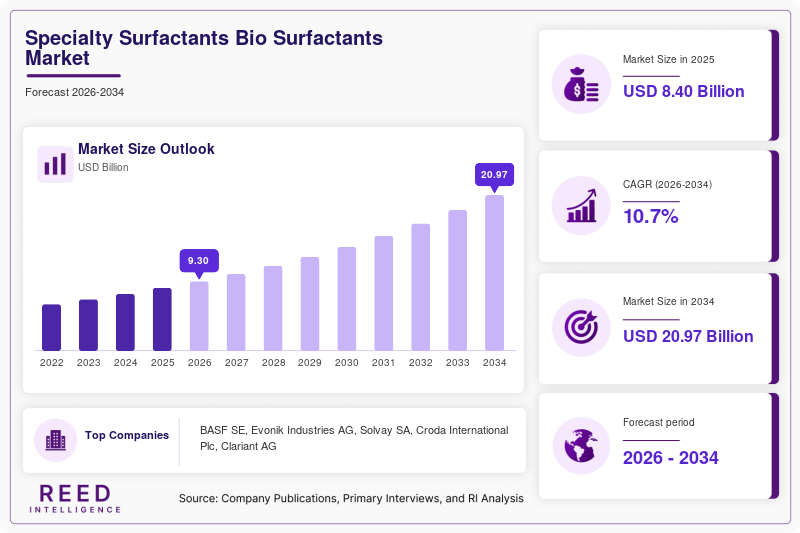
Key Highlights
- North America dominated the market with a 35.1% share in 2025.
- Asia Pacific is expected to grow at the fastest CAGR of 11.9% during 2026–2034.
- By product type, glycolipids accounted for the largest share of 39.4%.
- while lipopeptides are projected to grow at a CAGR of 12.8%.
- By application, household detergents led with a 33.7% share.
- whereas personal care products are expected to expand at a CAGR of 12.2%.
- By end-use industry, consumer goods dominated with a 36.8% share.
- while pharmaceutical applications are projected to grow at a CAGR of 11.7%.
- The United States remained the dominant country, with market values of USD 1.94 billion in 2024 and USD 2.11 billion in 2025.
Market Trends
Rising Adoption of Green Cleaning Products
The increasing demand for eco-friendly cleaning products is emerging as a major trend within the Specialty Surfactants Bio Surfactants Market. Consumers across residential and commercial sectors are actively shifting toward biodegradable formulations that minimize environmental impact without compromising cleaning performance. Bio surfactants are increasingly integrated into dishwashing liquids, industrial cleaners, fabric care products, and disinfectants due to their superior emulsification and foaming properties. Retail companies and global consumer brands are also reformulating products to comply with sustainability certifications and environmental labeling standards. This trend is particularly strong in North America and Europe, where consumers are willing to pay premium prices for environmentally responsible products. Manufacturers are responding by expanding production capacities and launching plant-based formulations that offer improved compatibility with concentrated detergent systems and low-temperature washing processes.
Expansion of Bio-Based Ingredients in Personal Care
The rapid expansion of natural and organic personal care products is another significant trend shaping the market landscape. Cosmetic manufacturers are incorporating bio surfactants into shampoos, facial cleansers, body washes, and skincare formulations due to their mildness and skin-friendly characteristics. Bio surfactants derived from renewable feedstocks are gaining popularity because they reduce irritation while maintaining effective cleansing performance. Rising consumer awareness regarding ingredient transparency and chemical safety is encouraging brands to replace sulfate-based surfactants with biodegradable alternatives. In addition, premium beauty brands are investing in microbiome-friendly formulations that rely on naturally sourced surfactants. The growing influence of social media marketing and clean-label product positioning has accelerated product innovation, particularly in Asia Pacific and Europe. Companies are also focusing on multifunctional ingredients that provide conditioning, antimicrobial, and moisturizing properties within a single formulation.
Market Drivers
Increasing Environmental Regulations on Synthetic Chemicals
The implementation of strict environmental regulations regarding chemical discharge and biodegradability continues to drive the Specialty Surfactants Bio Surfactants Market. Governments and regulatory agencies across several regions are enforcing policies that limit the use of petrochemical-based surfactants in household and industrial products. Bio surfactants are gaining traction because they decompose more efficiently and generate lower environmental toxicity. Industrial manufacturers are increasingly adopting sustainable surfactants to meet wastewater treatment standards and reduce ecological risks associated with conventional chemicals. In Europe, regulatory emphasis on green chemistry and circular economy initiatives has encouraged detergent and personal care companies to transition toward renewable formulations. Similar trends are emerging in Asia Pacific and North America, where environmental compliance is becoming a key procurement requirement for industrial buyers. This regulatory environment is supporting long-term market expansion and encouraging investment in research and commercial production infrastructure.
Growth in Industrial and Agricultural Applications
The increasing use of bio surfactants across industrial processing and agricultural operations is significantly contributing to market growth. Specialty bio surfactants are widely utilized in enhanced oil recovery, agrochemical formulations, metal cleaning, textile processing, and food manufacturing because of their high stability and low toxicity. Agricultural producers are increasingly using bio surfactants in pesticide and herbicide formulations to improve spreading and penetration efficiency while minimizing environmental contamination. Industrial sectors are also integrating bio surfactants into wastewater treatment systems and bioremediation processes. Rapid industrialization in emerging economies has further expanded demand for sustainable specialty chemicals across manufacturing operations. In addition, technological advancements in microbial fermentation and renewable feedstock processing have improved product consistency and reduced production expenses. These developments are increasing commercial adoption across industries that previously relied heavily on synthetic surfactants.
Market Restraint
High Production Costs and Limited Commercial Scalability
One of the primary restraints affecting the Specialty Surfactants Bio Surfactants Market is the relatively high production cost associated with microbial and plant-based surfactants. Manufacturing bio surfactants requires sophisticated fermentation technologies, controlled processing conditions, and specialized raw materials, which increase operational expenses compared to conventional synthetic surfactants. Small and medium-sized manufacturers often face difficulties in achieving economies of scale due to limited production infrastructure and fluctuating feedstock prices. In price-sensitive markets, end users may continue using traditional petrochemical surfactants because of lower procurement costs and established supply chains.
Commercial scalability also remains a challenge in certain regions where industrial biotechnology infrastructure is underdeveloped. Some bio surfactants require extended fermentation cycles and complex purification processes that limit mass production capabilities. In addition, inconsistent agricultural feedstock availability can create pricing volatility and supply disruptions. For example, manufacturers relying on vegetable oils and sugar-based substrates may experience cost fluctuations during periods of poor crop yields or global commodity price instability. These challenges can reduce profit margins and slow product adoption, particularly in industrial sectors that prioritize low-cost chemical inputs. Despite ongoing technological improvements, production economics remain a critical factor influencing broader market penetration.
Market Opportunities
Growing Demand for Sustainable Agricultural Formulations
The increasing focus on sustainable agriculture is creating substantial opportunities for bio surfactant manufacturers. Farmers and agrochemical producers are actively searching for environmentally safe additives that improve pesticide efficiency while minimizing soil and water contamination. Bio surfactants enhance wetting, dispersion, and penetration properties in agrochemical formulations, enabling improved crop protection performance with lower chemical concentrations. Governments in several countries are promoting sustainable farming practices and encouraging the use of biodegradable agricultural inputs through subsidy programs and environmental policies. This shift is supporting the adoption of bio-based surfactants across herbicides, fungicides, and nutrient delivery systems.
The opportunity is particularly strong in Asia Pacific and Latin America, where agricultural productivity remains a key economic priority. Rising food demand and pressure to increase crop yields are encouraging innovation in precision agriculture technologies and sustainable crop management solutions. Bio surfactant manufacturers are collaborating with agricultural chemical companies to develop specialized formulations suitable for diverse climatic conditions and crop types. Increasing consumer demand for residue-free food products is also influencing the transition toward environmentally responsible farming inputs, creating favorable long-term growth opportunities for market participants.
Expansion of Biotechnology and Fermentation Capabilities
Rapid developments in industrial biotechnology and microbial fermentation technologies are opening new growth opportunities for the Specialty Surfactants Bio Surfactants Market. Advances in genetic engineering, enzyme optimization, and feedstock conversion are improving production efficiency and reducing manufacturing costs. Companies are increasingly utilizing renewable waste streams and low-cost agricultural residues as fermentation substrates to enhance economic viability. These innovations are expected to improve scalability and support broader commercialization across industrial and consumer applications.
The expansion of biotechnology investments in countries such as the United States, Germany, China, and India is further strengthening the market outlook. Research institutions and chemical manufacturers are forming partnerships to develop next-generation bio surfactants with enhanced stability, antimicrobial activity, and multifunctional performance characteristics. In addition, rising venture capital funding for sustainable chemical technologies is accelerating product development and pilot-scale commercialization projects. As production processes become more efficient and cost competitive, bio surfactants are expected to penetrate new end-use sectors including pharmaceuticals, oilfield chemicals, and advanced material processing industries.
Segmental Analysis
By Product Type
Glycolipids emerged as the dominant product type segment in 2024, accounting for 39.4% of the global Specialty Surfactants Bio Surfactants Market share. This segment maintains a strong position due to its broad compatibility with personal care products, detergents, and industrial cleaners. Glycolipids provide excellent emulsification, foaming, and antimicrobial properties, making them suitable for a wide range of commercial applications. Rising demand for mild and biodegradable cleansing ingredients has accelerated the adoption of sophorolipids and rhamnolipids in cosmetic and household formulations. Major consumer goods manufacturers are increasingly integrating glycolipid-based surfactants into premium products marketed as environmentally responsible alternatives to sulfate-based chemicals. The segment also benefits from growing regulatory support for biodegradable ingredients and increased consumer awareness regarding sustainable product formulations.
Lipopeptides are projected to register the fastest CAGR of 12.8% during the forecast period due to their multifunctional performance characteristics and expanding industrial applications. These bio surfactants demonstrate strong antimicrobial, antiadhesive, and surface activity properties, making them suitable for pharmaceuticals, agriculture, and oilfield applications. Research activities focused on microbial biosynthesis and advanced fermentation technologies are improving commercial production efficiency and expanding application potential. Pharmaceutical manufacturers are increasingly exploring lipopeptides for drug delivery systems and antimicrobial formulations. In agriculture, lipopeptides are gaining traction as environmentally safe crop protection agents that support sustainable farming practices. Rising investment in biotechnology infrastructure and industrial microbiology research is expected to accelerate commercialization and strengthen demand for this rapidly expanding product segment.
By Application
Household detergents represented the leading application segment in 2024 with a market share of 33.7%. Growing consumer demand for environmentally safe cleaning products has significantly increased the use of bio surfactants in laundry detergents, dishwashing liquids, and surface cleaners. Bio surfactants offer effective stain removal, superior wetting performance, and compatibility with concentrated cleaning systems while maintaining biodegradability. Rising awareness regarding the environmental impact of phosphate- and petroleum-based detergents has encouraged manufacturers to reformulate products using renewable surfactant ingredients. Large multinational consumer goods companies are actively promoting sustainable cleaning solutions through eco-label certifications and green marketing campaigns. The expansion of e-commerce distribution channels and increased availability of environmentally friendly cleaning products in retail outlets have further strengthened segment growth.
Personal care products are anticipated to witness the fastest CAGR of 12.2% during the forecast period due to rising consumer preference for natural and skin-friendly ingredients. Bio surfactants are increasingly used in shampoos, facial cleansers, body washes, and baby care products because they provide mild cleansing properties and lower skin irritation compared to conventional surfactants. Premium beauty and wellness brands are focusing on sulfate-free and clean-label formulations to address changing consumer preferences. Growing awareness regarding ingredient transparency and long-term skin health is encouraging demand for plant-derived and microbial surfactants. In addition, rising disposable income and expanding urban populations in Asia Pacific are supporting increased spending on premium personal care products, creating strong growth opportunities for bio surfactant manufacturers operating in this application segment.
By End-Use Industry
Consumer goods accounted for the largest end-use industry share of 36.8% in 2024 within the Specialty Surfactants Bio Surfactants Market. The segment benefits from widespread use of bio surfactants across cleaning products, cosmetics, hygiene products, and food processing applications. Consumer goods manufacturers are increasingly adopting renewable surfactants to align with sustainability goals and respond to evolving consumer expectations regarding environmental responsibility. Bio surfactants are also being integrated into concentrated formulations that reduce packaging waste and transportation emissions. Growing urbanization and rising awareness regarding chemical safety have supported demand for sustainable household and personal care products. Major brands are investing in research partnerships and product innovation initiatives to develop high-performance bio-based formulations capable of competing with synthetic surfactants in terms of efficiency and cost effectiveness.
Pharmaceutical applications are projected to grow at the fastest CAGR of 11.7% during the forecast period because of increasing interest in bio-compatible and multifunctional surfactants. Bio surfactants are gaining importance in drug delivery systems, antimicrobial formulations, wound care products, and medical device cleaning applications. Their low toxicity and biodegradability make them suitable for pharmaceutical and healthcare environments that require stringent safety standards. Research institutions and biotechnology companies are actively studying the therapeutic potential of certain microbial surfactants for antimicrobial and anticancer applications. Rising investment in healthcare infrastructure and biopharmaceutical manufacturing is expected to create additional opportunities for specialized surfactant formulations. The increasing prevalence of antibiotic-resistant infections is also encouraging the development of alternative antimicrobial ingredients based on bio surfactant technologies.
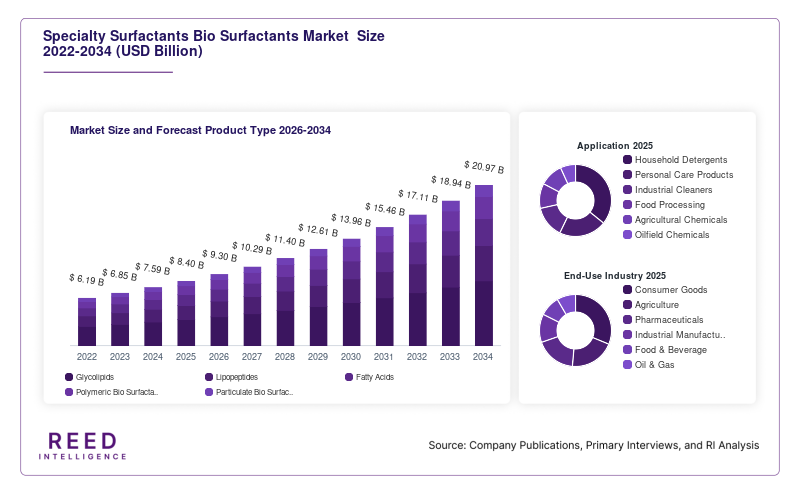
Regional Analysis
North America
North America accounted for 35.1% of the global Specialty Surfactants Bio Surfactants Market share in 2025 and is expected to maintain steady growth at a CAGR of 9.8% during the forecast period. Strong demand from household cleaning products, cosmetics, and industrial processing sectors continues to support regional expansion. The region benefits from advanced biotechnology infrastructure and strong investment in sustainable chemical manufacturing. Regulatory pressure on chemical emissions and wastewater discharge has also accelerated the transition toward biodegradable surfactant formulations. Major consumer goods companies operating in the region are increasingly integrating renewable ingredients into product portfolios.
The United States remains the dominant country in North America due to its extensive consumer goods industry and established biotechnology ecosystem. The country recorded market values of USD 1.94 billion in 2024 and USD 2.11 billion in 2025. A major growth factor is the rising adoption of clean-label household and personal care products among environmentally conscious consumers. Large retail chains are expanding shelf space for sustainable products, while industrial cleaning companies are implementing bio-based chemical procurement strategies to align with corporate sustainability goals.
Europe
Europe represented 28.6% of the global market share in 2025 and is projected to expand at a CAGR of 10.1% through 2034. The region maintains a strong position due to strict environmental legislation and widespread adoption of green chemistry standards. Demand for biodegradable surfactants remains particularly high in Germany, France, the United Kingdom, and the Nordic countries. Manufacturers across the region are focusing on reducing dependence on fossil fuel-derived chemicals and increasing the use of renewable raw materials in detergents and cosmetics.
Germany continues to lead the European market because of its advanced industrial manufacturing sector and strong emphasis on sustainable innovation. The country benefits from extensive research collaborations between universities, biotechnology firms, and chemical manufacturers. A unique growth factor is the increasing integration of bio surfactants into industrial wastewater treatment systems. Industrial facilities are adopting biodegradable surfactants to improve treatment efficiency and comply with stringent European environmental regulations, supporting consistent market demand across multiple industrial applications.
Asia Pacific
Asia Pacific held 24.8% of the Specialty Surfactants Bio Surfactants Market share in 2025 and is anticipated to witness the fastest CAGR of 11.9% during the forecast period. Rapid industrialization, urbanization, and rising consumer spending on personal care and household products are contributing to regional growth. Countries such as China, India, Japan, and South Korea are witnessing increasing demand for sustainable specialty chemicals. Expanding manufacturing activities and rising environmental awareness are also encouraging adoption across industrial and agricultural sectors.
China dominates the Asia Pacific market due to its large-scale manufacturing base and expanding biotechnology investments. The country is witnessing significant demand for bio-based ingredients across cosmetics, detergents, and agricultural formulations. One unique growth factor is the government’s increasing focus on pollution reduction and green manufacturing initiatives. Environmental regulations targeting industrial chemical discharge are encouraging domestic manufacturers to adopt biodegradable surfactants, while local biotechnology companies are investing in fermentation capacity expansion to meet rising regional demand.
Middle East & Africa
The Middle East & Africa region accounted for 6.3% of the global market share in 2025 and is projected to grow at a CAGR of 8.7% through 2034. Market growth is supported by increasing investments in industrial cleaning, water treatment, and oilfield chemical applications. Countries across the Gulf Cooperation Council are gradually incorporating sustainable chemical solutions into industrial operations to support environmental sustainability initiatives. The region is also witnessing growing demand for bio-based personal care products among urban consumers.
Saudi Arabia remains the dominant country in the regional market due to its large petrochemical and industrial processing sectors. A significant growth factor is the increasing use of bio surfactants in enhanced oil recovery and industrial cleaning operations. Industrial operators are adopting environmentally compatible surfactants to improve operational efficiency and align with evolving sustainability targets. Government diversification programs focused on biotechnology and advanced manufacturing are also creating opportunities for bio surfactant suppliers and specialty chemical producers.
Latin America
Latin America captured 5.2% of the global market share in 2025 and is expected to grow at a CAGR of 9.2% during the forecast period. The region is benefiting from expanding agricultural activities and increasing demand for sustainable crop protection solutions. Household cleaning product consumption is also increasing steadily due to urbanization and rising disposable income levels. Manufacturers are gradually introducing biodegradable surfactants into consumer and industrial formulations to address changing environmental standards.
Brazil dominates the Latin American market because of its extensive agricultural sector and abundant renewable feedstock availability. The country benefits from strong sugarcane and vegetable oil production, which support bio-based chemical manufacturing. A unique growth factor is the growing use of bio surfactants in agrochemical formulations aimed at improving crop productivity and reducing environmental contamination. Agricultural producers are increasingly adopting sustainable additives to comply with export quality standards and improve long-term soil management practices.

Competitive Landscape
The Specialty Surfactants Bio Surfactants Market is moderately consolidated, with global chemical manufacturers and biotechnology companies competing through product innovation, capacity expansion, and strategic partnerships. Leading companies are increasingly investing in sustainable production technologies and renewable feedstock sourcing to strengthen market positioning. Product differentiation is focused on improving biodegradability, multifunctional performance, and cost efficiency across industrial and consumer applications.
Evonik Industries AG remains one of the leading participants in the market due to its broad specialty chemical portfolio and strong biotechnology capabilities. The company recently expanded its bio surfactant production initiatives to support rising demand from personal care and household cleaning manufacturers. BASF SE, Solvay SA, Croda International Plc, and Clariant AG also maintain significant market presence through extensive research activities and global distribution networks. Several companies are collaborating with biotechnology startups to accelerate microbial surfactant commercialization and improve fermentation efficiency.
Competition is intensifying as regional manufacturers in Asia Pacific and Latin America increase investments in renewable chemical production. Companies are also focusing on acquisitions and joint ventures to strengthen raw material sourcing and improve geographic reach. Increasing demand for sustainable consumer products and stricter environmental regulations are expected to encourage further innovation and strategic expansion activities across the market.
Key Players
- BASF SE
- Evonik Industries AG
- Solvay SA
- Croda International Plc
- Clariant AG
- Dow Inc.
- Stepan Company
- Givaudan SA
- Saraya Co. Ltd.
- Ecover
- Jeneil Biotech Inc.
- Allied Carbon Solutions Co. Ltd.
- AGAE Technologies LLC
- Kaneka Corporation
- Akzo Nobel N.V.
Recent Developments
- In February 2026, BASF SE announced the expansion of its bio-based surfactant production facility to strengthen supply capacity for household and personal care applications.
- In July 2025, Evonik Industries AG introduced a new range of fermentation-derived bio surfactants designed for sulfate-free cosmetic formulations and industrial cleaning products.
- In November 2025, Croda International Plc entered a strategic collaboration with a biotechnology startup to develop advanced microbial surfactants for pharmaceutical and agricultural applications.
- In March 2026, Solvay SA launched a biodegradable specialty surfactant platform focused on low-carbon industrial processing and water treatment applications.
- In September 2025, Clariant AG expanded its renewable feedstock sourcing program to improve sustainable surfactant production across European manufacturing facilities.
Specialty Surfactants Bio Surfactants Market Segments
Product Type
- Glycolipids
- Lipopeptides
- Fatty Acids
- Polymeric Bio Surfactants
- Particulate Bio Surfactants
Application
- Household Detergents
- Personal Care Products
- Industrial Cleaners
- Food Processing
- Agricultural Chemicals
- Oilfield Chemicals
End-Use Industry
- Consumer Goods
- Agriculture
- Pharmaceuticals
- Industrial Manufacturing
- Food & Beverage
- Oil & Gas
By Region
- North America
- Europe
- APAC
- Middle East and Africa
- LATAM