Spirotetramat Packaging Market Size, Share & Demand Report By Packaging Type (Rigid Containers, Flexible Packaging), By Material (Plastic, Metal, Glass, Biodegradable Materials), By End-Use (Agriculture, Horticulture, Others), By Region & Segment Forecasts, 2026–2034
USD 3950
Market Overview
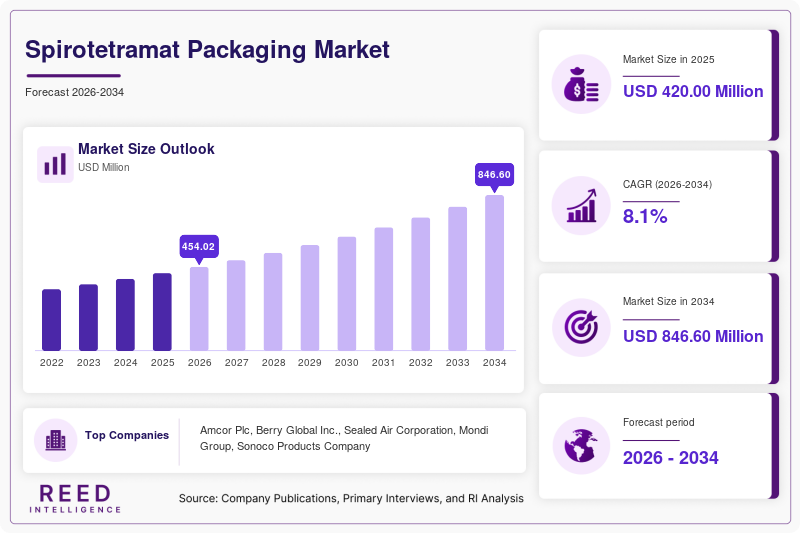
The Spirotetramat Packaging Market size was valued at approximately USD 420 million in 2026 and is projected to reach USD 785 million by 2034, expanding at a CAGR of 8.1% during the forecast period (2026–2034). The market reflects steady growth driven by increasing demand for crop protection solutions and the need for secure, compliant packaging formats for agrochemical products. Spirotetramat, a systemic insecticide widely used in agriculture, requires specialized packaging that ensures product stability, safety, and extended shelf life, which continues to support market expansion.
A key global factor supporting market growth is the rising emphasis on sustainable agriculture and efficient pest management. As farmers adopt advanced crop protection chemicals to improve yield and reduce losses, the need for reliable and eco-conscious packaging solutions has increased. Regulatory frameworks focusing on safe handling, transport, and storage of agrochemicals have further pushed manufacturers to invest in high-quality packaging materials such as high-density polyethylene (HDPE), multilayer containers, and recyclable flexible packaging formats.
Key Highlights
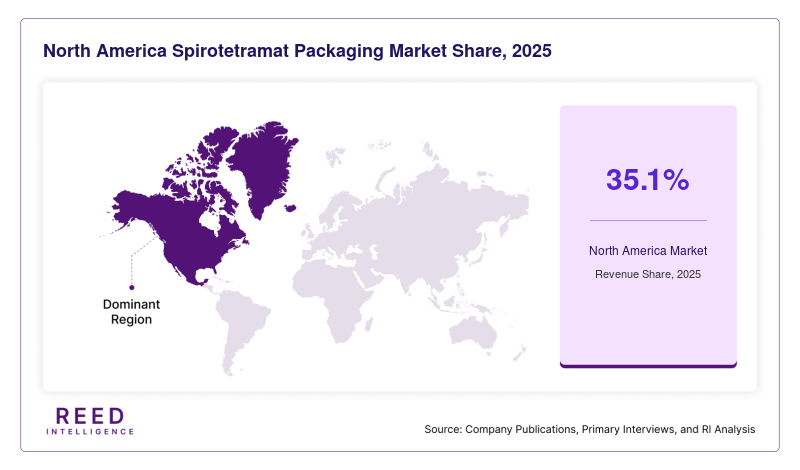
- North America dominated the market with a 35.1% share in 2025.
- Asia Pacific is expected to grow at the fastest CAGR of 9.4% during 2026–2034.
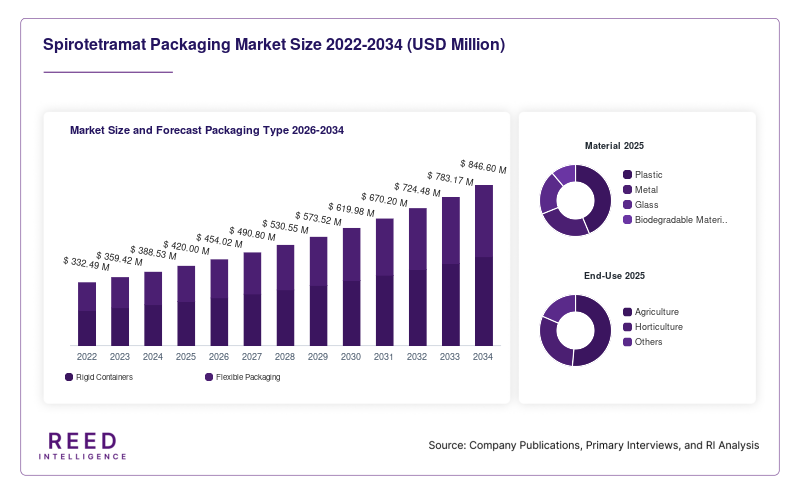
- By packaging type, rigid containers accounted for the largest share of 42.8%, while flexible pouches are projected to grow at a CAGR of 9.9%.
- By material, plastic-based packaging led with a 51.6% share, whereas biodegradable materials are expected to expand at a CAGR of 10.7%.
- The United States remained the dominant country, with market values of USD 92 million in 2024 and USD 101 million in 2025.
Market Trends
Increasing Adoption of Sustainable Packaging Solutions
Sustainability has become a central trend shaping the spirotetramat packaging market, with manufacturers shifting toward environmentally responsible materials and production processes. Companies are actively developing recyclable, biodegradable, and reduced-weight packaging formats to align with environmental regulations and consumer expectations. This shift is particularly visible in regions where strict environmental laws mandate reduced plastic waste and encourage circular economy practices. As a result, packaging providers are introducing innovations such as compostable films and reusable containers that maintain chemical stability while minimizing environmental impact.
In addition, agricultural companies are prioritizing sustainability across their supply chains, including packaging. This has led to partnerships between agrochemical firms and packaging manufacturers to co-develop eco-friendly solutions. The use of mono-material plastics and designs that simplify recycling processes is gaining traction. These advancements not only reduce environmental footprint but also improve brand perception and regulatory compliance, contributing to long-term growth in the market.
Integration of Smart Packaging Technologies
Another emerging trend is the integration of smart packaging technologies that enhance product safety, traceability, and user convenience. Features such as QR codes, RFID tags, and digital labeling are being incorporated into spirotetramat packaging to provide real-time information about product authenticity, usage instructions, and safety guidelines. This is particularly beneficial in preventing counterfeit agrochemical products, which remain a challenge in several developing markets.
Smart packaging also supports better inventory management and supply chain transparency. Distributors and retailers can track product movement and storage conditions, ensuring quality preservation. Moreover, digital interfaces embedded in packaging allow farmers to access detailed application guidelines and safety protocols via smartphones. This technological integration is expected to drive innovation and create value-added opportunities within the spirotetramat packaging market.
Market Drivers
Growing Demand for Crop Protection Chemicals
The increasing global demand for food production has significantly boosted the use of crop protection chemicals, including spirotetramat. As agricultural productivity becomes a priority, farmers are adopting advanced insecticides to protect crops from pests and diseases. This surge in agrochemical usage directly drives the need for efficient and durable packaging solutions that ensure product integrity during storage and transportation.
Packaging plays a critical role in maintaining the efficacy of spirotetramat, which requires protection from environmental factors such as moisture, light, and temperature fluctuations. As a result, manufacturers are investing in high-performance materials and innovative designs that extend shelf life and prevent contamination. The expansion of commercial farming and increasing adoption of precision agriculture further contribute to consistent demand for specialized packaging formats tailored to various application needs.
Stringent Regulatory Frameworks for Agrochemical Packaging
Government regulations regarding the safe handling, labeling, and disposal of agrochemicals have become stricter, driving the adoption of advanced packaging solutions. Regulatory authorities require packaging to meet specific standards related to chemical compatibility, leakage prevention, and user safety. These regulations ensure that spirotetramat products are securely packaged to minimize environmental risks and health hazards.
Compliance with these standards has encouraged packaging manufacturers to develop tamper-evident closures, child-resistant designs, and clearly labeled containers. Additionally, regulations promoting sustainable packaging materials have accelerated innovation in eco-friendly solutions. Companies that align with these requirements gain a competitive advantage, as compliance is essential for market entry and expansion. This regulatory push continues to act as a key driver for growth in the spirotetramat packaging market.
Market Restraint
High Cost of Advanced Packaging Materials and Technologies
One of the primary challenges facing the spirotetramat packaging market is the high cost associated with advanced packaging materials and technologies. The shift toward sustainable and high-performance packaging solutions often involves the use of specialized materials such as multilayer plastics, biodegradable polymers, and high-grade barrier coatings. These materials are significantly more expensive than conventional alternatives, increasing overall production costs for manufacturers.
Small and medium-sized packaging companies, particularly in developing regions, may struggle to adopt these advanced solutions due to financial constraints. This can limit their ability to compete with larger players that have greater access to capital and technological resources. Additionally, the integration of smart packaging features such as RFID and digital tracking systems adds further cost, making it challenging for widespread adoption.
The high cost also impacts end users, as increased packaging expenses can lead to higher product prices. This may discourage adoption among cost-sensitive farmers, especially in price-competitive markets. As a result, balancing cost efficiency with performance and sustainability remains a key challenge for industry participants.
Market Opportunities
Expansion in Emerging Agricultural Economies
Emerging economies present significant growth opportunities for the spirotetramat packaging market, driven by expanding agricultural activities and increasing adoption of modern farming techniques. Countries in Asia Pacific, Latin America, and Africa are witnessing rising demand for crop protection solutions due to growing population and food security concerns. This creates a strong need for reliable packaging that ensures safe storage and distribution of agrochemicals.
As governments in these regions invest in agricultural infrastructure and promote the use of advanced pesticides, demand for spirotetramat packaging is expected to rise. Local manufacturers are also entering the market, offering cost-effective solutions tailored to regional requirements. The combination of increasing agricultural output and supportive government policies makes emerging markets a key area of opportunity for industry players.
Innovation in Lightweight and Flexible Packaging Formats
The development of lightweight and flexible packaging formats offers another promising opportunity for the market. Flexible pouches, sachets, and collapsible containers are gaining popularity due to their cost efficiency, reduced material usage, and ease of handling. These formats also lower transportation costs and carbon emissions, making them attractive for both manufacturers and end users.
Advancements in barrier technology have improved the durability and chemical resistance of flexible packaging, making it suitable for spirotetramat products. Companies are focusing on designing packaging that combines functionality with sustainability, such as recyclable laminates and mono-material pouches. This innovation not only enhances product performance but also aligns with environmental goals, creating new growth avenues in the market.
Segmental Analysis
By Packaging Type
Rigid containers dominated the market in 2024, accounting for 42.8% of the total share. These containers, including bottles, drums, and canisters, are widely used due to their durability, chemical resistance, and ability to protect spirotetramat from external factors. They are particularly suitable for large-scale agricultural applications where bulk storage and transportation are required. The use of high-density polyethylene and other robust materials ensures product safety and compliance with regulatory standards, making rigid containers the preferred choice among manufacturers.
Flexible packaging is emerging as the fastest-growing subsegment, with a projected CAGR of 9.9%. The growth is driven by increasing demand for cost-effective and lightweight solutions that reduce logistics expenses. Flexible formats such as pouches and sachets are gaining popularity among small-scale farmers due to their convenience and affordability. Advances in material technology have improved barrier properties, making flexible packaging suitable for sensitive agrochemicals like spirotetramat.
By Material
Plastic-based packaging led the market in 2024, holding a share of 51.6%. Plastics offer excellent durability, chemical resistance, and versatility, making them ideal for spirotetramat packaging. Materials such as HDPE and PET are commonly used due to their ability to maintain product integrity and extend shelf life. The widespread availability and cost-effectiveness of plastic further contribute to its dominance in the market.
Biodegradable materials are expected to grow at the fastest CAGR of 10.7%. The increasing focus on sustainability and environmental protection drives the adoption of eco-friendly alternatives. Innovations in biodegradable polymers and compostable packaging solutions are gaining traction, particularly in regions with strict environmental regulations. This shift toward sustainable materials is expected to reshape the market landscape.
By End-Use
The agricultural sector dominated the market in 2024, accounting for 68.3% of the share. Spirotetramat is primarily used as an insecticide in agriculture, making this segment the largest consumer of packaging solutions. The need for efficient pest control and improved crop yield drives demand for reliable packaging formats that ensure safe handling and storage.
The horticulture segment is projected to grow at a CAGR of 9.1%. The increasing cultivation of fruits, vegetables, and ornamental plants drives the use of specialized agrochemicals. This growth is supported by rising consumer demand for high-quality produce and the adoption of modern farming practices, which require advanced packaging solutions.
Regional Analysis
North America
North America held a dominant share of 35.1% in 2025 and is expected to grow at a CAGR of 7.6% during the forecast period. The region benefits from advanced agricultural practices, high adoption of crop protection chemicals, and strong regulatory frameworks that mandate safe packaging standards. The presence of established agrochemical companies and packaging manufacturers further supports market growth.
The United States remains the leading country in the region, driven by its large-scale commercial farming sector. A key growth factor is the increasing adoption of precision agriculture, which requires high-quality packaging solutions for efficient chemical application. This trend continues to boost demand for innovative spirotetramat packaging formats.
Europe
Europe accounted for a significant market share of 27.4% in 2025 and is projected to grow at a CAGR of 7.9%. The region is characterized by stringent environmental regulations and a strong focus on sustainable packaging solutions. These factors drive innovation and adoption of eco-friendly materials in agrochemical packaging.
Germany leads the European market due to its advanced manufacturing capabilities and emphasis on sustainability. A unique growth factor is the implementation of circular economy initiatives, which encourage recycling and reuse of packaging materials. This approach supports long-term market development.
Asia Pacific
Asia Pacific is expected to witness the fastest growth, with a CAGR of 9.4% during the forecast period. The region’s expanding agricultural sector and increasing use of pesticides contribute to strong demand for spirotetramat packaging solutions. Rapid industrialization and population growth further drive market expansion.
China dominates the regional market, supported by its large agricultural output. A key growth factor is government initiatives promoting modern farming techniques and efficient pest management. These initiatives increase the adoption of advanced packaging solutions.
Middle East & Africa
The Middle East & Africa region held a moderate market share of 6.8% in 2025 and is projected to grow at a CAGR of 8.3%. Growth is driven by increasing agricultural activities and efforts to improve food security in arid regions.
South Africa leads the region, benefiting from its developed agricultural sector. A unique growth factor is the adoption of irrigation and crop protection technologies, which increases demand for reliable packaging solutions for agrochemicals.
Latin America
Latin America accounted for 9.2% of the market in 2025 and is expected to grow at a CAGR of 8.7%. The region’s strong agricultural base and export-oriented farming practices support market growth.
Brazil is the dominant country, driven by large-scale crop production. A key growth factor is the expansion of agribusiness and increasing use of pesticides, which boosts demand for high-quality spirotetramat packaging.
Competitive Landscape
The spirotetramat packaging market is moderately fragmented, with several global and regional players competing based on product quality, innovation, and pricing strategies. Leading companies focus on developing sustainable packaging solutions and expanding their product portfolios to meet evolving regulatory requirements.
Amcor Plc is recognized as a market leader due to its strong global presence and continuous investment in sustainable packaging technologies. The company recently introduced recyclable packaging solutions tailored for agrochemicals, enhancing its competitive position. Other key players are also investing in research and development to improve material performance and reduce environmental impact.
Strategic collaborations, mergers, and acquisitions are common in the market, enabling companies to strengthen their market presence and expand their geographic reach. The focus on innovation and sustainability remains a key differentiator among competitors.
Key Players
- Amcor Plc
- Berry Global Inc.
- Sealed Air Corporation
- Mondi Group
- Sonoco Products Company
- Greif Inc.
- DS Smith Plc
- Huhtamaki Oyj
- Constantia Flexibles
- Clondalkin Group
- Winpak Ltd.
- Uflex Ltd.
- Coveris Holdings S.A.
- ProAmpac LLC
- LC Packaging
Recent Developments
- Amcor Plc launched a new recyclable packaging solution designed specifically for agrochemical products, improving sustainability.
- Berry Global Inc. expanded its production capacity for high-performance plastic containers to meet rising demand in the agriculture sector.
- Mondi Group introduced a flexible packaging solution with enhanced barrier properties for crop protection chemicals.
Spirotetramat Packaging Market Segments
Packaging Type
- Rigid Containers
- Flexible Packaging
Material
- Plastic
- Metal
- Glass
- Biodegradable Materials
End-Use
- Agriculture
- Horticulture
- Others
By Region
- North America
- Europe
- APAC
- Middle East and Africa
- LATAM