Sugar Free Cookie Market Size, Share Demand Report By Product Type (Chocolate Sugar Free Cookies, Oatmeal Sugar Free Cookies) By Sweetener Type (Stevia-Based, Erythritol-Based, Sucralose-Based, Monk Fruit-Based, Others), By Distribution Channel (Supermarkets and Hypermarkets, Convenience Stores) By End User (Diabetic Consumers, Weight Management Consumers) By Region & Segment Forecasts, 2026–2034
USD 3950
Market Overview
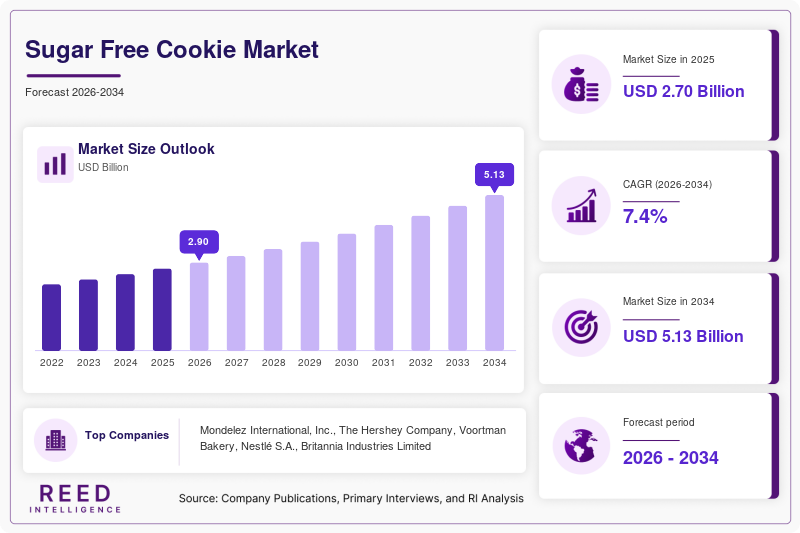
The Sugar Free Cookie Market size was valued at USD 2.7 billion in 2026 and is projected to reach USD 4.8 billion by 2034, expanding at a CAGR of 7.4% during 2026–2034. The global Sugar Free Cookie Market growth has been supported by rising global awareness regarding sugar consumption and the increasing demand for healthier snack alternatives. Consumers are actively seeking bakery products that align with low-sugar, diabetic-friendly, and calorie-conscious dietary preferences, which has accelerated the adoption of sugar free cookies across retail and online channels.
Sugar free cookies are gaining traction among health-conscious consumers, diabetic patients, fitness enthusiasts, and individuals following ketogenic or low-carbohydrate diets. Manufacturers are introducing products formulated with natural sweeteners such as stevia, monk fruit, erythritol, and allulose to improve taste profiles while reducing caloric content. Product innovation in texture, flavor, and clean-label ingredients has further strengthened consumer interest in the Sugar Free Cookie Market.
Key Highlights
- North America accounted for 34.8% of the global Sugar Free Cookie Market share in 2025, while Asia Pacific is projected to register the fastest CAGR of 8.6% during 2026–2034.
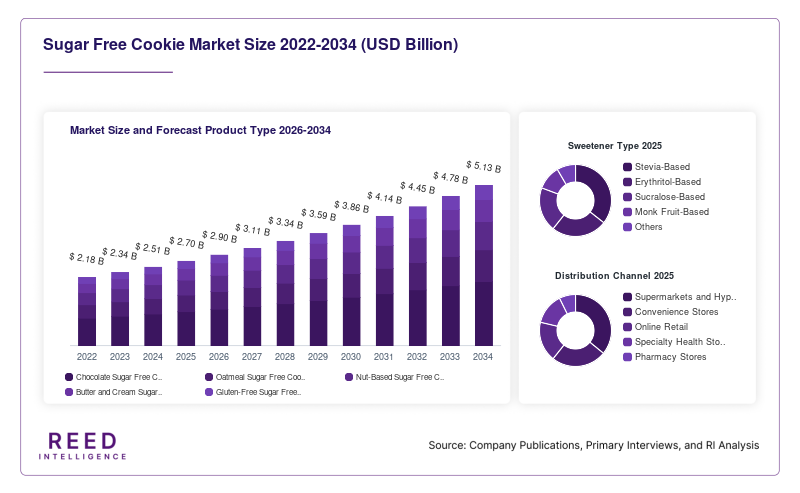
- By product type, chocolate sugar free cookies held the dominant share of 31.9% in 2025, while protein-enriched sugar free cookies are projected to grow at a CAGR of 9.1%.
- By sweetener type, stevia-based cookies dominated the market with a 36.4% share in 2025, while monk fruit sweetener cookies are expected to expand at a CAGR of 9.4%.
- By distribution channel, supermarkets and hypermarkets accounted for 43.7% of the market share in 2025, while online retail is anticipated to grow at a CAGR of 10.2%.
- The United States remained the dominant country market, valued at USD 612 million in 2024 and USD 659 million in 2025.
Market Trends
Growing Demand for Clean-Label and Natural Sweeteners
Consumers are increasingly demanding bakery products made with recognizable and plant-based ingredients. This trend has encouraged manufacturers to replace artificial sweeteners with natural alternatives such as stevia, monk fruit, and erythritol. Clean-label formulations with reduced preservatives and organic ingredients are becoming more prominent across premium product categories.
Food companies are investing in research and development to improve the taste and texture of naturally sweetened cookies. Improved flavor masking technologies and ingredient blending techniques have enabled manufacturers to create products with lower sugar content while maintaining consumer acceptance.
Expansion of Functional and Protein-Enriched Cookies
The growing popularity of functional foods has encouraged manufacturers to introduce sugar free cookies enriched with protein, fiber, vitamins, and probiotics. Consumers are increasingly using healthy snacks as meal replacements or post-workout options, which has accelerated product innovation.
Protein-enriched cookies formulated with whey protein, pea protein, and oat fiber are gaining popularity among fitness-conscious consumers. Manufacturers are also promoting digestive health and energy support claims to differentiate products in competitive retail environments.
Market Drivers
Rising Global Prevalence of Diabetes and Obesity
Increasing cases of diabetes and obesity worldwide have significantly contributed to the growth of the Sugar Free Cookie Market. Consumers diagnosed with metabolic disorders are actively seeking low-sugar alternatives to traditional confectionery and bakery products. Healthcare professionals are also recommending reduced sugar consumption to manage long-term health risks.
Growing awareness campaigns related to balanced nutrition and sugar reduction have influenced purchasing behavior across multiple age groups. This has created favorable conditions for sugar free snack product adoption.
Increasing Consumer Preference for Healthy Snacking
Modern consumers are shifting from traditional indulgent snacks toward healthier alternatives that support active lifestyles. Busy work schedules and on-the-go eating habits have increased demand for convenient packaged snacks with improved nutritional value.
Sugar free cookies are increasingly perceived as guilt-free indulgence products that combine taste with wellness benefits. Food manufacturers are capitalizing on this trend by introducing portion-controlled packaging and premium ingredient formulations.
Market Restraint
High Production Costs of Specialty Ingredients
The use of premium sugar substitutes and specialty functional ingredients increases manufacturing costs for sugar free cookies. Natural sweeteners and protein fortification ingredients often have higher procurement costs than conventional sugar, which can limit affordability for price-sensitive consumers. This pricing challenge may restrict market penetration in developing economies.
Market Opportunities
Expansion of Vegan and Gluten-Free Sugar Free Cookies
The rising adoption of vegan and gluten-free diets presents opportunities for manufacturers to diversify product portfolios. Consumers are increasingly seeking allergen-friendly and plant-based bakery products that align with broader wellness preferences. Companies developing multi-functional products combining sugar-free, gluten-free, and vegan claims are expected to gain market traction.
Growth of Online Health Food Retail Platforms
The rapid expansion of digital grocery and specialty wellness platforms is creating new sales opportunities for sugar free cookie brands. Online retail channels allow manufacturers to reach niche consumer groups and promote premium products directly to health-conscious buyers. Subscription snack boxes and direct-to-consumer models are also supporting sales growth.
Segmental Analysis
By Product Type
Chocolate Sugar Free Cookies
Chocolate sugar free cookies accounted for the largest market share of 31.9% in 2025. Consumers continued to prefer chocolate-based flavors due to familiarity, taste appeal, and product availability across premium and mass-market categories.
Protein-Enriched Sugar Free Cookies
Protein-enriched sugar free cookies are projected to grow at the fastest CAGR of 9.1% during the forecast period. Rising fitness trends and increasing demand for functional snacking products are expected to support segment growth. Manufacturers are introducing products fortified with whey and plant-based proteins to appeal to active consumers.
By Sweetener Type
Stevia-Based Cookies
Stevia-based cookies held a dominant market share of 36.4% in 2025 due to increasing consumer preference for plant-derived sweeteners. Stevia formulations gained popularity because of their low-calorie profile and widespread regulatory acceptance.
Monk Fruit Sweetener Cookies
Monk fruit sweetener cookies are expected to expand at a CAGR of 9.4% during 2026–2034. Growing awareness regarding clean-label ingredients and the natural origin of monk fruit extracts are projected to accelerate segment demand.
By Distribution Channel
Supermarkets and Hypermarkets
Supermarkets and hypermarkets dominated the Sugar Free Cookie Market with a 43.7% share in 2025. These retail formats offered broad product visibility, promotional pricing, and convenient consumer access.
Online Retail
Online retail is projected to witness a CAGR of 10.2% during the forecast period. Expanding digital grocery adoption and growing preference for direct-to-consumer healthy snack purchases are expected to support segment expansion.
By Packaging Type
Flexible Pouches
Flexible pouches accounted for the largest market share of 39.5% in 2025 due to convenience, lightweight properties, and cost-effective transportation benefits.
Single-Serve Packaging
Single-serve packaging is anticipated to grow at a CAGR of 8.8% during 2026–2034. Increasing consumer preference for portion-controlled snacking and portable food products is expected to drive demand.
By End User
Adults
Adults represented the dominant segment with a 61.3% market share in 2025. Rising health awareness among working professionals and diabetic consumers contributed to segment leadership.
Fitness Enthusiasts
Fitness enthusiasts are forecast to register a CAGR of 9.3% during the assessment period. Demand for low-sugar and protein-rich snacks aligned with active lifestyle trends is expected to support segment growth.
Regional Analysis
North America
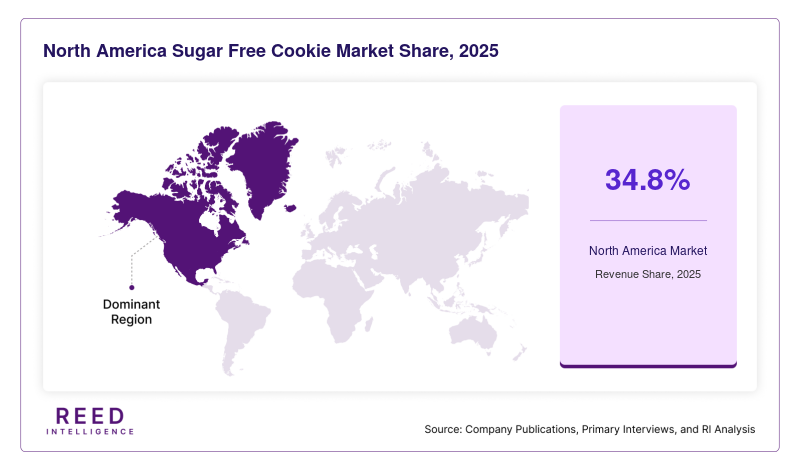
North America accounted for 34.8% of the global Sugar Free Cookie Market share in 2025 and is projected to grow at a CAGR of 6.9% during 2026–2034. The region has maintained strong demand due to increasing health awareness and growing adoption of low-sugar diets.
The United States dominated the regional market owing to the high prevalence of diabetes and obesity. Consumers in the country increasingly prefer functional snack products with clean-label ingredients and reduced sugar formulations.
Europe
Europe held 28.6% of the Sugar Free Cookie Market share in 2025 and is anticipated to expand at a CAGR of 7.1% during the forecast period. The region has witnessed increasing demand for natural and organic bakery products supported by stringent food labeling regulations.
Germany emerged as the dominant country market due to rising consumer preference for healthier packaged snacks and increasing availability of diabetic-friendly bakery products in supermarkets and specialty stores.
Asia Pacific
Asia Pacific accounted for 24.3% of the global market share in 2025 and is projected to register the fastest CAGR of 8.6% during 2026–2034. Rapid urbanization, expanding middle-class populations, and increasing health awareness are supporting regional market growth.
China dominated the regional market due to growing demand for premium packaged foods and increasing adoption of low-sugar dietary patterns among younger consumers. Rising e-commerce penetration has also enhanced product accessibility.
Middle East & Africa
The Middle East & Africa represented 6.4% of the global Sugar Free Cookie Market share in 2025 and is forecast to grow at a CAGR of 6.3% during the assessment period. Increasing lifestyle-related health concerns and expanding retail infrastructure are supporting market growth.
The United Arab Emirates emerged as the leading regional market due to rising demand for premium imported health snacks and increasing consumer spending on wellness-oriented food products.
Latin America
Latin America accounted for 5.9% of the market share in 2025 and is projected to grow at a CAGR of 7.5% during the forecast period. The region is benefiting from growing awareness regarding sugar reduction and improving access to healthy packaged foods.
Brazil dominated the regional market owing to increasing demand for low-calorie bakery products and expanding supermarket distribution networks for health-focused snack products.
Competitive Landscape
The Sugar Free Cookie Market remains highly competitive with the presence of multinational food manufacturers, specialty wellness brands, and regional bakery companies. Market participants are focusing on product innovation, clean-label formulations, and expansion across digital retail channels.
Mondelez International emerged as a leading player due to its extensive global distribution network and diversified healthier snacking portfolio. The company recently expanded its reduced-sugar biscuit product line using natural sweetener blends to strengthen its health-focused offerings.
Nestlé S.A. continues to invest in low-sugar snack innovation and premium wellness products. The Hershey Company has expanded its sugar-free confectionery and cookie portfolio targeting diabetic and calorie-conscious consumers.
Voortman Bakery focuses on sugar-free bakery products with clean-label positioning and specialty formulations. HighKey has strengthened its ketogenic and low-carb cookie portfolio to address growing functional snack demand.
Key Players List
- Mondelez International
- Nestlé S.A.
- The Hershey Company
- Voortman Bakery
- HighKey
- Murray Sugar Free
- Gullón S.A.
- Britannia Industries Limited
- Parle Products Pvt. Ltd.
- Quest Nutrition
- Lenny & Larry’s
- Nature’s Path Foods
- Unibic Foods
- Diabliss Consumer Foods
- The Kraft Heinz Company
Recent Developments
- In February 2025, Mondelez International launched a new line of naturally sweetened sugar free cookies targeting wellness-focused consumers.
- In April 2025, Nestlé S.A. expanded its reduced-sugar bakery portfolio across European retail channels.
- In September 2024, HighKey introduced protein-enriched keto cookies formulated with monk fruit sweetener.
- In November 2024, Voortman Bakery expanded its sugar free product distribution network in North America.
- In January 2025, Britannia Industries Limited launched low-sugar digestive cookies targeting urban health-conscious consumers.
Sugar Free Cookie Market Segments
Product Type
- Chocolate Sugar Free Cookies
- Oatmeal Sugar Free Cookies
- Nut-Based Sugar Free Cookies
- Butter and Cream Sugar Free Cookies
- Gluten-Free Sugar Free Cookies
Sweetener Type
- Stevia-Based
- Erythritol-Based
- Sucralose-Based
- Monk Fruit-Based
- Others
Distribution Channel
- Supermarkets and Hypermarkets
- Convenience Stores
- Online Retail
- Specialty Health Stores
- Pharmacy Stores
End User
- Diabetic Consumers
- Weight Management Consumers
- Fitness Enthusiasts
- General Health-Conscious Consumers
By Region
- North America
- Europe
- APAC
- Middle East and Africa
- LATAM