Sugar Free Drinks Market Size, Share & Demand Report By Product Type (Carbonated Soft Drinks, Functional Beverages, Flavored Water, Sports Drinks, Ready-to-Drink Tea and Coffee, Energy Drinks), By Distribution Channel (Supermarkets and Hypermarkets, Convenience Stores, Online Retail, Specialty Stores, Foodservice Channels), By Packaging Type (Bottles, Cans, Cartons, Pouches, Glass Containers), By Region & Segment Forecasts, 2026–2034
USD 3950
Market Overview
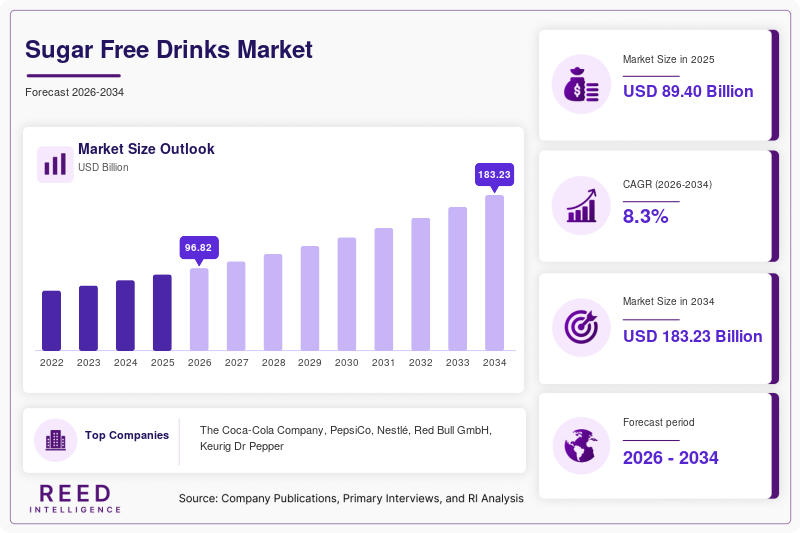
The global Sugar Free Drinks Market size was valued at USD 89.4 billion in 2026 and is projected to reach USD 168.7 billion by 2034, expanding at a CAGR of 8.3% during the forecast period from 2026 to 2034. The market is witnessing consistent growth due to shifting consumer preferences toward low-calorie beverages, rising awareness regarding lifestyle-related disorders, and increasing adoption of healthier beverage alternatives across developed and emerging economies. Beverage manufacturers are introducing innovative formulations using natural sweeteners, plant-based ingredients, and functional additives to strengthen their product portfolios and meet changing consumer expectations.
One of the major global factors supporting market growth is the increasing prevalence of obesity and diabetes among adults and younger populations. Governments, healthcare organizations, and public health agencies are promoting reduced sugar consumption through awareness campaigns and labeling regulations. These developments have encouraged beverage companies to expand sugar-free product lines across carbonated soft drinks, energy drinks, flavored water, sports beverages, and ready-to-drink tea categories. Retail chains and e-commerce platforms are also enhancing the accessibility of sugar-free beverages, particularly in urban markets where health-conscious purchasing behavior continues to rise.
Key Highlights
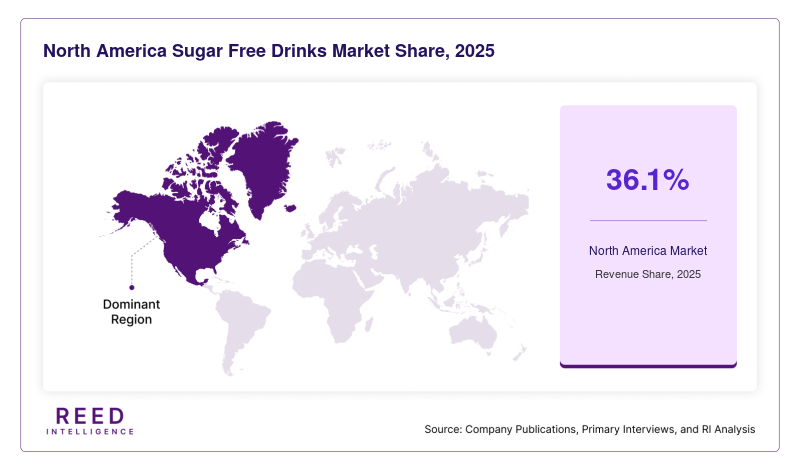
- North America dominated the market with a 36.1% share in 2025.
- Asia Pacific is expected to grow at the fastest CAGR of 10.8% during 2026–2034.
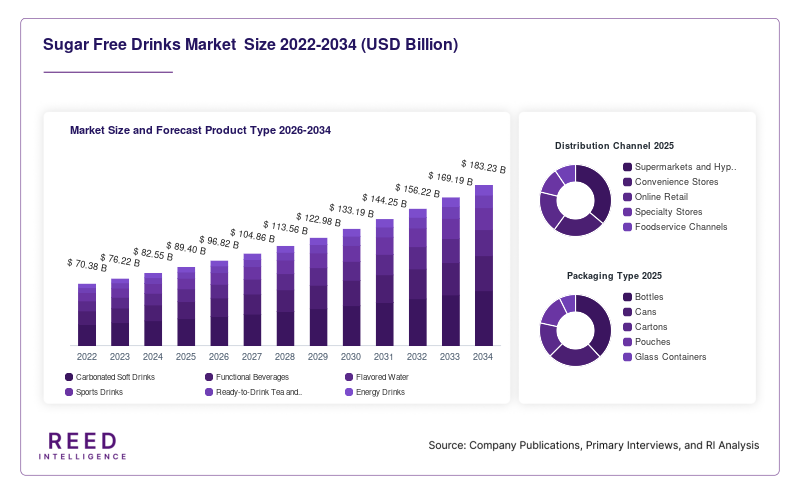
- By product type, carbonated soft drinks accounted for the largest share of 39.4%, while functional sugar-free beverages are projected to grow at a CAGR of 11.7%.
- By distribution channel, supermarkets and hypermarkets led with a 44.6% share, whereas online retail is expected to expand at a CAGR of 12.1%.
- The United States remained the dominant country, with market values of USD 24.8 billion in 2024 and USD 27.1 billion in 2025.
Market Trends
Expansion of Functional and Wellness-Oriented Beverage Formulations
The Sugar Free Drinks Market is experiencing a strong transition toward functional beverages that combine sugar reduction with added health benefits. Consumers are increasingly seeking products that support hydration, immunity, digestive health, mental focus, and energy management without contributing to excessive calorie intake. Beverage manufacturers are responding by integrating vitamins, probiotics, botanical extracts, electrolytes, and adaptogens into sugar-free formulations. Functional sparkling water, sugar-free kombucha, and zero-sugar sports drinks are gaining traction among younger consumers and fitness-focused populations.
The growing popularity of active lifestyles and preventive healthcare practices has accelerated demand for wellness-oriented drinks in both developed and emerging economies. Companies are investing in research to improve flavor balance and ingredient compatibility in functional sugar-free beverages. Premium product positioning, modern packaging formats, and social media marketing campaigns are also influencing purchasing behavior. The trend is expected to strengthen further as consumers continue to associate sugar-free products with broader health and wellness objectives rather than only calorie reduction.
Rising Preference for Natural Sweeteners and Clean-Label Products
Consumers are showing increased interest in sugar-free drinks formulated with natural and recognizable ingredients. This shift is encouraging beverage companies to replace artificial sweeteners with plant-derived alternatives such as stevia and monk fruit extract. Clean-label positioning has become an important competitive factor, especially among millennials and urban consumers who closely examine ingredient transparency and nutritional labeling before purchasing beverages.
Manufacturers are also reformulating existing products to reduce synthetic additives and preservatives while maintaining taste quality. Natural flavor infusions, fruit-based extracts, and organic ingredients are becoming more common across premium sugar-free beverage categories. Retailers are allocating more shelf space to clean-label beverages, particularly in supermarkets and specialty health stores. The trend is also influencing private-label brands, which are increasingly launching affordable sugar-free drink options using natural sweetener blends. This development is expected to create stronger competition and product differentiation across global beverage markets.
Market Drivers
Increasing Health Awareness and Reduced Sugar Consumption
Growing public awareness regarding the health risks associated with excessive sugar intake is a major driver supporting the Sugar Free Drinks Market. Consumers are becoming more conscious of calorie consumption and are actively reducing their intake of sugary beverages to manage weight, diabetes risk, and cardiovascular health. Healthcare campaigns, nutritional education programs, and media coverage related to obesity and metabolic disorders are influencing beverage purchasing decisions across multiple age groups.
Governments in several countries have also introduced sugar taxes and stricter labeling requirements for high-sugar beverages. These regulatory measures are encouraging consumers to shift toward sugar-free alternatives while motivating beverage manufacturers to expand low-calorie product offerings. Demand is particularly strong among urban professionals, fitness enthusiasts, and younger consumers seeking healthier refreshment options. The availability of improved sweetener technologies has further enhanced product taste and consumer acceptance, supporting broader market penetration across supermarkets, convenience stores, and online retail channels.
Product Innovation and Expansion Across Beverage Categories
Continuous innovation in beverage formulations and packaging is significantly contributing to market growth. Leading beverage companies are introducing sugar-free variants across carbonated drinks, flavored water, iced tea, sports drinks, and energy beverages to capture a wider consumer base. Product launches featuring exotic flavors, functional ingredients, and sustainable packaging formats are strengthening consumer engagement and brand visibility.
Advancements in sweetener combinations are enabling manufacturers to achieve better taste profiles with lower aftertaste intensity, improving repeat purchases and brand loyalty. Companies are also targeting niche consumer groups through specialized products such as keto-friendly drinks, vegan beverages, and electrolyte-enhanced hydration products. Digital marketing strategies and influencer partnerships are helping brands reach younger demographics more effectively. The growing availability of sugar-free beverages in foodservice outlets, vending machines, and quick-service restaurants is also increasing product exposure and accelerating consumption across global markets.
Market Restraint
Consumer Concerns Regarding Artificial Sweeteners and Taste Perception
Despite strong market growth, concerns associated with artificial sweeteners remain a notable restraint for the Sugar Free Drinks Market. Many consumers continue to question the long-term health implications of ingredients such as aspartame, saccharin, and sucralose. Negative perceptions regarding synthetic additives and chemically processed ingredients can reduce product acceptance, especially among consumers seeking natural and minimally processed beverages. In some markets, misinformation related to sweetener safety has also influenced purchasing behavior and limited adoption rates.
Taste perception remains another challenge for beverage manufacturers. Some sugar-free drinks continue to experience criticism related to aftertaste, reduced flavor intensity, or texture differences compared to traditional sugary beverages. Achieving sugar-like taste quality without increasing production costs requires extensive formulation research and ingredient optimization. Smaller beverage companies often face financial constraints when investing in advanced sweetener technologies and reformulation initiatives. These factors can slow innovation cycles and create barriers for new entrants attempting to compete with established global beverage brands.
Market Opportunities
Growing Demand in Emerging Economies and Urban Markets
Emerging economies present substantial growth opportunities for the Sugar Free Drinks Market due to rapid urbanization, rising disposable incomes, and increasing awareness regarding healthy lifestyles. Consumers in countries across Asia Pacific, Latin America, and the Middle East are gradually shifting away from traditional sugary beverages and adopting low-calorie drink alternatives. Expanding middle-class populations and growing retail infrastructure are improving product accessibility in metropolitan and semi-urban areas.
International beverage companies are increasing investments in localized manufacturing facilities, regional flavor development, and strategic partnerships to strengthen market presence in emerging economies. Marketing campaigns focused on fitness, hydration, and modern lifestyles are resonating strongly with younger consumers. In addition, smartphone penetration and online grocery platforms are helping brands reach consumers beyond traditional retail channels. The growing popularity of western dietary trends and wellness culture is expected to further support demand for sugar-free beverages in developing markets during the forecast period.
Expansion of Premium and Personalized Beverage Segments
The increasing demand for premium and personalized beverage experiences is creating new opportunities for industry participants. Consumers are showing interest in beverages tailored to specific dietary preferences, fitness routines, and wellness objectives. Sugar-free drinks featuring customized nutritional benefits, organic ingredients, and functional enhancements are gaining popularity in premium retail channels and health-focused stores.
Brands are introducing personalized hydration drinks, protein-infused beverages, and sugar-free products designed for energy support, immunity, and cognitive performance. Subscription-based beverage services and direct-to-consumer platforms are also expanding, enabling companies to collect consumer preference data and improve product targeting strategies. Premium packaging, sustainable sourcing claims, and limited-edition flavors are helping brands differentiate products in a highly competitive environment. As consumers continue to prioritize quality, transparency, and lifestyle alignment, premium sugar-free beverage categories are expected to experience significant expansion across global markets.
Segmental Analysis
By Product Type
Carbonated soft drinks accounted for the largest share of the Sugar Free Drinks Market in 2024, representing approximately 39.4% of total revenue. The dominance of this segment is linked to the strong global presence of established beverage brands and extensive product availability across supermarkets, restaurants, convenience stores, and vending channels. Consumers transitioning away from traditional sugary sodas often prefer familiar sugar-free carbonated alternatives due to comparable taste profiles and brand loyalty. Major beverage manufacturers continue to invest in product reformulation, advanced sweetener combinations, and flavor diversification to maintain segment leadership. Demand is particularly strong among younger consumers and working professionals seeking convenient low-calorie beverage options. Promotional campaigns, celebrity endorsements, and retail discounts also contribute to high sales volumes within this segment across both developed and emerging economies.
Functional sugar-free beverages are projected to register the fastest CAGR of 11.7% during the forecast period due to growing consumer interest in wellness-oriented products. This subsegment includes sports drinks, energy beverages, probiotic drinks, and vitamin-enriched hydration products formulated without added sugar. Consumers increasingly prefer beverages that provide additional health benefits beyond hydration, including energy support, digestive balance, and immunity enhancement. Beverage companies are responding through innovation in plant-based ingredients, adaptogens, electrolytes, and botanical extracts. The expansion of gym memberships, fitness communities, and active lifestyle trends is accelerating demand for functional sugar-free beverages globally. Premium packaging, influencer marketing, and direct-to-consumer distribution channels are further supporting subsegment growth, especially among millennials and health-conscious urban populations.
By Distribution Channel
Supermarkets and hypermarkets held the largest market share in 2024, accounting for approximately 44.6% of total Sugar Free Drinks Market revenue. These retail channels provide consumers with access to a broad variety of sugar-free beverages across multiple price categories and product formats. High product visibility, promotional pricing strategies, and convenient shopping experiences continue to support strong sales performance within large retail outlets. Consumers often prefer supermarkets for bulk purchases and product comparisons, especially in urban regions where organized retail infrastructure is well developed. Beverage companies also rely heavily on supermarkets and hypermarkets for brand exposure and new product launches. Strategic shelf placement, in-store advertising, and seasonal promotional campaigns play a significant role in influencing purchasing decisions and encouraging repeat consumption across several demographic groups.
Online retail is expected to grow at the fastest CAGR of 12.1% during the forecast period due to increasing digital shopping adoption and expanding e-commerce grocery platforms. Consumers are increasingly purchasing sugar-free beverages through mobile applications and online marketplaces because of convenience, subscription services, and wider product availability. Online platforms also allow niche and premium beverage brands to reach consumers without depending entirely on traditional retail networks. Personalized recommendations, discount bundles, and home delivery services are supporting higher consumer engagement across digital channels. The growing use of social media advertising and influencer-driven product promotions is also contributing to rising online beverage sales. As internet penetration and digital payment infrastructure improve globally, online retail is expected to become a major distribution channel for sugar-free beverage manufacturers.
By Packaging Type
Bottles represented the dominant packaging segment in the Sugar Free Drinks Market in 2024, accounting for nearly 48.2% of global revenue. Plastic and recyclable bottle formats remain widely preferred due to portability, convenience, and compatibility with multiple beverage categories including carbonated drinks, flavored water, and sports beverages. Beverage companies favor bottle packaging because it supports product differentiation through customized designs, branding elements, and portion-size flexibility. Consumers also associate bottled beverages with convenience for travel, office consumption, and fitness activities. Advancements in lightweight packaging materials and recyclable plastics are helping manufacturers align with sustainability objectives while reducing logistics costs. Retailers prefer bottled products because of easy shelf arrangement and strong consumer familiarity, which continues to support high sales volumes across both developed and emerging markets.
Cans are projected to witness the fastest CAGR of 10.4% during the forecast period due to increasing demand for sustainable and premium beverage packaging solutions. Aluminum cans are gaining popularity because they offer improved recyclability, longer shelf life, and strong visual appeal for modern beverage branding. Consumers increasingly perceive canned sugar-free drinks as environmentally responsible alternatives to plastic packaging. Beverage companies are also launching limited-edition flavors and premium functional beverages in sleek can formats to attract younger demographics. The rising popularity of ready-to-drink energy beverages and sparkling flavored water is further supporting can adoption globally. Improved transportation efficiency, reduced packaging waste, and compatibility with automated vending systems are expected to contribute to strong growth within this packaging subsegment over the coming years.
Regional Analysis
North America
North America accounted for 36.1% of the global Sugar Free Drinks Market share in 2025 and is expected to maintain a stable growth trajectory during the forecast period. The regional market is projected to expand at a CAGR of 7.6% from 2026 to 2034 due to strong consumer awareness regarding calorie management and healthy beverage consumption. The presence of established beverage manufacturers, advanced retail infrastructure, and widespread availability of sugar-free product options supports consistent market demand across the United States and Canada.
The United States remains the dominant country in the region due to high consumption of low-calorie beverages and growing adoption of fitness-oriented lifestyles. Major beverage companies are expanding zero-sugar product portfolios and investing in natural sweetener technologies to improve taste quality and product differentiation. Another important growth factor is the increasing influence of workplace wellness programs and gym-based nutrition culture, which continues to encourage regular consumption of sugar-free hydration and energy beverages.
Europe
Europe represented a significant share of the Sugar Free Drinks Market in 2025 and is anticipated to grow at a CAGR of 7.9% during the forecast period. Strong regulatory frameworks regarding sugar labeling and sugar taxation policies are encouraging consumers to shift toward low-calorie beverage alternatives. Countries across Western Europe are witnessing increasing demand for flavored sparkling water, sugar-free ready-to-drink tea, and functional wellness beverages as consumers prioritize healthier dietary habits.
Germany emerged as the dominant country in the European market due to strong consumer preference for clean-label and naturally sweetened beverages. Beverage companies operating in Germany are focusing on sustainable packaging, organic ingredients, and reduced sugar formulations to align with evolving consumer expectations. Another major growth factor in the region is the increasing popularity of plant-based and vegan beverage categories, which frequently incorporate sugar-free formulations to attract health-conscious consumers.
Asia Pacific
Asia Pacific is projected to register the fastest CAGR of 10.8% from 2026 to 2034 in the Sugar Free Drinks Market. Rising urbanization, growing middle-class populations, and expanding awareness regarding diabetes prevention are supporting strong regional demand. Consumers in metropolitan areas are increasingly replacing traditional sugary beverages with low-calorie alternatives, particularly among younger demographics influenced by social media fitness trends and western dietary preferences.
China dominates the regional market due to its large population base and rapidly expanding beverage manufacturing industry. Domestic and international beverage companies are investing heavily in digital marketing, localized flavors, and affordable sugar-free product offerings to strengthen market penetration. A unique growth factor driving regional expansion is the rapid growth of e-commerce grocery platforms, which are increasing product accessibility and encouraging impulse purchases of sugar-free beverages among urban consumers.
Middle East & Africa
The Middle East & Africa region is witnessing steady growth in the Sugar Free Drinks Market and is expected to expand at a CAGR of 8.1% during the forecast period. Increasing healthcare awareness campaigns and rising incidence of obesity-related disorders are encouraging consumers to reduce sugar intake across several Gulf countries and urban African markets. Beverage manufacturers are gradually introducing sugar-free carbonated drinks, flavored water, and sports beverages through supermarkets and convenience retail channels.
Saudi Arabia remains the dominant country in the regional market due to strong regulatory action targeting sugary beverage consumption. Government initiatives promoting healthier lifestyles and taxation on sugar-sweetened drinks are encouraging demand for zero-sugar alternatives. Another significant growth factor is the expansion of modern retail infrastructure and international foodservice chains, which are improving the availability and visibility of sugar-free beverages across urban centers in the region.
Latin America
Latin America continues to experience gradual expansion in the Sugar Free Drinks Market and is projected to grow at a CAGR of 7.4% from 2026 to 2034. The market is benefiting from increasing consumer awareness regarding nutritional balance and calorie reduction, particularly among younger urban populations. Beverage manufacturers are expanding regional production capabilities and introducing affordable sugar-free drink variants to improve accessibility across middle-income consumer groups.
Brazil is the dominant country within the regional market due to its large beverage industry and rising consumer interest in healthier refreshment products. Companies operating in Brazil are focusing on tropical flavor innovation and low-calorie functional drinks to capture local consumer preferences. Another key growth factor supporting the market is the increasing influence of sports culture and active lifestyle trends, which are driving higher demand for sugar-free hydration beverages and energy drinks across major cities.
Competitive Landscape
The Sugar Free Drinks Market is highly competitive, with multinational beverage companies and regional manufacturers focusing on product innovation, flavor diversification, and strategic marketing initiatives to strengthen market position. Leading players are expanding zero-sugar product portfolios across carbonated beverages, flavored water, sports drinks, and functional wellness categories. Companies are also investing in natural sweetener research, sustainable packaging solutions, and digital distribution strategies to enhance consumer engagement and long-term brand loyalty.
The market leader remains The Coca-Cola Company due to its extensive global distribution network and broad portfolio of sugar-free beverage products. The company recently expanded its zero-sugar flavored beverage range across Asia Pacific and North America to address increasing demand for low-calorie refreshment options. PepsiCo continues to strengthen its sugar-free energy and hydration beverage portfolio through strategic partnerships and premium product launches. Nestlé is focusing on clean-label beverage innovation and functional hydration products, while Red Bull GmbH is expanding sugar-free energy drink offerings in emerging markets. Keurig Dr Pepper is also increasing investments in flavored sparkling water and reduced-calorie soft drink categories.
Key Players
- The Coca-Cola Company
- PepsiCo
- Nestlé
- Red Bull GmbH
- Keurig Dr Pepper
- Monster Beverage Corporation
- Danone
- Suntory Holdings Limited
- Asahi Group Holdings
- Unilever
- National Beverage Corp.
- Zevia LLC
- Britvic plc
- Tata Consumer Products
- Arizona Beverages USA
Recent Developments
- The Coca-Cola Company introduced a new naturally sweetened sugar-free sparkling beverage line in 2025 targeting health-conscious consumers across North America and Europe.
- PepsiCo expanded its zero-sugar sports drink production facilities in Asia Pacific during 2025 to meet increasing regional demand for functional hydration beverages.
- Nestlé launched a premium sugar-free flavored water portfolio featuring botanical extracts and vitamin blends in selected European markets in 2026.
- Red Bull GmbH expanded distribution of its sugar-free energy drink variants across Middle Eastern countries through strategic retail partnerships in 2025.
- Keurig Dr Pepper invested in recyclable aluminum can packaging technology for its sugar-free beverage portfolio to strengthen sustainability initiatives in 2026.
Sugar Free Drinks Market Segments
Product Type
- Carbonated Soft Drinks
- Functional Beverages
- Flavored Water
- Sports Drinks
- Ready-to-Drink Tea and Coffee
- Energy Drinks
Distribution Channel
- Supermarkets and Hypermarkets
- Convenience Stores
- Online Retail
- Specialty Stores
- Foodservice Channels
Packaging Type
- Bottles
- Cans
- Cartons
- Pouches
- Glass Containers
By Region
- North America
- Europe
- APAC
- Middle East and Africa
- LATAM