Superfood Powders Market Size, Share & Demand Report By Product Type (Plant-Based Green Powders, Fruit and Berry Powders, Protein-Enriched Superfood Blends, Herbal and Adaptogenic Powders, Others), By Distribution Channel (Online Retail, Supermarkets and Hypermarkets, Specialty Health Stores, Pharmacies and Drug Stores, Others), By Application (Dietary Supplements, Functional Beverages, Sports Nutrition, Functional Food Products, Others) By Region & Segment Forecasts, 2026–2034
USD 3950
Market Overview
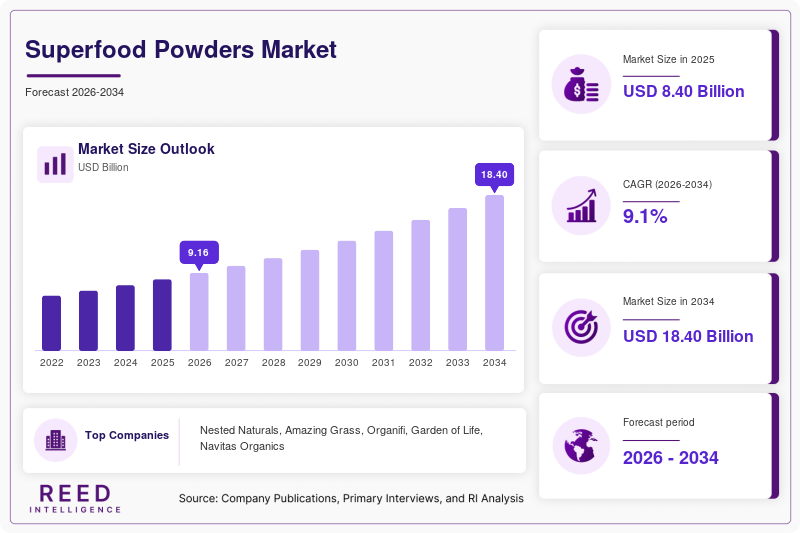
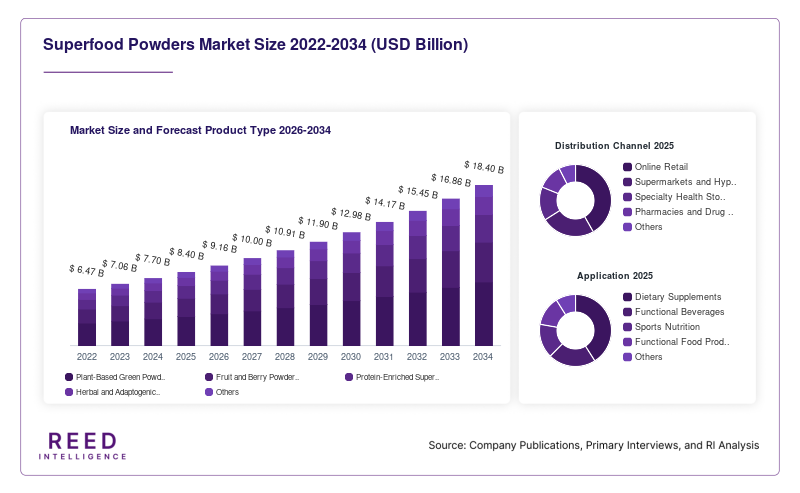
The global Superfood Powders Market size was valued at USD 8.4 billion in 2026 and is projected to reach USD 16.9 billion by 2034, expanding at a CAGR of 9.1% during the forecast period. The market continues to witness stable expansion due to changing dietary habits, increasing preference for nutrient-dense food products, and wider adoption of plant-based nutritional supplements across developed and emerging economies. Consumers are actively seeking convenient wellness products that support immunity, digestion, energy management, and overall health. Superfood powders, including spirulina, wheatgrass, moringa, turmeric, and berry blends, have gained commercial traction because they can be easily incorporated into smoothies, beverages, functional foods, and dietary supplements.
One major global factor supporting market growth is the rising consumer shift toward preventive healthcare and clean-label nutrition. Urban populations are increasingly focused on long-term wellness management, leading to strong demand for natural ingredients with perceived functional benefits. Manufacturers are responding by launching organic, vegan, sugar-free, and preservative-free powder formulations to address evolving dietary preferences. Expansion of e-commerce platforms and direct-to-consumer nutrition brands has further improved product accessibility, particularly among younger consumers seeking personalized wellness solutions. In addition, growing fitness participation and awareness regarding micronutrient deficiencies are encouraging routine consumption of superfood blends in daily diets.
Key Highlights
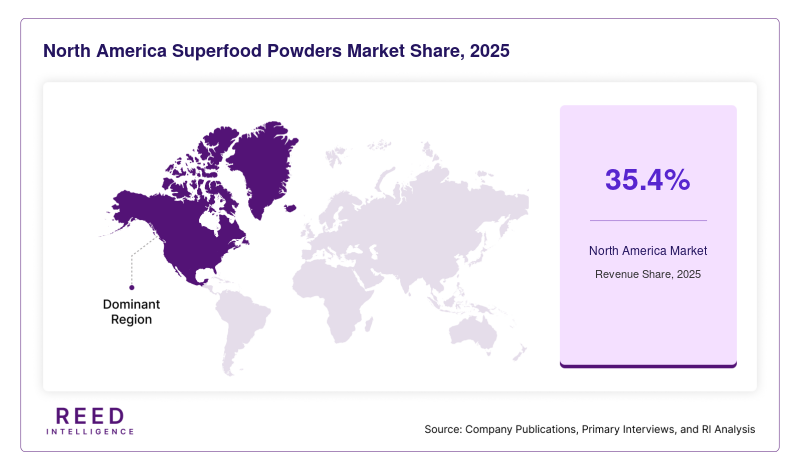
- North America dominated the market with a 35.4% share in 2025.
- Asia Pacific is expected to grow at the fastest CAGR of 10.8% during 2026–2034.
- By product type, plant-based green powders accounted for the largest share of 39.6%, while protein-enriched blends are projected to grow at a CAGR of 11.5%. By distribution channel, online retail led with a 44.2% share, whereas specialty health stores are expected to expand at a CAGR of 10.9%.
- By application, dietary supplements held a leading share of 41.3%, while functional beverages are projected to grow at a CAGR of 11.2%. The United States remained the dominant country, with market values of USD 2.3 billion in 2024 and USD 2.6 billion in 2025.
Market Trends
Growing Preference for Organic and Plant-Based Nutrition Products
The Superfood Powders Market is experiencing strong momentum from the increasing consumer preference for organic and plant-based nutrition products. Consumers are becoming more conscious about ingredient sourcing, production transparency, and nutritional quality, leading to higher demand for powders derived from natural fruits, vegetables, herbs, and algae. Organic spirulina, kale blends, beetroot powders, and moringa formulations are gaining attention among health-conscious buyers seeking minimally processed dietary additions. This trend is especially visible among millennials and younger consumers who prioritize sustainability and clean-label products when making purchasing decisions. Manufacturers are responding by obtaining organic certifications, improving traceability practices, and introducing environmentally friendly packaging solutions.
The trend is also supported by the expansion of vegan and flexitarian diets across several countries. Superfood powders are increasingly marketed as versatile products suitable for smoothies, protein shakes, snack bars, and meal replacements. Social media wellness influencers and nutrition-focused digital campaigns continue to raise awareness about ingredient functionality and daily nutrient intake. Retailers are allocating larger shelf space to plant-based wellness products, while online subscription models are improving recurring purchases. As consumers seek products aligned with natural wellness lifestyles, organic and plant-based formulations are expected to remain a significant trend shaping long-term market development.
Expansion of Personalized Nutrition and Functional Wellness Blends
Another notable trend in the Superfood Powders Market is the emergence of personalized nutrition solutions and functional wellness blends. Consumers are increasingly purchasing products formulated for specific health goals such as immunity support, gut health, stress management, cognitive function, and sports recovery. This shift has encouraged manufacturers to develop targeted powder combinations that include probiotics, adaptogens, collagen, antioxidants, and botanical extracts alongside traditional superfood ingredients. Personalized nutrition platforms are also using digital health assessments and subscription-based services to recommend customized superfood combinations tailored to individual dietary preferences and wellness objectives.
The trend is influencing product innovation across the nutrition and functional food industries. Companies are investing in research related to ingredient synergy, nutrient bioavailability, and flavor enhancement to improve consumer acceptance. Functional blends designed for morning energy, post-workout recovery, or sleep support are becoming increasingly common in retail channels. In addition, convenient single-serve packaging and travel-friendly sachets are supporting adoption among busy urban consumers. The growing integration of nutrition technology with wellness products is expected to strengthen consumer engagement and encourage premium product positioning within the global market.
Market Drivers
Rising Health Awareness and Preventive Healthcare Adoption
Increasing awareness regarding preventive healthcare practices is one of the primary factors driving the Superfood Powders Market. Consumers are actively seeking food products that provide nutritional benefits beyond basic dietary requirements. Superfood powders are widely perceived as rich sources of vitamins, minerals, antioxidants, and phytonutrients that may support immunity, digestive health, and energy management. Growing concerns regarding obesity, diabetes, cardiovascular disorders, and nutritional deficiencies have encouraged individuals to adopt healthier daily routines. This has resulted in stronger demand for wellness-oriented food and beverage products across both developed and developing markets.
The growing popularity of fitness activities and active lifestyles is further contributing to product demand. Health clubs, nutrition coaches, and wellness influencers frequently promote superfood powders as convenient additions to balanced diets and workout routines. Consumers with limited time for meal preparation are increasingly purchasing nutritional powders that can be quickly mixed into beverages and snacks. In addition, the expansion of health-focused retail stores and online nutrition platforms has improved consumer access to a wide range of premium and specialized products. As preventive healthcare becomes a long-term consumer priority, demand for nutrient-rich superfood formulations is expected to remain strong.
Expansion of E-Commerce and Direct-to-Consumer Wellness Brands
The rapid growth of e-commerce platforms and direct-to-consumer nutrition brands is another major driver supporting the Superfood Powders Market. Online retail channels provide consumers with convenient access to a diverse product portfolio, including imported and specialty formulations that may not be available in traditional retail stores. Digital marketplaces enable consumers to compare ingredients, prices, certifications, and customer reviews before purchasing. This has significantly improved product visibility and accelerated market penetration across urban and semi-urban regions.
Direct-to-consumer wellness companies are using subscription models, targeted advertising, and personalized product recommendations to build customer loyalty. Social media marketing campaigns and influencer partnerships have also strengthened brand engagement among younger demographics. Smaller brands can now enter the market more efficiently through digital platforms without depending heavily on physical distribution networks. Furthermore, e-commerce channels support rapid product launches and real-time consumer feedback, enabling manufacturers to adapt formulations based on evolving preferences. As online health and wellness shopping continues to expand globally, digital distribution channels are expected to remain a major growth catalyst for the industry.
Market Restraint
High Product Costs and Consumer Skepticism Regarding Health Claims
One significant challenge affecting the Superfood Powders Market is the relatively high cost of premium formulations combined with growing consumer skepticism regarding nutritional claims. Many superfood powders contain imported organic ingredients, specialized processing methods, and certification requirements that increase production costs. As a result, retail prices for premium blends are often considerably higher than conventional nutritional supplements and beverage mixes. Price-sensitive consumers in emerging markets may hesitate to purchase these products regularly, limiting broader market penetration. In addition, fluctuations in agricultural yields and raw material availability can further increase manufacturing and transportation expenses.
Consumer skepticism regarding marketing claims also creates challenges for industry participants. While many products are promoted for immunity support, detoxification, energy enhancement, or digestive health, consumers are becoming more cautious about unverified wellness statements. Regulatory authorities in several countries are increasing scrutiny over nutritional labeling and advertising practices, requiring companies to provide clearer product information and transparent ingredient sourcing. Negative publicity related to ingredient adulteration or misleading claims can affect brand credibility and reduce consumer trust. For example, some smaller brands have faced criticism for overstating antioxidant or detox benefits without sufficient scientific support. These factors may restrain purchasing decisions among first-time consumers and increase compliance costs for manufacturers.
Market Opportunities
Increasing Demand from Emerging Economies and Urban Consumers
Emerging economies present considerable growth opportunities for the Superfood Powders Market due to rising disposable income, urbanization, and growing health awareness. Consumers in countries across Asia Pacific, Latin America, and the Middle East are gradually adopting functional nutrition products as wellness awareness expands through digital media and healthcare campaigns. Urban consumers are increasingly interested in convenient dietary products that fit busy lifestyles while supporting long-term health objectives. The rising influence of western dietary patterns and fitness culture is also contributing to stronger demand for superfood-based beverages and supplements.
Manufacturers are responding by expanding regional distribution networks and introducing affordable product formats suited to local purchasing behavior. Smaller packaging sizes and locally sourced ingredient blends are helping brands improve accessibility among middle-income consumers. Retail expansion in supermarkets, pharmacies, and online marketplaces is further increasing product visibility. In addition, regional food and beverage companies are incorporating superfood ingredients into functional drinks, snack products, and breakfast foods. As awareness regarding nutrition and preventive healthcare improves across emerging markets, these regions are expected to create substantial long-term revenue opportunities for manufacturers.
Product Innovation in Functional Food and Sports Nutrition Applications
Another important opportunity within the Superfood Powders Market lies in the growing application of superfood ingredients in functional foods and sports nutrition products. Athletes, fitness enthusiasts, and active consumers are increasingly seeking natural nutritional products that support energy, endurance, hydration, and recovery. This has encouraged manufacturers to introduce performance-focused blends containing plant proteins, adaptogens, electrolytes, and antioxidant-rich ingredients. Functional powders designed for pre-workout and post-workout applications are gaining popularity in gyms, fitness centers, and sports nutrition retail channels.
The integration of superfood ingredients into mainstream food categories is also creating new growth potential. Food manufacturers are increasingly using superfood powders in bakery products, cereals, dairy alternatives, snack bars, and ready-to-drink beverages. These applications help brands position products within the broader functional wellness category while reaching consumers beyond the dietary supplement segment. Innovation related to flavor enhancement, texture improvement, and nutrient stability is further supporting product acceptance. As consumers continue to seek convenient nutritional solutions integrated into everyday diets, diversified product applications are expected to generate significant market opportunities.
Segmental Analysis
By Product Type
Plant-based green powders accounted for the largest share of the Superfood Powders Market in 2024, representing approximately 39.6% of global revenue. This segment includes products derived from spirulina, chlorella, wheatgrass, barley grass, kale, spinach, and moringa. Strong consumer interest in detoxification, digestive support, and nutrient-rich dietary supplementation continues to support demand for green powder formulations. Consumers perceive these products as convenient sources of vitamins, minerals, antioxidants, and plant compounds that complement healthy lifestyles. The segment has also benefited from rising vegan and vegetarian populations seeking plant-derived nutritional alternatives. Manufacturers are expanding flavor options and improving ingredient combinations to enhance taste profiles and consumer acceptance.
Protein-enriched superfood blends are expected to witness the fastest CAGR of 11.5% during the forecast period due to increasing demand from sports nutrition and active lifestyle consumers. These products combine superfood ingredients with plant proteins such as pea, hemp, soy, and brown rice protein to support muscle recovery and daily nutritional intake. The growth of fitness culture and gym memberships has encouraged consumers to purchase multifunctional wellness products that provide both protein and micronutrient benefits. Brands are increasingly launching formulations designed for pre-workout, post-workout, and meal replacement applications. Innovation related to texture improvement, sugar reduction, and flavor enhancement is further strengthening demand across mainstream consumer segments.
By Distribution Channel
Online retail emerged as the dominant distribution channel in the Superfood Powders Market, accounting for 44.2% of total revenue in 2024. E-commerce platforms provide consumers with access to extensive product selections, ingredient comparisons, and customer reviews that support informed purchasing decisions. Subscription-based delivery services and direct-to-consumer business models have further strengthened online sales performance. Consumers increasingly prefer digital shopping channels due to convenience, product availability, and promotional pricing. Social media marketing, wellness influencers, and targeted digital advertising also play important roles in driving online engagement and recurring purchases. Global brands and smaller specialty companies are both benefiting from the lower operational barriers associated with digital retail channels.
Specialty health stores are expected to register the fastest CAGR of 10.9% during the forecast period as consumers continue to seek personalized wellness guidance and premium nutritional products. These stores often provide curated product selections and knowledgeable staff capable of explaining ingredient functionality and nutritional benefits. Consumers interested in organic, allergen-free, or sports-specific formulations frequently prefer specialty retailers because of their focus on quality and authenticity. The expansion of health-focused retail chains and urban wellness boutiques is supporting segment growth across developed and emerging markets. In addition, collaborations between specialty retailers and nutrition brands are increasing opportunities for exclusive product launches and educational marketing initiatives.
By Application
Dietary supplements represented the leading application segment within the Superfood Powders Market in 2024, holding approximately 41.3% of global revenue. Consumers widely use superfood powders as daily nutritional supplements to support immunity, digestive health, energy levels, and overall wellness. The segment benefits from growing awareness regarding micronutrient deficiencies and preventive healthcare practices. Powder-based supplements are preferred because they are versatile, portable, and easily incorporated into beverages and meals. Manufacturers are also introducing targeted formulations designed for specific demographics, including women, seniors, athletes, and children. Increased retail availability and wider adoption of subscription-based wellness programs continue to strengthen demand for supplement-oriented superfood products.
Functional beverages are projected to expand at the fastest CAGR of 11.2% between 2026 and 2034 due to increasing consumer preference for convenient nutrition products. Beverage manufacturers are incorporating superfood powders into smoothies, ready-to-drink juices, plant-based beverages, and energy drinks to enhance nutritional positioning. Consumers are actively seeking drinks that provide hydration along with functional health benefits such as immunity support and digestive wellness. Product innovation in flavor combinations and natural sweetening solutions is improving consumer acceptance across broader demographic groups. Cafes, fitness centers, and quick-service restaurants are also expanding beverage menus featuring superfood ingredients, contributing to higher commercial adoption.
Regional Analysis
North America
North America accounted for 35.4% of the global Superfood Powders Market in 2025 and is expected to maintain a stable growth trajectory during the forecast period, registering a CAGR of 8.7% from 2026 to 2034. The region benefits from strong consumer awareness regarding preventive healthcare, nutritional supplementation, and clean-label dietary products. High spending on wellness and fitness products, along with a mature dietary supplement industry, continues to support market expansion. E-commerce penetration and widespread availability of premium organic products also contribute to sustained consumer demand.
The United States remains the dominant country within the regional market due to its large health-conscious consumer base and established functional food industry. One unique growth factor supporting the U.S. market is the increasing integration of superfood powders into meal replacement products and ready-to-drink beverages. Consumers are actively seeking convenient nutrition options suitable for busy lifestyles. Major retailers and wellness brands continue to launch innovative formulations featuring probiotics, adaptogens, and plant proteins, which is strengthening product visibility across mainstream retail and online channels.
Europe
Europe represented 27.1% of the global Superfood Powders Market in 2025 and is projected to expand at a CAGR of 8.4% during the forecast period. The regional market is supported by increasing demand for organic and sustainable nutritional products. Consumers across European countries are placing greater emphasis on ingredient transparency, ethical sourcing, and environmentally responsible packaging. This has encouraged manufacturers to develop certified organic and vegan product portfolios tailored to regional dietary preferences. Regulatory standards related to food labeling and quality assurance are also improving consumer confidence in premium nutritional products.
Germany continues to dominate the European market due to strong demand for functional foods and plant-based dietary supplements. A unique factor driving growth in Germany is the expanding popularity of natural wellness products among aging populations seeking nutritional support for active lifestyles. Retailers are increasing shelf space for clean-label nutrition products, while pharmacies and specialty health stores are improving product accessibility. In addition, rising participation in fitness and wellness programs is encouraging consumers to adopt nutrient-rich powder blends as part of daily nutrition routines.
Asia Pacific
Asia Pacific held 22.8% of the global Superfood Powders Market in 2025 and is expected to register the fastest CAGR of 10.8% between 2026 and 2034. Rapid urbanization, changing dietary patterns, and rising disposable income levels are major factors contributing to market expansion across the region. Consumers are becoming more aware of immunity support and nutritional supplementation following increased health education campaigns and digital wellness content. The growing middle-class population and expansion of organized retail channels are also improving product accessibility in major urban centers.
China represents the leading country within the Asia Pacific market due to its large consumer base and expanding health and wellness industry. One unique growth factor supporting the Chinese market is the increasing demand for traditional botanical ingredients combined with modern nutritional formulations. Consumers are showing interest in products containing matcha, ginseng, turmeric, and herbal extracts integrated into convenient powder formats. Domestic manufacturers and international brands are actively investing in digital marketing and cross-border e-commerce strategies to strengthen regional market presence.
Middle East & Africa
The Middle East & Africa accounted for 7.2% of the global Superfood Powders Market in 2025 and is projected to grow at a CAGR of 8.1% during the forecast period. Rising health awareness and increasing adoption of fitness-oriented lifestyles are supporting market development across urban populations. Consumers are gradually shifting toward functional nutrition products as awareness regarding obesity, diabetes, and lifestyle-related health concerns increases. Expanding supermarket chains and online retail platforms are improving product availability, particularly in major metropolitan areas.
The United Arab Emirates remains the dominant country within the regional market due to high consumer spending on premium wellness products and imported nutritional supplements. A unique factor contributing to market growth in the UAE is the strong influence of expatriate populations and international wellness trends on dietary preferences. Fitness centers, luxury health stores, and digital wellness platforms are actively promoting superfood products targeting active consumers. The hospitality sector is also incorporating functional beverages and wellness menus featuring superfood ingredients, which is improving product visibility.
Latin America
Latin America captured 7.5% of the global Superfood Powders Market in 2025 and is expected to grow at a CAGR of 8.5% through 2034. Increasing consumer awareness regarding balanced nutrition and preventive wellness is supporting regional market expansion. The demand for plant-based and natural dietary supplements is gradually increasing among younger urban consumers. In addition, the growing popularity of fitness culture and healthy food retail concepts is creating favorable conditions for product adoption across major economies in the region.
Brazil dominates the Latin American market due to its large consumer population and abundant availability of natural agricultural resources. One unique growth factor supporting the Brazilian market is the increasing commercial use of locally sourced superfoods such as acai, guarana, and acerola in nutritional powder formulations. Domestic brands are leveraging regional biodiversity to develop differentiated products tailored to local tastes and wellness trends. Expansion of online retail channels and partnerships with fitness influencers are also contributing to stronger market awareness and consumer engagement.
Competitive Landscape
The Superfood Powders Market is moderately fragmented, with established nutrition companies and emerging wellness brands competing through product innovation, ingredient transparency, and digital marketing strategies. Leading participants are focusing on organic certifications, clean-label formulations, and functional ingredient combinations to strengthen market positioning. Partnerships with e-commerce platforms, fitness influencers, and specialty retailers remain important competitive strategies across major regions. Companies are also investing in sustainable packaging solutions and supply chain transparency to align with evolving consumer expectations regarding environmental responsibility.
Nested Naturals remains one of the leading companies in the market due to its broad product portfolio and strong online consumer engagement. The company recently expanded its product range with adaptogen-enriched superfood blends targeting stress management and cognitive wellness applications. Other major participants are concentrating on regional expansion, mergers, and new product launches to increase market share. Competition is expected to intensify as more food and beverage companies enter the functional wellness category and introduce superfood-based nutritional products tailored to specific health objectives.
Key Players
- Nested Naturals
- Amazing Grass
- Organifi
- Garden of Life
- Navitas Organics
- Athletic Greens
- Sunfood Superfoods
- Vibrant Health
- MacroLife Naturals
- Your Super
- Terrasoul Superfoods
- Nutiva
- Herbalife Nutrition
- Vega
- Bloom Nutrition
Recent Developments
- In February 2026, Organifi introduced a new superfood powder line containing probiotic ingredients and botanical extracts designed for digestive wellness applications.
- In July 2025, Garden of Life expanded its distribution partnership with major online retailers to strengthen direct-to-consumer sales across North America and Europe.
- In November 2025, Amazing Grass launched a plant-protein superfood blend formulated for sports nutrition consumers seeking clean-label recovery products.
- In March 2026, Bloom Nutrition announced the expansion of its flavored greens powder portfolio targeting younger consumers through social media-focused marketing campaigns.
- In August 2025, Navitas Organics invested in sustainable sourcing initiatives for cacao and berry ingredients to improve supply chain transparency and environmental compliance.
Superfood Powders Market Segments
Product Type
- Plant-Based Green Powders
- Fruit and Berry Powders
- Protein-Enriched Superfood Blends
- Herbal and Adaptogenic Powders
- Others
Distribution Channel
- Online Retail
- Supermarkets and Hypermarkets
- Specialty Health Stores
- Pharmacies and Drug Stores
- Others
Application
- Dietary Supplements
- Functional Beverages
- Sports Nutrition
- Functional Food Products
- Others
By Region
- North America
- Europe
- APAC
- Middle East and Africa
- LATAM