Surgical Headband Market Size, Share & Demand Report By Type (Reusable Surgical Headbands, Disposable Surgical Headbands), By Application (General Surgery, Cosmetic & Reconstructive Surgery, Orthopedic Surgery, Other Surgical Applications), By End-Use (Hospitals, Ambulatory Surgical Centers, Specialty Clinics), By Region & Segment Forecasts, 2025–2034
USD 3950
Market Overview
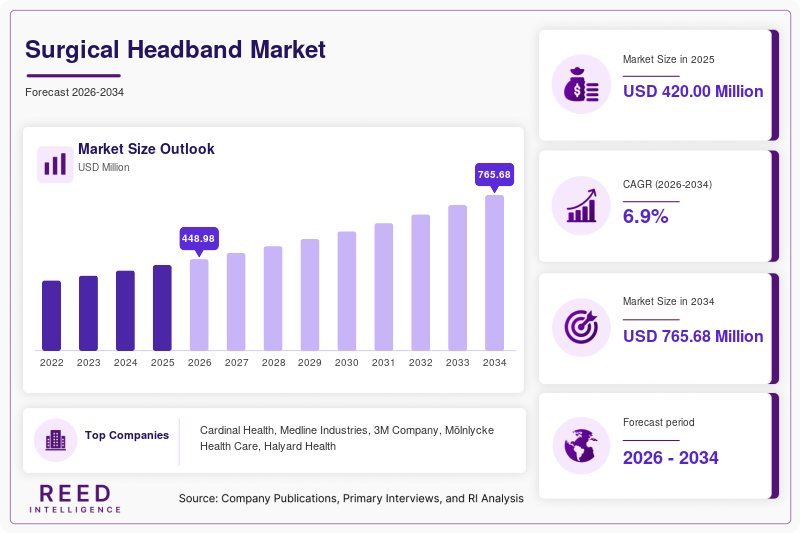
The Surgical Headband Market size is witnessing steady growth due to rising surgical volumes, increasing awareness of infection control, and the growing adoption of personal protective equipment (PPE) in healthcare environments. In 2025, the global surgical headband market size is estimated to reach approximately USD 420 million, increasing to USD 455 million in 2026. The market is projected to achieve a value of around USD 780 million by 2034, expanding at a compound annual growth rate (CAGR) of 6.9% during the forecast period from 2025 to 2034.
Surgical headbands are widely used by surgeons, nurses, and healthcare professionals to manage sweat, secure head-mounted equipment, and maintain hygiene in operating rooms. The increasing complexity of surgical procedures, combined with longer operation durations, has driven demand for high-performance and comfortable headbands. Additionally, the expansion of ambulatory surgical centers and specialty clinics is creating new demand avenues for disposable and reusable surgical accessories.
Key Highlights
- Market size valued at USD 420 million in 2025
- Expected to reach USD 780 million by 2034
- CAGR of 6.9% from 2025 to 2034
- Increasing surgical volumes driving demand
- Strong adoption of infection control practices
- Technological advancements in material design
Market Trends
Adoption of Antimicrobial and Moisture-Wicking Materials
The use of advanced materials in surgical headbands is becoming a notable trend in the market. Manufacturers are focusing on integrating antimicrobial fabrics that help reduce the risk of contamination in surgical environments. These materials inhibit bacterial growth and maintain hygiene standards, which is critical in operating rooms. Additionally, moisture-wicking technologies are gaining traction as they enhance comfort for surgeons during long procedures by absorbing sweat efficiently. The combination of these features supports improved performance and user satisfaction, leading to increased product adoption across hospitals and surgical centers.
Shift Toward Disposable and Eco-Friendly Products
Another emerging trend in the Surgical Headband Market is the shift toward disposable and environmentally sustainable products. Healthcare facilities are increasingly adopting single-use headbands to minimize cross-contamination risks and comply with stringent hygiene regulations. At the same time, sustainability concerns are encouraging manufacturers to develop biodegradable and recyclable headbands. This trend aligns with global efforts to reduce medical waste and promote eco-friendly practices. As a result, companies are investing in research and development to produce headbands that balance hygiene, performance, and environmental responsibility.
Market Drivers
Increasing Number of Surgical Procedures
The rising number of surgical procedures worldwide is a primary driver of the Surgical Headband Market. The growing incidence of chronic diseases, including cancer, cardiovascular disorders, and musculoskeletal conditions, has led to a higher demand for surgical interventions. Additionally, advancements in medical technology have expanded the scope of minimally invasive and complex surgeries, further increasing procedure volumes. As surgical durations become longer and more intricate, healthcare professionals require reliable accessories such as headbands to maintain focus and comfort. This sustained demand for surgical support products is contributing significantly to market growth.
Emphasis on Infection Control and Hygiene Standards
Strict infection control protocols in healthcare settings are another key driver of the market. Hospitals and surgical centers are increasingly implementing measures to reduce the risk of hospital-acquired infections (HAIs). Surgical headbands play a role in maintaining cleanliness by preventing sweat and hair from interfering with sterile environments. Regulatory bodies and healthcare organizations are also promoting the use of protective gear, which includes headbands, to ensure compliance with safety standards. This emphasis on hygiene is encouraging the adoption of high-quality, sterile, and disposable headbands, thereby supporting market expansion.
Market Restraint
Price Sensitivity and Availability of Low-Cost Alternatives
One of the key restraints affecting the Surgical Headband Market is the price sensitivity observed in several healthcare systems, particularly in developing regions. Many hospitals operate under constrained budgets and prioritize essential surgical equipment over accessory items such as headbands. As a result, cost-effective alternatives or reusable products are often preferred, which can limit the adoption of premium or technologically advanced headbands. Additionally, local manufacturers offering low-cost products create intense competition, putting pressure on established brands to maintain competitive pricing.
The availability of substitutes, such as surgical caps and basic cloth bands, also impacts market growth. These alternatives are often perceived as sufficient for maintaining hygiene and managing sweat, reducing the perceived necessity of specialized surgical headbands. This challenge is particularly evident in small clinics and rural healthcare settings where resource allocation is limited. To address this restraint, companies need to focus on demonstrating the added value of advanced headbands, such as improved comfort, durability, and infection control benefits, to justify higher pricing.
Market Opportunities
Expansion in Emerging Healthcare Markets
Emerging economies present significant growth opportunities for the Surgical Headband Market. Countries in Asia, Latin America, and Africa are investing heavily in healthcare infrastructure, including the establishment of new hospitals and surgical centers. As access to healthcare services improves, the number of surgical procedures is expected to rise, driving demand for surgical accessories. Additionally, increasing awareness of hygiene and infection control practices is encouraging healthcare providers to adopt standardized protective equipment. Companies that establish strong distribution networks and offer cost-effective solutions tailored to these markets can benefit from substantial growth opportunities.
Integration with Wearable Surgical Technology
The integration of surgical headbands with wearable technology represents another promising opportunity. Innovations such as head-mounted lighting systems, magnification lenses, and communication devices are becoming more common in modern operating rooms. Surgical headbands designed to support these technologies can enhance functionality and efficiency for healthcare professionals. Manufacturers are exploring ergonomic designs and advanced materials to improve compatibility with such उपकरणs. This trend is expected to create new product categories and drive premiumization within the market, offering higher value propositions to end users.
Segmental Analysis
By Type
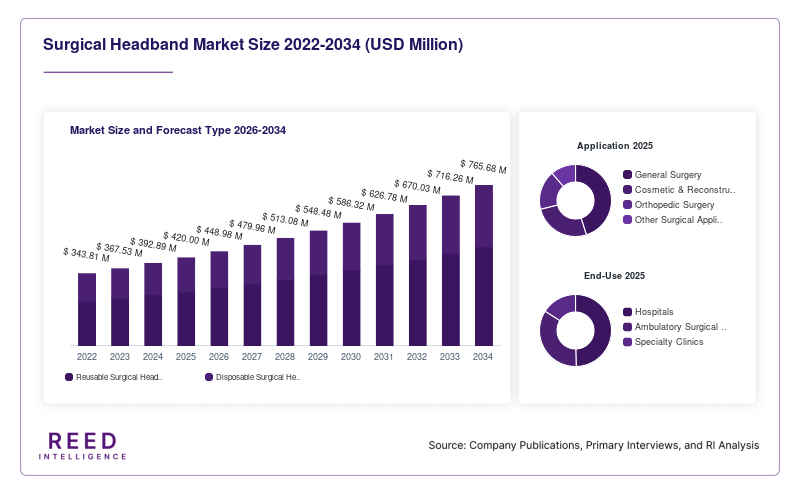
The reusable surgical headbands segment dominated the market in 2024, accounting for approximately 58% of the total share. These headbands are preferred in many healthcare facilities due to their cost-effectiveness and durability. Reusable headbands are typically made from high-quality fabrics that can withstand multiple sterilization cycles without losing functionality. Hospitals with budget constraints often favor these products as they reduce long-term costs. Additionally, advancements in fabric technology have improved the performance and comfort of reusable headbands, further supporting their widespread adoption across healthcare settings.
The disposable surgical headbands segment is expected to grow at the fastest CAGR of 7.8% during the forecast period. The increasing emphasis on infection control and hygiene is driving demand for single-use products. Disposable headbands eliminate the need for cleaning and sterilization, reducing the risk of contamination. This makes them particularly suitable for high-risk environments such as operating rooms and emergency care units. The growing adoption of disposable medical products, along with regulatory guidelines promoting their use, is expected to accelerate growth in this segment.
By Application
The general surgery segment held the largest share of approximately 45% in 2024. This dominance is attributed to the high volume of general surgical procedures performed worldwide. Surgical headbands are commonly used in these procedures to maintain comfort and hygiene. The increasing prevalence of conditions requiring surgical intervention, such as gastrointestinal disorders and trauma cases, is driving demand in this segment. Additionally, the expansion of surgical departments in hospitals is contributing to growth.
The cosmetic and reconstructive surgery segment is projected to grow at the fastest CAGR of 7.5%. The rising demand for aesthetic procedures and reconstructive surgeries is a key growth factor. Surgeons in this field require precise and comfortable equipment, including headbands, to perform delicate procedures. The increasing popularity of minimally invasive cosmetic treatments is also contributing to segment growth. As awareness and acceptance of cosmetic procedures continue to rise, the demand for surgical accessories is expected to increase.
By End-Use
Hospitals accounted for the largest market share of approximately 62% in 2024. This segment dominates due to the high number of surgical procedures performed in hospital settings. Hospitals require a consistent supply of surgical accessories, including headbands, to support various departments. The presence of skilled healthcare professionals and advanced surgical infrastructure further drives demand in this segment. Additionally, hospitals often adopt standardized protocols for infection control, which includes the use of surgical headbands.
Ambulatory surgical centers are expected to grow at the fastest CAGR of 8.3% during the forecast period. These centers are gaining popularity due to their cost-effectiveness and convenience. The increasing number of outpatient procedures is driving demand for surgical accessories in these facilities. Ambulatory centers often focus on efficiency and hygiene, making disposable headbands a preferred choice. The expansion of these centers, particularly in emerging markets, is expected to contribute significantly to market growth.
Regional Analysis
North America
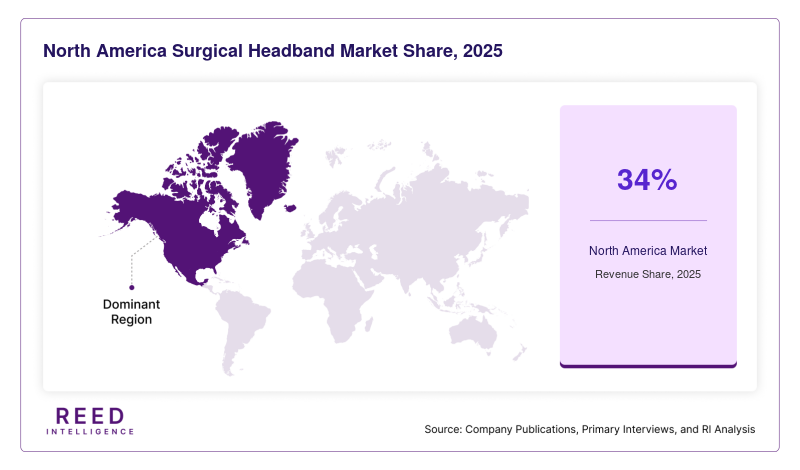
North America accounted for approximately 34% of the global Surgical Headband Market share in 2025 and is expected to grow at a CAGR of 6.2% during the forecast period. The region benefits from a well-established healthcare system and high adoption of advanced surgical equipment. The presence of leading medical device manufacturers and strong regulatory frameworks further supports market growth. Additionally, the high volume of surgical procedures and increasing focus on infection control contribute to steady demand.
The United States dominates the North American market due to its advanced healthcare infrastructure and high healthcare expenditure. A unique growth factor in the country is the increasing adoption of technologically enhanced surgical accessories, including headbands integrated with lighting and magnification features. This trend is driven by the need to improve surgical precision and efficiency, particularly in complex procedures.
Europe
Europe held around 27% of the global market share in 2025 and is projected to grow at a CAGR of 5.8%. The region's growth is supported by strong healthcare systems and stringent hygiene standards across hospitals. Increasing surgical procedures and aging populations are key factors contributing to demand. Additionally, government initiatives to improve healthcare quality are driving the adoption of protective surgical accessories.
Germany leads the European market due to its robust healthcare infrastructure and high number of surgical interventions. A unique growth factor in Germany is the emphasis on sustainability, which is encouraging the adoption of eco-friendly and reusable surgical headbands. This aligns with broader environmental policies and healthcare practices in the region.
Asia Pacific
Asia Pacific accounted for approximately 22% of the market share in 2025 and is expected to grow at the highest CAGR of 8.1%. Rapid urbanization, increasing healthcare investments, and growing awareness of infection control are key drivers. The region is also witnessing a rise in medical tourism, which contributes to higher surgical volumes.
China dominates the Asia Pacific market due to its large population and expanding healthcare infrastructure. A unique growth factor is the increasing number of government initiatives aimed at improving rural healthcare access. This expansion is driving demand for cost-effective surgical consumables, including headbands, across a wide range of healthcare facilities.
Middle East & Africa
The Middle East & Africa region held around 9% of the market share in 2025 and is projected to grow at a CAGR of 6.5%. Growth is driven by increasing healthcare investments and the development of modern medical facilities. The region is also focusing on improving surgical outcomes and reducing infection rates.
Saudi Arabia leads the market in this region due to its significant investments in healthcare infrastructure. A unique growth factor is the government's focus on healthcare modernization under national development plans. This includes the adoption of advanced surgical equipment and accessories, which supports market growth.
Latin America
Latin America accounted for approximately 8% of the market share in 2025 and is expected to grow at a CAGR of 6.7%. The region's growth is supported by improving healthcare systems and increasing access to surgical procedures. Rising awareness of hygiene practices is also contributing to demand.
Brazil dominates the Latin American market due to its large healthcare sector and increasing number of surgeries. A unique growth factor is the expansion of private healthcare facilities, which are adopting higher standards of surgical safety and hygiene. This trend is driving the demand for quality surgical headbands.
Competitive Landscape
The Surgical Headband Market is moderately fragmented, with several global and regional players competing based on product quality, pricing, and innovation. Leading companies are focusing on developing advanced materials and ergonomic designs to enhance user comfort and performance. Strategic initiatives such as product launches, partnerships, and expansions are commonly adopted to strengthen market presence.
One of the leading players in the market is Cardinal Health, known for its wide range of medical products and strong distribution network. The company has recently introduced new surgical headbands featuring improved moisture-wicking properties, catering to the evolving needs of healthcare professionals. Other key players are also investing in research and development to introduce innovative products and gain a competitive edge. The increasing focus on sustainability and infection control is expected to drive further competition in the market.
Key Players
- Cardinal Health
- Medline Industries
- 3M Company
- Mölnlycke Health Care
- Halyard Health
- Paul Hartmann AG
- Owens & Minor
- Dynarex Corporation
- Ansell Limited
- Kimberly-Clark Corporation
- Smith & Nephew
- BSN Medical
- Lohmann & Rauscher
- Narang Medical Limited
- Winner Medical Co., Ltd.
Recent Developments
- In 2024, a leading manufacturer launched eco-friendly disposable surgical headbands made from biodegradable materials.
- In 2023, a major company introduced headbands integrated with LED lighting systems for enhanced surgical visibility.
- In 2024, a partnership between two healthcare firms focused on expanding distribution networks in emerging markets.
Surgical Headband Market Segments
Type
- Reusable Surgical Headbands
- Disposable Surgical Headbands
Application
- General Surgery
- Cosmetic & Reconstructive Surgery
- Orthopedic Surgery
- Other Surgical Applications
End-Use
- Hospitals
- Ambulatory Surgical Centers
- Specialty Clinics
By Region
- North America
- Europe
- APAC
- Middle East and Africa
- LATAM