Sweet Sauces Market Size, Share & Trends Analysis Report By Type (Chocolate Sauce, Dessert Sauce, Custard Sauce, Creme Anglaise), By Application (Bakery, Confectionery, Dairy Products), By Distribution Channel (Supermarkets/Hypermarkets, Foodservice/HoReCa), By Form (Liquid/Pourable, Paste/Thick, Powder Mix), By End User (Household/Retail, Foodservice/HoReCa) and By Region (North America, Europe, APAC, Middle East and Africa, LATAM) Forecasts, 2026-2034
USD 3950
Sweet Sauces Market Size
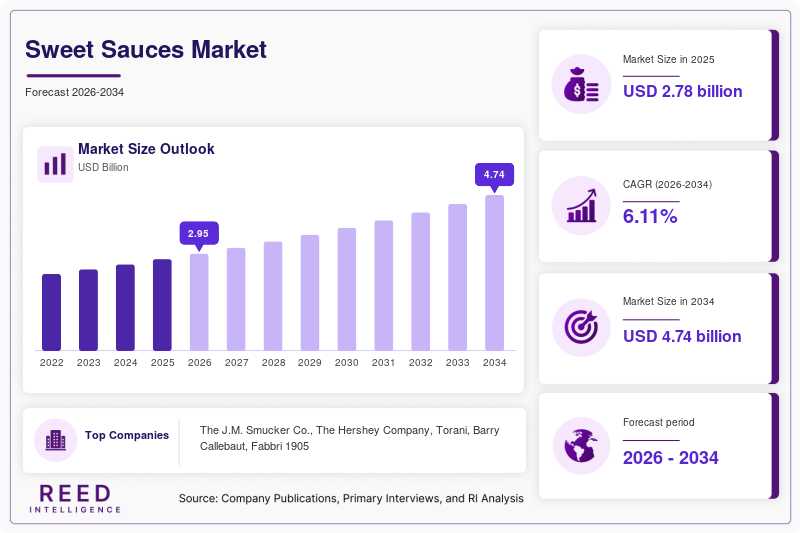
The Sweet Sauces Market was valued at USD 2.78 billion in 2025 and is estimated at USD 2.95 billion in 2026. Based on the supplied forecast, the market is projected to reach USD 4.74 billion by 2034, representing a CAGR of 6.11% during 2026–2034.
The 2026 market represents approximately 6.1% growth over 2025. Applying the supplied 6.11% CAGR backward gives an analytical market trajectory of approximately USD 2.48 billion in 2024, USD 2.34 billion in 2023 and USD 2.20 billion in 2022. These historical figures are back-calculated estimates, not independently reported historical market sizes.
The category is supported by two complementary consumption channels. Retail sweet sauces benefit from home dessert preparation, coffee and beverage customization, while foodservice demand comes from ice cream, bakery, beverages, pancakes, waffles and plated desserts. In the U.S., inflation-adjusted foodservice sales reached USD 1.41 trillion in 2025, and food away from home accounted for 56.3% of total food expenditures, illustrating the scale of the commercial channel in which dessert toppings and sweet sauces are used.
Sweet sauces are used as toppings, fillings, drizzles, inclusions and flavoring components across bakery, confectionery, dairy desserts and beverages. The category includes chocolate and caramel-style sauces as well as custard, fruit, cream-based and specialty dessert sauces.
The market is becoming more diversified rather than relying only on conventional chocolate and caramel. Torani currently offers Puremade caramel, dark chocolate, white chocolate, sea-salt chocolate caramel, chocolate hazelnut and seasonal sauces, while also expanding into zero-calorie beverage sauces.
A second structural change is the convergence between dessert sauces and beverage applications. Sauces are increasingly formulated to work in coffee, milkshakes, frappés, hot chocolate and other drinks. Torani's product portfolio explicitly positions sauces for coffeehouse beverages, mochas, hot cocoa, ice cream, milkshakes and frappés.
Sweet Sauces Market Drivers
Foodservice creates repeated demand for sweet sauce applications
Sweet sauces are closely connected to foodservice because they can be applied to finished products without materially changing the underlying food preparation process. Restaurants, cafés, ice-cream outlets and bakeries can use one sauce across multiple menu items, improving ingredient flexibility.
USDA data show that inflation-adjusted U.S. foodservice sales reached USD 1.41 trillion in 2025, while limited-service establishments alone generated approximately USD 516.1 billion in inflation-adjusted food sales.
The mechanism is commercially important: a chocolate or caramel sauce can be used on ice cream, pancakes, waffles, coffee beverages, milkshakes, cakes and plated desserts. This multi-application capability gives foodservice operators a reason to maintain sauce inventories even when individual menu items change.
Beverage customization is expanding the use of dessert sauces
Coffee and specialty beverage preparation has become an important application for sweet sauces. Torani's 2025 product activity illustrates this overlap: its Puremade sauces are positioned for hot and cold beverages, while its newer zero-calorie beverage sauces target chocolate and caramel flavor without sugar or calories.
This expands the addressable market beyond traditional dessert toppings. A sauce manufacturer can sell the same flavor platform to cafés, restaurants, beverage chains and household consumers.
Premium and experiential flavors support higher-value products
Sweet sauces are increasingly used to create differentiated sensory experiences. Premium Italian dessert sauces launched by Melissa's Produce in April 2025 included Chocolate, Caramel, Pistachio, Strawberry and Wild Cherry, with the products made in Italy by Fabbri and positioned for retailers and foodservice operators.
This indicates that premiumization is not limited to chocolate quality. Consumers and chefs can pay for unusual flavors, imported origin, visual presentation, convenience and restaurant-style finishing.
Manufacturers are combining indulgence with reduced-sugar positioning
The category faces a tension between indulgence and nutrition. Consumers still want familiar dessert flavors, but added-sugar disclosure makes sugar content more visible.
Torani launched Zero Calorie Chocolate and Caramel Beverage Sauces in February 2025, directly addressing consumers looking to reduce sugar while retaining familiar flavors.
The commercial mechanism is clear: manufacturers can protect usage occasions by creating lower-sugar alternatives rather than relying only on conventional high-sugar formulations.
Retail formats make at-home customization easier
Sweet sauces require limited preparation and can transform relatively simple foods into customized desserts. This makes them suitable for supermarkets, hypermarkets, online grocery and convenience channels.
USDA data show that grocery stores remained the largest U.S. food-at-home outlet in 2025, accounting for 56.2% of food-at-home sales, while warehouse clubs and supercenters accounted for 26.4%.
Sweet Sauces Market Restraints
Cocoa and sugar costs create margin pressure
Chocolate sauces are exposed to cocoa costs, while most sweet sauces also rely on sugar or other sweeteners. The International Cocoa Organization reported that the 2024/25 cocoa season moved into surplus after a major prior deficit, but prices remained highly sensitive to weather and production expectations.
Large confectionery companies have already reported the commercial effect. Mondelēz International reported that unprecedented cocoa costs materially affected 2025 profitability and that higher raw-material costs included cocoa, dairy, packaging, edible oils and nuts.
For sweet-sauce manufacturers, the implication is greater pressure to reformulate, adjust pack sizes, increase prices or use alternative cocoa formulations.
Added-sugar scrutiny limits conventional formulations
FDA labeling requirements make added-sugar levels more transparent to consumers. Products containing syrups, honey and other added sweeteners must account for these ingredients in the Nutrition Facts framework.
This does not eliminate demand for indulgent sauces, but it increases the commercial value of zero-sugar, reduced-sugar and portion-controlled formats.
Shelf-life and texture stability remain technical constraints
Sweet sauces must maintain viscosity, appearance and flavor during storage and after repeated dispensing. Separation, crystallization, viscosity changes and microbial stability can affect product performance.
This is especially important in foodservice because sauces may be exposed to repeated temperature changes and frequent handling. Manufacturers therefore need formulations that balance clean labels, sensory quality and shelf stability.
Premium ingredients increase formulation costs
Imported fruit, nuts, specialty chocolate, cream and natural flavors can increase product cost. Premium sauces therefore need to justify higher prices through flavor differentiation, provenance, packaging or foodservice performance.
Sweet Sauces Market Opportunities
Zero-sugar and reduced-sugar sauces
The development of zero-calorie sauces demonstrates a clear product opportunity. Torani's February 2025 launch of zero-calorie chocolate and caramel beverage sauces shows how manufacturers are attempting to preserve indulgent flavor while removing sugar and calories.
Premium fruit and nut sauces
Pistachio, hazelnut, wild cherry, strawberry and other fruit or nut profiles allow manufacturers to move away from heavily commoditized chocolate and caramel categories. Melissa's April 2025 launch of Fabbri dessert sauces provides a current example of this premiumization strategy.
Foodservice bulk formats
Large-format products provide an opportunity to serve cafés, restaurants, bakeries and ice-cream operators. Barry Callebaut, for example, supplies chocolate sauce in 22 kg bag-in-box format for ice-cream and dessert applications.
This format reduces packaging frequency for professional users and supports high-volume applications such as swirls, tubs, cones and dessert toppings.
Clean-label formulations
Torani's Puremade positioning emphasizes real ingredients and the absence of artificial flavors, colors and preservatives in the Puremade sauce line.
This creates a pathway for manufacturers to compete through ingredient transparency rather than relying solely on flavor and price.
Cross-category sauce applications
Sweet sauces can be adapted across bakery, dairy, beverages and confectionery. This allows manufacturers to develop a single flavor platform for multiple customers.
For example, a caramel sauce can be used in coffee, ice cream, bakery fillings and milkshakes. This cross-application flexibility can reduce the commercial risk associated with launching a new flavor.
Segmental Analysis
By Type
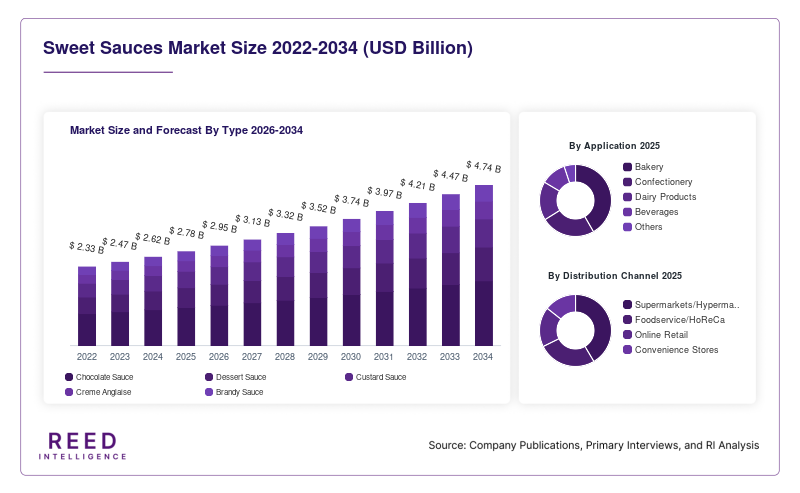
Chocolate Sauce represents approximately 34.2% of the 2025 market, equivalent to about USD 0.95 billion under the internal analytical allocation. It is modeled at approximately 5.9% CAGR through 2034, producing an indicative USD 1.62 billion by 2034. Chocolate remains the largest category because it works across ice cream, bakery, beverages and confectionery, while current supplier portfolios continue to offer multiple chocolate sauce formats.
Dessert Sauce represents approximately 24.0% of the 2025 market, equivalent to about USD 0.67 billion. It is modeled at approximately 6.2% CAGR, reaching about USD 1.15 billion by 2034. The category benefits from premium dessert finishing, restaurant-style presentation and the expansion of specialty flavors such as fruit, pistachio and caramel.
Custard Sauce represents approximately 16.0% of the 2025 market, or about USD 0.44 billion under the internal allocation. It is modeled at approximately 5.8% CAGR, reaching around USD 0.75 billion by 2034. Its use in bakery, plated desserts and dairy applications supports stable demand, although it faces stronger refrigeration, shelf-life and formulation requirements than many shelf-stable chocolate sauces.
Creme Anglaise represents approximately 15.0% of the 2025 market, equivalent to about USD 0.42 billion. It is modeled at approximately 7.5% CAGR, reaching approximately USD 0.81 billion by 2034. The higher modeled growth reflects its use in premium plated desserts and foodservice applications where chefs use sauces to improve presentation and perceived product value.
Brandy Sauce represents approximately 10.8% of the 2025 market, or about USD 0.30 billion. It is modeled at approximately 4.9% CAGR, reaching approximately USD 0.47 billion by 2034. The category remains comparatively specialized because of its association with traditional desserts and alcohol-containing formulations.
By Application
Bakery represents approximately 26% of the 2025 market, equivalent to about USD 0.72 billion under the internal allocation. It is modeled at approximately 6.2% CAGR, reaching about USD 1.24 billion by 2034. Sweet sauces are used as fillings, toppings and decorative elements in cakes, pastries, donuts, pancakes and other bakery products.
Confectionery represents approximately 24% of the 2025 market, or about USD 0.67 billion. It is modeled at approximately 6.0% CAGR, reaching about USD 1.13 billion by 2034. Chocolate and caramel sauces are particularly relevant to confectionery because they provide flavor, visual contrast and texture.
Dairy Products represent approximately 20% of the 2025 market, equivalent to about USD 0.56 billion, and are modeled at approximately 6.3% CAGR, reaching around USD 0.96 billion by 2034. Ice cream, frozen desserts and yogurt provide repeat applications for chocolate, caramel, fruit and nut sauces. Barry Callebaut specifically lists chocolate filling sauces for ice-cream and dessert applications.
Beverages represent approximately 18% of the 2025 market, or about USD 0.50 billion, and are modeled at approximately 6.5% CAGR, reaching approximately USD 0.88 billion by 2034. Beverage applications are one of the more dynamic areas because sauces can be incorporated into coffee, frappés, milkshakes and hot chocolate. Torani's current portfolio illustrates this application overlap.
Others represent approximately 12% of the 2025 market, equivalent to about USD 0.33 billion. The segment is modeled at approximately 5.3% CAGR, reaching about USD 0.53 billion by 2034. It includes specialty food applications that do not fall within the principal bakery, confectionery, dairy or beverage categories.
By Distribution Channel
Supermarkets/Hypermarkets represent approximately 38% of the 2025 market, equivalent to about USD 1.06 billion under the internal allocation. The segment is modeled at approximately 5.5% CAGR, reaching around USD 1.71 billion by 2034. Large retail outlets remain important because consumers can purchase sauces as pantry products for home desserts and beverages.
Foodservice/HoReCa represents approximately 32% of the 2025 market, or about USD 0.89 billion, and is modeled at approximately 6.7% CAGR, reaching approximately USD 1.59 billion by 2034. The higher modeled rate reflects recurring use by restaurants, cafés, bakeries, hotels and ice-cream outlets. The broader U.S. foodservice market reached USD 1.41 trillion in inflation-adjusted sales in 2025.
Online Retail represents approximately 18% of the 2025 market, equivalent to about USD 0.50 billion, and is modeled at approximately 8.3% CAGR, reaching around USD 1.03 billion by 2034. Online channels provide greater assortment and make premium, imported and specialty sauces easier to reach consumers outside conventional retail distribution.
Convenience Stores represent approximately 12% of the 2025 market, or about USD 0.33 billion. The segment is modeled at approximately 5.0% CAGR, reaching around USD 0.52 billion by 2034. Its role is stronger for smaller packs, impulse-oriented dessert products and sauces connected to ready-to-consume beverages or snacks.
By Form
Liquid/Pourable sauces represent approximately 58% of the 2025 market, equivalent to about USD 1.61 billion. The segment is modeled at approximately 6.0% CAGR, reaching about USD 2.72 billion by 2034. Pourability is commercially important because it supports drizzling, beverage mixing, topping and foodservice dispensing.
Paste/Thick sauces represent approximately 27% of the 2025 market, or about USD 0.75 billion, and are modeled at approximately 6.5% CAGR, reaching approximately USD 1.32 billion by 2034. Thick sauces are useful for premium toppings, fillings, swirls and applications requiring stronger visual or textural impact.
Powder Mix represents approximately 15% of the 2025 market, equivalent to about USD 0.42 billion, and is modeled at approximately 5.6% CAGR, reaching around USD 0.68 billion by 2034. Powder formats offer transportation and storage advantages but require reconstitution and therefore compete differently from ready-to-use sauces.
By End User
Household/Retail represents approximately 50% of the 2025 market, equivalent to about USD 1.39 billion under the internal allocation. It is modeled at approximately 5.7% CAGR, reaching about USD 2.29 billion by 2034. Household users benefit from the convenience of transforming ice cream, fruit, pancakes, coffee and baked goods without preparing a sauce from scratch.
Foodservice/HoReCa represents approximately 32% of the 2025 market, or about USD 0.89 billion, and is modeled at approximately 6.7% CAGR, reaching around USD 1.59 billion by 2034. The segment benefits from standardized sauce application across high-volume menu items and from the continuing scale of food-away-from-home consumption.
Food Manufacturing/Industrial represents approximately 18% of the 2025 market, equivalent to about USD 0.50 billion. It is modeled at approximately 6.4% CAGR, reaching approximately USD 0.87 billion by 2034. Industrial users incorporate sauces into ice cream, bakery products, confectionery, desserts and prepared foods, making consistency, shelf stability and supply reliability key purchasing criteria.
Regional Analysis
North America Sweet Sauces Market
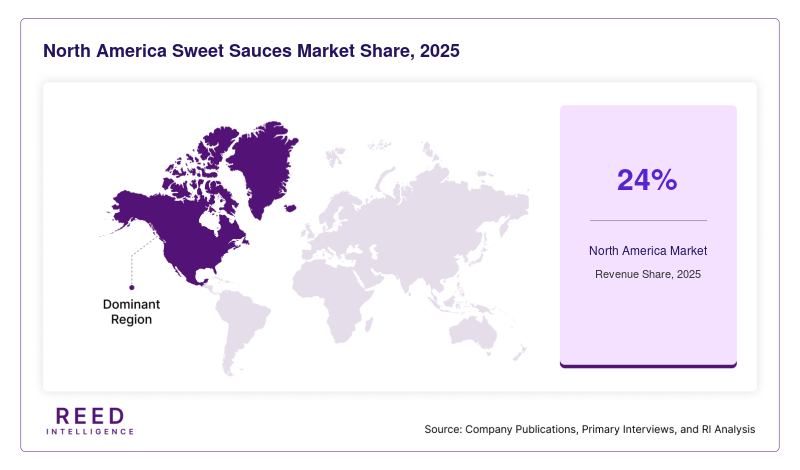
North America represents approximately 24% of the 2025 market, equivalent to about USD 0.67 billion under the internal allocation. It is modeled at approximately 5.8% CAGR, reaching around USD 1.11 billion by 2034.
The region benefits from mature foodservice infrastructure, strong dessert consumption and extensive retail distribution. USDA data show that foodservice represented 56.3% of U.S. food expenditures in 2025, creating a large commercial environment for sauces used by restaurants, cafés and dessert outlets.
Product innovation is also active. Torani's 2025 zero-calorie beverage sauce launch demonstrates how North American suppliers are responding to sugar reduction while maintaining indulgent flavor profiles.
Europe Sweet Sauces Market
Europe represents approximately 32% of the 2025 market, equivalent to about USD 0.89 billion, making it the largest regional allocation. It is modeled at approximately 5.8% CAGR, reaching around USD 1.48 billion by 2034.
The region has strong bakery, pastry, confectionery and café traditions, supporting demand for premium dessert sauces. The April 2025 launch of Fabbri dessert sauces through Melissa's, featuring Italian-made chocolate, caramel, pistachio, strawberry and wild-cherry varieties, demonstrates the commercial value of European dessert heritage and premium flavor positioning.
APAC Sweet Sauces Market
APAC represents approximately 23% of the 2025 market, or about USD 0.64 billion. It is modeled at approximately 7.0% CAGR, the fastest regional rate, reaching approximately USD 1.18 billion by 2034.
The region combines large consumer populations with expanding café culture, modern retail, food delivery and Western-style dessert formats. Local flavor adaptation also provides an opportunity for manufacturers to develop sauces around regional fruit, tea, nut and spice profiles.
Middle East and Africa Sweet Sauces Market
The Middle East and Africa represent approximately 8% of the 2025 market, equivalent to about USD 0.22 billion. The segment is modeled at approximately 6.0% CAGR, reaching around USD 0.38 billion by 2034.
Demand is supported by hospitality, cafés, bakeries and premium dessert outlets, particularly in Gulf markets. However, imported ingredients, cold-chain requirements for selected formulations and purchasing-power differences create cost and distribution constraints.
LATAM Sweet Sauces Market
LATAM represents approximately 13% of the 2025 market, or about USD 0.36 billion, under the internal allocation. It is modeled at approximately 6.2% CAGR, reaching approximately USD 0.62 billion by 2034.
Brazil, Mexico and other major markets provide a large consumer base for confectionery, bakery and dairy desserts. Premium and localized flavors can provide additional value, while inflation and currency volatility remain important considerations for imported ingredients and premium products.
Competitive Landscape
Competition is fragmented across global food companies, flavor and ingredient suppliers, specialist beverage-sauce companies and premium dessert brands.
Torani competes through beverage-oriented sauces, Puremade formulations and zero-calorie products. Its current portfolio includes chocolate, white chocolate, caramel, chocolate-hazelnut, sea-salt chocolate caramel and seasonal sauces.
Barry Callebaut competes primarily on industrial and foodservice applications, offering cocoa and chocolate filling sauces for ice cream and desserts. Its products include certifications and ingredient-positioning options such as Fairtrade, Cocoa Horizons, Rainforest Alliance and vegan formulations.
Fabbri 1905 competes through premium Italian dessert ingredients and sauces. Its partnership with Melissa's in 2025 expanded its chocolate, caramel, pistachio, strawberry and wild-cherry dessert sauces into U.S. retail and foodservice.
Key Market Players
Recent Market Developments
February 2026 – Nestlé reports continued confectionery growth despite cocoa-cost pressure
In February 2026, Nestlé reported strong organic growth in its confectionery business for 2025, while also highlighting the effect of substantially higher cocoa costs on profitability.
March 2026 – Torani launches Cookie Butter flavor
In March 2026, Torani introduced Cookie Butter, a new flavor positioned around the growing "desserts-as-drinks" trend. Torani specifically linked the launch to social-media-driven demand for dessert-inspired beverage experiences.
Sweet Sauces Market Segments
By Type
- Chocolate Sauce
- Dessert Sauce
- Custard Sauce
- Creme Anglaise
- Brandy Sauce
By Application
- Bakery
- Confectionery
- Dairy Products
- Beverages
- Others
By Distribution Channel
- Supermarkets/Hypermarkets
- Foodservice/HoReCa
- Online Retail
- Convenience Stores
By Form
- Liquid/Pourable
- Paste/Thick
- Powder Mix
By End User
- Household/Retail
- Foodservice/HoReCa
- Food Manufacturing/Industrial
By Region
- North America
- Europe
- APAC
- Middle East and Africa
- LATAM