Tahini Food Market Size, Share & Demand Report By Product Type (Conventional Tahini, Organic Tahini), By Application (Dips and Spreads, Bakery and Confectionery, Sauces and Dressings, Frozen and Ready-to-Eat Foods, Others), By Distribution Channel (Supermarkets and Hypermarkets, Convenience Stores, Specialty Stores, Online Retail, Foodservice Distribution) By Region & Segment Forecasts, 2026–2034
USD 3950
Market Overview
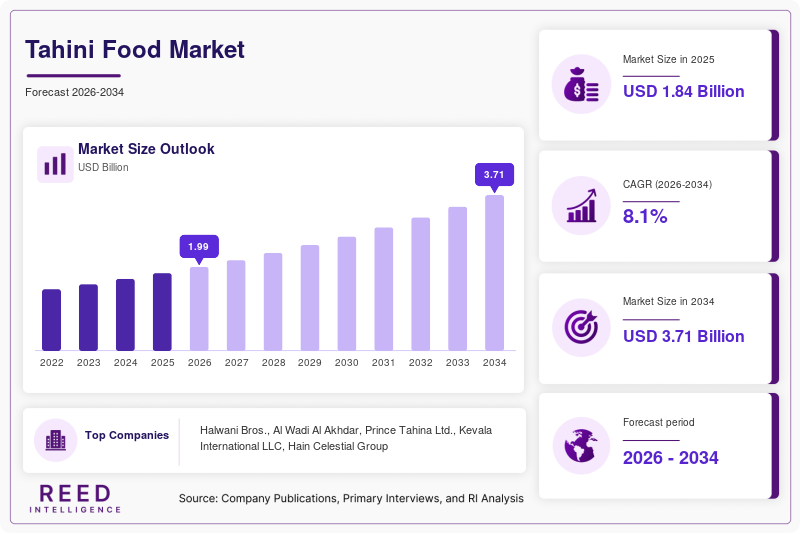
The global Tahini Food Market size was valued at USD 1.84 billion in 2026 and is projected to reach USD 3.42 billion by 2034, expanding at a CAGR of 8.1% during the forecast period from 2026 to 2034. The market is witnessing stable growth due to rising consumer preference for plant-based food products, Mediterranean dietary patterns, and clean-label spreads. Tahini, a sesame seed paste widely used in dips, sauces, bakery fillings, and confectionery products, has gained broader acceptance across retail and foodservice channels. Increasing awareness regarding nutrient-rich ingredients containing calcium, healthy fats, and protein has further accelerated product adoption in developed and emerging economies.
The expansion of international cuisine consumption has become a major global factor supporting market growth. Consumers are increasingly experimenting with ethnic flavors and functional foods, particularly in urban markets where Middle Eastern and Mediterranean dishes have become mainstream. Tahini-based hummus, dressings, and vegan sauces are now widely available through supermarkets, convenience stores, and online retail platforms. Food manufacturers are also introducing flavored and organic tahini variants to target health-conscious consumers. Product innovation in squeeze packaging, flavored blends, and fortified tahini products is strengthening shelf visibility and improving customer retention across multiple demographics.
Key Highlights
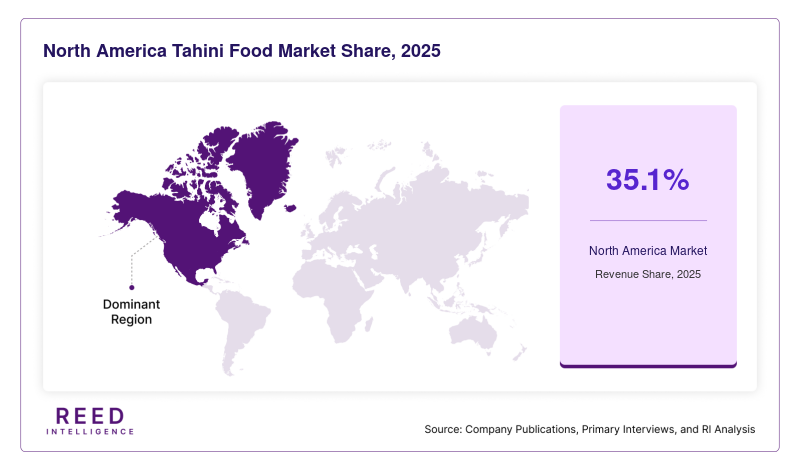
- North America dominated the market with a 35.1% share in 2025, while Asia Pacific is expected to grow at the fastest CAGR of 10.9% during 2026–2034.
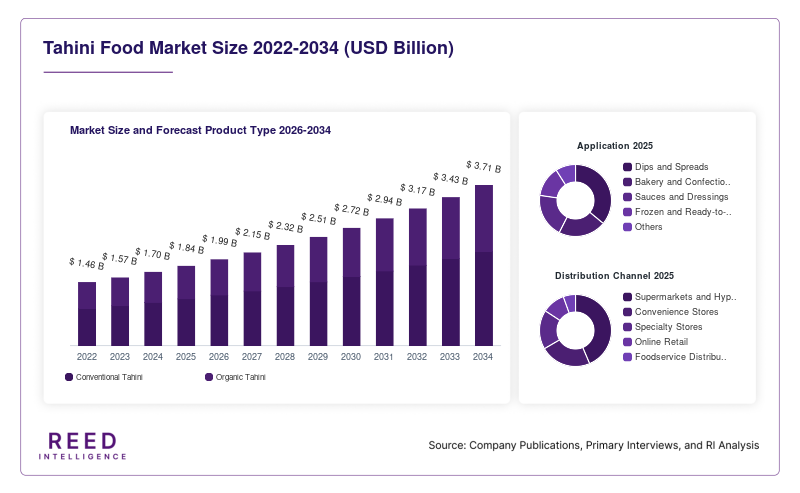
- By product type, conventional tahini accounted for the largest share of 62.8%, while organic tahini is projected to grow at a CAGR of 11.6%.
- By application, dips and spreads led with a 39.4% share, whereas bakery and confectionery applications are expected to expand at a CAGR of 10.7%.
- By distribution channel, supermarkets and hypermarkets held the largest share of 44.6%, while online retail is forecast to grow at a CAGR of 12.1%.
- The United States remained the dominant country, with market values of USD 420 million in 2024 and USD 462 million in 2025.
Market Trends
Rising Demand for Organic and Clean-Label Tahini Products
The growing shift toward natural and minimally processed foods is influencing purchasing patterns within the Tahini Food Market. Consumers are actively seeking products with transparent ingredient labels, non-GMO certifications, and organic sourcing standards. Organic tahini products are increasingly positioned as premium offerings in supermarkets and specialty health stores. Food brands are also removing preservatives, artificial stabilizers, and refined oils to align with clean-label preferences. This trend is especially visible among millennials and urban consumers who prioritize nutritional value and sustainable sourcing. Manufacturers are responding by introducing single-origin sesame seed products and eco-friendly packaging solutions. In North America and Europe, organic tahini consumption has expanded through vegan meal kits, protein bowls, and plant-based snack categories. The trend is expected to continue as retailers allocate more shelf space to health-focused and allergen-friendly food products.
Expansion of Tahini Usage Across Foodservice and Processed Foods
Tahini is no longer limited to traditional Middle Eastern cuisine, as foodservice operators and packaged food companies increasingly integrate it into mainstream menus and ready-to-eat products. Restaurants are using tahini in sandwiches, dressings, sauces, desserts, and fusion dishes to deliver distinctive flavor profiles. The processed food industry is also introducing tahini-flavored snacks, protein bars, frozen meals, and bakery products. This diversification has widened the product’s consumer base and increased retail penetration. Foodservice chains are leveraging tahini’s nutritional positioning to attract health-conscious diners seeking plant-based ingredients. Growth in quick-service restaurants offering Mediterranean-style meals has strengthened commercial demand for bulk tahini products. Manufacturers are additionally investing in improved texture stability and longer shelf life to support industrial applications, particularly in bakery fillings and packaged dips.
Market Drivers
Growing Popularity of Plant-Based Diets and Functional Foods
The increasing adoption of plant-based diets is significantly supporting the growth of the Tahini Food Market. Consumers are searching for nutrient-rich alternatives to dairy-based spreads and sauces, leading to higher demand for sesame-derived products. Tahini contains beneficial fats, minerals, and plant protein, making it suitable for vegan, vegetarian, and flexitarian diets. Functional food trends are also encouraging the incorporation of tahini into smoothies, protein bowls, and healthy snack formulations. Food brands are marketing tahini as a source of calcium and iron, which appeals to health-conscious consumers focused on balanced nutrition. In addition, rising awareness regarding lactose intolerance and food allergies has accelerated interest in sesame-based spreads. The expansion of plant-based retail sections in supermarkets and online platforms continues to improve product accessibility and encourage repeat purchases among younger demographics.
Increasing Consumption of Mediterranean and Ethnic Cuisine
The global popularity of Mediterranean cuisine has become another major driver for the Tahini Food Market. Consumers are increasingly embracing authentic international flavors, particularly in urban dining environments. Tahini is a key ingredient in popular dishes such as hummus, falafel wraps, baba ganoush, and salad dressings. The growth of Mediterranean restaurant chains and ready-to-eat meal kits has increased commercial demand for tahini products. Social media food trends and culinary influencers have also contributed to higher awareness regarding tahini-based recipes and healthy meal preparation. In emerging economies, rising disposable income and exposure to international cuisines are supporting market expansion. Foodservice companies are leveraging tahini to create fusion recipes that appeal to broader audiences while maintaining nutritional positioning. This shift is helping tahini transition from a niche ethnic ingredient into a mainstream pantry product.
Market Restraint
Volatility in Sesame Seed Prices and Supply Chain Constraints
Fluctuations in sesame seed prices remain a significant challenge for the Tahini Food Market. Sesame cultivation is heavily influenced by climatic conditions, agricultural productivity, and geopolitical trade patterns across key producing countries in Africa and Asia. Variability in raw material supply can directly affect production costs and retail pricing, creating pressure on manufacturers and distributors. Smaller producers often struggle to maintain consistent pricing strategies during periods of supply shortages, reducing competitiveness in price-sensitive markets. Transportation costs and import dependency further contribute to operational uncertainty, particularly for manufacturers in North America and Europe relying on imported sesame seeds. In addition, quality inconsistencies in raw sesame supplies may impact flavor, texture, and product stability, affecting consumer confidence. Rising input costs can limit profit margins and slow expansion plans for emerging brands seeking broader retail distribution.
Market Opportunities
Expansion of E-Commerce and Direct-to-Consumer Sales Channels
The rapid development of online grocery platforms presents considerable opportunities for the Tahini Food Market. Consumers increasingly prefer digital purchasing channels for specialty food products due to convenience, broader product availability, and subscription-based delivery models. Tahini manufacturers are leveraging e-commerce platforms to reach health-conscious consumers seeking organic, flavored, and premium product varieties that may not be available in local stores. Online retail also enables smaller brands to compete with established companies through targeted digital marketing and social media engagement. Direct-to-consumer strategies allow manufacturers to build stronger customer relationships and gather purchasing insights for future product development. In addition, the availability of international shipping has expanded market access across emerging economies where Mediterranean food categories are gaining popularity. Growth in online food retail infrastructure is expected to support long-term sales expansion for tahini products.
Product Innovation in Flavored and Fortified Tahini Varieties
Innovation in flavored and fortified tahini products is creating new revenue opportunities across retail and foodservice sectors. Manufacturers are introducing chocolate, garlic, spicy herb, and honey-infused tahini products to attract younger consumers and diversify applications. Fortification with protein, probiotics, and vitamins is also gaining traction among functional food manufacturers seeking premium positioning. These innovations are enabling tahini brands to move beyond traditional culinary uses and enter snack, dessert, and breakfast categories. Premium packaging designs and convenient squeeze bottles are improving consumer usability and supporting impulse purchases in supermarkets. Foodservice operators are additionally experimenting with tahini-based beverages, desserts, and fusion recipes to appeal to evolving consumer preferences. Such product diversification helps manufacturers differentiate themselves in a competitive marketplace while increasing consumer engagement and repeat buying behavior.
Segmental Analysis
By Product Type
Conventional tahini accounted for the largest share of the Tahini Food Market in 2024, representing 62.8% of total revenue. The segment maintains strong demand due to widespread availability, lower pricing, and established consumer familiarity across retail and foodservice sectors. Conventional tahini products are extensively used in hummus production, sauces, dressings, and bakery fillings because they provide consistent texture and flavor profiles. Large-scale food manufacturers and restaurants continue to prefer conventional tahini due to cost efficiency and easier sourcing of sesame seeds. Supermarkets also dedicate significant shelf space to standard tahini varieties, particularly in North America and the Middle East. In emerging economies, conventional products remain more accessible than premium alternatives, supporting higher consumption volumes among price-sensitive consumers and foodservice operators.
Organic tahini is projected to witness the fastest CAGR of 11.6% during the forecast period. Rising consumer awareness regarding pesticide-free ingredients and sustainable agricultural practices is driving segment expansion. Health-conscious consumers increasingly associate organic tahini with superior nutritional quality and cleaner production methods. Retailers are responding by expanding their organic food sections and promoting premium sesame-based products. Organic tahini manufacturers are also introducing innovative packaging and flavored variants to attract younger demographics seeking convenient and healthy snack options. Growth in vegan and plant-based diets further supports demand for organic sesame products across Europe and North America. The segment additionally benefits from rising disposable income and willingness among consumers to spend more on premium food products perceived as natural and environmentally responsible.
By Application
Dips and spreads represented the dominant application segment in 2024, accounting for 39.4% of the Tahini Food Market share. Tahini remains a primary ingredient in hummus and various Mediterranean spreads widely consumed across households and restaurants. The segment benefits from increasing demand for ready-to-eat and healthy snack products that offer nutritional value and convenience. Foodservice establishments continue to expand their use of tahini-based spreads in wraps, sandwiches, and salad bowls to appeal to health-conscious consumers. Retail chains are also introducing private-label hummus and tahini dips to strengthen profitability and consumer loyalty. The popularity of protein-rich snacks and clean-label products further contributes to the expansion of this segment. Consumers increasingly prefer versatile spreads that can be incorporated into breakfast, lunch, and snack routines.
Bakery and confectionery applications are expected to register the fastest CAGR of 10.7% during the forecast period. Food manufacturers are increasingly using tahini in cookies, cakes, pastries, and dessert fillings to create unique flavor profiles and enhance nutritional value. Tahini’s creamy texture and nutty taste make it suitable for fusion desserts and premium bakery products targeting younger consumers. The growth of artisanal bakeries and specialty dessert chains is also encouraging experimentation with sesame-based ingredients. In addition, manufacturers are developing tahini-infused chocolate spreads and snack bars to capitalize on rising demand for functional indulgence products. Increasing interest in Middle Eastern-inspired desserts across Europe and Asia Pacific is further supporting segment growth. Product innovation and premiumization trends are expected to sustain long-term expansion within bakery and confectionery applications.
By Distribution Channel
Supermarkets and hypermarkets held the largest share of the Tahini Food Market in 2024, contributing 44.6% of global revenue. These retail formats provide consumers with easy access to multiple tahini brands, packaging sizes, and product variants under one location. Strong product visibility, promotional discounts, and in-store sampling activities continue to support consumer engagement and repeat purchases. Major retail chains are increasingly dedicating shelf space to Mediterranean and plant-based food categories due to rising consumer demand for healthy spreads and sauces. Supermarkets also play an important role in introducing private-label tahini products at competitive prices. In developed economies, consumers prefer purchasing tahini during routine grocery shopping, contributing to stable sales volumes. The expansion of organized retail infrastructure in emerging markets is further strengthening segment growth.
Online retail is anticipated to record the fastest CAGR of 12.1% during the forecast period due to increasing digital grocery adoption and consumer preference for convenient shopping experiences. E-commerce platforms allow consumers to access premium, imported, and organic tahini products that may not be available in physical stores. Subscription-based delivery models and targeted online advertising are helping manufacturers strengthen customer retention and brand visibility. Online channels additionally provide opportunities for small and regional brands to compete with larger players through direct-to-consumer strategies. Consumers increasingly rely on digital product reviews and social media recommendations when purchasing specialty food items, supporting online tahini sales growth. Expanding smartphone penetration and improvements in logistics infrastructure are expected to further accelerate adoption of online retail channels worldwide.
Regional Analysis
North America
North America accounted for 35.1% of the global Tahini Food Market share in 2025 and is expected to maintain a stable growth trajectory during the forecast period. The regional market is projected to expand at a CAGR of 7.8% between 2026 and 2034 due to rising demand for plant-based and Mediterranean food products. Increasing awareness regarding healthy fats, vegan diets, and clean-label spreads has strengthened retail sales across the United States and Canada. Supermarkets are expanding shelf space for tahini-based dips, sauces, and organic spreads to meet growing consumer demand.
The United States remains the dominant country in the regional market due to strong consumption of hummus and Mediterranean meal products. The country benefits from a mature retail infrastructure and a large base of health-conscious consumers seeking nutrient-rich alternatives to conventional spreads. Foodservice chains are increasingly incorporating tahini into wraps, salad dressings, and vegan menu items. The growing popularity of ethnic cuisine among younger demographics and expanding online grocery sales continue to support regional market growth and product diversification.
Europe
Europe represented 27.4% of the global Tahini Food Market share in 2025 and is forecast to grow at a CAGR of 7.5% through 2034. Consumer preference for organic and sustainably sourced food products is driving regional demand for tahini. Countries across Western Europe are witnessing increased adoption of Mediterranean dietary habits, particularly among urban consumers seeking healthier eating patterns. Retailers are responding by expanding their assortment of sesame-based spreads, sauces, and ready-to-eat dips. Growth in vegan food consumption has also strengthened demand for tahini as a dairy-free ingredient.
Germany emerged as the dominant country within the European market due to strong organic food sales and rising awareness regarding plant-based nutrition. The country’s expanding vegan population and premium food retail sector continue to support tahini product penetration. Bakery manufacturers and foodservice operators are increasingly using tahini in desserts, pastries, and sauces to introduce differentiated flavor profiles. The presence of specialized health food stores and strong consumer interest in clean-label ingredients are supporting long-term market expansion across the country.
Asia Pacific
Asia Pacific is projected to record the fastest CAGR of 10.9% during the forecast period, supported by increasing urbanization and growing exposure to international cuisines. The region accounted for 21.8% of the global Tahini Food Market share in 2025. Rising disposable income levels and expanding retail infrastructure are encouraging consumers to experiment with imported and health-focused food products. The growing popularity of fusion cuisine and premium dining experiences has accelerated the adoption of tahini across restaurants and foodservice establishments in major metropolitan areas.
China remains the dominant country in the Asia Pacific market due to rapid expansion of international food chains and increasing consumer interest in healthy ingredients. Urban consumers are embracing Mediterranean-inspired meals and functional foods that align with wellness trends. E-commerce platforms play a critical role in improving product accessibility across tier-one and tier-two cities. Domestic food manufacturers are also introducing locally adapted tahini products and flavored variants to cater to evolving taste preferences and strengthen regional market competitiveness.
Middle East & Africa
The Middle East & Africa region held 9.1% of the global Tahini Food Market share in 2025 and is anticipated to grow at a CAGR of 8.4% through 2034. Tahini remains a staple ingredient in many regional cuisines, supporting consistent baseline demand across households and foodservice outlets. Growth in tourism and hospitality sectors has further strengthened commercial consumption of tahini-based dishes and sauces. Manufacturers are increasingly investing in modern packaging technologies and export-oriented production to improve product shelf life and expand international trade opportunities.
Saudi Arabia dominated the regional market due to strong traditional consumption patterns and growing investment in food manufacturing infrastructure. The country benefits from high demand for authentic Middle Eastern cuisine across restaurants, hotels, and catering services. Increasing retail modernization and the expansion of premium supermarket chains are improving access to branded tahini products. Rising interest in healthier food formulations and locally produced sesame-based products is further encouraging innovation among regional manufacturers and suppliers.
Latin America
Latin America accounted for 6.6% of the global Tahini Food Market share in 2025 and is projected to grow at a CAGR of 7.2% during the forecast period. The market is gradually expanding due to increasing awareness regarding Mediterranean diets and functional food ingredients. Urban consumers are adopting healthier eating habits and exploring international culinary options, particularly through premium supermarkets and online grocery channels. Food manufacturers are also incorporating tahini into snacks, sauces, and bakery products to diversify their product portfolios and attract younger consumer groups.
Brazil emerged as the leading country within the Latin American market due to the rapid expansion of health-focused retail chains and growing vegan food consumption. The country’s large urban population and rising disposable income levels are supporting demand for premium imported food products. Social media food trends and wellness influencers are contributing to greater consumer awareness regarding tahini’s nutritional profile. Increased investment in specialty food imports and modern retail distribution continues to improve product visibility across major Brazilian cities.
Competitive Landscape
The Tahini Food Market is moderately fragmented, with global and regional manufacturers competing through product innovation, organic certifications, flavor diversification, and retail expansion strategies. Companies are increasingly focusing on premium packaging, clean-label formulations, and online distribution to strengthen market positioning. Strategic partnerships with supermarkets, foodservice chains, and specialty health stores remain important growth approaches among leading participants.
Halwani Bros. emerged as one of the leading companies in the market due to its extensive product portfolio and strong presence across Middle Eastern and international markets. The company recently expanded its tahini production capacity to support growing export demand from Europe and North America. Other major participants are investing in organic sesame sourcing and flavored product launches to attract younger consumer groups. Several manufacturers are also adopting sustainable packaging materials and digital marketing campaigns to improve brand visibility. Competitive intensity is expected to increase further as emerging brands enter the market with vegan, fortified, and premium tahini offerings targeting health-conscious consumers.
Key Players
- Halwani Bros.
- Al Wadi Al Akhdar
- Prince Tahina Ltd.
- Kevala International LLC
- Hain Celestial Group
- Seed + Mill
- Soom Foods
- Achdut Ltd.
- Dipasa USA Inc.
- El Rashidi El Mizan
- Sunshine International Foods
- Haitoglou Bros S.A.
- Mounir Bissat Factories
- Baron’s International Kitchen
- Sesame King
Recent Developments
- Seed + Mill introduced a flavored tahini product line featuring chocolate and vanilla variants to strengthen its premium retail presence in North America in 2025.
- Halwani Bros. expanded its sesame processing facility in Saudi Arabia during 2025 to improve export capacity and support rising international demand for tahini products.
- Soom Foods partnered with multiple online grocery platforms in 2024 to strengthen direct-to-consumer sales and expand distribution across Europe and Asia Pacific.
Tahini Food Market Segments
Product Type
- Conventional Tahini
- Organic Tahini
Application
- Dips and Spreads
- Bakery and Confectionery
- Sauces and Dressings
- Frozen and Ready-to-Eat Foods
- Others
Distribution Channel
- Supermarkets and Hypermarkets
- Convenience Stores
- Specialty Stores
- Online Retail
- Foodservice Distribution
By Region
- North America
- Europe
- APAC
- Middle East and Africa
- LATAM