Tangerine Essential Oil Market Size, Share & Demand Report By Extraction Method (Cold Pressing, Steam Distillation), By Application (Food & Beverage Flavoring, Aromatherapy, Cosmetics & Personal Care, Household & Cleaning Products), By End-Use Industry (Cosmetics & Personal Care Industry, Food Processing Industry, Pharmaceutical & Nutraceutical Industry, Fragrance Manufacturing Industry), By Distribution Channel (Direct B2B Sales, Specialty Retail Stores, Online Retail), By Region & Segment Fore
USD 3950
Market Overview
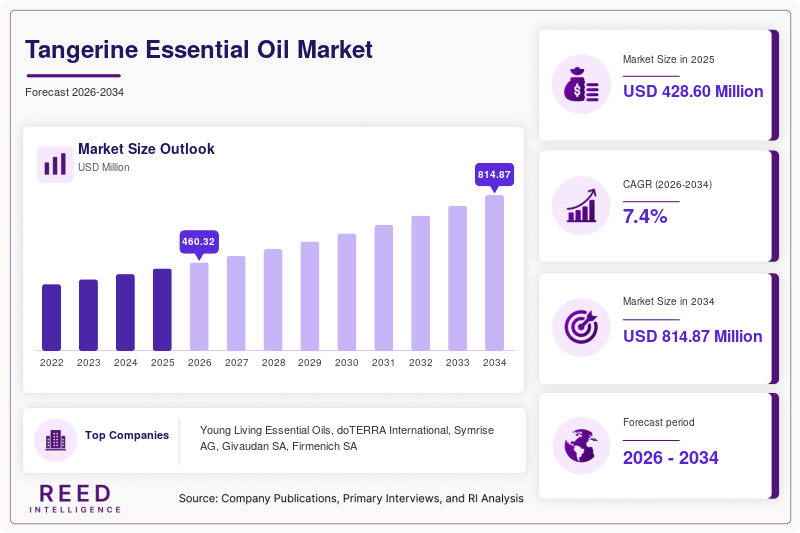
The Tangerine Essential Oil Market size was valued at USD 428.6 million in 2025 and is projected to reach USD 812.4 million by 2034, expanding at a compound annual growth rate (CAGR) of 7.4% from 2025 to 2034. Growth in the market size is being shaped by the expanding use of citrus-based essential oils in personal care, aromatherapy, and natural food flavoring applications. Increasing consumer interest in botanical ingredients has supported demand across several industries including cosmetics, nutraceuticals, and household care products.
A key global factor supporting market expansion has been the growing consumer shift toward plant-derived ingredients. Many manufacturers are reformulating products with natural fragrances and functional oils to meet evolving regulatory and consumer expectations. Tangerine essential oil, extracted primarily from citrus peel through cold pressing, has gained attention due to its mild fragrance profile and versatile application in skincare, food flavoring, and therapeutic formulations.
Key Highlights
- Dominant Region: Asia Pacific accounted for 36.8% market share in 2025, while Latin America is projected to grow at a CAGR of 8.6% through 2034.
- Segment Leadership: Food & beverage applications represented the largest application segment with 31.4% share, while aromatherapy applications are expected to grow at a CAGR of 8.9%.
- Dominant Country: The United States market reached USD 84.3 million in 2025 and is estimated to reach USD 89.7 million in 2026.
Market Trends
Integration of Citrus Oils in Clean-Label Personal Care Productsn
Personal care brands are increasing the use of citrus-based essential oils to create naturally scented formulations. Tangerine oil is used in skincare, soaps, and haircare products because of its light fragrance and compatibility with botanical ingredient blends. Clean-label beauty products emphasize recognizable ingredients, and citrus oils support this positioning by replacing synthetic fragrance compounds. As a result, cosmetic manufacturers are integrating tangerine oil into product lines targeting wellness-oriented consumers.
Rising Use of Citrus Oils in Functional Food Flavoring
Food manufacturers are exploring essential oils as flavoring agents that deliver both aroma and functional value. Tangerine essential oil provides a mild citrus profile that complements beverages, confectionery products, and baked goods. The trend toward natural flavor enhancers in beverages and packaged foods is creating opportunities for essential oil suppliers. Beverage companies in particular are incorporating citrus oils into sparkling drinks, herbal teas, and natural soft drink formulations. This trend is expected to expand the application scope of the Tangerine Essential Oil Market in food processing over the forecast period.
Market Drivers
Expansion of Aromatherapy and Wellness Industries
The global wellness industry has expanded significantly as consumers increasingly seek natural approaches to relaxation and stress management. Aromatherapy practices rely on plant-derived essential oils for diffusers, massage oils, and spa treatments. Tangerine essential oil has become a preferred ingredient in aromatherapy blends due to its mild citrus scent and perceived calming properties. Wellness centers, spas, and home-diffuser product manufacturers are increasing the procurement of citrus oils to diversify fragrance offerings. This growth in wellness applications has strengthened demand across the Tangerine Essential Oil Market.
Growth in Natural Household Cleaning Products
Demand for botanical-based cleaning products has increased as consumers adopt environmentally conscious lifestyles. Household cleaning brands are replacing synthetic fragrances with citrus oils to improve scent profiles while maintaining natural ingredient positioning. Tangerine oil is used in surface cleaners, dishwashing liquids, and air fresheners due to its refreshing aroma and compatibility with plant-based cleaning formulations. Product developers are also combining citrus oils with biodegradable surfactants to produce eco-friendly cleaning products. The continued development of plant-based home care solutions is therefore contributing to the expansion of the Tangerine Essential Oil Market.
Market Restraint
Variability in Citrus Raw Material Supply
The Tangerine Essential Oil Market faces challenges associated with fluctuations in citrus crop production. Tangerine oil is primarily derived from citrus peel, which depends on agricultural output and climatic conditions. Weather events, plant diseases, and shifting agricultural patterns can affect citrus yield and availability of peel feedstock used for oil extraction.
Irregular harvest volumes can lead to price volatility for citrus raw materials. When citrus production declines in major producing regions, essential oil manufacturers may experience supply shortages or increased procurement costs. These factors may affect profit margins and production planning for oil processors.
Additionally, citrus processing industries are geographically concentrated, meaning disruptions in key producing countries can influence global supply chains. Essential oil manufacturers often rely on long-term contracts with citrus processors to secure peel feedstock. However, fluctuations in fruit demand for juice production may alter the availability of peel by-products.
These supply-side uncertainties may create operational challenges for manufacturers in the Tangerine Essential Oil Market, particularly small and mid-scale producers with limited sourcing networks.
Market Opportunities
Expansion in Natural Fragrance Manufacturing
The fragrance industry is increasingly exploring natural aromatic compounds derived from botanical sources. Tangerine essential oil provides a citrus top note that blends well with floral, herbal, and woody fragrance components. Perfume manufacturers are incorporating citrus oils into natural fragrance lines targeting consumers seeking botanical alternatives to synthetic perfumes.
Small-batch fragrance houses and niche cosmetic brands are particularly active in adopting natural aromatic ingredients. As consumer interest in botanical fragrances grows, the Tangerine Essential Oil Market may benefit from increased demand among fragrance formulators.
Growth in Citrus-Based Nutraceutical Products
The nutraceutical sector is exploring essential oils for potential functional benefits. Citrus oils are being investigated for inclusion in dietary supplements, herbal extracts, and functional beverages. Tangerine oil is sometimes used in capsule formulations or liquid extracts designed for digestive or wellness support.
Research institutions and nutraceutical manufacturers are examining the bioactive compounds present in citrus peel oils, including flavonoids and limonene. Product developers are incorporating these compounds into wellness formulations targeting digestive health and metabolic balance. The continued development of botanical nutraceutical products may create new avenues of growth for the Tangerine Essential Oil Market.
Segmental Analysis
By Extraction Method
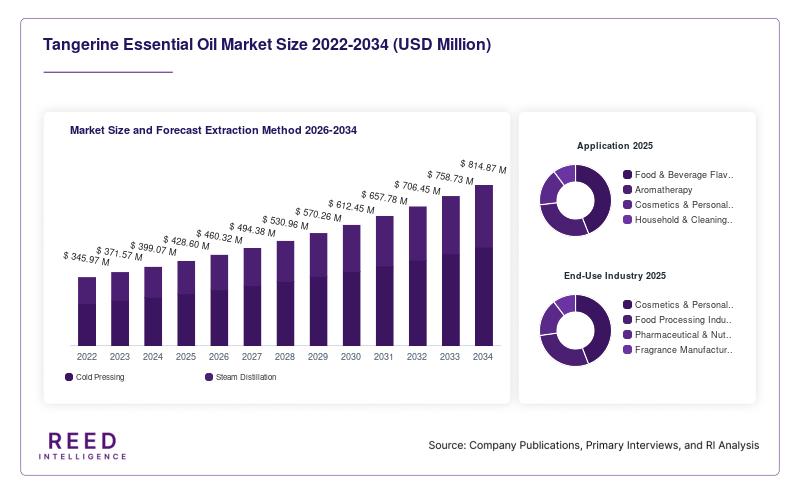
Cold pressing accounted for the largest share of the Tangerine Essential Oil Market in 2025 at 64.3%. This extraction method involves mechanically pressing citrus peels to release aromatic oils. The technique preserves the natural fragrance compounds present in citrus peel, making it suitable for applications in food flavoring and cosmetics. Cold pressing is widely used in citrus oil processing because it does not require high temperatures or complex chemical solvents.
Steam distillation will represent the fastest-growing extraction method with a projected CAGR of 8.1% through 2034. Distillation allows producers to obtain highly concentrated essential oils with controlled purity levels. Some manufacturers prefer distilled oils for fragrance blending and aromatherapy formulations due to their consistent composition. Advances in distillation technology and improved efficiency of extraction equipment will support the growth of this segment in the Tangerine Essential Oil Market.
By Application
Food & beverage applications represented the dominant application segment in 2025 with 31.4% shareof the Tangerine Essential Oil Market. Citrus oils are used as natural flavoring agents in beverages, confectionery products, and baked goods. Tangerine oil contributes a mild citrus flavor profile that blends well with fruit-based beverages and dessert formulations. Food manufacturers use small concentrations of essential oils to enhance flavor while maintaining natural ingredient positioning.
Aromatherapy applications will expand at the fastest CAGR of 8.9% during the forecast period. The increasing use of essential oils in home diffusers, massage oils, and spa treatments is supporting demand in this segment. Aromatherapy product manufacturers often blend citrus oils with herbal or floral essential oils to create calming fragrance compositions. The growth of home wellness products and personal relaxation routines will contribute to rising demand for aromatherapy applications in the Tangerine Essential Oil Market.
By End-Use Industry
The cosmetics and personal care industry accounted for 34.7% share of the Tangerine Essential Oil Market in 2025, making it the dominant end-use sector. Cosmetic brands utilize citrus oils as fragrance ingredients in skincare, haircare, and bath products. Tangerine oil is often included in body washes, lotions, and facial cleansers because it provides a light citrus scent that complements botanical formulations.
The pharmaceutical and nutraceutical industry will grow at a projected CAGR of 8.2% through 2034. Researchers and product developers are exploring plant-derived oils as ingredients in wellness supplements and herbal formulations. Tangerine oil contains naturally occurring aromatic compounds that may be incorporated into liquid extracts and botanical capsules. Continued interest in botanical health products will contribute to the growth of this segment within the Tangerine Essential Oil Market.
By Distribution Channel
Direct business-to-business sales accounted for the largest distribution share in 2025 at 58.6%of the Tangerine Essential Oil Market. Essential oil manufacturers frequently supply bulk quantities directly to cosmetic brands, fragrance manufacturers, and food processors. These companies often require consistent oil specifications and long-term supply agreements, which are facilitated through direct procurement channels.
Online retail channels will expand at the fastest CAGR of 9.1% through 2034. E-commerce platforms have enabled small essential oil brands to sell products directly to consumers interested in aromatherapy and natural wellness products. Online marketplaces allow companies to distribute small-volume essential oil bottles for home use. The growth of digital retail platforms and direct-to-consumer wellness brands will therefore increase sales through online channels in the Tangerine Essential Oil Market.
Regional Analysis
North America
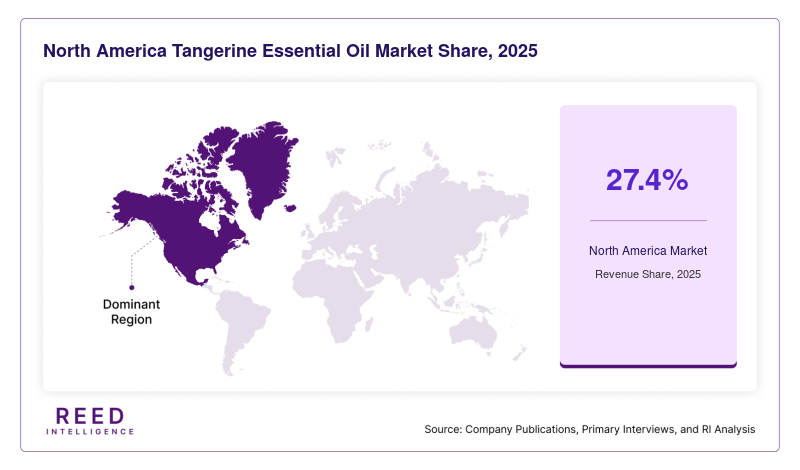
North America accounted for 27.4% of the Tangerine Essential Oil Market in 2025, reflecting stable demand across food processing, cosmetics, and aromatherapy sectors. The regional market will expand at a projected CAGR of 6.8% between 2025 and 2034. The presence of large personal care brands and established aromatherapy product manufacturers contributes to consistent demand for citrus essential oils. In addition, consumer interest in plant-based ingredients has encouraged cosmetic manufacturers to incorporate natural oils into skincare and fragrance formulations.
The United Statesrepresented the dominant country within the regional market. The growth of natural skincare brands has contributed to rising consumption of botanical ingredients used in creams, serums, and body care products. Independent cosmetic brands and wellness product manufacturers frequently include citrus essential oils in aromatherapy blends and scented skincare lines. The country also hosts several essential oil distributors and private-label product developers, which strengthens supply chains for botanical oils. Increasing investment in small-batch wellness products has supported demand for citrus oils in North America.
Europe
Europe held 22.1% share of the Tangerine Essential Oil Market in 2025and will grow at a forecast CAGR of 6.5% through 2034. The region has a well-established cosmetics industry that increasingly integrates botanical ingredients into product formulations. European regulations around cosmetic ingredient transparency have also encouraged the use of recognizable natural ingredients in skincare and fragrance products.
Franceaccounted for a substantial portion of the regional market due to its long-standing fragrance manufacturing industry. Many perfume houses and aroma compound producers operate within the country, creating consistent demand for citrus essential oils used in fragrance compositions. Tangerine oil is often utilized as a citrus top note in perfume blends. Additionally, France hosts several contract fragrance manufacturers that supply scented compounds to global personal care brands. The continued demand for natural fragrance ingredients in perfume manufacturing supports steady growth within the European Tangerine Essential Oil Market.
Asia Pacific
Asia Pacific represented 36.8% of the Tangerine Essential Oil Market in 2025, making it the largest regional market. The region is expected to grow at a CAGR of 7.9% during the forecast period. Expanding manufacturing sectors for cosmetics, food processing, and herbal wellness products have contributed to the region’s high consumption of citrus oils.
Chinadominated the regional market due to its strong citrus cultivation and large essential oil extraction industry. Citrus processing facilities generate substantial volumes of peel by-products that can be utilized for oil extraction. Domestic manufacturers produce essential oils for use in food flavoring, aromatherapy products, and herbal formulations. China also exports citrus oils to several international markets, strengthening its role in global supply chains. The availability of citrus raw materials and processing capacity has supported the country’s position in the Tangerine Essential Oil Market.
Middle East & Africa
The Middle East & Africa accounted for 7.6% of the Tangerine Essential Oil Market in 2025and will grow at a forecast CAGR of 6.2% through 2034. Demand within the region is driven by the use of essential oils in fragrance production and personal care manufacturing. Several regional fragrance houses incorporate citrus oils into perfume formulations used in both local and export markets.
The United Arab Emiratesrepresented a key country within the regional market. The country hosts an active fragrance and perfume manufacturing sector serving both domestic consumers and export markets across the Middle East. Tangerine essential oil is utilized in fragrance blending processes due to its fresh citrus aroma that complements traditional perfume ingredients. Local cosmetic brands also incorporate citrus oils into body care and scented oil products. The presence of fragrance manufacturing facilities has therefore supported demand in the regional Tangerine Essential Oil Market.
Latin America
Latin America held 6.1% of the Tangerine Essential Oil Market in 2025and is projected to grow at a CAGR of 8.6% through 2034, representing one of the faster-expanding regional markets. The region benefits from strong citrus cultivation and increasing investment in agricultural processing industries.
Brazildominated the regional market due to its extensive citrus farming sector. Citrus fruit production generates peel waste that can be processed into essential oils. Agricultural processing companies are investing in oil extraction facilities to capture additional value from citrus by-products. The availability of raw materials has encouraged local essential oil production and exports to international fragrance and food industries. This agricultural advantage supports the continued development of the Tangerine Essential Oil Market across Latin America.
Competitive Landscape
The Tangerine Essential Oil Marketfeatures a mix of global essential oil producers, fragrance manufacturers, and agricultural processing companies. Market participants focus on citrus sourcing networks, extraction technology, and partnerships with cosmetic and food manufacturers.
Young Living Essential Oilsis recognized as a significant market participant due to its vertically integrated sourcing strategy and wide distribution network for essential oil products. The company has expanded citrus oil product lines within aromatherapy and wellness categories.
Other companies in the market focus on expanding production capacity, improving oil purity standards, and developing customized fragrance blends for industrial customers. Manufacturers also invest in sustainable citrus sourcing programs to secure raw material supply while meeting environmental standards. Strategic collaborations with cosmetic brands and food manufacturers remain common competitive strategies within the Tangerine Essential Oil Market.
Key Players List
- Young Living Essential Oils
- doTERRA International
- Symrise AG
- Givaudan SA
- Firmenich SA
- International Flavors & Fragrances Inc.
- Citrus and Allied Essences Ltd.
- Ultra International B.V.
- Phoenix Aromas & Essential Oils LLC
- Mountain Rose Herbs
- AOS Products Pvt. Ltd.
- Plant Therapy Essential Oils
- Edens Garden
- Rocky Mountain Oils
- Moksha Lifestyle Products
Recent Developments
- Several essential oil producers expanded citrus sourcing partnerships with fruit processing companies to secure peel feedstock for oil extraction.
- Aromatherapy brands introduced citrus-based essential oil blends designed for home diffuser products and wellness routines.
- Fragrance manufacturers incorporated citrus oils into botanical perfume collections aimed at natural fragrance markets.
- Agricultural processors in citrus-producing regions invested in improved oil extraction facilities to increase production efficiency.
Tangerine Essential Oil Market Segments
Extraction Method
- Cold Pressing
- Steam Distillation
Application
- Food & Beverage Flavoring
- Aromatherapy
- Cosmetics & Personal Care
- Household & Cleaning Products
End-Use Industry
- Cosmetics & Personal Care Industry
- Food Processing Industry
- Pharmaceutical & Nutraceutical Industry
- Fragrance Manufacturing Industry
Distribution Channel
- Direct B2B Sales
- Specialty Retail Stores
- Online Retail
By Region
- North America
- Europe
- APAC
- Middle East and Africa
- LATAM