Tardive Dyskinesia Therapeutics Market Size, Share & Demand Report By Drug Class (VMAT2 Inhibitors, Dopamine-Depleting Agents, Anticholinergic Agents, Benzodiazepines, Others), By Distribution Channel (Hospital Pharmacies, Retail Pharmacies, Online Pharmacies), By End User (Specialty Neurology Clinics, Hospitals, Home Healthcare Settings, Rehabilitation Centers) By Region & Segment Forecasts, 2026–2034
USD 3950
Market Overview
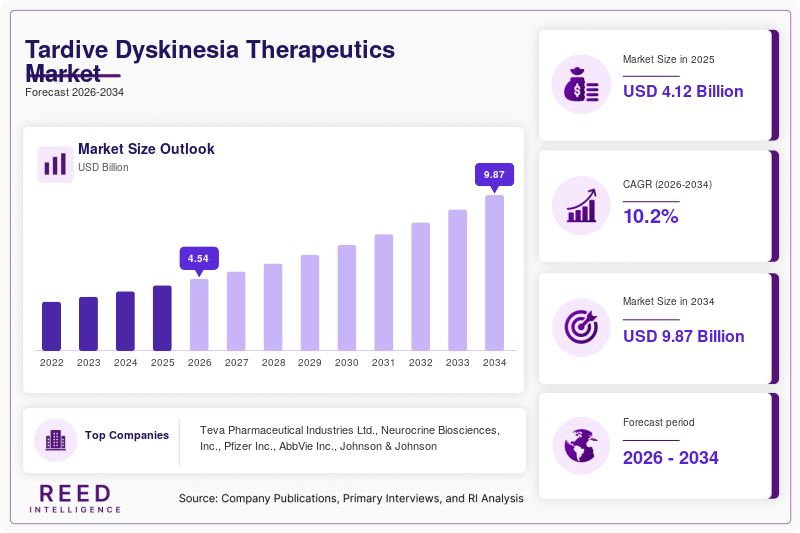
The global Tardive Dyskinesia Therapeutics Market size was valued at USD 4.12 billion in 2026 and is projected to reach USD 8.94 billion by 2034, expanding at a CAGR of 10.2% during the forecast period from 2026 to 2034. The market is experiencing consistent growth due to the rising prevalence of neurological disorders associated with long-term antipsychotic drug use and the increasing diagnosis rate of movement disorders across developed and emerging healthcare systems. Tardive dyskinesia is a chronic neurological condition characterized by involuntary movements, primarily caused by prolonged exposure to dopamine receptor-blocking agents. The growing awareness among healthcare professionals regarding early diagnosis and treatment has strengthened demand for innovative therapeutics and supportive care solutions.
The expansion of mental health treatment programs globally has also contributed to the increasing patient pool requiring long-term antipsychotic therapy, thereby supporting demand for tardive dyskinesia therapeutics. Pharmaceutical companies are focusing on the development of VMAT2 inhibitors, novel neurological therapies, and improved drug delivery technologies to address unmet clinical needs. In addition, favorable reimbursement policies in developed countries and the growing availability of specialty neurology clinics are improving treatment accessibility. The market is also benefiting from ongoing clinical trials, rising healthcare expenditure, and increased investment in central nervous system drug development. Strategic collaborations between biotechnology companies and healthcare providers are expected to support market expansion during the forecast period.
Key Highlights
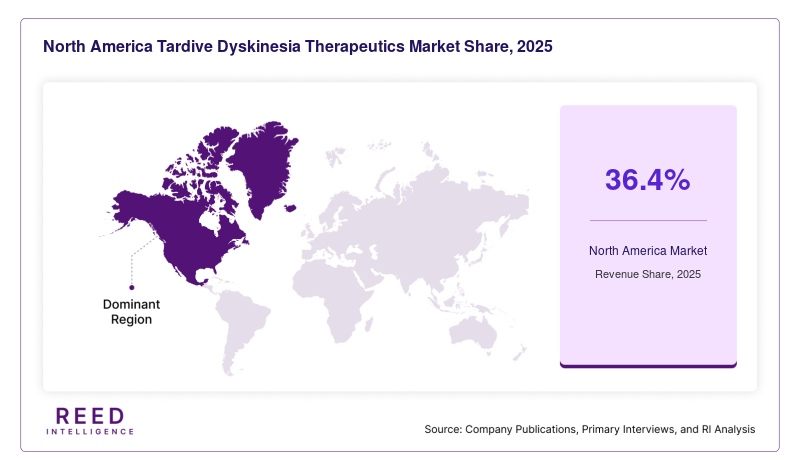
- North America dominated the market with a 36.4% share in 2025.
- Asia Pacific is expected to grow at the fastest CAGR of 11.8% during 2026–2034.
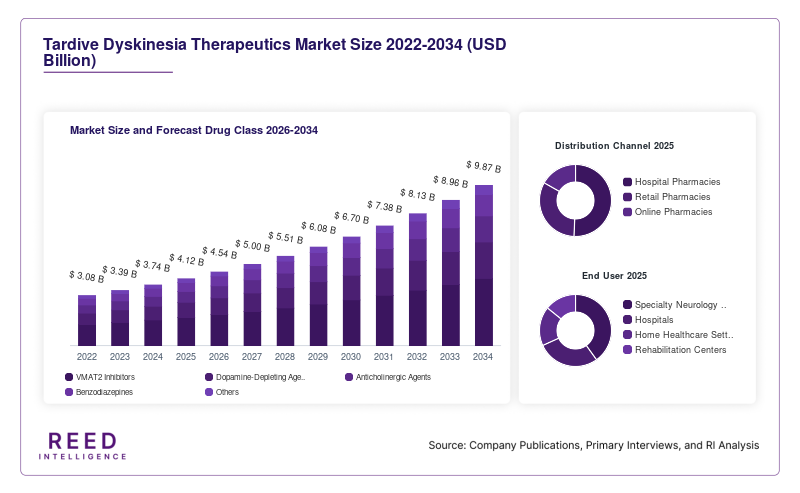
- By drug class, VMAT2 inhibitors accounted for the largest share of 47.2%, while dopamine-depleting agents are projected to grow at a CAGR of 11.6%. By distribution channel, hospital pharmacies led with a 44.1% share, whereas online pharmacies are expected to expand at a CAGR of 12.3%.
- By end user, specialty neurology clinics held the highest share of 39.8%, while home healthcare settings are anticipated to grow at a CAGR of 11.4%.
- The United States remained the dominant country, with market values of USD 1.21 billion in 2024 and USD 1.34 billion in 2025.
Market Trends
Expansion of VMAT2 Inhibitor-Based Treatment Approaches
The Tardive Dyskinesia Therapeutics Market is witnessing increasing adoption of VMAT2 inhibitor-based therapies due to their improved clinical effectiveness and favorable safety profiles compared to traditional treatment approaches. Healthcare providers are increasingly prescribing advanced neurological drugs that help reduce involuntary muscle movements while improving patient quality of life. Pharmaceutical manufacturers are investing heavily in research programs aimed at improving dosing efficiency, minimizing side effects, and increasing treatment adherence. The growing preference for targeted neurological therapies is encouraging the commercialization of next-generation VMAT2 inhibitors across major healthcare markets. Rising regulatory approvals for innovative treatment options are also expanding physician confidence and supporting broader adoption in hospitals and specialty clinics.
Integration of Digital Neurology and Remote Patient Monitoring
The increasing integration of digital health technologies into neurological disorder management is emerging as a significant trend in the market. Healthcare providers are utilizing remote monitoring platforms, artificial intelligence-supported movement tracking systems, and telehealth consultations to improve patient monitoring and treatment outcomes. These digital tools allow physicians to assess symptom progression more effectively and optimize therapeutic strategies for patients receiving long-term antipsychotic therapy. The adoption of wearable movement-tracking devices is also increasing among neurology centers and research institutions. In addition, pharmaceutical companies are collaborating with digital health firms to improve patient engagement and medication adherence. This trend is expected to strengthen market growth by improving treatment continuity and supporting personalized therapeutic management.
Market Drivers
Rising Prevalence of Mental Health Disorders and Antipsychotic Drug Usage
The increasing prevalence of schizophrenia, bipolar disorder, major depressive disorder, and other psychiatric conditions has significantly increased the long-term use of antipsychotic medications worldwide. Since prolonged exposure to dopamine receptor-blocking drugs remains one of the primary causes of tardive dyskinesia, the growing psychiatric patient population is contributing directly to the expansion of the Tardive Dyskinesia Therapeutics Market. Healthcare systems across developed and developing economies are investing in mental health awareness initiatives and expanding psychiatric care infrastructure. This has improved diagnosis rates and increased access to long-term neurological treatment. Furthermore, aging populations in countries such as Japan, Germany, and the United States are increasing demand for neurological care and supportive therapeutic solutions.
Increasing Regulatory Support and Neurology Drug Development Investments
Government agencies and healthcare regulators are increasingly supporting the development of therapies targeting neurological movement disorders. Several pharmaceutical companies are receiving fast-track designations, orphan drug benefits, and accelerated approvals for innovative tardive dyskinesia treatment candidates. These supportive regulatory frameworks are encouraging higher investments in clinical trials and neurological drug innovation. Biotechnology firms are also entering strategic partnerships to accelerate commercialization and global distribution activities. In addition, growing healthcare expenditure and rising public-private funding for central nervous system disorder research are supporting the expansion of the Tardive Dyskinesia Therapeutics Market. The availability of advanced diagnostic tools and specialized neurological care centers is further strengthening treatment adoption across both urban and semi-urban healthcare systems.
Market Restraint
High Treatment Costs and Limited Access in Developing Healthcare Systems
The high cost associated with advanced tardive dyskinesia therapies remains a significant challenge for market expansion, particularly in low-income and middle-income countries. VMAT2 inhibitors and other specialty neurological drugs often involve substantial treatment expenses due to complex research, development, and regulatory approval processes. Many patients in developing healthcare systems lack adequate insurance coverage or reimbursement support for chronic neurological treatment, limiting access to advanced medications. In addition, delayed diagnosis and limited awareness among primary care providers contribute to underreporting and undertreatment of tardive dyskinesia in emerging economies.
The shortage of trained neurologists and specialty psychiatric care centers in rural regions further restricts market penetration. Some healthcare providers also remain cautious regarding long-term neurological drug administration because of concerns related to adverse effects, treatment adherence, and patient monitoring requirements. Generic treatment alternatives are available in some regions, but their clinical effectiveness may vary significantly compared to branded therapies. These cost-related and infrastructure-related challenges are expected to limit treatment accessibility and slow adoption rates in several price-sensitive healthcare markets during the forecast period.
Market Opportunities
Growing Demand for Personalized Neurological Treatment Strategies
The increasing focus on personalized medicine is creating strong opportunities for companies operating in the Tardive Dyskinesia Therapeutics Market. Healthcare providers are shifting toward patient-specific treatment approaches that consider genetic profiles, symptom severity, medication history, and comorbid neurological conditions. This trend is encouraging pharmaceutical manufacturers to invest in biomarker-based drug development and precision neurology research. Personalized treatment strategies improve clinical outcomes by reducing adverse drug reactions and optimizing therapeutic effectiveness. The adoption of artificial intelligence and predictive analytics in neurological diagnostics is also supporting individualized treatment planning. As healthcare systems increasingly prioritize patient-centered care models, demand for advanced and customized tardive dyskinesia therapies is expected to increase steadily.
Expansion Opportunities Across Emerging Healthcare Economies
Emerging economies in Asia Pacific, Latin America, and the Middle East are creating substantial growth opportunities for market participants due to expanding healthcare infrastructure and rising mental health awareness. Governments in countries such as India, Brazil, and Saudi Arabia are increasing investments in neurological care facilities and psychiatric treatment programs. Pharmaceutical companies are strengthening regional distribution networks and forming partnerships with local healthcare providers to improve market penetration. Rising disposable incomes and improving insurance coverage are also supporting access to specialty neurological drugs. In addition, growing adoption of telemedicine and digital healthcare platforms is helping patients in underserved regions connect with neurology specialists. These developments are expected to support long-term expansion opportunities for both established pharmaceutical firms and emerging biotechnology companies.
Segmental Analysis
By Drug Class
VMAT2 inhibitors represented the dominant subsegment within the Tardive Dyskinesia Therapeutics Market and accounted for approximately 47.2% of total revenue in 2024. The segment continues to maintain strong market leadership due to the growing clinical preference for targeted therapies that effectively manage involuntary movement symptoms with improved tolerability. Healthcare providers increasingly recommend VMAT2 inhibitors because they offer more consistent symptom reduction compared to conventional neurological treatments. Pharmaceutical companies are focusing on expanding production capacities and improving drug formulations to support wider patient adoption. Rising regulatory approvals and the availability of branded neurological medications across developed markets are further supporting segment expansion. In addition, strong reimbursement support in countries such as the United States and Germany continues to encourage higher prescription volumes.
Dopamine-depleting agents are projected to witness the fastest growth during the forecast period, registering a CAGR of 11.6%. The increasing demand for alternative therapeutic approaches among patients who experience limited response to standard therapies is driving segment growth. Researchers are exploring improved dopamine regulation mechanisms to enhance long-term treatment effectiveness while minimizing adverse effects. Several biotechnology firms are investing in clinical development programs targeting next-generation neurological compounds with enhanced safety profiles. Growing awareness regarding early intervention in movement disorders is also encouraging healthcare providers to adopt combination treatment strategies that include dopamine-depleting therapies. Expanding pharmaceutical distribution networks in emerging economies are expected to further support the segment’s long-term growth trajectory.
By Distribution Channel
Hospital pharmacies held the largest share of the Tardive Dyskinesia Therapeutics Market in 2024, accounting for approximately 44.1% of total revenue. The segment dominates because hospitals and specialty care centers remain the primary locations for neurological diagnosis, psychiatric treatment, and prescription management. Many advanced tardive dyskinesia therapies require close physician supervision and regular patient monitoring, which supports strong demand through hospital-based distribution systems. Hospital pharmacies also benefit from direct partnerships with pharmaceutical manufacturers and large healthcare procurement programs. In developed economies, integrated hospital networks are increasingly adopting digital prescription systems and centralized pharmaceutical management, improving treatment accessibility for chronic neurological patients. The presence of specialty neurology departments further strengthens hospital pharmacy dominance.
Online pharmacies are expected to emerge as the fastest-growing distribution channel, expanding at a CAGR of 12.3% during the forecast period. The rapid adoption of digital healthcare platforms and increasing consumer preference for convenient medication delivery services are supporting segment growth. Patients managing chronic neurological conditions often require long-term medication refills, making online pharmacy services highly attractive for improving treatment continuity and reducing travel burdens. Healthcare providers are also integrating e-prescription systems that allow patients to access specialty medications through regulated digital platforms. The expansion of telemedicine and remote psychiatric consultations is further contributing to rising online pharmaceutical purchases. Emerging economies are witnessing increased smartphone penetration and digital payment adoption, which are expected to support broader online pharmacy market expansion.
By End User
Specialty neurology clinics accounted for the dominant share of the Tardive Dyskinesia Therapeutics Market in 2024, representing approximately 39.8% of total revenue. These clinics specialize in diagnosing and managing complex neurological movement disorders, making them critical treatment centers for tardive dyskinesia patients. The increasing availability of movement disorder specialists and advanced neurological diagnostic technologies is supporting the growth of this segment. Patients often prefer specialty clinics because they provide individualized treatment plans, regular monitoring, and access to innovative therapeutic options. Pharmaceutical companies also collaborate closely with specialty clinics to support clinical trials and physician education programs. In developed healthcare systems, specialty neurology centers are expanding multidisciplinary care models that integrate psychiatric treatment, neurological rehabilitation, and digital patient monitoring services.
Home healthcare settings are projected to register the fastest CAGR of 11.4% during the forecast period due to the growing preference for patient-centered treatment approaches and remote care solutions. Many chronic neurological patients seek home-based care services to reduce hospitalization frequency and improve long-term treatment convenience. Advances in telemedicine, wearable monitoring devices, and digital consultation platforms are enabling healthcare providers to manage tardive dyskinesia symptoms remotely with greater efficiency. Aging populations and increasing healthcare costs are also encouraging governments and insurers to promote home-based neurological management programs. In addition, pharmaceutical companies are developing user-friendly medication delivery systems that support safer drug administration in home environments. These factors are expected to accelerate demand for home healthcare services across both developed and emerging healthcare markets.
Regional Analysis
North America
North America accounted for the largest share of the Tardive Dyskinesia Therapeutics Market in 2025, representing approximately 36.4% of global revenue. The region is expected to maintain stable growth at a CAGR of 9.8% during the forecast period due to the strong presence of advanced healthcare infrastructure and high awareness regarding neurological disorders. Increased diagnosis rates of tardive dyskinesia among psychiatric patients have contributed significantly to treatment demand. The region also benefits from extensive reimbursement coverage, strong pharmaceutical research capabilities, and early adoption of innovative VMAT2 inhibitor therapies. Growing investment in mental health treatment programs continues to strengthen long-term market growth.
The United States remains the dominant country within the regional market due to high healthcare spending and the presence of leading pharmaceutical manufacturers specializing in neurological therapies. The country recorded significant market expansion supported by rising antipsychotic medication prescriptions and increasing access to specialty neurology clinics. Another important growth factor is the expansion of telepsychiatry and remote neurological consultation services, which improve treatment continuity for chronic patients. Canada is also witnessing rising adoption of advanced movement disorder therapies due to favorable healthcare policies and increased public awareness regarding neurological side effects associated with psychiatric medications.
Europe
Europe represented a significant portion of the Tardive Dyskinesia Therapeutics Market in 2025 and is expected to register a CAGR of 9.4% during the forecast period. The region benefits from well-established healthcare systems, strong psychiatric treatment networks, and growing investment in neurological research initiatives. Countries across Western Europe are emphasizing early detection of movement disorders through integrated mental healthcare programs. Rising demand for safer and more effective neurological therapies is encouraging pharmaceutical companies to expand product availability throughout the region. Increasing collaboration between academic research institutions and biotechnology firms is also supporting clinical innovation and treatment accessibility.
Germany remained the leading contributor to the European market due to its advanced pharmaceutical manufacturing capabilities and extensive neurological care infrastructure. The country is experiencing increasing demand for tardive dyskinesia treatment as the elderly population continues to grow and long-term psychiatric care becomes more common. One unique growth factor in Germany is the strong integration of neurological rehabilitation programs within public healthcare systems, allowing patients to receive comprehensive movement disorder management. The United Kingdom and France are also expanding investments in digital mental healthcare services and specialty psychiatric treatment programs.
Asia Pacific
Asia Pacific is projected to witness the fastest growth in the Tardive Dyskinesia Therapeutics Market, expanding at a CAGR of 11.8% from 2026 to 2034. The region is benefiting from rapid improvements in healthcare infrastructure, increasing mental health awareness, and expanding access to neurological treatment services. Countries across the region are witnessing rising diagnosis rates for psychiatric conditions, resulting in greater use of antipsychotic medications and increased demand for tardive dyskinesia therapies. Governments are also investing in healthcare modernization and specialty neurology centers to address the growing burden of neurological disorders. The entry of multinational pharmaceutical companies into emerging Asian markets is supporting wider product availability.
China dominated the regional market due to its large patient population and increasing healthcare expenditure. The country is rapidly expanding psychiatric care services and investing in neurological disease management programs across urban and semi-urban healthcare facilities. A key growth factor supporting the Chinese market is the increasing adoption of domestically manufactured neurological drugs, which improves treatment affordability and accessibility. India is also witnessing significant growth due to improving mental healthcare awareness campaigns, rising insurance penetration, and increasing collaborations between hospitals and pharmaceutical distributors focused on neurological therapeutics.
Middle East & Africa
The Middle East & Africa region is gradually expanding within the Tardive Dyskinesia Therapeutics Market and is expected to grow at a CAGR of 8.1% during the forecast period. Market growth is supported by improving healthcare infrastructure, increasing awareness regarding neurological disorders, and rising investment in specialty medical services. Governments in several Gulf countries are strengthening mental healthcare programs and expanding access to advanced pharmaceutical therapies. The region is also witnessing higher diagnosis rates for psychiatric disorders due to improved healthcare outreach and urbanization. However, treatment access remains uneven across lower-income African countries due to limited healthcare resources.
Saudi Arabia emerged as the leading country in the regional market owing to its increasing healthcare modernization initiatives and rising investment in neurological treatment facilities. The country is actively expanding specialized psychiatric hospitals and promoting mental health awareness through national healthcare reforms. One important growth factor is the rapid digital transformation of healthcare services, including telemedicine and electronic prescription systems, which improves patient access to neurological specialists. South Africa is also experiencing gradual growth due to increasing pharmaceutical imports and rising awareness among healthcare providers regarding tardive dyskinesia management.
Latin America
Latin America accounted for a moderate share of the Tardive Dyskinesia Therapeutics Market in 2025 and is expected to register a CAGR of 8.7% during the forecast period. The region is benefiting from increasing healthcare expenditure and growing awareness regarding mental health treatment. Public and private healthcare providers are expanding psychiatric care services, leading to increased diagnosis and treatment rates for neurological movement disorders. Pharmaceutical companies are strengthening regional distribution networks and launching educational campaigns aimed at improving awareness among clinicians. Economic development and urbanization are also contributing to improved access to specialty neurological therapies in major metropolitan areas.
Brazil remained the dominant country within the Latin American market due to its large healthcare system and increasing adoption of specialty pharmaceutical products. The country is witnessing growing demand for neurological therapies as psychiatric treatment programs expand across both public and private hospitals. A unique growth factor in Brazil is the increasing participation of local pharmaceutical manufacturers in generic neurological drug production, which helps improve affordability for chronic patients. Mexico is also showing positive market growth due to healthcare reforms, rising medical insurance coverage, and increasing investment in mental health infrastructure.
Competitive Landscape
The Tardive Dyskinesia Therapeutics Market is characterized by strong competition among multinational pharmaceutical companies, specialty biotechnology firms, and emerging neurological drug developers. Market participants are focusing on product innovation, regulatory approvals, strategic partnerships, and geographic expansion to strengthen their competitive positioning. Companies are investing heavily in research and development activities aimed at improving neurological drug efficacy, reducing side effects, and enhancing long-term patient outcomes. Increasing collaboration between pharmaceutical manufacturers and healthcare institutions is also supporting clinical trial expansion and commercialization efforts.
Teva Pharmaceutical Industries Ltd. remains one of the leading players in the market due to its strong neurological drug portfolio and established global distribution network. The company continues to focus on expanding access to VMAT2 inhibitor therapies through strategic partnerships and regional market expansion initiatives. Neurocrine Biosciences, Inc. is another significant participant recognized for its strong focus on movement disorder therapeutics and advanced neurological research programs. Companies such as Pfizer Inc., AbbVie Inc., and Johnson & Johnson are also increasing investments in central nervous system disorder treatments to strengthen their market presence.
Key Players
- Teva Pharmaceutical Industries Ltd.
- Neurocrine Biosciences, Inc.
- Pfizer Inc.
- AbbVie Inc.
- Johnson & Johnson
- Sun Pharmaceutical Industries Ltd.
- Novartis AG
- Bristol-Myers Squibb Company
- Eli Lilly and Company
- Merck & Co., Inc.
- Otsuka Holdings Co., Ltd.
- Viatris Inc.
- AstraZeneca plc
- Sanofi S.A.
- GlaxoSmithKline plc
Recent Developments
- Neurocrine Biosciences expanded its neurological research pipeline in 2025 with new clinical programs focused on advanced movement disorder therapies and improved long-term symptom management.
- Teva Pharmaceutical Industries Ltd. strengthened its specialty neurology distribution network across Asia Pacific in 2025 to improve patient access to tardive dyskinesia therapeutics.
- Several pharmaceutical companies introduced digital patient adherence platforms in 2024 to support remote monitoring, medication tracking, and virtual neurological consultations for chronic movement disorder patients.
Tardive Dyskinesia Therapeutics Market Segments
Drug Class
- VMAT2 Inhibitors
- Dopamine-Depleting Agents
- Anticholinergic Agents
- Benzodiazepines
- Others
Distribution Channel
- Hospital Pharmacies
- Retail Pharmacies
- Online Pharmacies
End User
- Specialty Neurology Clinics
- Hospitals
- Home Healthcare Settings
- Rehabilitation Centers
By Region
- North America
- Europe
- APAC
- Middle East and Africa
- LATAM