Tea Tree Oil Market Size, Share & Demand Report By Product Type (100% Pure Tea Tree Oil, Blended Tea Tree Oil), By Application (Cosmetics & Personal Care, Pharmaceuticals, Aromatherapy, Household Products), By Distribution Channel (Online Retail, Supermarkets & Hypermarkets, Pharmacies & Drug Stores, Specialty Stores), By Region & Segment Forecasts, 2025–2034
USD 3950
Market Overview
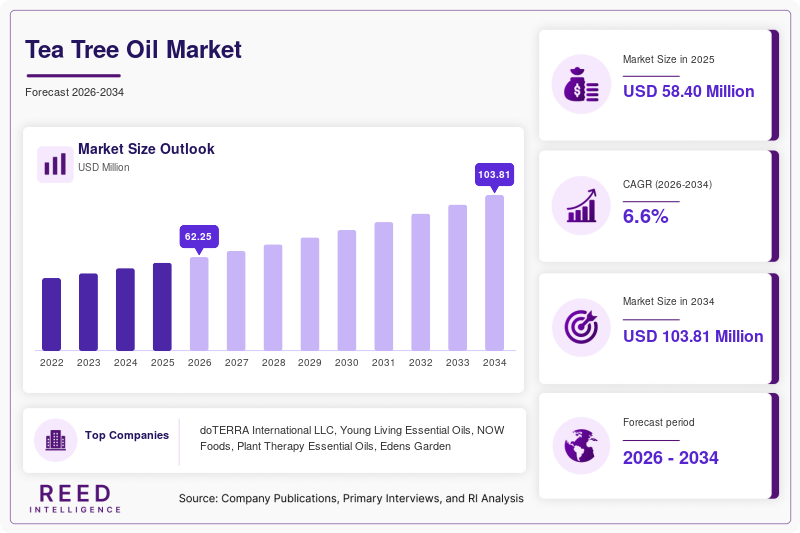
The global Tea Tree Oil Market size was valued at approximately USD 58.4 million in 2025 and is projected to reach USD 103.7 million by 2034, expanding at a CAGR of 6.6% during 2025–2034. The market has demonstrated consistent growth driven by increasing consumer preference for plant-based and natural ingredients across personal care, healthcare, and household applications. Tea tree oil, derived from Melaleuca alternifolia, is widely recognized for its antimicrobial, antifungal, and anti-inflammatory properties, making it a key ingredient in skincare, aromatherapy, and pharmaceutical formulations.
A significant global factor supporting the Tea Tree Oil Market growth is the rising awareness of chemical-free products. Consumers are actively shifting toward organic and natural alternatives due to concerns over synthetic additives, which has strengthened demand for essential oils globally. This trend is further supported by regulatory encouragement for safer cosmetic and healthcare ingredients, especially in developed markets.
Key Highlights
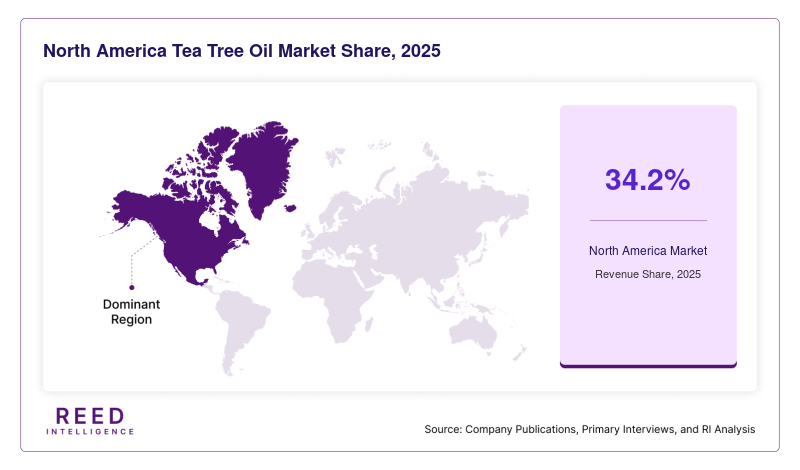
- North America dominated the Tea Tree Oil Market with a 34.2% share in 2025, while Asia Pacific is projected to grow at the fastest CAGR of 7.8% through 2034.
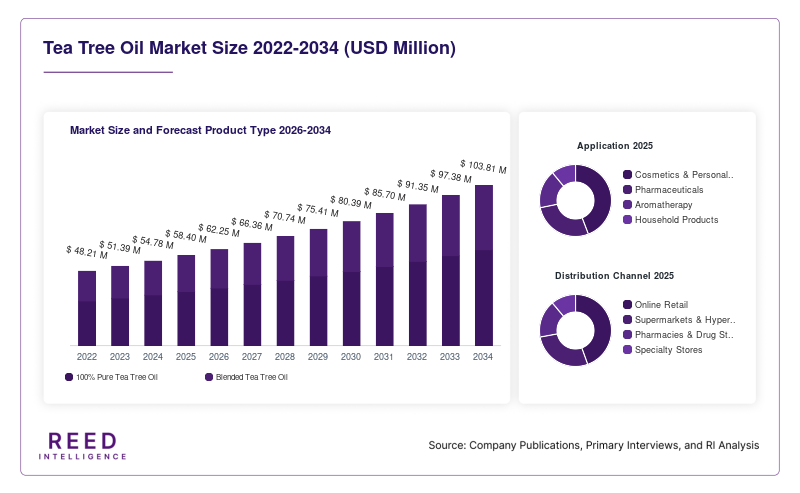
- In product type, 100% pure tea tree oil led with a 61.5% share, while blended oils are expected to grow at a CAGR of 7.1%.
- By application, cosmetics & personal care accounted for 48.6% share, whereas pharmaceuticals will register the fastest CAGR of 7.4%.
- The United States remained the dominant country with USD 18.2 million in 2025, expected to reach USD 19.5 million in 2026.
Market Trends
Rising Demand for Natural Skincare Ingredients
The Tea Tree Oil Market is witnessing a strong trend toward natural and clean-label skincare products. Consumers are increasingly opting for botanical ingredients due to their perceived safety and efficacy. Tea tree oil is widely used in acne treatment, anti-dandruff formulations, and antiseptic creams, which has strengthened its role in premium skincare and dermatological products. The shift toward vegan and cruelty-free formulations is also contributing to the increased incorporation of tea tree oil across cosmetic product lines.
Expansion of Aromatherapy and Wellness Applications
Aromatherapy is emerging as a significant application area within the Tea Tree Oil Market. The growing focus on mental well-being and stress management has led to increased adoption of essential oils in diffusers, spa therapies, and home wellness products. Tea tree oil is gaining traction for its therapeutic properties, particularly in respiratory health and relaxation treatments. This trend is further supported by the expansion of wellness centers and increased consumer spending on holistic health solutions.
Market Drivers
Increasing Consumer Awareness of Antimicrobial Properties
The growing awareness of tea tree oil’s antibacterial and antifungal benefits is a key driver of the Tea Tree Oil Market. It is widely used in products targeting acne, fungal infections, and minor wounds. The demand for effective natural remedies has surged, especially in post-pandemic scenarios where hygiene and immunity are prioritized. This has significantly boosted the use of tea tree oil in personal care and healthcare formulations.
Growth in Organic and Herbal Product Industries
The rapid expansion of organic and herbal product industries is accelerating the Tea Tree Oil Market growth. Manufacturers are incorporating tea tree oil into a wide range of products, including shampoos, face washes, soaps, and disinfectants. The increasing penetration of organic product brands and rising disposable incomes are further encouraging consumers to choose premium herbal solutions, thereby supporting sustained market expansion.
Market Restraint
Limited Raw Material Availability and Price Volatility
One of the major challenges in the Tea Tree Oil Market is the limited availability of raw materials and fluctuating prices. Tea tree oil production is heavily dependent on climatic conditions, primarily in regions such as Australia. Variations in weather, droughts, or crop diseases can significantly impact supply, leading to price instability. Additionally, the time-intensive cultivation and extraction processes contribute to higher production costs.
This volatility creates uncertainty for manufacturers and can hinder long-term planning and pricing strategies. Small-scale producers are particularly affected, as they lack the resources to manage supply chain disruptions effectively. Furthermore, the presence of adulterated or low-quality oil in the market can impact consumer trust and brand reputation, posing additional challenges for established players.
Market Opportunities
Rising Demand in Pharmaceutical Applications
The pharmaceutical sector presents a strong growth opportunity for the Tea Tree Oil Market. Increasing research into the medicinal benefits of tea tree oil, particularly in treating skin infections and inflammation, is driving its adoption in therapeutic formulations. As natural remedies gain acceptance in mainstream medicine, manufacturers have the opportunity to expand their product portfolios into clinical-grade applications.
Expansion in Emerging Markets
Emerging economies offer significant untapped potential for the Tea Tree Oil Market. Rising urbanization, increasing disposable incomes, and growing awareness of natural products are driving demand in regions such as Asia Pacific and Latin America. Local manufacturers are also entering the market, enhancing product accessibility and affordability. This expansion is expected to create new growth avenues for global players and strengthen market penetration.
Segmental Analysis
By Type
The 100% pure tea tree oil segment dominated the Tea Tree Oil Market with a 61.5% share in 2025. This dominance is attributed to its high efficacy and widespread use in therapeutic and cosmetic applications. Consumers prefer pure oil due to its concentrated properties and versatility in various formulations.
The blended tea tree oil segment is expected to grow at a CAGR of 7.1%, driven by its affordability and ease of use. Blended oils are increasingly used in ready-to-use products such as creams, lotions, and aromatherapy solutions, making them more accessible to a broader consumer base.
By Application
The cosmetics & personal care segment accounted for the largest share of 48.6% in 2025. The widespread use of tea tree oil in skincare, haircare, and hygiene products has contributed to this dominance. Its effectiveness in treating acne and dandruff has made it a preferred ingredient among manufacturers.
The pharmaceutical segment is projected to grow at the fastest CAGR of 7.4%, supported by increasing research into its medicinal properties. The rising adoption of natural remedies in healthcare will further drive this segment’s growth.
By Distribution Channel
The offline retail segment dominated the Tea Tree Oil Market with a 55.2% share in 2025, driven by the strong presence of supermarkets, pharmacies, and specialty stores. Consumers often prefer physical stores for purchasing essential oils due to the ability to verify product quality.
The online retail segment is expected to grow at a CAGR of 8.2%, fueled by the rapid expansion of e-commerce platforms. Convenience, wider product availability, and competitive pricing are key factors supporting this growth.
Regional Analysis
North America
North America accounted for 34.2% of the Tea Tree Oil Market share in 2025 and is expected to grow at a CAGR of 5.9% during the forecast period. The region’s growth is driven by strong demand for natural personal care products and increasing consumer awareness regarding the benefits of essential oils.
The United States dominated the regional market due to the widespread adoption of organic skincare products. The presence of established cosmetic brands and advanced retail infrastructure has facilitated the availability of tea tree oil-based products. Additionally, increasing consumer spending on wellness and self-care products has further supported market expansion.
Europe
Europe held a 27.6% share of the Tea Tree Oil Market in 2025 and is projected to grow at a CAGR of 6.1% through 2034. The region’s growth is supported by stringent regulations favoring natural and safe cosmetic ingredients.
Germany emerged as the dominant country in this region, driven by its strong herbal medicine tradition. The demand for plant-based healthcare solutions and natural cosmetics has significantly contributed to the market growth. Consumers in Europe are increasingly prioritizing sustainability and eco-friendly products, which has boosted the adoption of tea tree oil.
Asia Pacific
Asia Pacific represented 21.8% of the Tea Tree Oil Market share in 2025 and is expected to grow at the fastest CAGR of 7.8% during the forecast period. Rapid urbanization and increasing awareness of natural products are key factors driving growth in this region.
China led the regional market due to its expanding personal care industry and growing middle-class population. The increasing demand for herbal skincare products and the rising popularity of traditional medicine have significantly contributed to market expansion. Additionally, the presence of local manufacturers has improved product accessibility.
Middle East & Africa
The Middle East & Africa accounted for 8.1% of the Tea Tree Oil Market share in 2025 and is anticipated to grow at a CAGR of 6.3%. The region’s growth is supported by increasing demand for natural and halal-certified products.
The United Arab Emirates dominated the market due to its expanding retail sector and growing consumer interest in premium personal care products. The rise of wellness tourism and spa services has also contributed to the increased use of tea tree oil in aromatherapy applications.
Latin America
Latin America held 8.3% of the Tea Tree Oil Market share in 2025 and is expected to grow at a CAGR of 6.7% during the forecast period. The region is experiencing steady growth due to increasing awareness of natural products and improving economic conditions.
Brazil emerged as the dominant country, driven by its strong cosmetics industry and growing demand for organic products. The increasing availability of herbal and natural skincare solutions has supported market growth, along with rising consumer preference for eco-friendly alternatives.
Competitive Landscape
The Tea Tree Oil Market is moderately fragmented, with a mix of global and regional players competing on product quality, pricing, and distribution networks. Companies are focusing on expanding their product portfolios and strengthening their presence in emerging markets.
A leading player in the market is doTERRA International LLC, which has established a strong brand presence through its high-quality essential oils and direct selling model. The company recently expanded its product line by introducing new blends targeting skincare and wellness applications.
Other key players are investing in sustainable sourcing practices and advanced extraction technologies to enhance product quality and maintain competitive advantage. Strategic partnerships, mergers, and acquisitions are also being adopted to expand market reach and improve supply chain efficiency.
Key Players List
- doTERRA International LLC
- Young Living Essential Oils
- NOW Foods
- Plant Therapy Essential Oils
- Edens Garden
- Aura Cacia
- Mountain Rose Herbs
- The Lebermuth Company
- Givaudan SA
- Symrise AG
- Firmenich SA
- Robertet Group
- Sydney Essential Oil Co.
- Integria Healthcare
- NHR Organic Oils
Recent Developments
- In 2024, key players increased investments in sustainable tea tree plantations to ensure consistent raw material supply.
- Several companies launched organic-certified tea tree oil products to meet rising consumer demand for clean-label solutions.
- Strategic collaborations between essential oil manufacturers and cosmetic brands were observed to develop innovative skincare formulations.
- Expansion of e-commerce channels enabled companies to reach a broader customer base globally.
Tea Tree Oil Market Segments
Product Type
- 100% Pure Tea Tree Oil
- Blended Tea Tree Oil
Application
- Cosmetics & Personal Care
- Pharmaceuticals
- Aromatherapy
- Household Products
Distribution Channel
- Online Retail
- Supermarkets & Hypermarkets
- Pharmacies & Drug Stores
- Specialty Stores
By Region
- North America
- Europe
- APAC
- Middle East and Africa
- LATAM