Tert-Butylhydroquinone Market Size, Share & Demand Report By Type (Synthetic TBHQ, Natural Antioxidant Alternatives), By Application (Food Preservation, Cosmetics & Personal Care, Industrial Applications), By End-Use Industry (Food & Beverage, Cosmetics Industry, Pharmaceutical Industry, Chemical Industry) & Segment Forecasts, 2025–2034
USD 3950
Market Overview
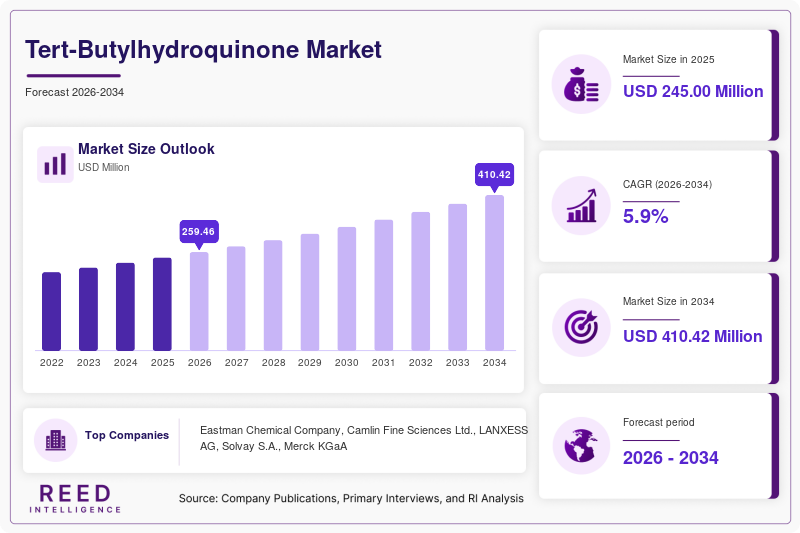
The Tert-Butylhydroquinone Market size is witnessing steady expansion, driven by its widespread use as an antioxidant in food preservation, cosmetics, and industrial applications. In 2025, the global market size is estimated at USD 245 million, rising to approximately USD 258 million in 2026. The market is projected to reach USD 410 million by 2034, growing at a CAGR of 5.9% from 2025 to 2034. This growth trajectory reflects increasing demand across both developed and emerging economies, supported by expanding food processing industries and rising awareness of product shelf-life stability.
One of the primary growth factors is the increasing consumption of processed and packaged foods globally. As consumers adopt fast-paced lifestyles, demand for ready-to-eat products continues to rise, boosting the need for effective preservatives like tert-butylhydroquinone (TBHQ). Additionally, the cosmetics industry is expanding rapidly, especially in Asia Pacific, where TBHQ is used as a stabilizing agent in formulations.
Key Highlights
- Market size projected to reach USD 410 million by 2034
- CAGR of 5.9% during the forecast period (2025–2034)
- Strong demand from food preservation and cosmetics sectors
- Asia Pacific emerging as a key growth region
- Increasing regulatory approvals supporting controlled usage
Market Trends
Rising Adoption in Packaged and Convenience Foods
The increasing demand for convenience foods is shaping the Tert-Butylhydroquinone Market significantly. Consumers are opting for ready-to-eat meals, frozen snacks, and packaged food products due to changing lifestyles and urbanization. TBHQ is widely used in these products to prevent oxidation and extend shelf life. Food manufacturers are focusing on maintaining product quality over extended storage periods, especially in global supply chains. This has led to higher incorporation of antioxidants such as TBHQ. Additionally, emerging economies are witnessing rapid growth in organized retail and food delivery platforms, further boosting the demand for packaged goods and indirectly driving TBHQ consumption across multiple food categories.
Increasing Use in Cosmetic and Personal Care Products
The cosmetics and personal care industry is becoming an important contributor to market growth. TBHQ is used as a stabilizer to prevent oxidation in oils and fats present in cosmetic formulations. With the rising demand for skincare, haircare, and beauty products, particularly in Asia Pacific and Latin America, manufacturers are seeking effective ingredients to maintain product consistency and shelf stability. The trend toward premium and long-lasting formulations has increased the need for antioxidants. Additionally, growing awareness about product safety and durability among consumers has encouraged brands to incorporate ingredients that enhance product lifespan, making TBHQ a valuable component in modern cosmetic formulations.
Market Drivers
Growth in Processed Food Industry
The expansion of the global processed food industry is a major driver for the Tert-Butylhydroquinone Market. Urbanization, rising disposable incomes, and changing dietary preferences have increased the consumption of packaged and ready-to-eat food products. TBHQ is widely used to preserve fats and oils in these products, preventing rancidity and maintaining flavor. Food manufacturers rely on TBHQ to ensure consistent quality across extended distribution networks. Moreover, the growth of international trade in food products necessitates longer shelf life, further boosting demand. As developing countries continue to adopt Western dietary habits, the need for preservatives such as TBHQ is expected to rise steadily.
Expanding Cosmetics and Personal Care Sector
The rapid growth of the cosmetics and personal care sector is another significant driver. TBHQ is used in various formulations to stabilize ingredients and prevent oxidation. The increasing demand for skincare and haircare products, especially among younger populations, is driving the use of such stabilizers. Additionally, the rise of e-commerce platforms has expanded the reach of cosmetic products globally, increasing production volumes. Manufacturers are focusing on maintaining product quality during storage and transportation, further increasing reliance on TBHQ. The trend toward multifunctional and long-lasting products is also contributing to higher usage of antioxidants in formulations.
Market Restraint
Regulatory Concerns and Health Perception Issues
One of the primary restraints affecting the Tert-Butylhydroquinone Market is the growing concern over regulatory limitations and consumer health perceptions. Although TBHQ is approved for use in specific quantities in many countries, excessive consumption has raised concerns among health authorities and consumers. Regulatory agencies impose strict limits on its usage in food products, which can restrict market growth. Additionally, the increasing preference for natural and clean-label ingredients has led some manufacturers to reduce reliance on synthetic antioxidants. This shift is particularly evident in developed markets where consumers are more conscious of ingredient transparency. For example, certain food brands are reformulating products to eliminate synthetic additives, opting for natural alternatives such as rosemary extract. This trend may limit the growth potential of TBHQ in the long term, especially in premium product segments.
Market Opportunities
Growth in Emerging Markets
Emerging markets present significant opportunities for the Tert-Butylhydroquinone Market. Rapid urbanization, population growth, and increasing disposable incomes are driving demand for processed foods and personal care products. Countries in Asia Pacific, Latin America, and parts of Africa are experiencing strong growth in retail infrastructure and food processing industries. This creates a favorable environment for TBHQ usage. Additionally, the expansion of multinational food chains and supermarkets in these regions is boosting demand for packaged products. As consumer awareness about product quality increases, manufacturers are likely to incorporate antioxidants to enhance shelf life, creating new growth avenues for TBHQ suppliers.
Advancements in Industrial Applications
Technological advancements are opening new opportunities for TBHQ in industrial applications. The compound is used as a stabilizer in various chemical processes, including polymer production and fuel stabilization. As industries focus on improving product durability and efficiency, the demand for stabilizing agents is increasing. Research and development activities are exploring new applications of TBHQ in high-performance materials and specialty chemicals. Additionally, the growing emphasis on sustainability and resource efficiency is encouraging the use of additives that enhance product lifespan. These developments are expected to expand the scope of TBHQ beyond traditional applications, contributing to long-term market growth.
Segmental Analysis
By Type
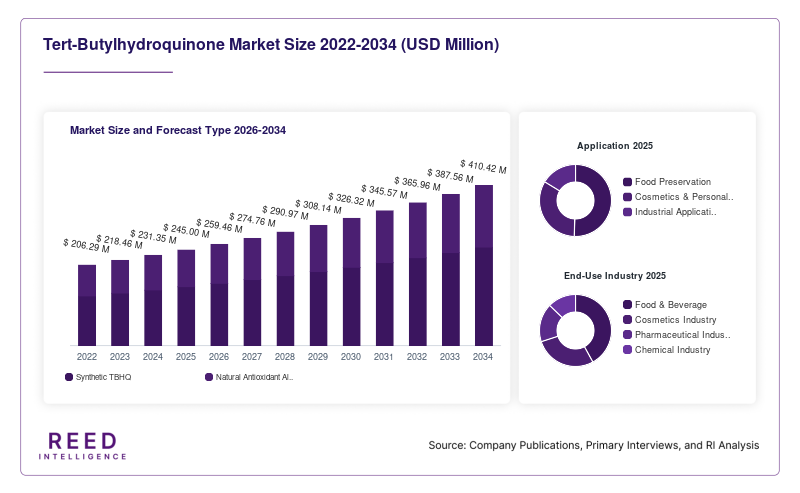
The synthetic TBHQ segment dominated the market in 2024, accounting for approximately 85% of the total share. This dominance is attributed to its cost-effectiveness, high efficiency, and widespread availability. Synthetic TBHQ is extensively used in food preservation due to its strong antioxidant properties, which help prevent oxidation in oils and fats. Manufacturers prefer synthetic variants because they offer consistent performance and are easier to produce at scale. Additionally, the established regulatory approvals for synthetic TBHQ in various regions further support its widespread adoption across multiple industries.
The natural antioxidant alternatives segment is expected to grow at the fastest CAGR of 6.5% during the forecast period. This growth is driven by increasing consumer preference for clean-label and natural ingredients. Although TBHQ itself is synthetic, the rising demand for natural substitutes is influencing market dynamics. Manufacturers are exploring hybrid formulations that combine TBHQ with natural antioxidants to balance performance and consumer expectations. This trend is particularly prominent in premium food and cosmetic products, where ingredient transparency is a key factor influencing purchasing decisions.
By Application
The food preservation segment held the largest market share in 2024, accounting for around 60% of total demand. TBHQ is widely used in edible oils, snacks, and processed foods to extend shelf life and maintain product quality. The growing demand for packaged and convenience foods is a major factor driving this segment. Food manufacturers rely on TBHQ to prevent rancidity and ensure consistent taste and texture. Additionally, the expansion of global food supply chains has increased the need for effective preservatives, further boosting demand in this segment.
The cosmetics and personal care segment is projected to grow at the fastest CAGR of 6.7% during the forecast period. This growth is driven by increasing consumer demand for high-quality and long-lasting products. TBHQ is used in formulations to stabilize ingredients and prevent oxidation, enhancing product durability. The rise of premium beauty products and the expansion of online retail channels are contributing to higher demand. Additionally, the growing focus on product innovation in the cosmetics industry is creating new opportunities for TBHQ applications.
By End-Use Industry
The food and beverage industry dominated the market in 2024, accounting for approximately 65% of total consumption. This dominance is due to the extensive use of TBHQ in preserving fats and oils in processed foods. The industry’s focus on maintaining product quality and extending shelf life is a key factor driving demand. Additionally, the increasing global consumption of packaged foods is supporting growth in this segment. Manufacturers are continuously seeking effective solutions to enhance product stability, making TBHQ a preferred choice.
The pharmaceutical industry is expected to grow at the fastest CAGR of 6.2% during the forecast period. TBHQ is used as a stabilizing agent in certain drug formulations to prevent degradation. The growing demand for pharmaceuticals, particularly in emerging markets, is driving this segment. Additionally, advancements in drug formulation technologies are increasing the use of stabilizers. As the pharmaceutical industry continues to expand, the demand for TBHQ is expected to rise, creating new growth opportunities.
Regional Analysis
North America
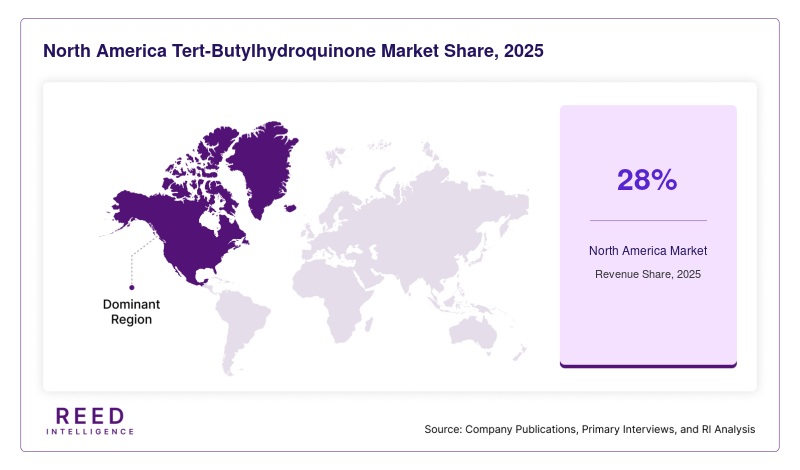
North America accounted for approximately 28% of the Tert-Butylhydroquinone Market share in 2025, with a projected CAGR of 5.2% during the forecast period. The region benefits from a well-established food processing industry and strong demand for packaged foods. The presence of advanced manufacturing infrastructure and strict quality standards supports the use of TBHQ in various applications. Additionally, the cosmetics sector contributes significantly to market demand.
The United States dominates the regional market due to its large consumer base and high consumption of convenience foods. A unique growth factor is the increasing demand for long-shelf-life products in e-commerce food delivery systems. As online grocery platforms expand, manufacturers require effective preservatives to maintain product quality during extended distribution cycles.
Europe
Europe held around 24% market share in 2025, with a CAGR of 4.8% expected through 2034. The region is characterized by stringent regulatory frameworks governing food additives, which influence TBHQ usage. Despite regulatory constraints, the demand for antioxidants remains steady due to the strong presence of food and cosmetic industries.
Germany leads the market in Europe, supported by its advanced food processing sector. A unique growth factor is the emphasis on high-quality and standardized food products. Manufacturers prioritize maintaining consistent product quality, which drives the use of stabilizers like TBHQ within permitted limits.
Asia Pacific
Asia Pacific accounted for approximately 32% of the market share in 2025, making it the largest regional market, with a projected CAGR of 6.8%. Rapid urbanization and population growth are key drivers. The region’s expanding middle class is increasing demand for packaged foods and personal care products.
China dominates the Asia Pacific market due to its large manufacturing base and growing consumer market. A unique growth factor is the rapid expansion of the food delivery ecosystem, which requires extended shelf-life products. This trend is significantly boosting the demand for TBHQ in food preservation.
Middle East & Africa
The Middle East & Africa region held about 8% market share in 2025, with a CAGR of 5.5%. The market is driven by increasing urbanization and the growth of the food processing sector. Rising investments in retail infrastructure are supporting market expansion.
Saudi Arabia is a key contributor in this region. A unique growth factor is the increasing demand for imported and packaged food products. As reliance on imported goods grows, the need for preservatives to maintain product quality during transportation is increasing.
Latin America
Latin America accounted for around 8% of the market share in 2025, with a projected CAGR of 5.7%. The region is experiencing growth in food processing and retail sectors. Increasing consumer awareness about product quality is driving demand for antioxidants.
Brazil leads the market in Latin America. A unique growth factor is the expansion of domestic food manufacturing industries. As local production increases, manufacturers are adopting preservatives like TBHQ to enhance product stability and competitiveness.
Competitive Landscape
The Tert-Butylhydroquinone Market is moderately consolidated, with several key players focusing on product quality, innovation, and strategic partnerships. Leading companies are investing in research and development to improve product performance and expand application areas. The market leader, Eastman Chemical Company, maintains a strong position due to its extensive product portfolio and global distribution network. The company recently expanded its production capacity to meet rising demand from the food and cosmetics sectors.
Other major players are focusing on regional expansion and collaborations with end-use industries. Companies are also exploring sustainable production methods to align with environmental regulations. Competitive strategies include mergers, acquisitions, and product innovations aimed at enhancing market presence. The increasing demand for high-quality antioxidants is encouraging companies to invest in advanced manufacturing technologies and quality assurance processes.
Key Players List
- Eastman Chemical Company
- Camlin Fine Sciences Ltd.
- LANXESS AG
- Solvay S.A.
- Merck KGaA
- Tokyo Chemical Industry Co., Ltd.
- Milestone Preservatives Pvt. Ltd.
- Oxiris Chemicals S.A.
- Jiangsu Zhongdan Group Co., Ltd.
- Yasho Industries Ltd.
- Haihang Industry Co., Ltd.
- Anhui Haihua Chemical Technology Group
- Shandong Linyi Sunny Wealth Chemicals
- Spectrum Chemical Manufacturing Corp.
- Parchem Fine & Specialty Chemicals
Recent Developments
- In 2024, Eastman Chemical Company expanded its antioxidant production facility to meet increasing global demand.
- In 2023, Camlin Fine Sciences introduced an improved TBHQ formulation with enhanced stability for food applications.
- In 2024, LANXESS AG announced a strategic partnership with a food processing company to develop advanced preservation solutions.
Tert-Butylhydroquinone Market Segments
Type
- Synthetic TBHQ
- Natural Antioxidant Alternatives
Application
- Food Preservation
- Cosmetics & Personal Care
- Industrial Applications
End-Use Industry
- Food & Beverage
- Cosmetics Industry
- Pharmaceutical Industry
- Chemical Industry
By Region
- North America
- Europe
- APAC
- Middle East and Africa
- LATAM