Thyroid Eye Disease Market Size, Share & Demand Report By Therapy Type (Biologics, Small Molecule Drugs, Corticosteroids), By Treatment Approach (Pharmacological Therapy, Combination Therapy, Surgical Intervention), By Distribution Channel (Hospital Pharmacies, Retail Pharmacies, Online Pharmacies), By Region & Segment Forecasts, 2025–2033
USD 3950
Market Overview
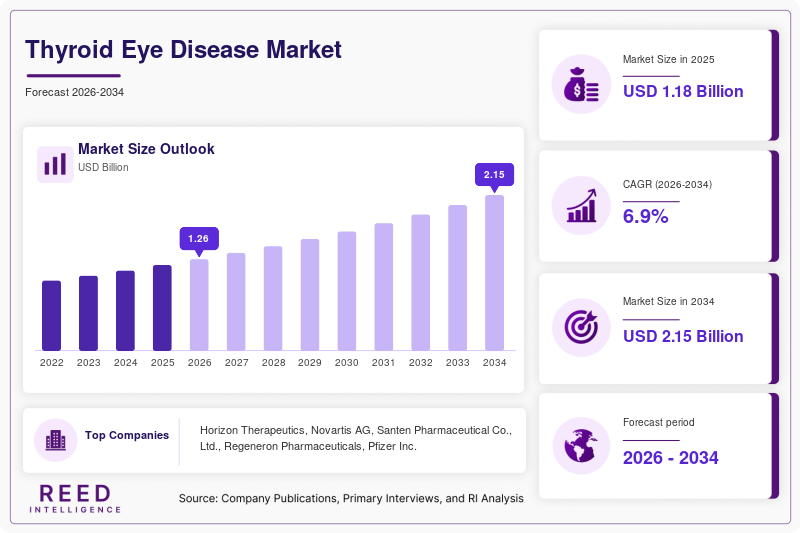
The Thyroid Eye Disease Market size was valued at USD 1.18 billion in 2024 and is projected to reach USD 2.12 billion by 2033, growing at a CAGR of 6.9% from 2025 to 2034. The market growth is primarily driven by increasing awareness of thyroid eye disease (TED), expanding prevalence of autoimmune disorders, and rising adoption of targeted therapies such as monoclonal antibodies and biologics. Advancements in ophthalmology, availability of innovative treatment options, and growing investment in clinical trials for TED therapeutics are also supporting the market expansion.
One global factor contributing to market growth is the rising prevalence of thyroid disorders, including Graves’ disease, which is a major precursor for thyroid eye disease. As populations age and autoimmune diseases become more common, the demand for effective therapies and early interventions rises. Furthermore, increased accessibility to ophthalmology care and improved diagnostic capabilities in emerging markets have accelerated detection and treatment, thereby expanding the overall market size.
Key Highlights
- North America dominated the market with 42.1% share in 2025, while Asia Pacific is projected to record the fastest CAGR of 7.8% during 2025–2034.
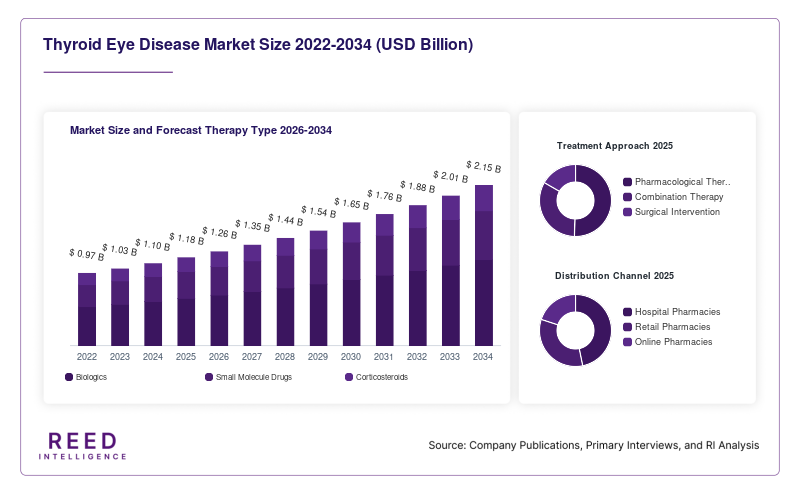
- By Therapy Type, Biologics held the largest share in 2024, while Small Molecule Drugs will grow the fastest at a CAGR of 7.5%.
- By Treatment Approach, Pharmacological Therapy led the market in 2024, while Combination Therapy is expected to register the fastest growth at 7.6% CAGR.
- United States was the dominant country with market values of USD 495 million in 2024 and USD 520 million in 2025.
Market Trends
Adoption of Biologics and Monoclonal Antibodies
The Thyroid Eye Disease Marketis witnessing increasing adoption of biologics, particularly monoclonal antibodies, as a preferred therapeutic approach. These treatments provide targeted mechanisms to reduce inflammation, orbital tissue expansion, and ocular proptosis associated with TED. The development of precision therapies has shifted the market from conventional corticosteroids to biologics, enhancing patient outcomes and market expansion.
Integration of Tele-Ophthalmology
Telemedicine platforms are increasingly being integrated into thyroid eye disease management. Remote diagnosis, patient monitoring, and virtual consultations enable early detection and continuous follow-up, particularly in regions with limited access to specialized care. Tele-ophthalmology adoption improves treatment adherence and facilitates timely intervention, which drives market growth.
Market Drivers
Rising Prevalence of Autoimmune Disorders
The growing prevalence of autoimmune disorders such as Graves’ disease is a primary driver of the Thyroid Eye Disease Market size. As the incidence of thyroid dysfunction increases globally, associated ophthalmic complications like TED become more common, driving demand for effective therapies.
Advancements in Ophthalmic Therapeutics
Technological and pharmaceutical advancements, including novel biologics and small molecule therapies, support market expansion. Innovative therapies improve treatment efficacy and reduce side effects, increasing patient adoption. Pharmaceutical companies are investing heavily in R&D to develop targeted treatments, fueling growth.
Market Restraint
High Cost of Treatment
A major restraint in the Thyroid Eye Disease Marketis the high cost associated with biologics and advanced therapies. Patients in low- and middle-income countries may face accessibility challenges due to limited insurance coverage or high out-of-pocket expenses. High costs may slow market penetration and restrict adoption in cost-sensitive regions.
Market Opportunities
Emerging Markets Expansion
Emerging regions such as Asia Pacific and Latin America provide significant opportunities for market expansion due to rising healthcare awareness, improving access to ophthalmology care, and increasing government initiatives for rare diseases. Targeted marketing and clinical education programs can drive adoption.
Development of Combination Therapies
Combination therapies integrating biologics with corticosteroids or immunomodulators are gaining attention for improving patient outcomes. Ongoing clinical trials and research programs focusing on combination approaches present opportunities for pharmaceutical companies to expand product portfolios and capture unmet clinical needs.
Segmental Analysis
By Therapy Type
Biologics dominated the Thyroid Eye Disease Market sharein 2024, accounting for 48.6% of revenue. These therapies target disease-specific immune pathways, offering higher efficacy with fewer systemic side effects.
Small molecule drugs will grow at a CAGR of 7.5% during 2025–2034. Growth is driven by improved formulation techniques, oral administration convenience, and ongoing clinical trials demonstrating efficacy in early-stage TED.
By Treatment Approach
Pharmacological therapy accounted for 55.2% share in 2024, reflecting widespread use of corticosteroids and biologics for TED symptom management.
Combination therapy is expected to grow at 7.6% CAGR. Combining biologics with immunosuppressive agents or corticosteroids enhances clinical outcomes and reduces recurrence rates, making this approach increasingly preferred.
By Distribution Channel
Hospital pharmacies dominated with 62.1% share in 2024. The structured healthcare delivery system ensures access to prescription-only TED therapeutics.
Online pharmacies are projected to grow at 7.2% CAGR. Increased e-pharmacy adoption, particularly in urban areas and during pandemic-induced shifts, improves patient access to TED medications, supporting market expansion.
Regional Analysis
North America
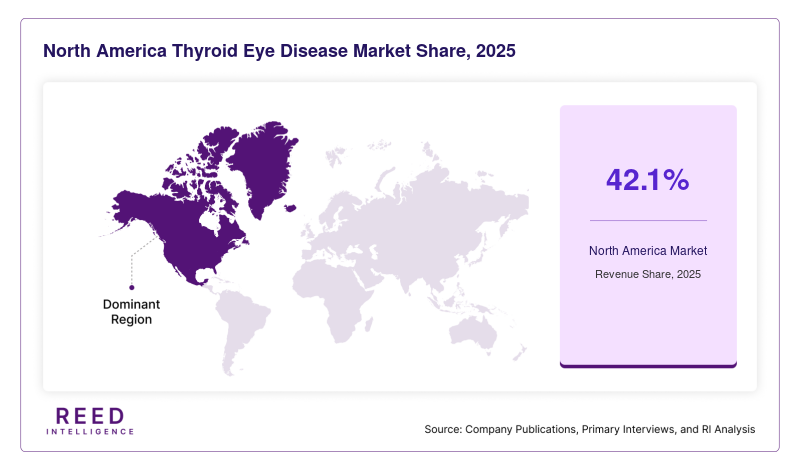
North America accounted for 42.1% of the global Thyroid Eye Disease Market share in 2025. The region exhibited steady growth due to a well-established healthcare infrastructure, access to advanced therapies, and high awareness levels among patients and clinicians. The market will expand at a CAGR of 6.2% during 2025–2034.
The United Statesdominated North America. Extensive research in autoimmune disorders, increasing FDA approvals for biologics, and growing patient advocacy initiatives contribute to strong market growth. Government programs supporting rare disease treatment accessibility further enhance adoption of TED therapeutics.
Europe
Europe held 25.4% share of the market in 2025. Growth is supported by established healthcare systems, reimbursement frameworks, and strong clinical research initiatives. The market will grow at a CAGR of 6.1% through 2034.
Germanywas the dominant country in Europe. Increasing R&D investments in biologic therapies and active participation in clinical trials for TED drugs drive regional adoption. Availability of specialized ophthalmology centers facilitates early diagnosis and treatment.
Asia Pacific
Asia Pacific represented 18.9% of the global market in 2025. Rapid healthcare infrastructure development, increasing thyroid disorder prevalence, and government healthcare programs support growth. The market is projected to grow at a CAGR of 7.8% during 2025–2034.
Chinadominated the region due to expanding healthcare access, growing awareness campaigns, and increasing number of endocrinology and ophthalmology specialists. Rising clinical trial activity also contributes to higher adoption of advanced therapies.
Middle East & Africa
Middle East & Africa accounted for 6.2% share in 2025. Growth was moderate due to limited access to specialized care but is expected to expand at a CAGR of 6.0% through 2034.
Saudi Arabialed the regional market. Government investment in healthcare modernization, rare disease programs, and import of biologics contributes to growth. Awareness campaigns and screening programs increase patient detection rates.
Latin America
Latin America held 7.4% share of the market in 2025. The market experienced gradual growth with increasing availability of biologics and emerging telemedicine platforms. Forecasted CAGR is 6.5% during 2025–2034.
Brazilwas the dominant country. Expanding access to specialized ophthalmic care, increased health insurance coverage, and government initiatives for rare diseases contribute to market adoption.
Competitive Landscape
The Thyroid Eye Disease Marketis moderately consolidated, with major players focusing on R&D and strategic partnerships.Horizon Therapeuticsis a leading company, recently expanding its clinical portfolio with new biologic therapy approvals for TED. Other key players including Novartis AG, Santen Pharmaceutical Co., Ltd., Regeneron Pharmaceuticals, and Pfizer focus on innovation, licensing agreements, and market expansion strategies to strengthen global presence.
Key Players List
- Horizon Therapeutics
- Novartis AG
- Santen Pharmaceutical Co., Ltd.
- Regeneron Pharmaceuticals
- Pfizer Inc.
- AbbVie Inc.
- Eli Lilly and Company
- Roche Holding AG
- Takeda Pharmaceutical Company Limited
- Amgen Inc.
- Bristol-Myers Squibb
- Boehringer Ingelheim GmbH
- Allergan (AbbVie)
- Astellas Pharma Inc.
- Mitsubishi Tanabe Pharma Corporation
Recent Developments
- 2024: Horizon Therapeutics received regulatory approval for new biologic therapy targeting thyroid eye disease in the U.S.
- 2023: Regeneron Pharmaceuticals expanded global distribution of TED biologics to European markets.
- 2023: Novartis AG initiated phase III trials for combination therapies in thyroid eye disease.
- 2022: Pfizer launched patient awareness programs and educational campaigns on TED diagnosis and treatment.
- 2022: Santen Pharmaceutical expanded its ophthalmology product portfolio to include novel biologics for autoimmune eye disorders.
Thyroid Eye Disease Market Segments
Therapy Type
- Biologics
- Small Molecule Drugs
- Corticosteroids
Treatment Approach
- Pharmacological Therapy
- Combination Therapy
- Surgical Intervention
Distribution Channel
- Hospital Pharmacies
- Retail Pharmacies
- Online Pharmacies
By Region
- North America
- Europe
- APAC
- Middle East and Africa
- LATAM