Tipping Foil Market Size, Share Demand Report By Type (Paper-Based Tipping Foil, Plastic-Based Tipping Foil), By Application (Tobacco Packaging, Labeling & Decorative Packaging), By End-Use Industry (Tobacco Industry, Cosmetics & Personal Care, Food & Beverage, Pharmaceuticals), By Region & Segment Forecasts, 2025–2034
USD 3950
Market Overview
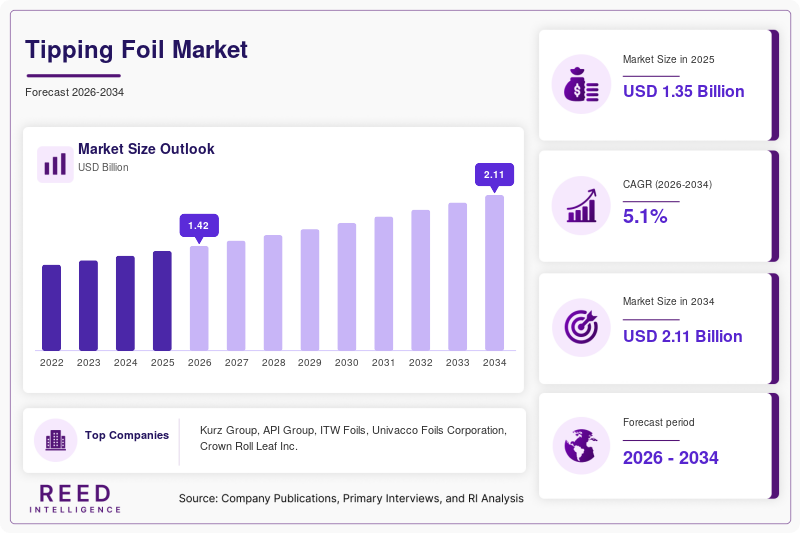
The global Tipping Foil Market size is estimated at USD 1.35 billion, and it is projected to reach approximately USD 1.42 billion in 2026. Over the forecast period from 2025 to 2034, the market is expected to grow at a compound annual growth rate (CAGR) of 5.1%, reaching nearly USD 2.05 billion by 2034. This growth reflects rising demand for decorative and functional foils used in cigarette filters, branding applications, and specialty packaging.
One of the primary growth factors is the sustained demand in the global tobacco industry, particularly in emerging economies where cigarette consumption remains stable. Tipping foils are widely used for branding and aesthetic enhancement of cigarette filters, which supports consistent product demand. Secondly, the increasing adoption of advanced printing and metallization technologies has improved foil quality, durability, and customization capabilities, thereby expanding its application scope. Thirdly, the growth of premium packaging across industries such as cosmetics, confectionery, and luxury goods is contributing to rising demand for visually appealing foil materials.
Key Highlights
- Asia Pacific dominated the Tipping Foil Market, accounting for approximately 34% share in 2025, driven by high tobacco consumption and expanding packaging industries.
- Asia Pacific is also the fastest-growing region, projected to register a CAGR of 6.2% (2025–2034) due to rapid industrialization and rising demand for premium packaging.
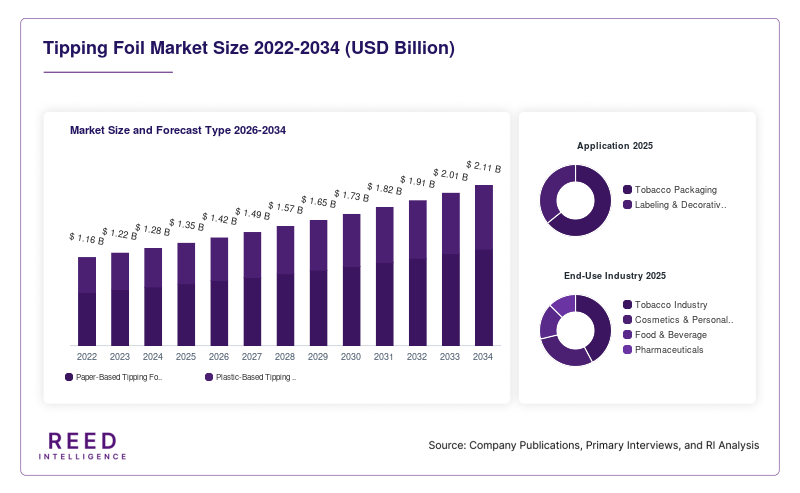
- By type, paper-based tipping foil held the dominant share of 58% in 2024, owing to its cost-effectiveness and strong adoption in cigarette filter applications.
- By application, tobacco packaging led the market with a 65% revenue share in 2024, supported by consistent demand from cigarette manufacturing.
- By end-use industry, the tobacco segment accounted for 62% of the market share in 2024, maintaining its position as the primary consumer of tipping foils.
- Plastic-based tipping foil and decorative packaging segments are the fastest growing, with CAGRs of 6.5% and 6.8% respectively, driven by demand for durability and premium visual appeal.
Market Trends
Shift Toward Sustainable and Eco-Friendly Foils
The tipping foil market is witnessing a growing shift toward sustainable and eco-friendly materials. Manufacturers are increasingly developing recyclable and biodegradable foil products to meet environmental standards and regulatory requirements. This trend is particularly prominent in Europe and North America, where strict environmental regulations are encouraging the adoption of greener materials. Companies are investing in water-based coatings and solvent-free adhesives to reduce environmental impact. In addition, brand owners are seeking packaging solutions that align with sustainability goals, which is influencing purchasing decisions. This shift is expected to reshape product development strategies and create long-term opportunities for innovation in material science.
Increasing Adoption of Advanced Printing Technologies
Another key trend in the tipping foil market is the adoption of advanced printing technologies such as digital printing and holographic effects. These technologies enable manufacturers to produce high-quality, customized designs with enhanced visual appeal. The use of holographic foils and intricate patterns is becoming more common in premium cigarette brands and luxury packaging. Digital printing allows for shorter production runs and faster turnaround times, which benefits small and medium-sized businesses. This trend is also supporting brand differentiation and anti-counterfeiting measures, as unique designs can be integrated into foil products. As technology continues to evolve, it is expected to drive further innovation and efficiency in the market.
Market Drivers
Strong Demand from the Tobacco Industry
The tipping foil market is significantly driven by its extensive use in the tobacco industry, particularly in cigarette filter applications. Tipping foil enhances the aesthetic appeal and branding of cigarette products, making it a critical component in product differentiation. Despite regulatory pressures, the global tobacco market continues to generate steady demand, especially in regions such as Asia Pacific and parts of Latin America. Manufacturers are focusing on innovative designs and premium finishes to attract consumers. Additionally, the need for compliance with packaging regulations, including health warnings and labeling requirements, is encouraging the use of high-quality foils. This consistent demand base provides stability to the tipping foil market.
Growth in Premium Packaging Applications
The expansion of premium packaging across industries such as cosmetics, food, and luxury goods is another key driver. Tipping foils are increasingly used to enhance the visual appeal of packaging and create a premium look. Brands are investing in high-quality packaging to improve customer experience and strengthen brand identity. The rise of e-commerce has also increased the importance of packaging aesthetics, as visually appealing products attract more consumers online. Furthermore, the use of metallic and decorative foils in labeling and packaging is gaining popularity, which is driving demand. This trend is expected to continue as companies prioritize differentiation in competitive markets.
Market Restraint
Regulatory Pressure on Tobacco Products
One of the primary restraints affecting the tipping foil market is the increasing regulatory pressure on tobacco products. Governments across the globe are implementing strict regulations on cigarette packaging, including plain packaging laws and restrictions on branding elements. These regulations limit the use of decorative foils, thereby reducing demand in the tobacco segment. For instance, several countries have mandated standardized packaging with minimal branding, which directly impacts the use of tipping foils. This creates uncertainty for manufacturers heavily reliant on the tobacco industry. Additionally, declining smoking rates in developed regions are further affecting market growth. Companies are responding by diversifying into non-tobacco applications, but the transition requires investment and time. The regulatory landscape remains a significant challenge, influencing market dynamics and strategic decisions.
Market Opportunities
Expansion into Non-Tobacco Applications
The tipping foil market presents significant opportunities through diversification into non-tobacco applications. Industries such as cosmetics, pharmaceuticals, and food packaging are increasingly adopting decorative foils to enhance product presentation. This shift reduces dependency on the tobacco sector and opens new revenue streams for manufacturers. The demand for premium packaging in these industries is growing, driven by consumer preferences for aesthetically appealing products. Additionally, the use of foils in labeling and branding provides functional benefits such as durability and tamper resistance. Companies that invest in product innovation and customization capabilities are well-positioned to capitalize on this opportunity.
Technological Advancements in Foil Manufacturing
Advancements in manufacturing technologies are creating new opportunities in the tipping foil market. Innovations in coating, printing, and metallization processes are enabling the production of high-quality foils with improved performance characteristics. These technologies allow for greater design flexibility, enhanced durability, and reduced production costs. Automation and digitalization are also improving operational efficiency and scalability. Furthermore, the development of eco-friendly materials is expanding the market potential, particularly in regions with stringent environmental regulations. Companies that adopt advanced technologies can gain a competitive edge and meet evolving customer demands effectively.
Segmental Analysis
By Type
The paper-based tipping foil segment dominated the market in 2024, accounting for approximately 58% of the total share. This dominance is attributed to its widespread use in cigarette filter applications due to its flexibility, printability, and cost-effectiveness. Paper-based foils are preferred for their ability to support high-quality printing and branding, which is essential for product differentiation. Additionally, these foils are compatible with various coating and metallization processes, making them suitable for diverse applications. The segment also benefits from established manufacturing processes and strong supply chains, ensuring consistent availability and quality.
Plastic-based tipping foils are emerging as the fastest-growing subsegment, with a projected CAGR of 6.5% during the forecast period. The growth is driven by their superior durability, moisture resistance, and enhanced visual appeal. These foils are increasingly used in premium packaging applications where performance and aesthetics are critical. Advances in polymer technology are enabling the development of lightweight and eco-friendly plastic foils, further supporting market growth. The rising demand for high-performance materials in packaging and labeling is expected to drive this segment’s expansion.
By Application
The tobacco packaging segment held the largest share in 2024, contributing nearly 65% of the market revenue. This segment’s dominance is due to the extensive use of tipping foils in cigarette filters for branding and decorative purposes. The consistent demand from the tobacco industry ensures stable market growth. Additionally, the need for compliance with packaging regulations and labeling requirements drives the use of high-quality foils. Manufacturers are focusing on innovative designs and finishes to enhance product appeal and maintain competitiveness in the market.
The labeling and decorative packaging segment is expected to grow at the fastest CAGR of 6.8%. This growth is driven by increasing demand for premium packaging across industries such as cosmetics, food, and pharmaceuticals. The use of tipping foils in labeling enhances product visibility and brand recognition. Technological advancements in printing and coating are enabling the production of customized and high-quality designs. As consumer preferences shift toward aesthetically appealing products, this segment is expected to witness significant growth.
By End-Use Industry
The tobacco industry remained the dominant end-use segment in 2024, accounting for approximately 62% of the market share. The extensive use of tipping foils in cigarette manufacturing supports this dominance. The industry’s focus on branding and product differentiation drives demand for high-quality foils. Despite regulatory challenges, the steady consumption of tobacco products in emerging markets ensures continued demand. Manufacturers are investing in innovative designs to meet evolving consumer preferences.
The cosmetics and personal care industry is projected to be the fastest-growing segment, with a CAGR of 7.1%. The growth is driven by increasing demand for premium packaging solutions that enhance product appeal. Tipping foils are used to create visually attractive packaging that aligns with brand identity. The rise of e-commerce and changing consumer preferences are further supporting this segment’s growth. Companies are focusing on sustainable and innovative packaging solutions to meet market demands.
Regional Analysis
North America
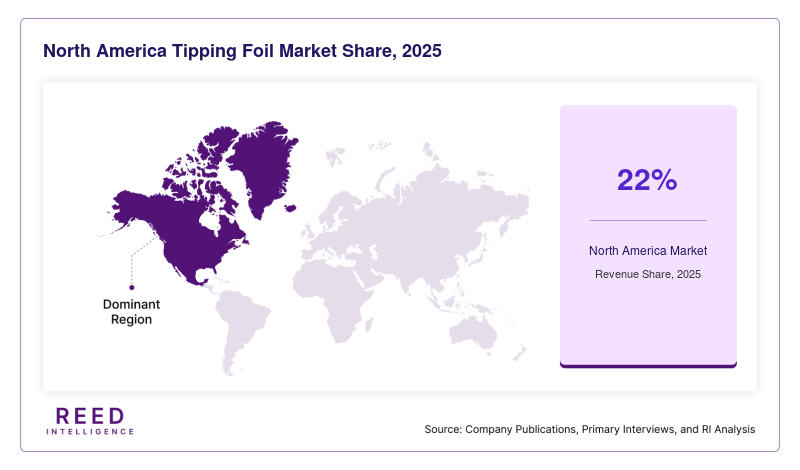
North America accounted for approximately 22% of the global tipping foil market share in 2025, with a projected CAGR of 4.3% during the forecast period. The region’s growth is driven by demand for premium packaging and advanced printing technologies. The presence of established manufacturers and strong distribution networks supports market expansion. Additionally, increasing consumer preference for high-quality packaging is contributing to steady demand across various industries.
The United States dominates the North American market, supported by its well-developed packaging industry. A key growth factor is the increasing use of tipping foils in luxury product packaging, particularly in cosmetics and personal care. The demand for visually appealing and durable packaging solutions is driving innovation and adoption of advanced foil technologies.
Europe
Europe held a 28% market share in 2025 and is expected to grow at a CAGR of 4.8%. The region benefits from strong demand in both tobacco and non-tobacco applications. Strict environmental regulations are encouraging the adoption of sustainable foil materials. The presence of leading manufacturers and advanced production capabilities further supports market growth.
Germany is the dominant country in the European tipping foil market. A unique growth factor is the strong emphasis on sustainability and eco-friendly packaging solutions. Manufacturers are investing in recyclable and biodegradable foils to comply with regulations and meet consumer expectations.
Asia Pacific
Asia Pacific led the global market with a 34% share in 2025 and is projected to grow at the highest CAGR of 6.2%. The region’s growth is driven by high tobacco consumption and expanding packaging industries. Rapid industrialization and urbanization are also contributing to increased demand for tipping foils.
China is the dominant country in the Asia Pacific region. A key growth factor is the large-scale production and consumption of cigarettes, which drives demand for tipping foils. Additionally, the growing middle-class population is increasing demand for premium packaging in various industries.
Middle East & Africa
The Middle East & Africa region accounted for 8% of the market share in 2025 and is expected to grow at a CAGR of 4.5%. The market is supported by moderate demand from the tobacco sector and emerging packaging industries. Economic development and increasing consumer spending are contributing to gradual market expansion.
The United Arab Emirates is a key market within the region. A unique growth factor is the rising demand for luxury packaging in the cosmetics and retail sectors. The region’s focus on premium products is driving the adoption of decorative foils.
Latin America
Latin America held an 8% share in 2025 and is projected to grow at a CAGR of 4.7%. The region’s growth is driven by steady demand in the tobacco industry and increasing adoption of decorative packaging. Economic recovery and industrial growth are supporting market expansion.
Brazil dominates the Latin American market. A key growth factor is the stable cigarette consumption combined with growing demand for attractive packaging solutions. The expansion of local manufacturing capabilities is also contributing to market growth.
Competitive Landscape
The tipping foil market is moderately fragmented, with several global and regional players competing based on product quality, innovation, and pricing strategies. Leading companies are focusing on expanding their product portfolios and investing in advanced manufacturing technologies. Strategic collaborations and mergers are also common to strengthen market presence.
A leading player in the market is Kurz Group, known for its extensive range of decorative and functional foils. The company has recently introduced eco-friendly foil solutions to address sustainability concerns. Other key players are focusing on expanding their production capacities and enhancing their distribution networks. Innovation in printing and coating technologies remains a critical factor for maintaining competitiveness.
Key Players
- Kurz Group
- API Group
- ITW Foils
- Univacco Foils Corporation
- Crown Roll Leaf Inc.
- Foil Stamp Solutions
- CFC International
- Zhejiang Zhongjia Technology
- Shanghai Yongtai Foil
- Henan Foils Co. Ltd.
- Katani Ltd.
- Nakai Industrial Co. Ltd.
- Oike & Co. Ltd.
- Kolon Industries
- Dunmore Corporation
Recent Developments
- In 2024, a major manufacturer launched a new range of recyclable tipping foils to meet sustainability requirements.
- In 2025, a leading company expanded its production facility in Asia Pacific to cater to growing regional demand.
- In 2025, a strategic partnership was formed between two key players to develop advanced holographic foil technologies for premium packaging applications.
Tipping Foil Market Segments
Type
- Paper-Based Tipping Foil
- Plastic-Based Tipping Foil
Application
- Tobacco Packaging
- Labeling & Decorative Packaging
End-Use Industry
- Tobacco Industry
- Cosmetics & Personal Care
- Food & Beverage
- Pharmaceuticals
By Region
- North America
- Europe
- APAC
- Middle East and Africa
- LATAM