Toltrazuril Market Size, Share & Demand Report By Product Type (Toltrazuril Solution, Toltrazuril Powder, Toltrazuril Suspension), By Application (Poultry, Swine, Cattle, Other Livestock), By Distribution Channel (Veterinary Hospitals & Clinics, Retail Veterinary Pharmacies, Online Veterinary Supply Platforms), By Region & Segment Forecasts, 2025–2033
USD 3950
Market Overview
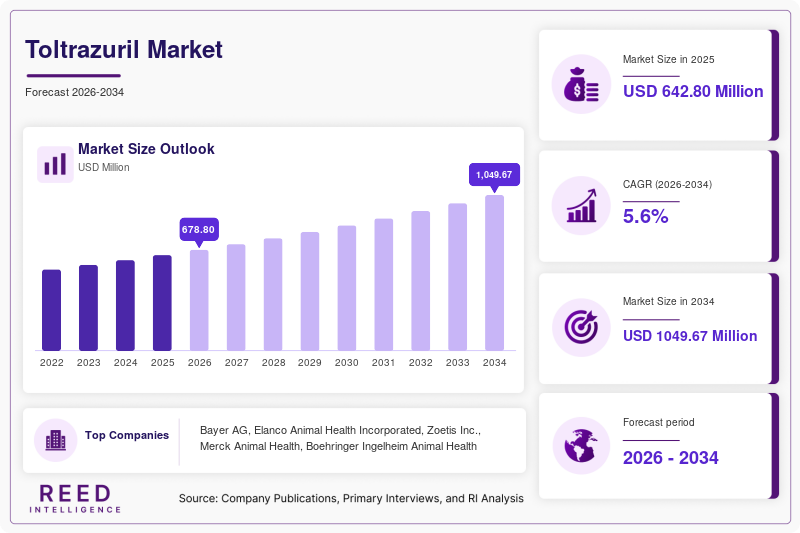
The global Toltrazuril Market size was valued at USD 642.8 million in 2025 and is projected to reach USD 1.05 billion by 2033, registering a CAGR of 5.6% during the forecast period (2025–2034). The market growth reflects the expanding demand for veterinary anticoccidial drugs used to control coccidiosis in livestock and poultry production. Toltrazuril, a triazinone derivative widely used in veterinary medicine, plays a critical role in improving animal health, enhancing feed efficiency, and reducing mortality in poultry, swine, and cattle farming operations.
A major global factor supporting the growth of the Toltrazuril Markethas been the rising global consumption of animal protein. As populations expand and incomes rise, particularly in emerging economies, demand for poultry meat, eggs, and livestock products has increased significantly. This shift has encouraged livestock producers to adopt preventive animal health management practices, including the use of anticoccidial drugs such as toltrazuril to control parasitic infections. Additionally, the modernization of commercial farming practices and improved veterinary healthcare infrastructure have contributed to wider adoption of veterinary pharmaceuticals.
Key Highlights
- North America dominated the Toltrazuril Market with a 34.2% share in 2025, while Asia Pacific is projected to register the fastest CAGR of 6.8% during 2025–2034.
- By product type, Toltrazuril Solution held the leading share of 52.6% in 2025, whereas Toltrazuril Powder is projected to grow fastest at a CAGR of 6.4%.
- By application, Poultry accounted for the largest share of 47.3% in 2025, while swine applications are expected to expand at a CAGR of 6.1%.
- The United States remained the dominant country, with the market valued at USD 162.4 million in 2025 and projected to reach USD 170.9 million in 2026.
Market Trends
Increasing Integration of Preventive Veterinary Care
One of the major trends influencing the Toltrazuril Marketis the growing adoption of preventive veterinary healthcare programs in commercial livestock operations. Livestock producers are shifting from reactive treatment to preventive disease management strategies to minimize production losses and maintain herd health. Toltrazuril-based anticoccidial medications are increasingly incorporated into regular treatment protocols for poultry and swine farms. This shift has encouraged veterinary pharmaceutical companies to develop easy-to-administer formulations, including oral solutions and feed additives, that improve dosing efficiency in large-scale farms.
Expansion of Veterinary Pharmaceutical Manufacturing in Emerging Economies
Another notable trend shaping the Toltrazuril Marketis the expansion of veterinary pharmaceutical manufacturing facilities in emerging markets such as China, India, and Brazil. Local manufacturers are increasing production capacity to meet rising regional demand for cost-effective veterinary drugs. This trend has improved product availability and reduced supply chain constraints in developing regions. In addition, partnerships between global pharmaceutical companies and regional distributors are supporting market penetration in rural livestock farming communities.
Market Drivers
Growth of Commercial Poultry and Livestock Farming
The expansion of commercial livestock farming has been a primary driver of the Toltrazuril Market. Large-scale poultry and swine production systems require effective disease management solutions to prevent economic losses caused by parasitic infections. Coccidiosis remains one of the most common diseases affecting poultry farms worldwide, leading to reduced weight gain and productivity. Toltrazuril is widely used due to its high efficacy against multiple life stages of coccidia parasites. As global meat and egg production continues to grow, demand for anticoccidial drugs is expected to remain strong.
Increasing Awareness of Animal Health Management
Growing awareness among farmers regarding the economic benefits of proper animal health management has also supported market expansion. Veterinary professionals and agricultural organizations increasingly emphasize the importance of disease prevention to improve farm productivity. Toltrazuril products are frequently recommended in veterinary treatment protocols due to their reliable efficacy and ease of administration. Improved access to veterinary services in developing regions has further contributed to the rising adoption of anticoccidial drugs.
Market Restraint
Regulatory Limitations and Drug Residue Concerns
Despite steady growth, the Toltrazuril Marketfaces certain regulatory challenges. Veterinary drug authorities in several regions have introduced strict guidelines regarding drug residues in animal-derived food products such as meat, milk, and eggs. These regulations require strict compliance with withdrawal periods and dosage limits for toltrazuril usage. In addition, concerns related to antimicrobial resistance and excessive pharmaceutical use in livestock production have encouraged regulators to closely monitor veterinary drug applications. These regulatory constraints can delay product approvals and limit the introduction of new toltrazuril formulations in some markets.
Market Opportunities
Expansion of Veterinary Healthcare Infrastructure in Emerging Economies
The development of veterinary healthcare infrastructure in emerging markets presents a significant opportunity for the Toltrazuril Market. Governments and agricultural agencies are investing in veterinary clinics, diagnostic services, and livestock disease monitoring systems. These initiatives support improved access to veterinary pharmaceuticals for small and medium-scale livestock farmers. As veterinary service networks expand, demand for anticoccidial medications such as toltrazuril is expected to grow.
Development of Combination Anticoccidial Formulations
Another emerging opportunity lies in the development of combination veterinary drugs that integrate toltrazuril with complementary therapeutic compounds. Pharmaceutical manufacturers are increasingly exploring formulations that combine anticoccidial agents with vitamins, immune-support additives, or antiparasitic drugs. Such combination products provide broader disease control and improved animal health outcomes. These innovations could create new product categories within the Toltrazuril Marketand enhance adoption across diversified livestock sectors.
Segmental Analysis
By Product Type
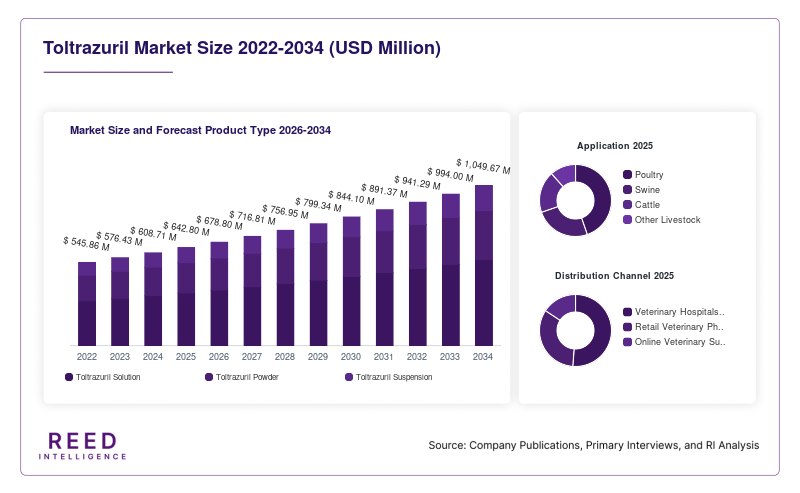
Toltrazuril products are commonly segmented into solution, powder, and suspension formulations. Among these, Toltrazuril Solution dominated the Toltrazuril Market with a share of 52.6% in 2025. Oral solution formulations are widely used in poultry and swine farms because they can be easily administered through drinking water systems. This method allows livestock producers to treat large groups of animals simultaneously, improving treatment efficiency and reducing labor requirements. Veterinary practitioners also prefer liquid formulations for their consistent dosage delivery and rapid absorption.
The Toltrazuril Powdersegment is projected to register the fastest growth, expanding at a CAGR of 6.4% during the forecast period. Powder formulations are increasingly incorporated into medicated feed preparations used in commercial livestock operations. These products provide a convenient solution for farms that utilize automated feed mixing systems. As feed-based medication strategies become more common in large-scale poultry farms, powder-based toltrazuril formulations are expected to gain wider adoption.
By Application
Based on application, the Toltrazuril Marketincludes poultry, swine, cattle, and other livestock. The poultry segment held the largest share of 47.3% in 2025. Poultry birds are highly susceptible to coccidiosis infections, which can cause significant economic losses in commercial farms. As a result, anticoccidial drugs such as toltrazuril are commonly used in poultry production systems. Many poultry farms administer preventive treatments to young chicks to reduce the risk of infection during early growth stages.
The swine segmentis expected to record the fastest CAGR of 6.1% between 2025 and 2034. Swine farming operations increasingly emphasize early disease prevention to improve piglet survival rates and growth performance. Toltrazuril treatments are often used to control coccidiosis infections in piglets, particularly in intensive farming environments. As swine production expands in emerging economies, demand for targeted anticoccidial treatments in pig farming is expected to increase.
By Distribution Channel
The Toltrazuril Marketis also segmented by veterinary hospitals and clinics, retail veterinary pharmacies, and online veterinary supply platforms. Among these, veterinary hospitals and clinics accounted for the largest share of 45.1% in 2025. Veterinary professionals frequently prescribe toltrazuril medications during routine animal health consultations and disease prevention programs. The credibility and expertise of veterinary practitioners encourage livestock producers to obtain medications through clinical channels.
The online veterinary supply segmentis projected to grow at the fastest CAGR of 6.6% during the forecast period. Digital platforms that specialize in veterinary pharmaceuticals have expanded significantly in recent years. These platforms allow farmers to purchase medications conveniently while accessing product information and dosage guidelines. The growth of e-commerce in agricultural supply chains is expected to strengthen the role of online distribution channels in the Toltrazuril Market.
Regional Analysis
North America
North America accounted for 34.2% of the global Toltrazuril Market share in 2025. The region benefited from a well-established veterinary pharmaceutical industry and advanced livestock management systems. During the forecast period from 2025 to 2034, the regional market is expected to grow at a CAGR of 5.1%. Commercial poultry and swine farming operations in the United States and Canada widely utilize anticoccidial medications to maintain productivity and reduce disease outbreaks. In addition, the presence of major veterinary pharmaceutical companies and strong regulatory frameworks supported consistent market growth.
The United Statesrepresented the dominant country in the region due to its large poultry production industry and advanced animal healthcare infrastructure. American poultry farms operate at large production scales, requiring effective disease prevention strategies to maintain consistent output. Veterinary professionals in the country frequently recommend toltrazuril formulations as part of routine coccidiosis management programs. The country's strong veterinary distribution networks and research capabilities have also contributed to the widespread availability of toltrazuril products.
Europe
Europe held approximately 27.6% of the global Toltrazuril Market share in 2025. The regional market will grow at a projected CAGR of 5.3% during the forecast period. The European livestock industry emphasizes disease control and animal welfare standards, which supports the consistent use of veterinary pharmaceuticals. Poultry and pig farming operations across Western and Central Europe regularly incorporate anticoccidial treatments to reduce production losses and maintain herd health.
Germanyremained the leading country within the European market. The country has a strong veterinary pharmaceutical manufacturing base and a well-developed livestock farming sector. German poultry producers often implement structured disease management programs that include preventive medication protocols. Additionally, Germany’s veterinary research institutions play a key role in evaluating new veterinary drug formulations, which supports product innovation and regulatory compliance in the regional Toltrazuril Market.
Asia Pacific
Asia Pacific represented 24.8% of the global Toltrazuril Market share in 2025and is expected to register the fastest CAGR of 6.8% from 2025 to 2034. Rapid growth of poultry farming and increasing meat consumption across several Asian countries have driven demand for veterinary medicines. Many farms in the region are transitioning from traditional small-scale operations to more organized commercial production systems. This shift requires more structured disease prevention programs and improved access to veterinary pharmaceuticals.
Chinadominated the regional market due to its large livestock population and expanding poultry sector. The country has one of the largest poultry production industries in the world, which creates consistent demand for anticoccidial drugs. Chinese veterinary pharmaceutical manufacturers have increased production capacity to meet domestic demand and support exports to neighboring countries. Additionally, government initiatives aimed at improving livestock productivity have supported broader adoption of veterinary disease management practices.
Middle East & Africa
The Middle East & Africaaccounted for 7.1% of the global Toltrazuril Market share in 2025. The market in this region will grow at a projected CAGR of 5.4% during the forecast period. Livestock farming remains an important economic activity in several countries across the region. Poultry farming has been expanding steadily due to increasing demand for affordable protein sources. This growth has created opportunities for veterinary pharmaceutical companies to expand their product distribution networks.
South Africaemerged as the dominant country within the regional market. The country possesses a relatively well-developed agricultural sector and veterinary healthcare infrastructure compared to other countries in the region. Poultry farms in South Africa increasingly implement disease prevention programs to reduce productivity losses caused by parasitic infections. The availability of veterinary pharmaceutical distributors and agricultural cooperatives has improved farmers’ access to toltrazuril products.
Latin America
Latin America accounted for 6.3% of the global Toltrazuril Market share in 2025and will grow at a CAGR of 5.7% during 2025–2034. The regional livestock industry plays a key role in global meat exports, particularly poultry and beef products. Growing export requirements have encouraged producers to maintain strict animal health standards and implement effective disease management programs.
Brazilrepresented the leading country in the Latin American market. Brazil’s large poultry and swine farming sectors have driven steady demand for veterinary medicines used in disease prevention. Brazilian livestock producers increasingly adopt structured health monitoring programs to ensure consistent production quality and compliance with international export standards. The presence of local veterinary pharmaceutical manufacturers has also supported product availability and affordability within the regional Toltrazuril Market.

Competitive Landscape
The Toltrazuril Marketis moderately competitive, with the presence of global veterinary pharmaceutical companies and regional manufacturers supplying anticoccidial drugs for livestock farming. Companies focus on expanding product portfolios, strengthening distribution networks, and improving formulation technologies to enhance product efficacy and administration efficiency.
Among market participants, Bayer AGremains one of the leading companies due to its long-standing presence in veterinary pharmaceuticals and its established toltrazuril-based product lines. The company has focused on expanding veterinary healthcare solutions through research investments and partnerships with livestock health organizations. Recently, the company introduced improved formulation technologies aimed at enhancing dosage stability and ease of administration in commercial livestock operations.Other market participants are strengthening regional distribution networks and developing cost-effective formulations to address the growing demand for veterinary pharmaceuticals in emerging livestock markets.
Key Players
- Bayer AG
- Elanco Animal Health Incorporated
- Zoetis Inc.
- Merck Animal Health
- Boehringer Ingelheim Animal Health
- Ceva Santé Animale
- Virbac SA
- Vetoquinol SA
- Huvepharma
- Kyoritsu Seiyaku Corporation
- Indian Immunologicals Ltd.
- Hebei Yuanzheng Pharmaceutical Co., Ltd.
- Shandong Luxi Animal Medicine Share Co., Ltd.
- Qilu Animal Health Products Co., Ltd.
- Zhejiang Hisun Pharmaceutical Co., Ltd.
- Dechra Pharmaceuticals PLC
Recent Developments
- In 2024, several veterinary pharmaceutical manufacturers expanded production facilities for anticoccidial drugs to support increasing global demand from poultry farms.
- In 2023, new toltrazuril-based formulations designed for improved solubility and stability were introduced in select veterinary markets.
- In 2023, multiple veterinary pharmaceutical companies strengthened distribution partnerships with agricultural supply networks to improve product accessibility in rural livestock farming regions.
Toltrazuril Market Segments
Product Type
- Toltrazuril Solution
- Toltrazuril Powder
- Toltrazuril Suspension
Application
- Poultry
- Swine
- Cattle
- Other Livestock
Distribution Channel
- Veterinary Hospitals & Clinics
- Retail Veterinary Pharmacies
- Online Veterinary Supply Platforms
By Region
- North America
- Europe
- APAC
- Middle East and Africa
- LATAM