Tourette Syndrome Market Size, Share & Demand Report By Drug Type (Antipsychotics, VMAT2 Inhibitors, Alpha Adrenergic Agonists), By Therapy Type (Pharmacological Treatment, Behavioral Therapy), By End-Use (Hospitals, Specialty Clinics, Homecare Settings), By Region & Segment Forecasts, 2026–2034
USD 3950
Market Overview
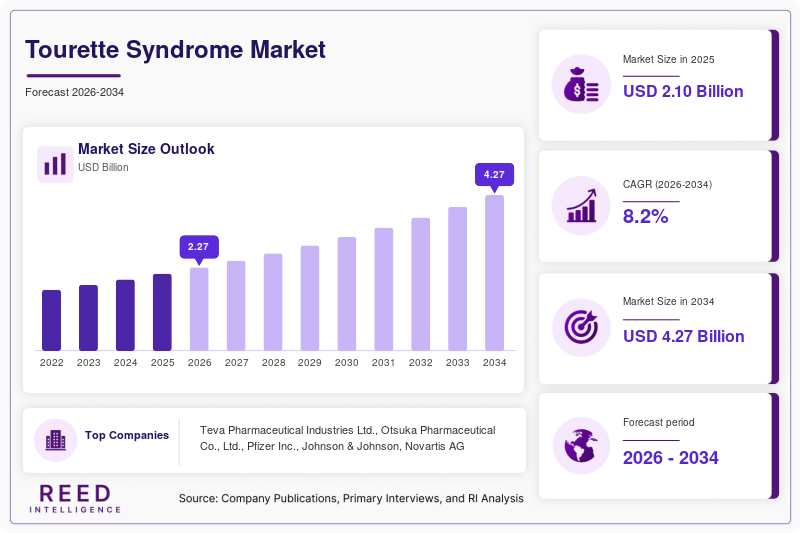
The Tourette Syndrome Market was valued at approximately USD 2.1 billion in 2026 and is projected to reach USD 3.9 billion by 2034, expanding at a CAGR of 8.2% during 2026–2034. The market growth is primarily supported by increasing awareness of neurological disorders and improvements in diagnosis rates across both developed and emerging economies. As healthcare systems prioritize early intervention and mental health integration, the demand for effective therapies for Tourette syndrome has steadily increased.
A key global factor contributing to market expansion is the growing emphasis on neurodevelopmental disorder management through multidisciplinary treatment approaches. Governments and healthcare organizations are investing in awareness campaigns, early screening programs, and insurance coverage expansion, which collectively improve patient access to pharmacological and behavioral therapies. Additionally, advancements in neuropharmacology and digital therapeutics are improving patient outcomes and encouraging higher treatment adoption rates.
Key Highlights
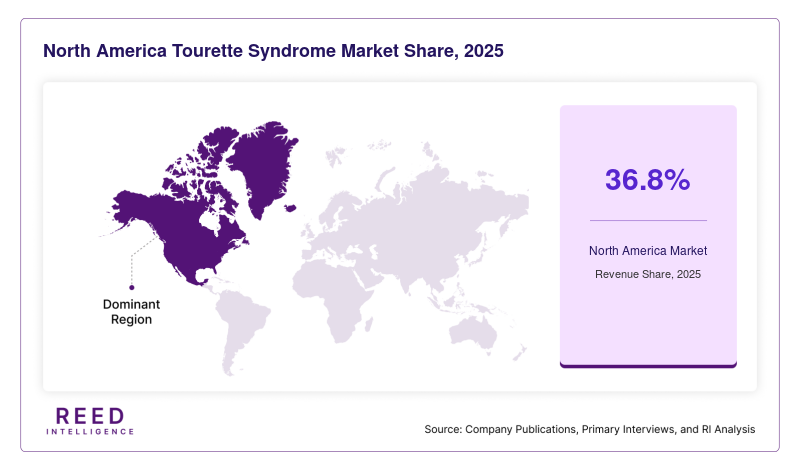
- North America dominated the market with a 36.8% share in 2025.
- Asia Pacific is expected to grow at the fastest CAGR of 9.6% during 2026–2034.
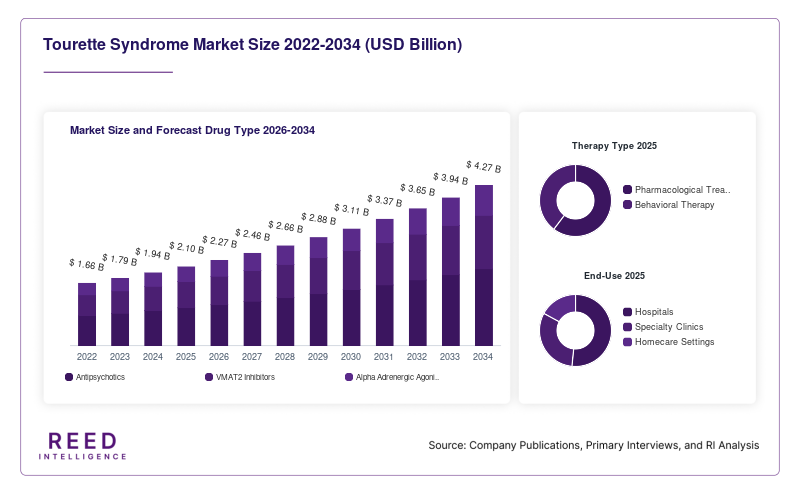
- By drug type, antipsychotics accounted for the largest share of 42.3%, while VMAT2 inhibitors are projected to grow at a CAGR of 10.8%.
- By therapy type, pharmacological treatment led with a 61.5% share, whereas behavioral therapy is expected to expand at a CAGR of 9.9%.
- The United States remained the dominant country, with market values of USD 620 million in 2024 and USD 670 million in 2025.
Market Trends
Increasing Adoption of Behavioral Therapy and Digital Interventions
One of the notable trends in the Tourette Syndrome Market is the increasing adoption of behavioral therapy techniques, particularly Comprehensive Behavioral Intervention for Tics (CBIT). Patients and caregivers are showing a growing preference for non-pharmacological treatments due to concerns regarding long-term side effects of medications. Digital health platforms are also gaining traction, offering remote therapy sessions and app-based behavioral training programs. These tools enhance patient compliance and accessibility, especially in regions with limited access to specialized neurologists. The integration of artificial intelligence into therapy platforms is further enabling personalized treatment plans, thereby improving efficacy and engagement levels.
Expansion of Pipeline Drugs and Targeted Therapies
Another significant trend is the expansion of the pharmaceutical pipeline focused on targeted therapies for Tourette syndrome. Companies are investing in the development of VMAT2 inhibitors and novel central nervous system drugs that offer improved efficacy with fewer adverse effects. Clinical trials are increasingly focusing on precision medicine approaches, considering genetic and neurobiological factors influencing tic severity. Regulatory bodies are also providing incentives for orphan drug development, accelerating approvals and encouraging innovation. This trend is expected to diversify treatment options and enhance patient outcomes over the forecast period.
Market Drivers
Rising Prevalence and Improved Diagnosis Rates
The increasing prevalence of Tourette syndrome and related tic disorders is a primary driver of market growth. Improved diagnostic techniques and growing awareness among healthcare professionals have led to earlier and more accurate identification of the condition. Pediatric populations are particularly benefiting from early screening programs implemented in schools and healthcare facilities. As diagnosis rates rise, the demand for effective treatment solutions increases correspondingly. Additionally, the reduction of social stigma surrounding neurological disorders has encouraged more individuals to seek medical attention, further expanding the patient pool.
Advancements in Neuropharmacology and Drug Development
Advancements in neuropharmacology have significantly contributed to the growth of the Tourette Syndrome Market. The development of drugs targeting dopamine regulation and neurotransmitter pathways has improved symptom management. Pharmaceutical companies are focusing on reducing side effects associated with traditional antipsychotics, leading to higher patient adherence. Furthermore, increased investment in clinical trials and research collaborations is accelerating the introduction of innovative therapies. These advancements not only improve treatment efficacy but also broaden the range of available therapeutic options, driving overall market expansion.
Market Restraint
Side Effects and Limited Long-Term Efficacy of Current Treatments
A major restraint impacting the Tourette Syndrome Market is the side effects associated with existing pharmacological treatments and their limited long-term efficacy. Many commonly prescribed medications, including antipsychotics, are linked to adverse effects such as weight gain, sedation, and metabolic disorders. These side effects often lead to poor patient compliance and discontinuation of treatment. Additionally, the variability in patient response to medications poses a challenge for clinicians in determining optimal treatment plans.
The lack of universally effective therapies also limits market growth. While behavioral therapies offer an alternative, they require consistent participation and access to trained professionals, which may not be feasible in all regions. In developing markets, limited healthcare infrastructure and lack of awareness further exacerbate the issue. These challenges highlight the need for safer, more effective treatment options and improved healthcare delivery systems to support long-term disease management.
Market Opportunities
Growth in Emerging Markets with Expanding Healthcare Access
Emerging economies present significant growth opportunities for the Tourette Syndrome Market. Countries in Asia Pacific and Latin America are witnessing improvements in healthcare infrastructure and increased government spending on mental health services. As awareness campaigns expand and diagnostic capabilities improve, more patients are being identified and treated. Pharmaceutical companies are also entering these markets through strategic partnerships and localized manufacturing, reducing treatment costs and improving accessibility. This expansion is expected to drive substantial market growth in the coming years.
Development of Personalized and Gene-Based Therapies
The development of personalized medicine and gene-based therapies offers promising opportunities for the Tourette Syndrome Market. Advances in genetic research are enabling a deeper understanding of the underlying causes of the disorder. This knowledge is facilitating the development of targeted therapies that address specific biological pathways. Personalized treatment approaches can improve efficacy and reduce side effects, enhancing patient outcomes. Additionally, ongoing research in neurostimulation and brain modulation technologies is opening new avenues for treatment, further expanding the market potential.
Segmental Analysis
By Drug Type
The antipsychotics subsegment dominated the Tourette Syndrome Market in 2024, accounting for approximately 42.3% of the total share. These drugs are widely prescribed due to their effectiveness in reducing tic severity. Healthcare providers prefer antipsychotics as a first-line treatment, particularly in moderate to severe cases. Their widespread availability and established clinical efficacy contribute to their dominant position. Additionally, ongoing improvements in drug formulations aim to reduce side effects, further supporting their adoption.
VMAT2 inhibitors are expected to be the fastest-growing subsegment, with a CAGR of 10.8% during the forecast period. These drugs offer a targeted approach by regulating neurotransmitter activity, resulting in improved symptom control with fewer side effects. Increasing clinical trials and regulatory approvals are driving their adoption. Pharmaceutical companies are investing heavily in the development of these therapies, recognizing their potential to address unmet medical needs in the Tourette Syndrome Market.
By Therapy Type
Pharmacological treatment held the largest share of the market in 2024, accounting for 61.5%. This dominance is attributed to the immediate effectiveness of medications in managing symptoms. Physicians often prescribe drugs as a primary treatment option, especially in severe cases. The availability of a wide range of medications and ongoing advancements in drug development further support this segment’s growth.
Behavioral therapy is expected to be the fastest-growing subsegment, with a CAGR of 9.9%. Increasing awareness of non-pharmacological treatment options and concerns about medication side effects are driving this growth. Techniques such as CBIT are gaining popularity due to their effectiveness and minimal risk. The integration of digital platforms for therapy delivery is also enhancing accessibility and patient engagement, contributing to the segment’s expansion.
By End-Use
Hospitals dominated the Tourette Syndrome Market in 2024, accounting for the largest share. Hospitals serve as primary centers for diagnosis and treatment, offering access to specialized healthcare professionals and advanced diagnostic tools. Patients with severe symptoms often require comprehensive care, which is readily available in hospital settings. The presence of multidisciplinary teams further enhances treatment outcomes.
Specialty clinics are projected to be the fastest-growing subsegment, with a CAGR of 9.4%. These clinics provide focused care for neurological disorders, offering personalized treatment plans and specialized therapies. The increasing number of such clinics and their ability to deliver targeted care are driving their growth. Additionally, shorter waiting times and improved patient experience make specialty clinics an attractive option for patients.
Regional Analysis
North America
North America accounted for approximately 36.8% of the Tourette Syndrome Market share in 2025 and is expected to grow at a CAGR of 7.9% during the forecast period. The region benefits from a well-established healthcare system, high awareness levels, and strong research infrastructure. The presence of leading pharmaceutical companies and ongoing clinical trials contribute to the steady growth of the market. Insurance coverage for neurological disorders further supports treatment adoption.
The United States dominates the regional market due to its advanced healthcare infrastructure and high diagnosis rates. A unique growth factor is the strong presence of patient advocacy groups that promote awareness and support early diagnosis. These organizations collaborate with healthcare providers to improve treatment access and patient outcomes, driving sustained market growth.
Europe
Europe held a significant share of the Tourette Syndrome Market in 2025, supported by increasing government initiatives and research funding. The region is expected to grow at a CAGR of 8.1% during the forecast period. Countries across Europe are focusing on integrating mental health services into primary healthcare systems, improving access to treatment. Additionally, the availability of reimbursement policies for neurological therapies enhances patient adoption rates.
Germany leads the European market due to its robust healthcare infrastructure and strong emphasis on research and development. A unique growth factor is the increasing collaboration between academic institutions and pharmaceutical companies, which accelerates drug development and clinical trials. This collaborative environment fosters innovation and supports market expansion.
Asia Pacific
Asia Pacific is projected to be the fastest-growing region, with a CAGR of 9.6% during 2026–2034. The region’s growth is driven by increasing healthcare expenditure, rising awareness, and improving diagnostic capabilities. Governments are investing in mental health programs and expanding healthcare coverage, which enhances treatment accessibility. The growing population and rising prevalence of neurological disorders further contribute to market growth.
China dominates the Asia Pacific market due to its large population and expanding healthcare infrastructure. A unique growth factor is the rapid adoption of digital health technologies, which improve access to behavioral therapies and remote consultations. These advancements are particularly beneficial in rural areas, where access to specialized care is limited.
Middle East & Africa
The Middle East & Africa region accounted for a smaller share of the Tourette Syndrome Market in 2025 but is expected to grow at a CAGR of 7.5% during the forecast period. The market is gradually expanding due to increasing awareness and improvements in healthcare infrastructure. Governments are focusing on enhancing mental health services and integrating them into existing healthcare systems.
Saudi Arabia leads the regional market, driven by government initiatives to improve healthcare quality. A unique growth factor is the increasing investment in specialized neurological centers, which provide advanced diagnostic and treatment services. These developments are expected to support market growth in the region.
Latin America
Latin America is experiencing steady growth in the Tourette Syndrome Market, with a projected CAGR of 8.3% during the forecast period. The region’s growth is supported by improving healthcare access and rising awareness of neurological disorders. Governments are implementing policies to enhance mental health services and expand insurance coverage.
Brazil dominates the Latin American market due to its large population and expanding healthcare infrastructure. A unique growth factor is the increasing focus on public health campaigns aimed at reducing stigma associated with neurological disorders. These initiatives encourage early diagnosis and treatment, contributing to market growth.
Competitive Landscape
The Tourette Syndrome Market is moderately competitive, with several pharmaceutical companies focusing on innovation and strategic collaborations. Leading players are investing in research and development to introduce advanced therapies and expand their product portfolios. Partnerships with research institutions and healthcare organizations are also common, enabling companies to accelerate drug development and commercialization.
Teva Pharmaceutical Industries Ltd. is a leading player in the market, known for its strong portfolio of neurological drugs. The company has recently focused on expanding its pipeline through clinical trials targeting novel treatment mechanisms. Other major players are also investing in VMAT2 inhibitors and digital therapeutics, reflecting the industry’s shift toward targeted and patient-centric solutions. Continuous innovation and strategic initiatives are expected to shape the competitive landscape in the coming years.
Key Players
- Teva Pharmaceutical Industries Ltd.
- Otsuka Pharmaceutical Co., Ltd.
- Pfizer Inc.
- Johnson & Johnson
- Novartis AG
- AbbVie Inc.
- Eli Lilly and Company
- Sun Pharmaceutical Industries Ltd.
- H. Lundbeck A/S
- UCB S.A.
- Amneal Pharmaceuticals, Inc.
- Neurocrine Biosciences, Inc.
- Ipsen S.A.
- Aurobindo Pharma Limited
- Zydus Lifesciences Limited
Recent Developments
- In 2025, Teva Pharmaceutical Industries expanded its clinical trials for next-generation VMAT2 inhibitors targeting improved safety profiles.
- In 2024, Neurocrine Biosciences received regulatory approval for a new therapy aimed at reducing tic severity in pediatric patients.
- In 2025, several digital health startups launched app-based behavioral therapy platforms, enhancing accessibility for Tourette syndrome patients globally.
Tourette Syndrome Market Segments
Drug Type
- Antipsychotics
- VMAT2 Inhibitors
- Alpha Adrenergic Agonists
Therapy Type
- Pharmacological Treatment
- Behavioral Therapy
End-Use
- Hospitals
- Specialty Clinics
- Homecare Settings
By Region
- North America
- Europe
- APAC
- Middle East and Africa
- LATAM