Tranexamic Acid Market Size, Share & Demand Report By Type (Injectable, Oral, Topical), By Application (Surgical, Trauma, Gynecology, Dermatology), By End-Use (Hospitals, Ambulatory Surgical Centers, Specialty Clinics), By Region & Segment Forecasts, 2025–2034
USD 3950
Market Overview
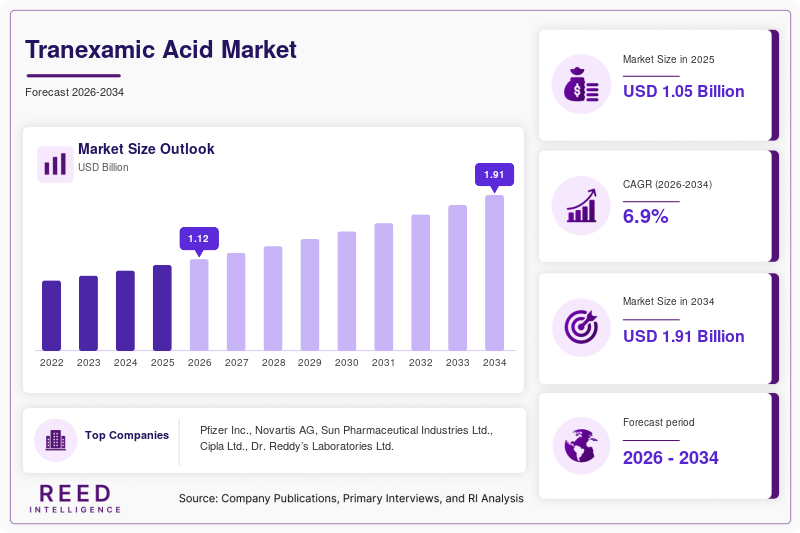
The global Tranexamic Acid Market size was estimated at USD 1.05 billion in 2025 and is projected to reach USD 1.12 billion in 2026. With increasing adoption in both developed and emerging healthcare systems, the market is forecasted to grow to approximately USD 1.95 billion by 2034, registering a compound annual growth rate (CAGR) of 6.9% from 2025 to 2034.
Tranexamic acid, an antifibrinolytic agent, plays a critical role in preventing excessive bleeding by inhibiting the breakdown of fibrin clots. Its clinical relevance has increased significantly in recent years due to rising surgical volumes and trauma-related cases globally. The growing emphasis on reducing perioperative blood loss and improving patient outcomes has further supported its demand.
Key Highlights
- Market size estimated at USD 1.05 billion in 2025 and USD 1.12 billion in 2026
- Forecasted to reach USD 1.95 billion by 2034
- CAGR of 6.9% from 2025 to 2034
- Increasing surgical procedures and trauma cases driving demand
- Expanding applications in gynecology and dermatology
Market Trends
Expanding Use in Dermatology and Cosmetic Procedures
The application of tranexamic acid in dermatology has gained traction, particularly for treating conditions such as melasma and post-inflammatory hyperpigmentation. Dermatologists are increasingly prescribing oral and topical formulations due to their effectiveness in reducing pigmentation without aggressive procedures. This shift toward non-invasive aesthetic treatments aligns with patient preferences for safer and less painful alternatives. Moreover, the rising demand for cosmetic procedures globally has contributed to the expansion of this niche application segment. Pharmaceutical companies are also investing in specialized dermatological formulations, enhancing product differentiation and market penetration.
Integration into Surgical Protocols and Guidelines
Tranexamic acid is increasingly being integrated into standardized surgical protocols across hospitals worldwide. Clinical guidelines now recommend its routine use in procedures such as joint replacement, cardiac surgeries, and cesarean sections to minimize blood loss and reduce transfusion requirements. This trend is driven by growing evidence supporting its efficacy and safety profile. Hospitals are adopting cost-effective strategies to optimize patient outcomes, and tranexamic acid fits well within these frameworks. Additionally, healthcare providers are focusing on reducing complications associated with blood transfusions, further accelerating the adoption of this medication.
Market Drivers
Rising Global Surgical Volume
The increasing number of surgical procedures globally is a major driver for the tranexamic acid market. Factors such as aging populations, rising incidence of chronic diseases, and improved access to healthcare services are contributing to higher surgical volumes. Procedures in orthopedics, cardiovascular care, and obstetrics often involve significant blood loss, making antifibrinolytic agents essential. Tranexamic acid is widely preferred due to its cost-effectiveness and proven clinical benefits. Hospitals and surgical centers are incorporating it into routine protocols to enhance patient outcomes and reduce complications associated with excessive bleeding.
Growing Adoption in Trauma and Emergency Care
The use of tranexamic acid in trauma care has expanded significantly, particularly in emergency medical services. Early administration in trauma patients has been shown to reduce mortality rates, leading to widespread adoption in emergency response protocols. Governments and healthcare organizations are promoting its use in pre-hospital settings, including ambulances and field hospitals. This trend is especially prominent in regions with high rates of road accidents and injuries. The availability of injectable formulations and ease of administration further support its use in critical care situations, driving overall market growth.
Market Restraint
Safety Concerns and Risk of Thromboembolic Events
Despite its benefits, the tranexamic acid market faces challenges related to safety concerns, particularly the risk of thromboembolic complications. In certain patient populations, such as those with a history of clotting disorders, the use of antifibrinolytic agents may increase the likelihood of adverse events. This has led to cautious adoption among healthcare providers, especially in complex cases. Regulatory authorities also impose strict guidelines regarding dosage and administration, which can limit widespread use. For example, in high-risk cardiovascular patients, clinicians may opt for alternative treatments to avoid potential complications. These concerns can hinder market expansion, particularly in regions with stringent regulatory frameworks.
Market Opportunities
Growth in Emerging Healthcare Markets
Emerging economies present significant opportunities for the tranexamic acid market due to improving healthcare infrastructure and increasing access to medical services. Countries in Asia Pacific, Latin America, and Africa are investing in hospital development and expanding surgical capabilities. This creates a growing demand for affordable and effective medications to manage surgical complications. Tranexamic acid, being relatively low-cost, is well-suited for these markets. Additionally, government initiatives to improve maternal health and reduce surgical mortality rates further support market growth in these regions.
Development of Advanced Formulations and Delivery Methods
The development of innovative formulations offers a promising growth avenue for market players. Companies are focusing on creating extended-release tablets, combination therapies, and targeted delivery systems to improve efficacy and patient compliance. Topical formulations for dermatological use and novel injectable forms for rapid administration are gaining attention. These advancements not only enhance therapeutic outcomes but also expand the range of applications. As research continues to uncover new uses for tranexamic acid, manufacturers have opportunities to diversify their product portfolios and strengthen their market presence.
Segmental Analysis
By Type
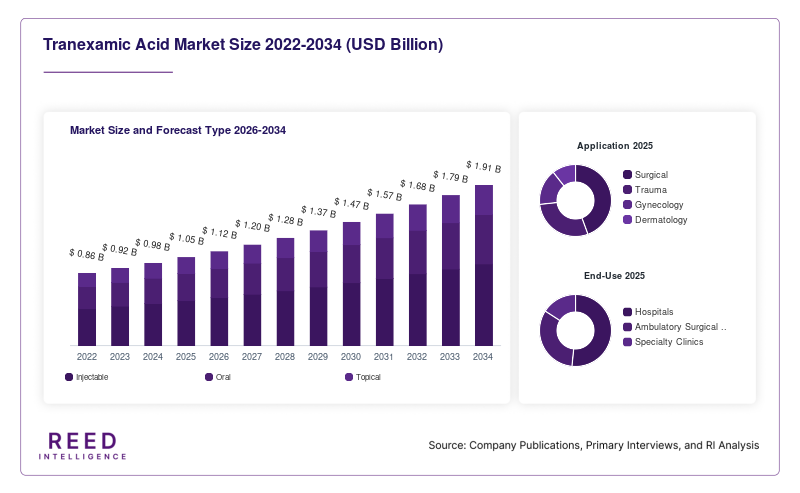
The injectable segment dominated the tranexamic acid market in 2024, accounting for approximately 58% of the total market share. Injectable formulations are widely used in hospital settings due to their rapid onset of action and effectiveness in managing acute bleeding. These formulations are commonly administered during surgeries, trauma care, and emergency situations where immediate hemostatic control is required. The reliability and ease of dosing make injectables the preferred choice among healthcare professionals. Additionally, their compatibility with intravenous administration systems enhances their adoption across critical care environments.
The oral segment is expected to be the fastest-growing, registering a CAGR of 7.5% during the forecast period. Oral tablets are gaining popularity due to their convenience and suitability for long-term treatment, particularly in conditions such as heavy menstrual bleeding and dermatological disorders. The increasing demand for outpatient care and self-administration options is driving this segment. Furthermore, advancements in formulation technologies are improving bioavailability and patient compliance, making oral tranexamic acid an attractive alternative to injectable forms.
By Application
The surgical segment held the largest share of around 45% in 2024, driven by the widespread use of tranexamic acid in various surgical procedures. It is commonly used in orthopedic, cardiac, and obstetric surgeries to reduce blood loss and minimize the need for transfusions. Hospitals are increasingly adopting standardized protocols that include tranexamic acid as a key component. The growing emphasis on patient safety and cost reduction further supports the dominance of this segment.
The dermatology segment is projected to grow at the fastest rate, with a CAGR of 8.1%. The increasing use of tranexamic acid for treating pigmentation disorders such as melasma is driving this growth. Patients are seeking non-invasive treatment options, and dermatologists are recommending tranexamic acid due to its effectiveness and safety profile. The rising demand for cosmetic procedures and aesthetic treatments is further contributing to the expansion of this segment.
By End-Use
Hospitals accounted for the largest market share of approximately 60% in 2024, owing to the high volume of surgical procedures and availability of advanced medical infrastructure. Hospitals are the primary settings for administering tranexamic acid, particularly in emergency and critical care situations. The presence of skilled healthcare professionals and access to advanced diagnostic tools further support the dominance of this segment.
Ambulatory surgical centers are expected to be the fastest-growing segment, with a CAGR of 7.8%. These centers are gaining popularity due to their cost-effectiveness and efficiency in performing minor and moderate surgical procedures. The increasing shift toward outpatient care is driving the demand for tranexamic acid in these settings. Additionally, the shorter recovery times and reduced healthcare costs associated with ambulatory centers make them an attractive option for both patients and providers.
Regional Analysis
North America
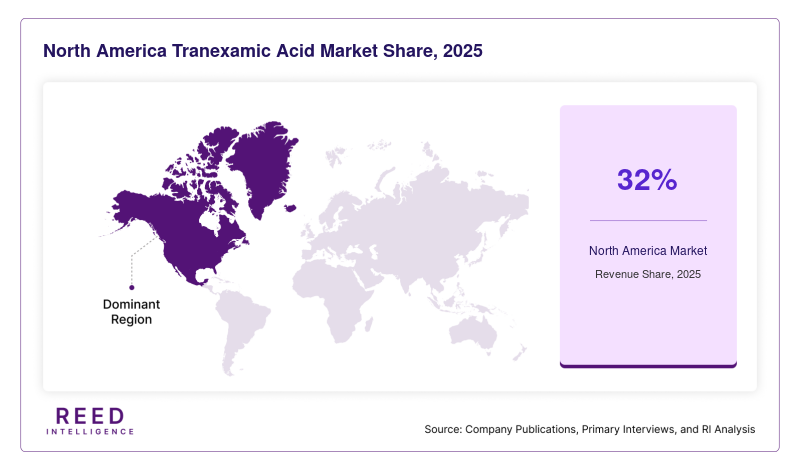
North America accounted for a significant share of the tranexamic acid market in 2025, contributing approximately 32% of global revenue. The region is expected to maintain steady growth with a CAGR of around 5.8% during the forecast period. The presence of advanced healthcare infrastructure, high surgical volumes, and strong adoption of evidence-based medical practices support market expansion. Additionally, increasing awareness about blood management techniques further boosts demand.
The United States dominates the regional market due to its well-established healthcare system and high expenditure on medical treatments. A key growth factor is the widespread implementation of patient blood management programs in hospitals. These programs emphasize minimizing blood loss during surgeries, leading to increased adoption of tranexamic acid as a standard therapeutic option.
Europe
Europe held a substantial market share of approximately 27% in 2025 and is projected to grow at a CAGR of 5.6% through 2034. The region benefits from strong regulatory frameworks and high adoption of advanced medical technologies. Increasing surgical procedures and aging populations contribute to the steady demand for antifibrinolytic agents across healthcare settings.
Germany leads the European market, supported by its robust healthcare infrastructure and focus on clinical research. A unique growth factor is the integration of tranexamic acid into national clinical guidelines for surgical and trauma care. This standardized approach ensures consistent usage across hospitals and enhances market stability.
Asia Pacific
Asia Pacific is the fastest-growing region, with a market share of around 22% in 2025 and a projected CAGR of 8.2%. Rapid urbanization, improving healthcare access, and rising surgical volumes are key factors driving growth. Governments in the region are investing heavily in healthcare infrastructure, further supporting market expansion.
China dominates the regional market due to its large population and increasing healthcare investments. A significant growth factor is the rising number of trauma cases and emergency care requirements. The expansion of hospital networks and emergency response systems has led to higher adoption of tranexamic acid in both urban and rural areas.
Middle East & Africa
The Middle East & Africa region accounted for approximately 10% of the market in 2025 and is expected to grow at a CAGR of 6.5%. Improving healthcare infrastructure and increasing awareness about advanced medical treatments are driving market growth. The region is witnessing gradual adoption of modern surgical practices, supporting demand.
Saudi Arabia is a leading market in the region, driven by government initiatives to enhance healthcare services. A unique growth factor is the increasing focus on reducing maternal mortality rates through improved obstetric care. Tranexamic acid is widely used in managing postpartum hemorrhage, contributing to its growing demand.
Latin America
Latin America held a market share of around 9% in 2025 and is projected to grow at a CAGR of 6.3%. The region is experiencing steady improvements in healthcare infrastructure and access to medical services. Rising surgical procedures and trauma cases are key factors supporting market growth.
Brazil dominates the regional market, supported by its expanding healthcare system and growing patient population. A notable growth factor is the increasing adoption of cost-effective treatments in public healthcare systems. Tranexamic acid’s affordability makes it a preferred choice for managing bleeding complications in resource-constrained settings.
Competitive Landscape
The tranexamic acid market is moderately competitive, with several global and regional players focusing on product innovation, strategic partnerships, and geographic expansion. Leading companies are investing in research and development to enhance product efficacy and expand application areas. The market is characterized by the presence of both branded and generic drug manufacturers, creating a competitive pricing environment.
Pfizer Inc. is a key leader in the market, leveraging its strong global presence and extensive product portfolio. The company recently expanded its production capacity to meet the growing demand for injectable formulations. Other major players are focusing on entering emerging markets and strengthening distribution networks. Strategic collaborations with healthcare providers and research institutions are also common, enabling companies to enhance their market position and drive growth.
Key Players List
- Pfizer Inc.
- Novartis AG
- Sun Pharmaceutical Industries Ltd.
- Cipla Ltd.
- Dr. Reddy’s Laboratories Ltd.
- Teva Pharmaceutical Industries Ltd.
- Mylan N.V.
- Zydus Lifesciences Ltd.
- Amneal Pharmaceuticals Inc.
- Hikma Pharmaceuticals PLC
- Fresenius Kabi AG
- Baxter International Inc.
- Lupin Limited
- Aurobindo Pharma Limited
- Glenmark Pharmaceuticals Ltd.
Recent Developments
- A leading pharmaceutical company launched an advanced injectable formulation designed for faster absorption and improved efficacy in emergency care settings.
- Several market players expanded their presence in Asia Pacific by establishing new manufacturing facilities and distribution networks.
- A strategic collaboration between healthcare providers and pharmaceutical firms aimed to promote the use of tranexamic acid in maternal healthcare programs, particularly for managing postpartum hemorrhage.
Tranexamic Acid Market Segments
Type
- Injectable
- Oral
- Topical
Application
- Surgical
- Trauma
- Gynecology
- Dermatology
End-Use
- Hospitals
- Ambulatory Surgical Centers
- Specialty Clinics
By Region
- North America
- Europe
- APAC
- Middle East and Africa
- LATAM