Trauma Care Centers Market Size, Share & Demand Report By Trauma Type (Blunt Trauma, Penetrating Trauma, Burn Injuries), By Facility Type (Level I Trauma Centers, Level II Trauma Centers, Level III Trauma Centers, Level IV Trauma Centers), By Service Type (Emergency Services, Surgical Services, Rehabilitation Services), By End-Use (Hospitals, Specialty Trauma Centers, Ambulatory Surgical Centers) & Segment Forecasts, 2025–2034
USD 3950
Market Overview
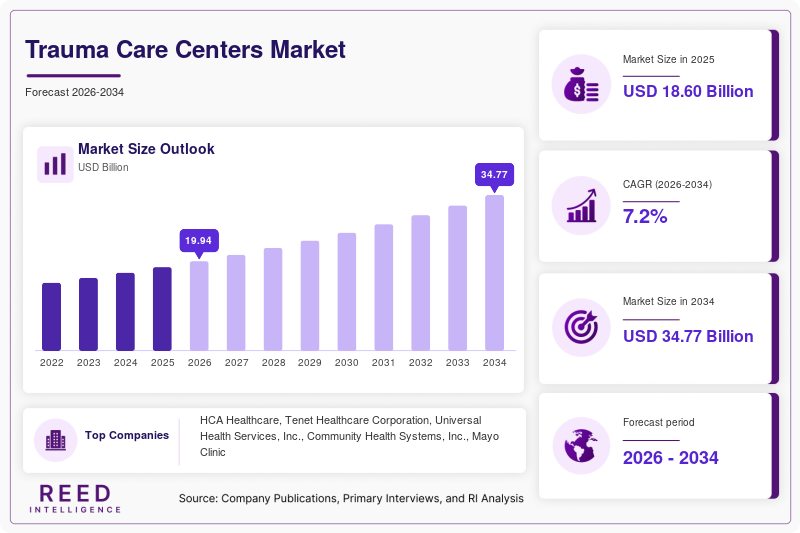
The Trauma Care Centers Market size was valued at approximately USD 18.6 billion in 2025 and is projected to reach USD 34.9 billion by 2034, expanding at a CAGR of 7.2% during the forecast period (2025–2034). The market growth is primarily driven by the rising global burden of trauma-related injuries, including road accidents, falls, and violence-related cases, which continue to increase demand for specialized emergency care infrastructure.
A significant global factor supporting market expansion is the continuous improvement in emergency medical response systems and trauma networks. Governments and private healthcare providers are investing in integrated trauma systems, including pre-hospital care, advanced life support ambulances, and dedicated trauma units, which enhance survival rates and drive demand for trauma care centers.
Key Highlights:
- North America dominated the market with a 38.5% share in 2025, while Asia Pacific is expected to register the fastest CAGR of 8.6%.
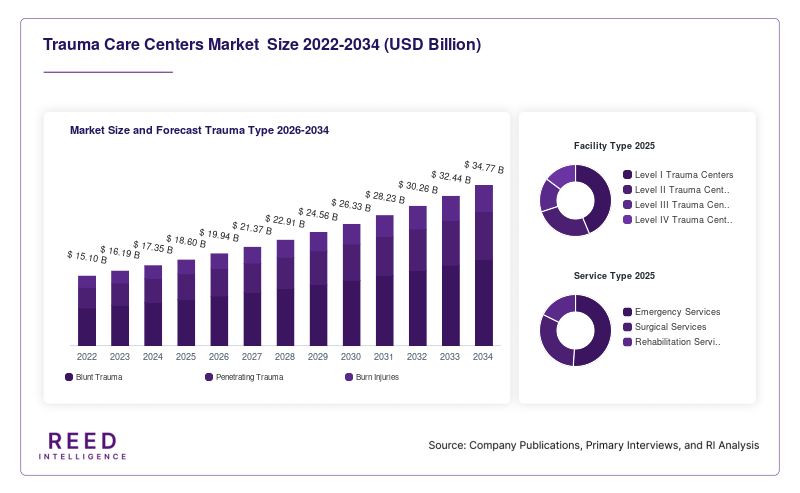
- By trauma type, blunt trauma held the largest share of 46.2% in 2024, while penetrating trauma is projected to grow at a CAGR of 7.9%.
- By facility type, Level I trauma centers dominated with a 41.7% share, while Level II centers are expected to grow at a CAGR of 8.1%.
- The United States remained the dominant country, with market values of USD 6.2 billion in 2024 and USD 6.6 billion in 2025.
Market Trends
Integration of Advanced Digital Health Technologies
Trauma care centers are increasingly adopting digital health solutions to enhance operational efficiency and patient outcomes. Technologies such as AI-based triage systems, predictive analytics, and telemedicine platforms are enabling faster decision-making and better coordination among emergency teams. Real-time patient data sharing between ambulances and hospitals is improving response times and reducing mortality rates. This digital transformation is also supporting resource optimization, particularly in high-volume trauma centers.
Expansion of Regional Trauma Networks
Healthcare systems worldwide are focusing on developing structured trauma networks that connect primary care facilities, ambulances, and specialized trauma centers. These networks ensure that critically injured patients are transported to appropriate facilities without delays. Regionalization of trauma care has been associated with improved survival rates and more efficient use of healthcare resources. Emerging economies are increasingly adopting this model, leading to the expansion of trauma care infrastructure and contributing to the overall growth of the Trauma Care Centers Market.
Market Drivers
Rising Incidence of Road Traffic Accidents and Injuries
The growing number of road traffic accidents globally is a key driver of the Trauma Care Centers Market. Rapid urbanization, increased vehicle ownership, and inadequate road safety measures in developing regions have led to a surge in trauma cases. Trauma centers play a crucial role in providing immediate and specialized care to accident victims, driving demand for advanced trauma care facilities.
Increasing Investments in Healthcare Infrastructure
Governments and private organizations are investing significantly in healthcare infrastructure to improve emergency care services. The establishment of new trauma centers, upgrading existing hospitals to trauma-ready facilities, and funding for advanced medical equipment are contributing to market growth. These investments are particularly prominent in developing countries aiming to strengthen their emergency response systems and reduce mortality from preventable injuries.
Market Restraint
High Operational and Capital Costs
One of the major challenges in the Trauma Care Centers Market is the high cost associated with establishing and maintaining trauma care facilities. Level I and Level II trauma centers require advanced medical equipment, specialized staff, and 24/7 operational capabilities, which significantly increase operational expenses. Additionally, the need for continuous training, certification, and compliance with regulatory standards adds to the financial burden.
In many regions, especially in low- and middle-income countries, limited healthcare budgets restrict the development of fully equipped trauma centers. The high cost of care also affects patient affordability, particularly in regions with limited insurance coverage. These financial constraints can hinder the expansion of trauma care services and limit access to quality emergency care.
Market Opportunities
Growth in Emerging Economies
Emerging economies present significant growth opportunities for the Trauma Care Centers Market. Rapid urbanization, increasing healthcare awareness, and improving economic conditions are driving demand for advanced medical services. Governments in these regions are prioritizing the development of emergency care infrastructure, creating opportunities for private players to invest in trauma care facilities.
Adoption of Tele-Trauma and Remote Consultation
The adoption of telemedicine in trauma care is opening new avenues for market growth. Tele-trauma services enable remote consultation with specialists, allowing smaller healthcare facilities to manage complex trauma cases effectively. This approach is particularly beneficial in rural and underserved areas, where access to specialized care is limited. The integration of tele-trauma solutions is expected to enhance the reach and efficiency of trauma care services.
Segmental Analysis
By Trauma Type
Blunt trauma was the dominant subsegment, accounting for 46.2% of the market share in 2024. This segment includes injuries caused by falls, road accidents, and physical impacts, which are among the most common trauma cases globally. The high prevalence of such injuries has contributed to the dominance of this segment.
Penetrating trauma is expected to be the fastest-growing subsegment, with a projected CAGR of 7.9% during the forecast period. The increase in violence-related injuries and the need for specialized surgical interventions will drive growth. Advances in surgical techniques and improved emergency response systems will further support this segment.
By Facility Type
Level I trauma centers dominated the market with a 41.7% share in 2024. These centers provide comprehensive trauma care, including specialized surgical services and research capabilities. Their ability to handle complex trauma cases has contributed to their leading position.
Level II trauma centers are projected to grow at the fastest CAGR of 8.1%. These centers provide high-level trauma care but with fewer resources compared to Level I centers. The growing demand for accessible trauma care facilities in urban and semi-urban areas will drive the growth of this segment.
By Service Type
Emergency services held the largest share of 38.9% in 2024. These services include initial assessment, stabilization, and life-saving interventions, which are critical in trauma care.
Rehabilitation services are expected to grow at the fastest CAGR of 7.6%. Increasing awareness about post-trauma recovery and the need for long-term care will drive the demand for rehabilitation services.
By End-Use
Hospitals dominated the market with a 52.4% share in 2024. Hospitals serve as primary centers for trauma care, offering comprehensive services and advanced medical infrastructure.
Specialty trauma centers are expected to grow at a CAGR of 7.8%. These centers focus exclusively on trauma care and offer specialized services, which are increasingly in demand due to the complexity of trauma cases.
Regional Analysis
North America
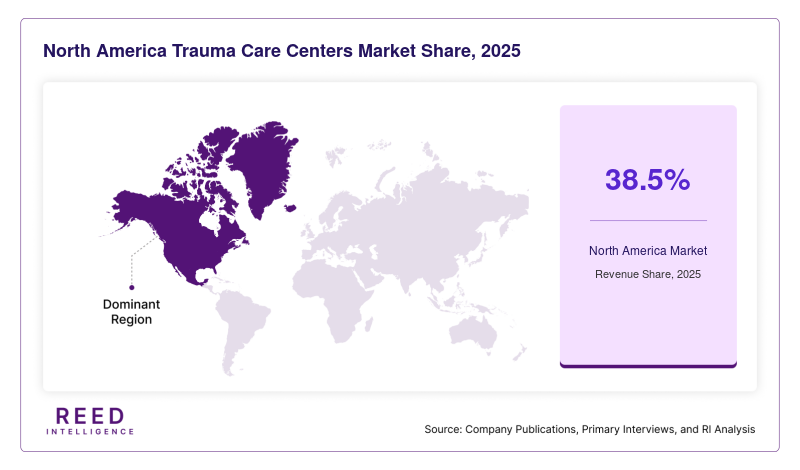
North America accounted for 38.5% of the Trauma Care Centers Market share in 2025 and will grow at a CAGR of 6.8% during the forecast period. The region has a well-established healthcare infrastructure and a high number of certified trauma centers, contributing to its dominant position.
The United States led the regional market due to its advanced emergency medical services and strong reimbursement framework. The presence of highly specialized trauma care facilities and continuous investment in healthcare innovation has supported market growth. Additionally, the increasing adoption of advanced technologies in trauma care has enhanced treatment outcomes.
Europe
Europe held a 24.3% market share in 2025 and is expected to grow at a CAGR of 6.5% through 2034. The region benefits from robust public healthcare systems and strong government support for emergency care services.
Germany dominated the European market due to its efficient healthcare infrastructure and focus on trauma system development. The country has a well-organized trauma network that ensures timely access to specialized care, contributing to improved patient outcomes.
Asia Pacific
Asia Pacific accounted for 21.7% of the market share in 2025 and is projected to grow at the fastest CAGR of 8.6% during the forecast period. Rapid urbanization and increasing healthcare investments are driving market growth in this region.
China emerged as the dominant country due to its large population and rising incidence of trauma cases. Government initiatives to improve healthcare infrastructure and expand trauma care services are significantly contributing to market expansion.
Middle East & Africa
The Middle East & Africa region held a 8.1% market share in 2025 and will grow at a CAGR of 7.4% through 2034. Increasing investments in healthcare infrastructure and growing awareness about emergency care are driving market growth.
Saudi Arabia dominated the region due to its ongoing healthcare reforms and investments in advanced medical facilities. The country is focusing on enhancing its emergency care capabilities, which is expected to support market growth.
Latin America
Latin America accounted for 7.4% of the market share in 2025 and is expected to grow at a CAGR of 7.1% during the forecast period. The region is witnessing improvements in healthcare infrastructure and emergency medical services.
Brazil led the regional market due to its expanding healthcare sector and increasing focus on trauma care services. Government initiatives aimed at improving emergency response systems are contributing to market growth.
Competitive Landscape
The Trauma Care Centers Market is moderately fragmented, with several global and regional players contributing to market growth. Key players are focusing on expanding their trauma care networks, investing in advanced technologies, and improving service quality.
HCA Healthcare is a leading player in the market, known for its extensive network of trauma centers and continuous investment in healthcare innovation. The company recently expanded its trauma care services by upgrading multiple facilities to Level I trauma centers, enhancing its market position.Other prominent players include Tenet Healthcare, Universal Health Services, Community Health Systems, and Mayo Clinic. These companies are focusing on strategic collaborations, acquisitions, and infrastructure development to strengthen their presence in the market.
Key Players
- HCA Healthcare
- Tenet Healthcare Corporation
- Universal Health Services, Inc.
- Community Health Systems, Inc.
- Mayo Clinic
- Cleveland Clinic
- Johns Hopkins Health System
- Ascension Health
- Kaiser Permanente
- Trinity Health
Recent Developments
- In 2025, HCA Healthcare expanded its trauma network by upgrading three hospitals to Level I trauma centers.
- In 2024, Mayo Clinic introduced AI-based triage systems to improve emergency response efficiency.
- In 2025, Apollo Hospitals launched a dedicated trauma care unit in India to address rising accident cases.
- In 2024, Cleveland Clinic invested in advanced robotic surgical systems for trauma care.
- In 2025, Fortis Healthcare partnered with regional emergency services to strengthen trauma response systems.
Trauma Care Centers Market Segments
Trauma Type
- Blunt Trauma
- Penetrating Trauma
- Burn Injuries
Facility Type
- Level I Trauma Centers
- Level II Trauma Centers
- Level III Trauma Centers
- Level IV Trauma Centers
Service Type
- Emergency Services
- Surgical Services
- Rehabilitation Services
End-Use
- Hospitals
- Specialty Trauma Centers
- Ambulatory Surgical Centers
By Region
- North America
- Europe
- APAC
- Middle East and Africa
- LATAM