Tricalcium Citrate Market Size, Share & Demand Report By Type (Food Grade, Pharmaceutical Grade), By Application (Food & Beverage, Nutraceuticals, Pharmaceuticals), By End-Use (Healthcare, Food Industry, Others), By Region & Segment Forecasts, 2025–2034
USD 3950
Market Overview
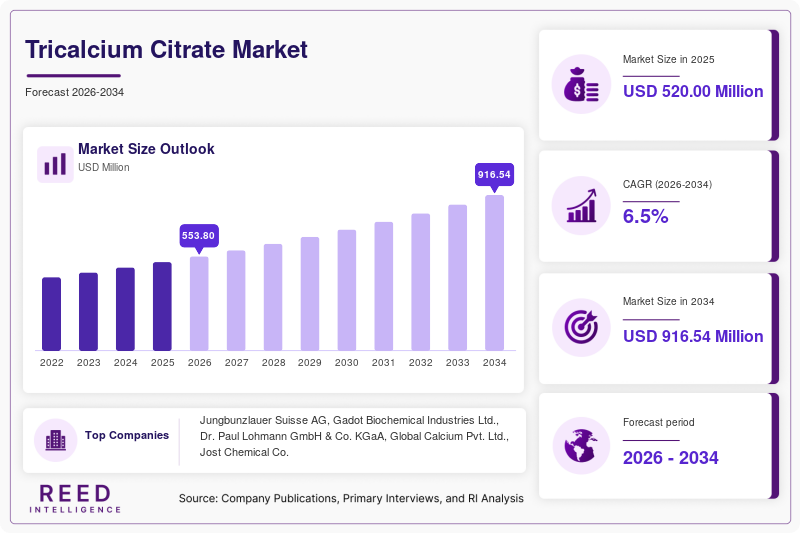
The Tricalcium Citrate Market size is estimated at approximately USD 520 million, rising to around USD 555 million in 2026. The market is projected to reach USD 920 million by 2034, expanding at a compound annual growth rate (CAGR) of 6.5% during the forecast period (2025–2034). This growth reflects expanding applications of tricalcium citrate as a calcium supplement, acidity regulator, and food additive.
One of the primary growth factors is the rising awareness of calcium deficiency and bone health, particularly among aging populations. Tricalcium citrate is widely preferred due to its high bioavailability and ease of absorption compared to other calcium salts. Additionally, the increasing consumption of fortified food and beverages has significantly contributed to market expansion, as manufacturers seek stable and efficient calcium sources.
Key Highlights
- Market size is projected to grow from USD 520 million in 2025 to approximately USD 920 million by 2034, reflecting steady expansion across key industries. This growth is supported by increasing adoption in food, pharmaceutical, and nutraceutical applications.
- The market is expected to register a CAGR of 6.5% during the forecast period of 2025–2034. Consistent demand and expanding application scope are key factors sustaining this growth rate.
- There is strong demand from the nutraceutical and pharmaceutical sectors, driven by rising health awareness and preventive healthcare trends. These industries continue to incorporate tricalcium citrate in supplements and therapeutic formulations.
- The increasing use of tricalcium citrate in fortified food and beverage products is boosting market expansion. Manufacturers are focusing on enhancing nutritional value, especially in dairy alternatives and functional foods.
Market Trends
Rising Demand for Functional and Fortified Foods
The growing consumer preference for functional foods is a key trend shaping the Tricalcium Citrate Market. Consumers are increasingly seeking products that provide additional health benefits beyond basic nutrition, particularly those supporting bone health and immunity. Food manufacturers are incorporating tricalcium citrate into dairy products, plant-based beverages, cereals, and bakery items to enhance nutritional value. This trend is especially prominent in developed regions where health-conscious consumption patterns are well established. Additionally, the shift toward clean-label ingredients is encouraging manufacturers to use stable and safe calcium sources like tricalcium citrate. The ingredient’s compatibility with various formulations and its neutral taste profile make it a suitable choice for fortified food applications, further strengthening its market presence.
Expansion of Nutraceutical and Dietary Supplement Industry
Another notable trend is the rapid expansion of the global nutraceutical and dietary supplement industry. Tricalcium citrate is increasingly used in supplements due to its superior absorption properties and reduced gastrointestinal side effects compared to other calcium salts. The rising incidence of lifestyle-related health conditions and increasing awareness of preventive healthcare are driving consumers toward supplements. Additionally, the demand for personalized nutrition solutions is contributing to product innovation, with manufacturers developing targeted formulations for different age groups and health needs. The growth of e-commerce platforms has also improved accessibility to dietary supplements, boosting sales volumes. This trend is expected to sustain strong demand for tricalcium citrate across global markets.
Market Drivers
Increasing Prevalence of Bone-Related Disorders
The rising prevalence of bone-related disorders such as osteoporosis and osteopenia is a major driver of the Tricalcium Citrate Market. Aging populations, particularly in developed economies, are more susceptible to calcium deficiencies, leading to increased demand for calcium supplements. Tricalcium citrate is widely used in these supplements due to its high bioavailability and effectiveness in improving bone density. Healthcare professionals often recommend calcium supplementation as part of preventive and therapeutic strategies, further boosting demand. Additionally, lifestyle factors such as poor dietary habits and lack of physical activity have contributed to increasing cases of bone health issues across younger populations. This expanding patient base is expected to drive sustained market growth over the forecast period.
Growth of Processed Food and Beverage Industry
The expansion of the processed food and beverage industry is another significant driver of the market. Tricalcium citrate is commonly used as a food additive for fortification, acidity regulation, and stabilization. With increasing urbanization and changing consumer lifestyles, the demand for convenient and ready-to-eat food products has grown substantially. Manufacturers are incorporating tricalcium citrate to enhance the nutritional profile of these products, particularly in dairy alternatives and fortified beverages. Additionally, the rising popularity of plant-based diets has increased the need for calcium fortification in non-dairy products, further boosting demand. This trend is particularly strong in emerging markets, where the processed food sector is experiencing rapid growth.
Market Restraint
High Production Costs and Availability of Alternatives
One of the primary restraints affecting the Tricalcium Citrate Market is the relatively high production cost compared to other calcium salts such as calcium carbonate. The manufacturing process for tricalcium citrate involves more complex procedures, leading to higher costs that can impact pricing and profit margins. This cost factor can limit its adoption, particularly in price-sensitive markets where manufacturers prioritize cost-effective alternatives. Additionally, the availability of substitute ingredients with similar functionalities creates competitive pressure. For example, calcium carbonate is widely used due to its lower cost and high calcium content, despite lower bioavailability. This competition can restrict market penetration in certain applications. Furthermore, fluctuations in raw material prices and supply chain challenges can add to cost pressures, affecting overall market growth.
Market Opportunities
Growth in Plant-Based and Vegan Food Products
The increasing popularity of plant-based and vegan diets presents a significant opportunity for the Tricalcium Citrate Market. As consumers reduce or eliminate dairy consumption, the demand for alternative sources of calcium has risen. Tricalcium citrate is widely used in plant-based milk, yogurt, and cheese products to ensure adequate calcium content. Its compatibility with various formulations and neutral taste profile make it an ideal fortification ingredient. Additionally, the rise of lactose intolerance and dairy allergies has further boosted demand for plant-based alternatives. Manufacturers are investing in innovative product development to cater to this growing consumer segment, creating new opportunities for tricalcium citrate applications. This trend is expected to continue driving market expansion in the coming years.
Expansion in Emerging Markets
Emerging markets in Asia Pacific, Latin America, and the Middle East & Africa offer substantial growth opportunities for the Tricalcium Citrate Market. Rapid urbanization, rising disposable incomes, and increasing health awareness are driving demand for fortified foods and dietary supplements in these regions. Governments and health organizations are also promoting nutritional awareness programs, encouraging the consumption of calcium-rich products. Additionally, the expansion of retail and e-commerce channels has improved product accessibility, supporting market growth. Local manufacturers are increasingly adopting tricalcium citrate in food and pharmaceutical applications to meet evolving consumer demands. These factors collectively create a favorable environment for market expansion in emerging economies.
Segmental Analysis
By Type
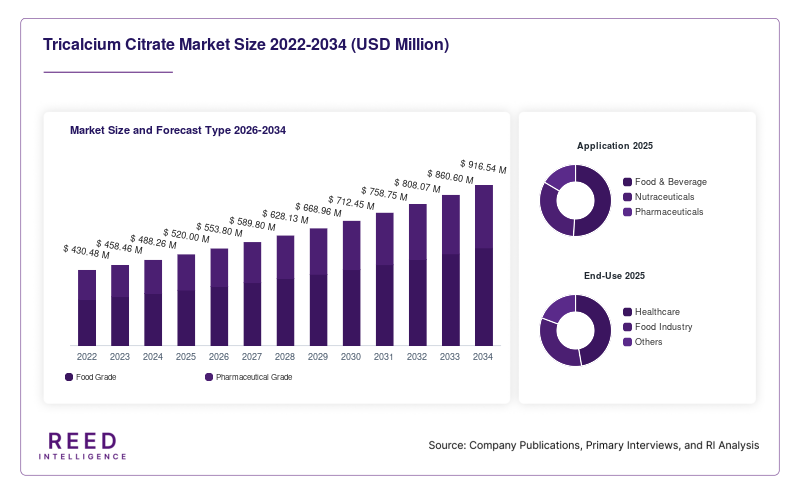
The food-grade tricalcium citrate segment dominated the market in 2024, accounting for approximately 55% of the total share. This dominance is attributed to its extensive use in food and beverage applications, particularly in fortified products. Food-grade tricalcium citrate is widely used for calcium enrichment, acidity regulation, and stabilization. The growing demand for functional foods and beverages has significantly contributed to the segment’s growth. Additionally, its compatibility with various food formulations and its neutral taste make it a preferred choice among manufacturers. The increasing trend toward clean-label products has further boosted demand for high-quality food-grade ingredients.
The pharmaceutical-grade segment is expected to be the fastest-growing, with a projected CAGR of 7.2% during the forecast period. This growth is driven by the increasing use of tricalcium citrate in dietary supplements and medications. Its high bioavailability and reduced side effects compared to other calcium salts make it suitable for pharmaceutical applications. The rising prevalence of bone-related disorders and the growing focus on preventive healthcare are key factors supporting this segment’s expansion. Additionally, advancements in formulation technologies are enabling the development of more effective and targeted products, further driving growth.
By Application
The food and beverage application segment held the largest market share in 2024, accounting for around 48%. This dominance is driven by the widespread use of tricalcium citrate in fortified foods, dairy alternatives, and beverages. The increasing demand for functional and health-oriented food products has significantly boosted this segment. Manufacturers are incorporating tricalcium citrate to enhance the nutritional profile of their products, particularly in response to growing consumer awareness of calcium deficiency. The expansion of the processed food industry and the rising popularity of plant-based diets have further strengthened this segment’s position.
The nutraceutical application segment is projected to grow at the highest CAGR of 7.8% during the forecast period. This growth is attributed to the increasing demand for dietary supplements and preventive healthcare products. Consumers are becoming more proactive in maintaining their health, leading to higher consumption of supplements containing tricalcium citrate. The growing availability of products through online platforms and retail channels has improved accessibility, further supporting segment growth. Additionally, the trend toward personalized nutrition is encouraging the development of specialized supplements, driving demand for high-quality calcium sources.
By End-Use
The healthcare sector dominated the market in 2024, accounting for approximately 50% of the total share. This segment includes pharmaceutical companies and healthcare providers that utilize tricalcium citrate in medications and supplements. The increasing prevalence of bone-related disorders and the growing aging population are key factors driving demand. Healthcare professionals frequently recommend calcium supplements as part of treatment and preventive strategies, supporting the segment’s growth. Additionally, the expansion of healthcare infrastructure in emerging markets is contributing to increased adoption of tricalcium citrate.
The food industry segment is expected to be the fastest-growing, with a CAGR of 7.0% during the forecast period. This growth is driven by the increasing demand for fortified and functional food products. Food manufacturers are focusing on enhancing the nutritional value of their offerings to meet evolving consumer preferences. The rise of plant-based diets and the need for calcium fortification in non-dairy products are key factors supporting this segment. Additionally, innovations in food processing and formulation are enabling the incorporation of tricalcium citrate in a wider range of products, further driving growth.
Regional Analysis
North America
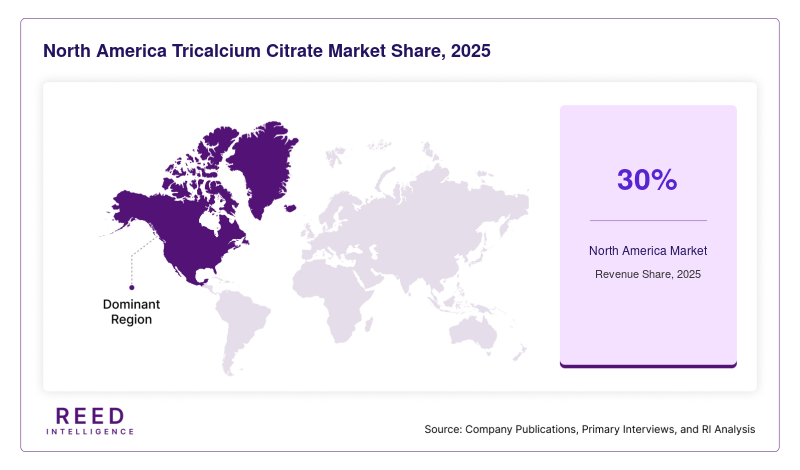
North America accounted for approximately 30% of the Tricalcium Citrate Market share in 2025 and is expected to grow at a CAGR of 5.8% during the forecast period. The region’s mature healthcare infrastructure and strong demand for dietary supplements contribute significantly to market growth. Consumers in this region show a high level of awareness regarding bone health and preventive nutrition, which supports consistent demand for calcium-based products. The presence of established manufacturers and continuous product innovation further strengthen the market outlook.
The United States dominates the regional market due to its large consumer base and advanced nutraceutical industry. A key growth factor is the increasing adoption of personalized nutrition, where consumers seek tailored supplement solutions. This trend encourages manufacturers to develop specialized formulations incorporating tricalcium citrate, driving sustained demand across various applications.
Europe
Europe holds around 25% market share in 2025 and is projected to grow at a CAGR of 5.5% through 2034. The region benefits from strict regulatory standards ensuring product quality and safety, which enhances consumer confidence. The demand for fortified food products is steadily increasing, particularly in Western European countries. Additionally, the aging population contributes to higher consumption of calcium supplements.
Germany leads the European market, supported by a strong pharmaceutical sector and increasing health awareness. A unique growth factor is the rising demand for clean-label and natural ingredients. Consumers prefer transparent labeling and safe additives, which positions tricalcium citrate as a suitable choice in food and supplement formulations.
Asia Pacific
Asia Pacific is the fastest-growing region, accounting for 28% of the market in 2025 with a projected CAGR of 7.5%. Rapid urbanization, expanding middle-class population, and increasing disposable income levels are key factors driving growth. The region’s growing food processing industry and rising demand for fortified products contribute significantly to market expansion.
China dominates the regional market due to its large population and growing health awareness. A unique growth factor is the government’s focus on improving nutritional standards through public health initiatives. This has encouraged the use of calcium fortification in food products, boosting demand for tricalcium citrate across multiple industries.
Middle East & Africa
The Middle East & Africa region holds around 9% market share in 2025 and is expected to grow at a CAGR of 6.2%. Increasing awareness of nutritional deficiencies and rising healthcare investments are key growth drivers. The demand for dietary supplements is gradually increasing as consumers become more health-conscious.
Saudi Arabia leads the regional market, driven by increasing healthcare spending and government initiatives promoting healthy lifestyles. A unique growth factor is the rising prevalence of vitamin and mineral deficiencies, which encourages the adoption of fortified food products and supplements containing tricalcium citrate.
Latin America
Latin America accounts for approximately 8% of the market in 2025 and is projected to grow at a CAGR of 6.0%. The region is experiencing steady growth due to increasing demand for processed and fortified foods. Economic development and improving living standards are supporting market expansion.
Brazil dominates the market in this region, supported by a growing food and beverage industry. A unique growth factor is the increasing penetration of retail chains and e-commerce platforms, which enhances product accessibility and drives the adoption of calcium-fortified products among consumers.
Competitive Landscape
The Tricalcium Citrate Market is moderately fragmented, with several global and regional players competing based on product quality, pricing, and innovation. Key companies are focusing on expanding their product portfolios and enhancing production capabilities to meet growing demand across various industries. Strategic collaborations, mergers, and acquisitions are common strategies adopted to strengthen market presence.
Jungbunzlauer Suisse AG is recognized as a leading player in the market due to its extensive product range and strong global distribution network. The company has recently expanded its production capacity to cater to increasing demand from the food and nutraceutical sectors. Other major players are investing in research and development to improve product performance and develop innovative formulations.
Companies are also focusing on sustainability and clean-label solutions to align with evolving consumer preferences. The competitive landscape is expected to remain dynamic, with continuous advancements in product development and increasing competition among key players.
Key Players
- Jungbunzlauer Suisse AG
- Gadot Biochemical Industries Ltd.
- Dr. Paul Lohmann GmbH & Co. KGaA
- Global Calcium Pvt. Ltd.
- Gadot Biochemical USA Inc.
- Sucroal S.A.
- Jost Chemical Co.
- Panvo Organics Pvt. Ltd.
- American Elements
- Noah Technologies Corporation
- Nikunj Chemicals
- Advance Inorganics
- Shanxi Zhaoyi Chemical Co., Ltd.
- Prakash Chemicals International Pvt. Ltd.
- ATP Group
Recent Developments
- In 2024, Jungbunzlauer Suisse AG expanded its production facility to increase output of tricalcium citrate for global markets.
- In 2023, Gadot Biochemical Industries Ltd. introduced a new high-purity tricalcium citrate product for pharmaceutical applications.
- In 2024, Global Calcium Pvt. Ltd. strengthened its distribution network in Asia Pacific to meet rising demand from the nutraceutical sector.
Tricalcium Citrate Market Segments
Type
- Food Grade
- Pharmaceutical Grade
Application
- Food & Beverage
- Nutraceuticals
- Pharmaceuticals
End-Use
- Healthcare
- Food Industry
- Others
By Region
- North America
- Europe
- APAC
- Middle East and Africa
- LATAM