Trichiasis Treatment Market Size, Share Demand Report By Treatment Type (Surgical Treatment, Non-Surgical Treatment), By Disease Cause (Trachoma-Induced Trichiasis, Non-Trachomatous Trichiasis), By End-Use (Hospitals, Specialty Eye Clinics, Ambulatory Surgical Centers), By Distribution Channel (Direct Sales, Online Channels), By Region & Segment Forecasts, 2026–2034
USD 3950
Market Overview
The global Trichiasis Treatment Market size was valued at approximately USD 1.45 billion in 2026 and is projected to reach USD 2.68 billion by 2034, expanding at a CAGR of 7.9% during the forecast period (2026–2034). The market is experiencing steady expansion due to increasing awareness of ocular disorders and improved access to ophthalmic care across developing regions. Trichiasis, characterized by inward-growing eyelashes that irritate the cornea, has gained greater clinical attention due to its potential to cause vision impairment if untreated.
One major global factor supporting market growth is the rising prevalence of chronic eye conditions associated with aging populations. As life expectancy increases globally, the incidence of eyelid disorders such as trichiasis is also rising, thereby fueling demand for both surgical and non-surgical treatment solutions. In addition, advancements in minimally invasive procedures and expanding ophthalmology infrastructure have enhanced patient outcomes and treatment adoption rates.
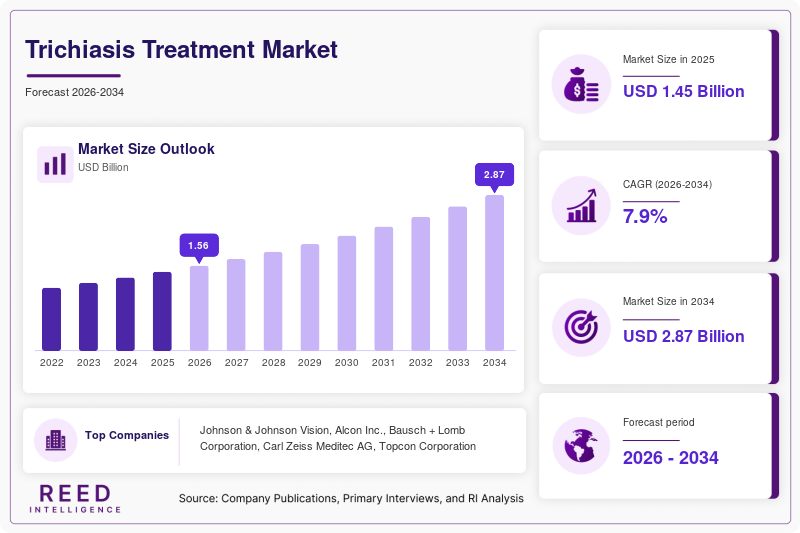
Key Highlights:
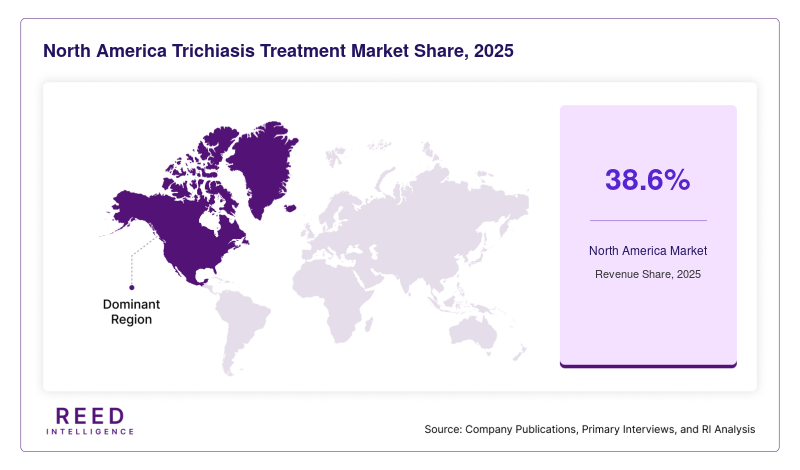
- North America dominated the market with a 38.6% share, while Asia Pacific is expected to register the fastest CAGR of 9.2% during the forecast period.
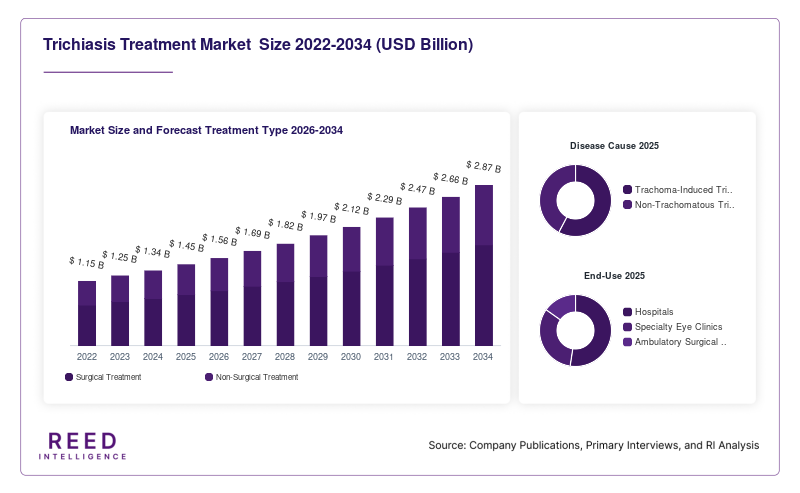
- Surgical treatment emerged as the leading segment with a 52.4% share, whereas non-surgical treatments are projected to grow fastest at a CAGR of 8.7%.
- Hospitals accounted for the largest end-use share at 46.8%, while specialty eye clinics are anticipated to witness the fastest growth at a CAGR of 8.9%.
- The United States remained the dominant country, with market values of USD 420 million in 2024 and USD 445 million in 2025.
Market Trends
Increasing Adoption of Minimally Invasive Procedures
The Trichiasis Treatment Market is witnessing a shift toward minimally invasive procedures such as electrolysis and laser ablation. These techniques reduce recovery time, minimize discomfort, and improve precision in eyelash removal. Patients are increasingly opting for outpatient procedures due to convenience and reduced hospitalization costs. Furthermore, healthcare providers are integrating advanced imaging and surgical tools, enabling accurate diagnosis and treatment planning. This trend is particularly prominent in developed regions where technological adoption is high and healthcare infrastructure is well established.
Expansion of Community-Based Eye Care Programs
Another significant trend shaping the market is the expansion of community-based eye care initiatives, especially in low- and middle-income countries. Governments and non-governmental organizations are focusing on early detection and treatment of preventable blindness conditions, including trichiasis caused by trachoma. Outreach programs, mobile eye clinics, and subsidized treatment campaigns are improving accessibility to care. These initiatives not only increase patient volume but also promote awareness about early intervention. As a result, the market is benefiting from a broader patient base and increased demand for affordable treatment solutions, particularly in underserved regions.
Market Drivers
Rising Prevalence of Trachoma and Eyelid Disorders
The increasing incidence of trachoma and other chronic eye infections is a primary driver of the Trichiasis Treatment Market. Trachoma remains a leading cause of preventable blindness in several regions, resulting in a high number of trichiasis cases. Persistent infections cause scarring of the eyelid, leading to misdirected eyelashes. The growing burden of such conditions has increased the need for effective and timely treatment options, driving both procedural and pharmaceutical demand.
Advancements in Ophthalmic Technologies
Technological progress in ophthalmology has significantly contributed to market growth. Innovations such as radiofrequency epilation, laser-based treatments, and improved surgical instruments have enhanced treatment precision and patient safety. These advancements reduce recurrence rates and improve clinical outcomes, encouraging healthcare providers to adopt modern treatment modalities. Additionally, the integration of digital diagnostics and teleophthalmology has facilitated early detection and treatment planning, further boosting the adoption of trichiasis treatment solutions.
Market Restraint
Limited Access to Specialized Eye Care in Rural Areas
A major restraint affecting the Trichiasis Treatment Market is the limited availability of specialized ophthalmic services in rural and remote regions. Many developing countries face a shortage of trained ophthalmologists and inadequate healthcare infrastructure, which restricts timely diagnosis and treatment. Patients in these areas often rely on basic healthcare facilities that lack the expertise and equipment required for effective trichiasis management.
This gap leads to delayed treatment, increasing the risk of complications such as corneal damage and vision loss. Additionally, the cost associated with advanced procedures can be prohibitive for low-income populations, further limiting market penetration. Although government initiatives and outreach programs are addressing this issue, the disparity in healthcare access continues to pose a challenge for market growth.
Market Opportunities
Growth in Emerging Healthcare Markets
Emerging economies present significant growth opportunities for the Trichiasis Treatment Market. Rapid urbanization, improving healthcare infrastructure, and increasing healthcare expenditure are driving demand for ophthalmic services. Countries in Asia Pacific and Africa are investing in eye care programs, creating a favorable environment for market expansion. Additionally, partnerships between governments and private organizations are facilitating the deployment of advanced treatment solutions in underserved areas.
Development of Cost-Effective Treatment Solutions
The development of affordable and scalable treatment options offers another promising opportunity. Manufacturers are focusing on low-cost surgical kits and portable devices to cater to resource-limited settings. These innovations enable healthcare providers to deliver effective treatments at reduced costs, increasing accessibility for a larger population. As affordability improves, the adoption of trichiasis treatments is expected to rise, particularly in developing regions where cost sensitivity is high.
Segmental Analysis
By Treatment Type
Surgical treatment dominated the Trichiasis Treatment Market in 2025, accounting for 52.4% of the total share. Procedures such as eyelid surgery and cryotherapy were widely adopted due to their effectiveness in preventing recurrence.
Non-surgical treatments are expected to grow at the fastest CAGR of 8.7% during the forecast period. The increasing preference for less invasive procedures and shorter recovery times will drive growth in this segment.
By Disease Cause
Trachoma-induced trichiasis held the largest share of 48.2% in 2025. The high prevalence of trachoma in developing regions contributed to the dominance of this segment.
Non-trachomatous trichiasis is projected to grow at a CAGR of 8.3%, driven by increasing cases linked to aging and chronic eye conditions.
By End-Use
Hospitals accounted for 46.8% of the market share in 2025, supported by access to advanced treatment facilities and skilled professionals.
Specialty eye clinics are expected to grow at a CAGR of 8.9%, driven by increasing patient preference for specialized care and outpatient services.
By Distribution Channel
Direct sales dominated the market with a 55.1% share in 2025, reflecting the reliance on institutional procurement.
Online distribution channels are anticipated to grow at a CAGR of 9.0%, supported by digitalization and improved access to medical supplies.
Regional Analysis
North America
North America accounted for 38.6% of the Trichiasis Treatment Market share in 2025 and is expected to grow at a CAGR of 6.8% during the forecast period. The region benefited from advanced healthcare infrastructure and high awareness of eye health.
The United States dominated the regional market due to strong healthcare spending and widespread availability of specialized ophthalmic services. The presence of skilled professionals and advanced treatment technologies contributed to consistent market growth.
Europe
Europe held a 27.4% share of the market in 2025 and is projected to grow at a CAGR of 7.1% through 2034. The region experienced steady demand due to an aging population and increasing incidence of eye disorders.
Germany emerged as the dominant country, driven by a well-established healthcare system and strong emphasis on early diagnosis. Government-supported healthcare programs ensured access to effective treatment options.
Asia Pacific
Asia Pacific captured 18.9% of the market share in 2025 and is expected to register the fastest CAGR of 9.2% during the forecast period. Rapid improvements in healthcare infrastructure supported market expansion.
China led the regional market due to a large patient population and increasing investments in healthcare facilities. Rising awareness and government initiatives to combat eye diseases played a key role in market growth.
Middle East & Africa
The Middle East & Africa region held 8.1% of the market share in 2025 and is anticipated to grow at a CAGR of 8.5%. The region showed gradual improvement in healthcare accessibility.
South Africa dominated the market, supported by expanding healthcare services and growing awareness of eye health. Efforts to address preventable blindness contributed to increased treatment adoption.
Latin America
Latin America accounted for 7.0% of the market share in 2025 and is expected to grow at a CAGR of 7.8%. Increasing healthcare investments supported market growth.
Brazil emerged as the leading country due to improving healthcare infrastructure and rising demand for ophthalmic treatments. Government initiatives aimed at expanding access to healthcare services played a crucial role.
Competitive Landscape
The Trichiasis Treatment Market is moderately fragmented, with several global and regional players competing on technology, pricing, and distribution. Key companies are focusing on expanding their product portfolios and strengthening their presence in emerging markets.
One leading player is Johnson & Johnson Vision, which has maintained a strong market position through continuous innovation and strategic partnerships. The company recently introduced advanced ophthalmic solutions aimed at improving treatment outcomes and patient comfort.
Other players are emphasizing research and development to introduce cost-effective and minimally invasive solutions. Collaborations with healthcare providers and government organizations are also common strategies to enhance market reach.
Key Players List
- Johnson & Johnson Vision
- Alcon Inc.
- Bausch + Lomb Corporation
- Carl Zeiss Meditec AG
- Topcon Corporation
- NIDEK Co., Ltd.
- EssilorLuxottica
- Ziemer Ophthalmic Systems AG
- Iridex Corporation
- Ellex Medical Lasers Ltd.
- Haag-Streit Group
- Lumenis Ltd.
- Quantel Medical
- Optos Plc
- Santen Pharmaceutical Co., Ltd.
Recent Developments
- In 2025, major companies introduced portable ophthalmic devices to improve accessibility in remote regions.
- Strategic collaborations between healthcare providers and NGOs increased the reach of trichiasis treatment programs.
- Advancements in laser-based procedures enhanced treatment precision and reduced recurrence rates.
- Several players expanded their presence in Asia Pacific through partnerships and distribution agreements.
Trichiasis Treatment Market Segments
Treatment Type
- Surgical Treatment
- Non-Surgical Treatment
Disease Cause
- Trachoma-Induced Trichiasis
- Non-Trachomatous Trichiasis
End-Use
- Hospitals
- Specialty Eye Clinics
- Ambulatory Surgical Centers
Distribution Channel
- Direct Sales
- Online Channels
By Region
- North America
- Europe
- APAC
- Middle East and Africa
- LATAM