Tularemia Therapeutic Market Size, Share & Demand Report By Treatment Type (Antibiotic Therapy, Combination Therapy), By Route of Administration (Injectable, Oral), By Distribution Channel (Hospital Pharmacies, Retail Pharmacies, Online Pharmacies), By End-User (Hospitals, Clinics, Homecare Settings), By Region & Segment Forecasts, 2025–2034
USD 3950
Market Overview
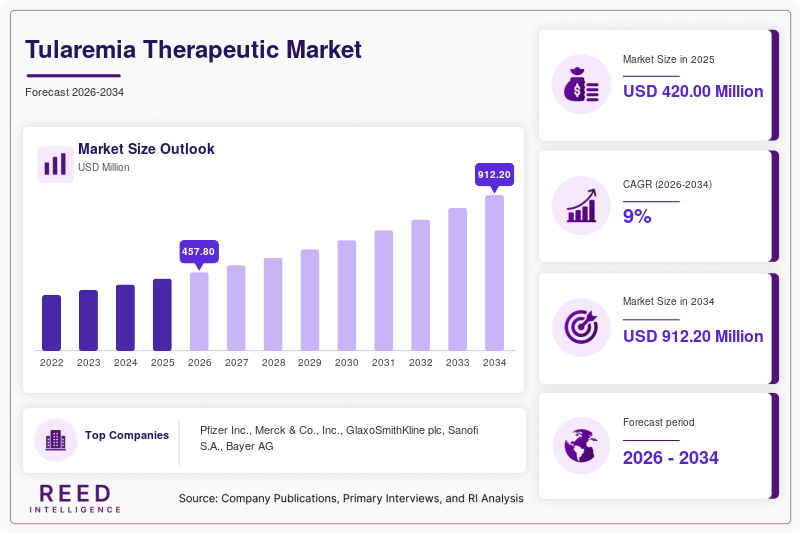
The Tularemia Therapeutic Market size was valued at approximately USD 420 million in 2025 and is projected to reach USD 910 million by 2034, expanding at a CAGR of 9.0% during 2025–2034. Growth in this market has been driven by increasing awareness of zoonotic infections and rising investments in infectious disease preparedness programs globally. Tularemia, a rare but potentially severe bacterial infection caused by Francisella tularensis, has gained renewed attention due to its classification as a potential biothreat agent, prompting governments and healthcare systems to strengthen stockpiling and treatment capabilities.
A key global factor supporting market expansion has been the growing emphasis on public health surveillance and biodefense initiatives, particularly in developed economies. Increased funding for antimicrobial therapies and rapid diagnostic technologies has led to enhanced treatment accessibility and early disease management, thereby driving therapeutic demand.
Key Highlights
- North America dominated the market with a 38% share in 2025, while Asia Pacific is expected to register the fastest growth at a CAGR of 10.8%.
- Antibiotic therapy emerged as the leading treatment segment, while combination therapy is projected to grow fastest with a CAGR of 10.5%.
- The hospital pharmacy segment held the largest share, whereas online pharmacy distribution is anticipated to expand at a CAGR of 11.2%.
- The United States accounted for a market value of USD 160 million in 2025, expected to grow to USD 175 million in 2026.
Market Trends
Shift Toward Combination Antibiotic Therapy
The Tularemia Therapeutic Market is witnessing a gradual shift from monotherapy to combination antibiotic regimens. Physicians are increasingly adopting dual-drug strategies to improve treatment efficacy and reduce relapse rates. This trend is particularly evident in severe or pneumonic tularemia cases, where standard monotherapy may not yield optimal results. Advances in pharmacokinetics and clinical research are supporting the development of combination therapies tailored to patient severity and comorbidities.
Integration of Rapid Diagnostic Technologies
Another key trend shaping the market is the integration of rapid diagnostic tools alongside therapeutic interventions. Early detection plays a crucial role in improving treatment outcomes, and innovations in molecular diagnostics are enabling quicker identification of Francisella tularensis. This has led to timely administration of targeted therapies, reducing hospitalization duration and complications. Healthcare systems are increasingly adopting point-of-care testing solutions, which is indirectly boosting demand for therapeutics by increasing diagnosed cases.
Market Drivers
Rising Focus on Biodefense Preparedness
Governments across the globe are prioritizing biodefense strategies due to the potential use of tularemia as a biological threat. This has resulted in increased funding for stockpiling antibiotics and developing effective treatment protocols. Strategic national reserves and emergency response frameworks are significantly contributing to the demand for tularemia therapeutics.
Increasing Incidence of Zoonotic Diseases
The growing prevalence of zoonotic infections, driven by climate change and human-animal interaction, is a major driver of the Tularemia Therapeutic Market. Expanding wildlife habitats and agricultural activities are increasing human exposure to disease vectors such as ticks and rodents. This has led to a rise in reported cases, particularly in endemic regions, thereby boosting the demand for effective treatment options.
Market Restraint
Limited Awareness and Underdiagnosis in Emerging Regions
A significant restraint impacting the Tularemia Therapeutic Market is the limited awareness and underdiagnosis of the disease in developing and low-income regions. Tularemia symptoms often mimic other febrile illnesses, leading to misdiagnosis or delayed treatment. Inadequate healthcare infrastructure and lack of access to advanced diagnostic tools further exacerbate the issue.
Additionally, healthcare professionals in non-endemic regions may have limited experience with the disease, resulting in inconsistent treatment approaches. The absence of standardized diagnostic protocols in certain areas contributes to underreporting, which restricts market growth potential. Pharmaceutical companies also face challenges in expanding their presence in these regions due to regulatory and logistical barriers.
Market Opportunities
Development of Targeted Therapeutics and Vaccines
The development of targeted therapeutics and potential vaccines presents a significant opportunity for market expansion. Ongoing research efforts aimed at understanding the pathogen’s molecular structure are enabling the design of more effective treatment options. Vaccine development, although still in experimental stages, could revolutionize disease prevention and create new revenue streams for market players.
Expansion in Emerging Healthcare Markets
Emerging economies offer substantial growth opportunities due to improving healthcare infrastructure and rising government investments in infectious disease management. Increased awareness campaigns and public health initiatives are expected to enhance diagnosis rates, thereby driving demand for therapeutics. Pharmaceutical companies can leverage these markets by establishing local manufacturing units and distribution networks.
Segmental Analysis
By Treatment Type
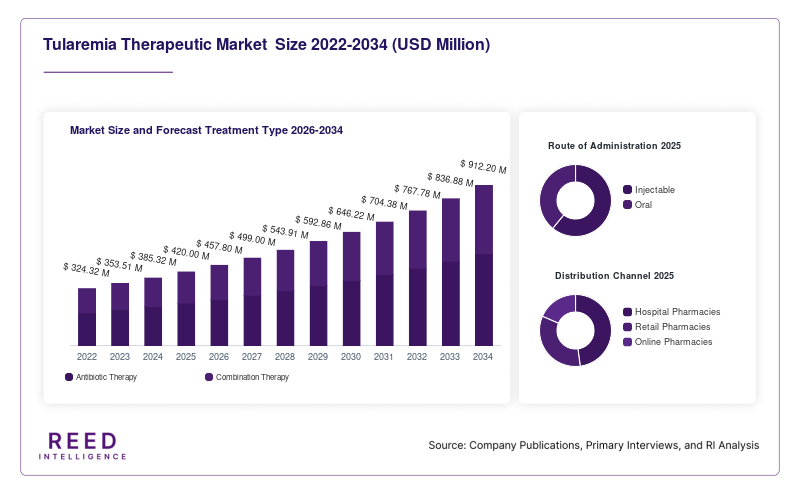
Antibiotic therapy dominated the Tularemia Therapeutic Market, accounting for approximately 72% of the total share in 2025. This dominance was driven by the effectiveness of antibiotics such as streptomycin, gentamicin, and doxycycline in treating tularemia infections. These drugs have been widely adopted due to their proven efficacy and established clinical guidelines.
Combination therapy is expected to emerge as the fastest-growing subsegment, projected to expand at a CAGR of 10.5%. This growth will be driven by increasing clinical evidence supporting the use of multiple antibiotics to enhance treatment outcomes and reduce relapse rates. The rising complexity of severe cases is encouraging healthcare providers to adopt combination regimens.
By Route of Administration
The injectable segment held the largest share, contributing around 65% in 2025. Injectable antibiotics are commonly used in severe cases and hospital settings due to their rapid action and high efficacy.
The oral segment is projected to grow at a CAGR of 10.2%, driven by increasing preference for outpatient treatment and improved patient compliance. Advances in oral antibiotic formulations are making them more effective and accessible, supporting segment growth.
By Distribution Channel
Hospital pharmacies dominated the market with a 58% share in 2025, as most tularemia cases require hospitalization and immediate medical intervention. The availability of specialized drugs and professional supervision in hospitals contributed to this dominance.
Online pharmacies are expected to grow at the fastest CAGR of 11.2%, driven by increasing digitalization of healthcare and rising adoption of e-commerce platforms. Improved logistics and regulatory support are facilitating the growth of this segment.
By End-User
Hospitals accounted for the largest share at 60% in 2025, due to the need for intensive care and monitoring in severe cases. The availability of advanced diagnostic and treatment facilities further supported this segment.
Homecare settings are anticipated to grow at a CAGR of 9.8%, driven by increasing preference for home-based treatment and advancements in telemedicine. This shift is expected to reduce hospitalization costs and improve patient convenience.
Regional Analysis
North America
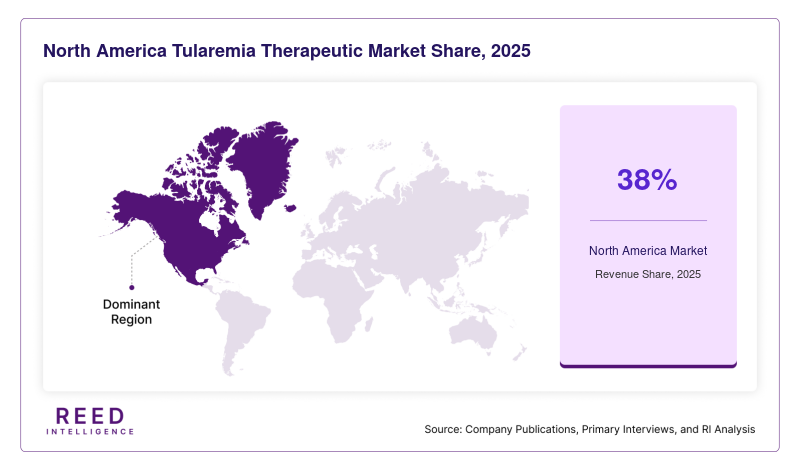
North America accounted for 38% of the Tularemia Therapeutic Market share in 2025 and is projected to grow at a CAGR of 8.5% through 2034. The region’s dominance was attributed to advanced healthcare infrastructure, strong government support for biodefense, and high awareness levels regarding rare infectious diseases. The presence of well-established pharmaceutical companies and robust research capabilities further strengthened market growth.
The United States remained the dominant country due to its extensive biodefense programs and strategic stockpiling of antibiotics. Federal agencies have been actively investing in infectious disease preparedness, which has significantly boosted the demand for tularemia therapeutics. Additionally, the availability of advanced diagnostic tools has facilitated early detection and effective treatment.
Europe
Europe held approximately 27% market share in 2025 and is expected to grow at a CAGR of 8.7% during the forecast period. The region’s growth was driven by increasing incidence rates in Eastern and Northern Europe, coupled with strong public healthcare systems. Government initiatives aimed at improving disease surveillance have also contributed to market expansion.
Germany emerged as the leading country, supported by its advanced healthcare infrastructure and strong focus on infectious disease research. The country has been actively investing in antimicrobial resistance programs, which indirectly supports the development and adoption of effective tularemia treatments.
Asia Pacific
Asia Pacific captured around 18% of the market share in 2025 and is anticipated to grow at the fastest CAGR of 10.8%. The region’s rapid growth is attributed to increasing awareness, improving healthcare infrastructure, and rising incidence of zoonotic diseases.
China dominated the regional market due to its large population base and growing investments in healthcare modernization. The government’s focus on strengthening disease surveillance systems and expanding access to healthcare services has significantly contributed to market growth.
Middle East & Africa
The Middle East & Africa region accounted for approximately 9% of the market share in 2025 and is expected to grow at a CAGR of 9.3%. Growth in this region was driven by increasing healthcare investments and rising awareness of infectious diseases.
Saudi Arabia emerged as a key contributor, supported by government initiatives aimed at improving healthcare infrastructure and disease management systems. The country’s focus on enhancing diagnostic capabilities has facilitated early detection and treatment.
Latin America
Latin America held around 8% market share in 2025 and is projected to grow at a CAGR of 9.1%. The region’s growth is supported by improving healthcare access and increasing government focus on infectious disease control.
Brazil led the regional market due to its expanding healthcare system and rising awareness of zoonotic diseases. Public health campaigns and improved diagnostic facilities have contributed to increased detection and treatment rates.
Competitive Landscape
The Tularemia Therapeutic Market is moderately consolidated, with key players focusing on antibiotic development, strategic partnerships, and government contracts. Leading companies are investing in research and development to enhance treatment efficacy and expand their product portfolios.
Pfizer Inc. stands out as a market leader due to its strong portfolio of anti-infective drugs and global distribution network. The company has recently expanded its production capacity to meet increasing demand for critical antibiotics used in tularemia treatment.
Other major players are emphasizing collaborations with government agencies and research institutions to strengthen their market position. Continuous innovation and regulatory approvals remain key strategies for sustaining competitiveness in this market.
Key Players
- Pfizer Inc.
- Merck & Co., Inc.
- GlaxoSmithKline plc
- Sanofi S.A.
- Bayer AG
- Novartis AG
- Johnson & Johnson
- Abbott Laboratories
- Teva Pharmaceutical Industries Ltd.
- Cipla Ltd.
- Sun Pharmaceutical Industries Ltd.
- Aurobindo Pharma Ltd.
- Hikma Pharmaceuticals PLC
- Mylan N.V.
- Lupin Limited
Recent Developments
- In 2024, leading pharmaceutical companies increased production of aminoglycoside antibiotics to strengthen global supply chains.
- In 2025, several biotech firms initiated clinical trials for novel tularemia vaccine candidates.
- Strategic collaborations between public health agencies and pharmaceutical companies expanded antibiotic stockpiles.
- Advancements in rapid diagnostic tools improved early detection and treatment initiation rates.
- Regulatory bodies introduced updated guidelines for the management of rare infectious diseases, including tularemia.
Tularemia Therapeutic Market Segments
Treatment Type
- Antibiotic Therapy
- Combination Therapy
Route of Administration
- Injectable
- Oral
Distribution Channel
- Hospital Pharmacies
- Retail Pharmacies
- Online Pharmacies
End-User
- Hospitals
- Clinics
- Homecare Settings
By Region
- North America
- Europe
- APAC
- Middle East and Africa
- LATAM