Ulcerated Necrobiosis Lipoidica Management Market Size, Share & Demand Report By Treatment Type (Topical Corticosteroids, Immunomodulators, Biologics, Advanced Wound Care Products), By Route of Administration (Topical, Oral, Injectable), By End-Use (Hospitals, Specialty Clinics, Homecare Settings) By Region & Segment Forecasts, 2025–2034
USD 3950
Market Overview
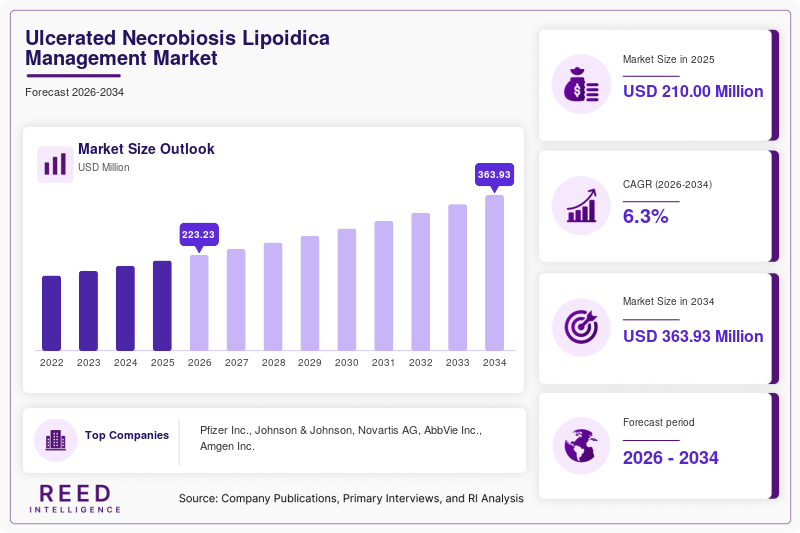
The global Ulcerated Necrobiosis Lipoidica Management Market size was valued at approximately USD 210 million in 2025 and is projected to reach around USD 365 million by 2034, expanding at a CAGR of 6.3% from 2025 to 2034. The market is driven by the increasing prevalence of chronic dermatological conditions associated with diabetes and autoimmune disorders, alongside rising awareness regarding early diagnosis and treatment of rare skin diseases.
One of the primary global factors supporting market growth is the rising burden of diabetes worldwide. As ulcerated necrobiosis lipoidica is strongly associated with diabetic populations, the expanding diabetic patient pool has significantly contributed to demand for advanced wound care, topical therapies, and immunomodulatory treatments. Additionally, improvements in dermatological research and the availability of specialized wound care centers have enhanced treatment accessibility, further supporting market expansion.
Key Highlights:
- North America dominated the market with 38% share, while Asia Pacific is projected to register the fastest CAGR of 7.5%.
- By treatment type, topical corticosteroids led with a 34% share, while biologics are expected to grow at a CAGR of 8.2%.
- By end-use, hospitals dominated, whereas specialty dermatology clinics are the fastest growing at a CAGR of 7.1%.
- The United States remained the dominant country with market values of USD 78 million in 2024 and USD 82 million in 2025.
Market Trends
Increasing Adoption of Advanced Wound Care Solutions
The Ulcerated Necrobiosis Lipoidica Management Market is witnessing a shift toward advanced wound care technologies, including bioengineered skin substitutes, antimicrobial dressings, and hydrocolloid-based therapies. These solutions improve healing rates, reduce infection risks, and enhance patient comfort. Healthcare providers are increasingly preferring these products due to their ability to manage chronic ulcers more effectively than conventional dressings.
Integration of Biologic and Immunomodulatory Therapies
Another notable trend shaping the market is the integration of biologic therapies targeting inflammatory pathways associated with ulcerated necrobiosis lipoidica. Drugs that modulate immune responses are gaining traction, especially in refractory cases. The growing use of biologics reflects advancements in personalized medicine and improved understanding of disease pathology, leading to better clinical outcomes and long-term management strategies.
Market Drivers
Rising Prevalence of Diabetes-Linked Skin Disorders
The increasing global incidence of diabetes has significantly contributed to the growth of the Ulcerated Necrobiosis Lipoidica Management Market. Patients with diabetes are more susceptible to vascular complications and skin disorders, including necrobiosis lipoidica. This expanding patient pool has created sustained demand for effective treatment solutions and long-term disease management approaches.
Growing Awareness and Early Diagnosis of Rare Dermatological Conditions
Improved awareness among healthcare professionals and patients has led to earlier diagnosis and treatment of ulcerated necrobiosis lipoidica. Educational initiatives and clinical guidelines have encouraged prompt intervention, reducing complications associated with ulceration. As a result, demand for both pharmacological and non-pharmacological treatment options has increased, driving overall market growth.
Market Restraint
Limited Standardized Treatment Protocols
A major challenge in the Ulcerated Necrobiosis Lipoidica Management Market is the lack of standardized treatment guidelines. Due to the rarity of the condition and variability in patient response, clinicians often rely on trial-and-error approaches. This uncertainty can lead to inconsistent treatment outcomes and prolonged healing times.
Additionally, limited clinical trials and insufficient large-scale studies hinder the development of universally accepted therapies. The absence of standardized protocols also affects reimbursement policies and restricts the widespread adoption of newer treatment modalities. These factors collectively act as a restraint on market growth, particularly in developing regions where access to specialized care is limited.
Market Opportunities
Expansion of Biologic Therapy Applications
The growing success of biologics in treating inflammatory and autoimmune conditions presents a significant opportunity for the Ulcerated Necrobiosis Lipoidica Management Market. Expanding research into targeted therapies could lead to the development of highly effective treatment options for severe and resistant cases. Pharmaceutical companies are increasingly investing in clinical trials to explore new indications for biologic drugs.
Growth in Teledermatology and Remote Patient Monitoring
The adoption of telemedicine platforms has created new avenues for managing chronic dermatological conditions. Teledermatology allows for remote diagnosis, monitoring, and follow-up care, particularly beneficial for patients in underserved areas. This approach enhances treatment adherence and enables early intervention, thereby improving outcomes and expanding the reach of the market.
Segmental Analysis
By Treatment Type
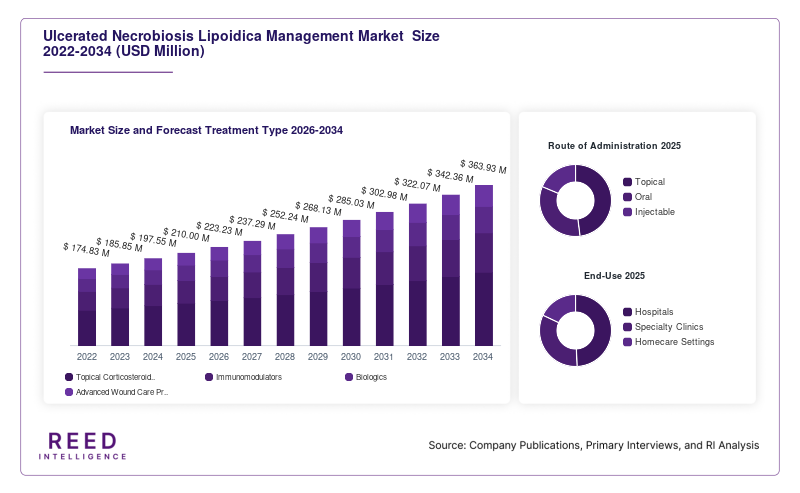
Topical corticosteroids dominated the Ulcerated Necrobiosis Lipoidica Management Market with a 34% share in 2024, owing to their widespread use as first-line therapy for reducing inflammation and controlling lesion progression.
Biologics are anticipated to be the fastest-growing subsegment, expanding at a CAGR of 8.2%, driven by their targeted mechanism of action and effectiveness in severe cases.
By Drug Class
Corticosteroids led the segment with a 36% share in 2024, reflecting their strong clinical adoption and cost-effectiveness.
Immunomodulators are projected to grow at a CAGR of 7.8%, supported by increasing research into immune-mediated pathways and improved patient outcomes.
By Route of Administration
Topical administration accounted for the largest share of 41% in 2024, due to ease of application and minimal systemic side effects.
Injectable therapies are expected to grow at a CAGR of 7.4%, driven by increasing use of biologics and advanced treatment options.
By End-Use
Hospitals dominated the market with a 45% share in 2024, supported by availability of comprehensive treatment facilities and skilled professionals.
Specialty dermatology clinics are expected to grow at a CAGR of 7.1%, driven by increasing patient preference for specialized care and personalized treatment approaches.
By Distribution Channel
Hospital pharmacies held a 39% share in 2024, owing to high patient inflow and direct access to prescribed medications.
Online pharmacies are projected to grow at a CAGR of 8.0%, fueled by rising digitalization and convenience of home delivery services.
Regional Analysis
North America
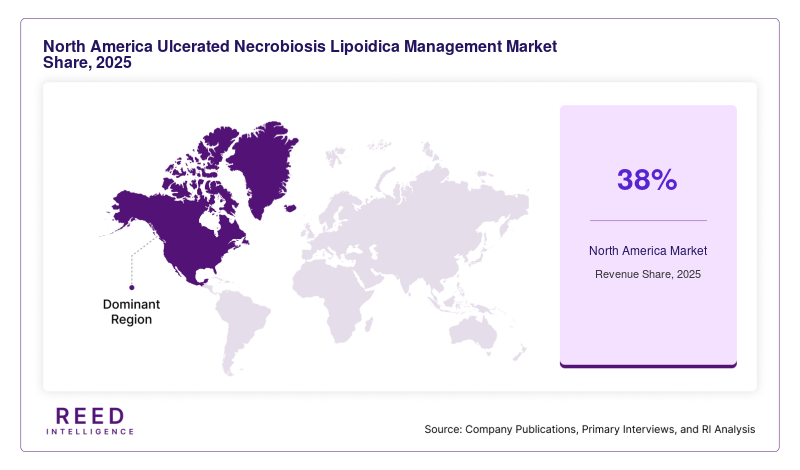
North America accounted for approximately 38% of the Ulcerated Necrobiosis Lipoidica Management Market share in 2025 and will grow at a CAGR of 5.8% through 2034.
The United States dominated the region due to advanced healthcare infrastructure and strong availability of specialized dermatology services. High healthcare spending and access to innovative therapies have supported consistent market growth.
Europe
Europe held around 27% market share in 2025 and is expected to grow at a CAGR of 5.9% during the forecast period.
Germany emerged as the leading country, supported by a well-established healthcare system and increasing focus on rare disease management. Government initiatives promoting dermatological research have further strengthened market growth.
Asia Pacific
Asia Pacific captured approximately 19% share in 2025 and will register the fastest CAGR of 7.5%.
China dominated the region due to its large diabetic population and improving healthcare infrastructure. Rising awareness and expanding access to dermatology clinics have significantly contributed to market expansion.
Middle East & Africa
The Middle East & Africa region accounted for about 9% share in 2025 and is projected to grow at a CAGR of 6.1%.
Saudi Arabia led the region, driven by increasing healthcare investments and growing awareness of chronic wound management. Expansion of healthcare facilities has improved access to treatment.
Latin America
Latin America held nearly 7% share in 2025 and is expected to grow at a CAGR of 6.0%.
Brazil dominated the region due to its expanding healthcare sector and rising prevalence of diabetes. Improved access to dermatological treatments has supported market growth.
Competitive Landscape
The Ulcerated Necrobiosis Lipoidica Management Market is moderately fragmented, with several pharmaceutical and wound care companies competing through product innovation and strategic collaborations. Key players focus on expanding their dermatology portfolios and enhancing their presence in emerging markets.
A leading player in the market is Pfizer Inc., which has strengthened its position through investments in biologic therapies and dermatological research. The company recently advanced clinical studies exploring new applications for its immunomodulatory drugs in rare skin conditions.
Other companies are actively developing advanced wound care products and expanding distribution networks to improve accessibility. Strategic partnerships between pharmaceutical firms and healthcare providers are also shaping the competitive landscape, enabling faster adoption of innovative treatment solutions.
Key Players List
- Pfizer Inc.
- Johnson & Johnson
- Novartis AG
- AbbVie Inc.
- Amgen Inc.
- Eli Lilly and Company
- Bristol-Myers Squibb Company
- GlaxoSmithKline plc
- Sanofi S.A.
- Merck & Co., Inc.
- 3M Company
- Smith & Nephew plc
- Coloplast A/S
- Mölnlycke Health Care AB
- B. Braun Melsungen AG
Recent Developments
- In 2024, major pharmaceutical companies expanded clinical trials targeting rare dermatological conditions using biologic therapies.
- Several wound care manufacturers introduced advanced antimicrobial dressings aimed at improving ulcer healing rates.
- Strategic collaborations between healthcare providers and biotech firms increased to accelerate treatment innovation.
- Digital health platforms expanded teledermatology services for chronic skin disease management.
Ulcerated Necrobiosis Lipoidica Management Market Segments
Treatment Type
- Topical Corticosteroids
- Immunomodulators
- Biologics
- Advanced Wound Care Products
Route of Administration
- Topical
- Oral
- Injectable
End-Use
- Hospitals
- Specialty Clinics
- Homecare Settings
Distribution Channel
- Hospital Pharmacies
- Retail Pharmacies
- Online Pharmacies
By Region
- North America
- Europe
- APAC
- Middle East and Africa
- LATAM