Ultrasound Image Analysis Software Market Size, Share Demand Report By Type (2D Ultrasound Analysis Software, 3D/4D Ultrasound Analysis Software), By Application (Radiology, Cardiology, Obstetrics & Gynecology, Others), By End-Use (Hospitals, Diagnostic Centers, Ambulatory Surgical Centers), By Region & Segment Forecasts, 2025–2034
USD 3950
Market Overview
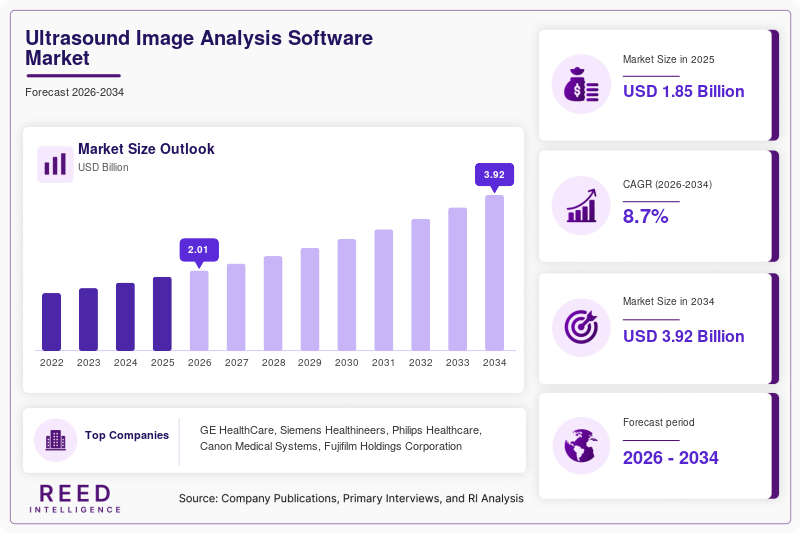
The Ultrasound Image Analysis Software Market size is witnessing consistent expansion driven by the increasing integration of digital imaging technologies in diagnostic workflows. In 2025, the global market size is estimated at USD 1.85 billion, and it is projected to reach approximately USD 2.05 billion in 2026. Over the forecast period from 2025 to 2034, the market is expected to grow at a CAGR of 8.7%, reaching nearly USD 4.25 billion by 2034. This growth reflects rising demand for automated imaging tools, enhanced diagnostic accuracy, and the broader adoption of artificial intelligence (AI) in healthcare systems.
One of the primary growth factors is the rising prevalence of chronic diseases such as cardiovascular disorders, cancer, and liver conditions, which require frequent imaging for diagnosis and monitoring. Ultrasound imaging, being non-invasive and cost-effective, has become a preferred modality, increasing the demand for advanced software solutions that can analyze images efficiently. Additionally, technological advancements such as machine learning-based segmentation, real-time imaging analytics, and 3D/4D visualization capabilities are significantly enhancing the utility of ultrasound analysis software.
Key Highlights
- Market size estimated at USD 1.85 billion in 2025
- Expected to reach USD 4.25 billion by 2034
- CAGR of 8.7% from 2025 to 2034
- Rising integration of AI and machine learning technologies
- Growing demand for point-of-care and portable imaging solutions
Market Trends
Integration of Artificial Intelligence in Image Interpretation
The integration of artificial intelligence into ultrasound image analysis software is transforming diagnostic processes across healthcare systems. AI-powered algorithms are capable of detecting abnormalities, segmenting anatomical structures, and providing quantitative measurements with a high level of precision. This trend is gaining traction as healthcare providers aim to improve diagnostic accuracy while reducing interpretation time. The use of deep learning models allows for automated detection of conditions such as tumors, cardiac anomalies, and fetal abnormalities. Additionally, AI enhances consistency in image interpretation, minimizing variability among clinicians. Vendors are increasingly focusing on developing AI-enabled platforms that can be integrated with existing ultrasound systems, enabling seamless adoption. This trend is expected to continue shaping the market as regulatory approvals for AI-based tools increase and healthcare institutions invest in advanced imaging technologies.
Shift Toward Cloud-Based and SaaS Deployment Models
Another notable trend in the Ultrasound Image Analysis Software Market is the transition toward cloud-based and software-as-a-service (SaaS) deployment models. These solutions offer scalability, remote accessibility, and cost efficiency, making them attractive for both large hospitals and small clinics. Cloud-based platforms enable real-time data sharing and collaboration among healthcare professionals, which is particularly valuable in telemedicine and remote diagnostics. Moreover, these solutions reduce the need for extensive on-premise infrastructure, lowering operational costs. Vendors are incorporating advanced security features to address data privacy concerns, further supporting adoption. The growing demand for integrated healthcare systems and electronic medical records is also driving the adoption of cloud-based ultrasound analysis software. This trend is expected to gain momentum as digital healthcare ecosystems continue to evolve.
Market Drivers
Increasing Prevalence of Chronic Diseases
The rising incidence of chronic diseases is a major driver of the Ultrasound Image Analysis Software Market. Conditions such as cardiovascular diseases, liver disorders, and cancer require continuous monitoring and early diagnosis, which heavily rely on imaging technologies. Ultrasound imaging is widely used due to its safety, affordability, and ability to provide real-time results. As the patient population grows, healthcare providers are seeking efficient software solutions to manage the increasing volume of imaging data. Advanced analysis software enables faster interpretation, improved accuracy, and better patient outcomes. Additionally, the aging global population is contributing to higher disease prevalence, further driving demand for ultrasound imaging and associated software solutions.
Technological Advancements in Imaging Software
Continuous technological advancements in ultrasound imaging software are significantly driving market growth. Innovations such as 3D/4D imaging, real-time analytics, and automated measurement tools are enhancing the capabilities of ultrasound systems. The integration of machine learning algorithms allows for improved image clarity and more accurate diagnosis. These advancements are particularly beneficial in specialized fields such as cardiology, obstetrics, and oncology. Furthermore, the development of user-friendly interfaces and customizable software solutions is encouraging adoption among healthcare professionals. Vendors are investing heavily in research and development to introduce advanced features that improve workflow efficiency and diagnostic precision, thereby fueling market expansion.
Market Restraint
High Implementation and Integration Costs
One of the key restraints affecting the Ultrasound Image Analysis Software Market is the high cost associated with implementation and integration. Advanced software solutions often require significant investment in hardware, infrastructure, and training. Small and medium-sized healthcare facilities may find it challenging to adopt these technologies due to budget constraints. Additionally, integrating new software with existing hospital information systems and imaging equipment can be complex and time-consuming. This complexity may lead to operational disruptions and increased costs during the transition phase. For example, a mid-sized diagnostic center may need to upgrade its entire imaging infrastructure to support advanced software features, which can delay adoption. Moreover, ongoing maintenance and software updates add to the total cost of ownership. These financial and operational challenges can limit market growth, particularly in developing regions where healthcare budgets are constrained.
Market Opportunities
Expansion in Emerging Markets
Emerging economies present significant growth opportunities for the Ultrasound Image Analysis Software Market. Countries in Asia Pacific, Latin America, and Africa are investing in healthcare infrastructure and expanding access to diagnostic services. The increasing adoption of digital healthcare solutions in these regions is creating demand for advanced imaging software. Government initiatives aimed at improving healthcare accessibility and affordability are further supporting market growth. Additionally, the rising prevalence of chronic diseases in these regions is driving the need for efficient diagnostic tools. Vendors can capitalize on this opportunity by offering cost-effective and scalable solutions tailored to the needs of emerging markets.
Growth of Telemedicine and Remote Diagnostics
The rapid growth of telemedicine and remote diagnostics is creating new opportunities for ultrasound image analysis software providers. With the increasing use of portable ultrasound devices, there is a growing need for software solutions that enable remote image analysis and interpretation. Cloud-based platforms allow healthcare professionals to access and analyze imaging data from any location, facilitating timely diagnosis and treatment. This is particularly beneficial in rural and underserved areas where access to specialized healthcare services is limited. The integration of ultrasound software with telemedicine platforms is expected to drive market growth as healthcare systems continue to adopt digital solutions.
Segmental Analysis
By Type
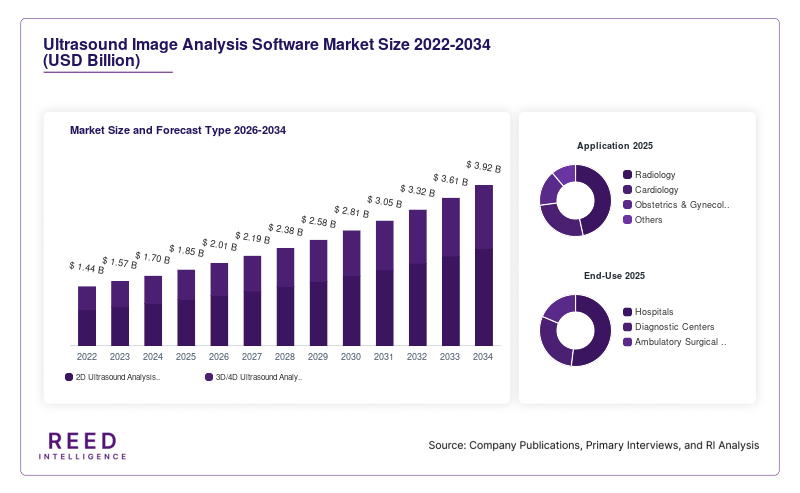
The 2D ultrasound analysis software segment dominated the market in 2024, accounting for approximately 46% of the total share. This dominance is attributed to the widespread use of 2D ultrasound imaging in routine diagnostic procedures. The simplicity, cost-effectiveness, and reliability of 2D imaging make it a preferred choice among healthcare providers. Additionally, 2D software solutions are easier to integrate with existing systems and require less computational power, making them accessible to a broader range of healthcare facilities.
The 3D/4D ultrasound analysis software segment is expected to grow at the fastest CAGR of 10.5% during the forecast period. The increasing demand for advanced imaging techniques in fields such as obstetrics and cardiology is driving this growth. These technologies provide enhanced visualization and more detailed anatomical information, improving diagnostic accuracy. The growing adoption of advanced imaging technologies and increasing investment in research and development are key factors contributing to the growth of this segment.
By Application
The radiology segment held the largest share of approximately 40% in 2024, driven by the extensive use of ultrasound imaging in diagnostic radiology. Radiologists rely on advanced software solutions for accurate image interpretation and efficient workflow management. The increasing volume of imaging procedures and the need for precise diagnosis are driving the adoption of ultrasound analysis software in this segment.
The cardiology segment is expected to grow at the highest CAGR of 9.8% during the forecast period. The rising prevalence of cardiovascular diseases and the increasing use of echocardiography are key factors driving growth. Advanced software solutions enable detailed analysis of cardiac structures and functions, improving diagnostic accuracy and patient outcomes. The integration of AI-based tools in cardiology applications is further supporting market growth.
By End-Use
Hospitals accounted for the largest market share of approximately 55% in 2024, owing to the high volume of imaging procedures performed in these settings. Hospitals have the resources to invest in advanced imaging technologies and software solutions, making them the primary users of ultrasound analysis software. The need for efficient workflow management and accurate diagnosis is driving adoption in this segment.
Diagnostic centers are expected to grow at the fastest CAGR of 9.2% during the forecast period. The increasing demand for outpatient diagnostic services and the expansion of diagnostic facilities are key factors driving growth. These centers are adopting advanced software solutions to enhance efficiency and provide high-quality diagnostic services. The growing trend of preventive healthcare and early diagnosis is further supporting the growth of this segment.
Regional Analysis
North America
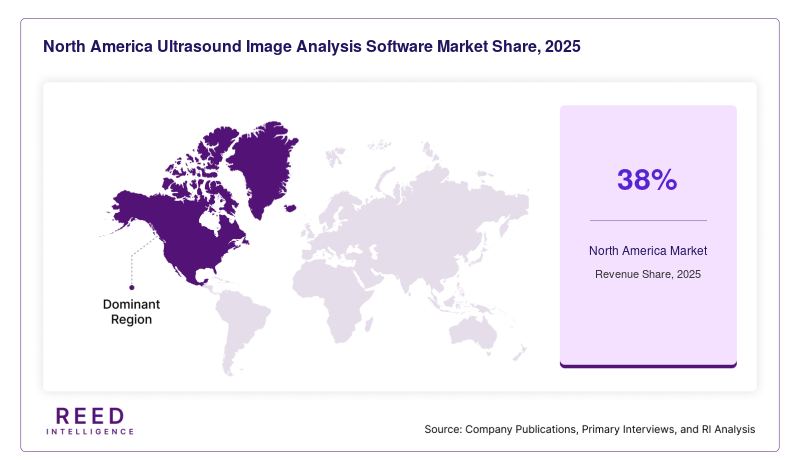
North America accounted for approximately 38% of the global Ultrasound Image Analysis Software Market share in 2025 and is expected to maintain its dominance throughout the forecast period, growing at a CAGR of 7.9%. The region’s growth is driven by advanced healthcare infrastructure, high adoption of digital imaging technologies, and strong investment in research and development. The presence of established market players and favorable reimbursement policies further support market expansion.
The United States dominates the regional market due to its well-developed healthcare system and high adoption of advanced imaging technologies. A key growth factor is the increasing integration of AI-based diagnostic tools in clinical workflows. Healthcare providers are focusing on improving efficiency and accuracy, which is driving the demand for advanced ultrasound analysis software.
Europe
Europe held around 27% of the market share in 2025 and is projected to grow at a CAGR of 8.1% during the forecast period. The region benefits from strong government support for healthcare innovation and increasing adoption of digital health solutions. Countries are investing in modernizing healthcare infrastructure, which is boosting demand for advanced imaging software.
Germany leads the European market, supported by its robust healthcare system and emphasis on technological innovation. A unique growth factor is the increasing collaboration between research institutions and technology providers, leading to the development of advanced imaging solutions tailored to clinical needs.
Asia Pacific
Asia Pacific accounted for nearly 22% of the market share in 2025 and is expected to grow at the highest CAGR of 10.2%. Rapid urbanization, increasing healthcare expenditure, and growing awareness about early disease diagnosis are driving market growth in this region.
China dominates the Asia Pacific market due to its large population and expanding healthcare infrastructure. A key growth factor is the government’s focus on digital healthcare transformation, which is encouraging the adoption of advanced imaging technologies, including ultrasound analysis software.
Middle East & Africa
The Middle East & Africa region held approximately 7% of the market share in 2025 and is projected to grow at a CAGR of 8.5%. The region is witnessing improvements in healthcare infrastructure and increasing investment in medical technologies, which are driving market growth.
The United Arab Emirates is a leading market in the region, supported by its advanced healthcare facilities and focus on medical tourism. A unique growth factor is the increasing adoption of telemedicine solutions, which is driving demand for remote imaging analysis software.
Latin America
Latin America accounted for about 6% of the market share in 2025 and is expected to grow at a CAGR of 8.3% during the forecast period. The region is experiencing gradual improvements in healthcare infrastructure and increasing adoption of digital health technologies.
Brazil dominates the Latin American market due to its large healthcare system and growing investment in medical technology. A key growth factor is the rising demand for cost-effective diagnostic solutions, which is driving the adoption of ultrasound image analysis software.
Competitive Landscape
The Ultrasound Image Analysis Software Market is characterized by moderate competition, with several global and regional players focusing on innovation and strategic collaborations. Key companies are investing in research and development to introduce advanced features such as AI-based image analysis, cloud integration, and real-time diagnostics.
GE HealthCare is considered a leading player in the market due to its extensive product portfolio and strong global presence. The company has recently introduced AI-powered ultrasound analysis solutions aimed at improving diagnostic accuracy and workflow efficiency. Other major players are focusing on partnerships and acquisitions to expand their market presence and enhance their technological capabilities. The competitive landscape is expected to remain dynamic, with companies continuously striving to gain a competitive edge through innovation and strategic initiatives.
Key Players
- GE HealthCare
- Siemens Healthineers
- Philips Healthcare
- Canon Medical Systems
- Fujifilm Holdings Corporation
- Mindray Medical International
- Esaote SpA
- Samsung Medison
- Agfa-Gevaert Group
- Carestream Health
- Hitachi Medical Systems
- Zebra Medical Vision
- Butterfly Network
- Terason
- ContextVision
Recent Developments
- In 2024, GE HealthCare launched an AI-enabled ultrasound software platform designed to enhance real-time diagnostic capabilities.
- In 2023, Siemens Healthineers expanded its ultrasound software portfolio with cloud-based solutions for remote diagnostics.
- In 2024, Philips Healthcare introduced advanced 3D imaging software integrated with machine learning algorithms for improved accuracy.
Ultrasound Image Analysis Software Market Segments
Type
- 2D Ultrasound Analysis Software
- 3D/4D Ultrasound Analysis Software
Application
- Radiology
- Cardiology
- Obstetrics & Gynecology
- Others
End-Use
- Hospitals
- Diagnostic Centers
- Ambulatory Surgical Centers
By Region
- North America
- Europe
- APAC
- Middle East and Africa
- LATAM