Umbilical Market Size, Share & Demand Report By Product Type (Umbilical Cord Blood Banking Services, Stem Cell Processing Systems, Collection and Storage Equipment), By Application (Regenerative Medicine, Neonatal Surgical Applications), By End Use (Hospitals and Maternity Centers, Biotechnology Research Institutes, Cord Blood Banks, Specialty Clinics), By Region & Segment Forecasts, 2026–2034
USD 3950
Market Overview
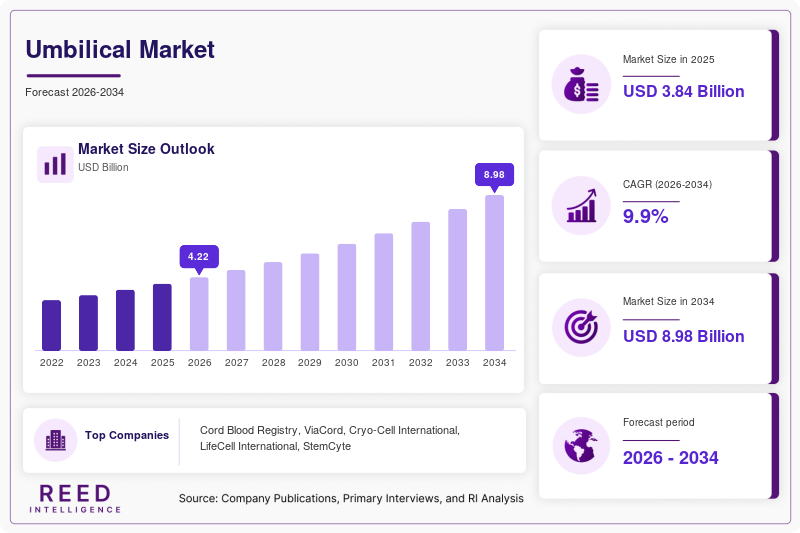
The global Umbilical Market size was valued at USD 3.84 billion in 2026 and is projected to reach USD 8.21 billion by 2034, expanding at a CAGR of 9.9% during the forecast period. The market continues to gain momentum due to rising demand for advanced neonatal care systems, expanding maternal healthcare infrastructure, and increasing investments in umbilical cord blood processing and storage technologies. Growing awareness regarding stem cell therapies and regenerative medicine has also contributed to long-term industry expansion across developed and emerging economies.
Healthcare providers and biotechnology companies are increasing investments in umbilical-related products and services to support prenatal diagnostics, cord blood banking, neonatal surgical devices, and postnatal care procedures. The adoption of advanced medical imaging systems and minimally invasive delivery technologies has improved procedural efficiency and patient outcomes. In addition, supportive government programs focused on maternal and infant healthcare have strengthened demand for umbilical care solutions in hospitals and specialty clinics.
Key Highlights
- North America dominated the market with a 35.1% share in 2025.
- Asia Pacific is expected to grow at the fastest CAGR of 11.6% during 2026–2034.
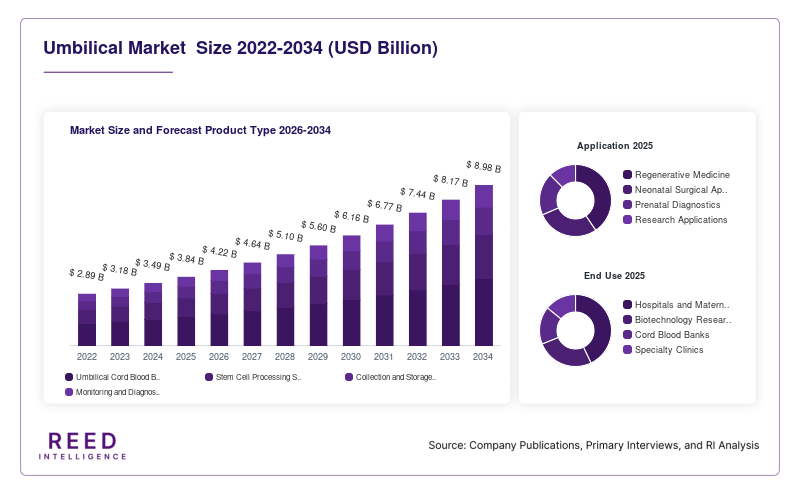
- By product type, umbilical cord blood banking services accounted for the largest share of 39.4%.
- while stem cell processing systems are projected to grow at a CAGR of 12.3%.
- By application, regenerative medicine led with a 42.1% share.
- whereas neonatal surgical applications are expected to expand at a CAGR of 11.4%.
- By end use, hospitals and maternity centers held the leading share of 46.8%.
- while biotechnology research institutes are projected to grow at a CAGR of 12.1%.
- The United States remained the dominant country, with market values of USD 710 million in 2024 and USD 780 million in 2025.
Market Trends
Expansion of Stem Cell Preservation Services
The Umbilical Market is experiencing increasing demand for stem cell preservation services as families become more aware of future therapeutic applications associated with cord blood and cord tissue storage. Private cord blood banks are expanding their operations in urban and semi-urban regions to address rising consumer interest in regenerative medicine. Many healthcare providers now include stem cell preservation counseling as part of prenatal care programs, creating stronger visibility for umbilical storage services. The integration of digital enrollment systems and remote sample tracking platforms has also improved customer convenience and operational transparency.
Biotechnology firms are conducting additional clinical trials involving umbilical-derived stem cells for immune disorders, blood diseases, and tissue regeneration treatments. This trend has encouraged long-term investments in cryogenic storage facilities and automated processing technologies. Several healthcare systems are also supporting hybrid public-private banking models that improve access to stem cell storage while maintaining affordability. As personalized medicine continues to expand, demand for preserved biological materials is expected to remain a key trend influencing the global Umbilical Market.
Integration of Advanced Neonatal Monitoring Technologies
Healthcare facilities are increasingly adopting advanced neonatal monitoring technologies that support safe umbilical procedures during childbirth and postnatal care. Modern delivery rooms now integrate digital fetal monitoring systems, umbilical flow assessment devices, and automated neonatal stabilization equipment. Hospitals are prioritizing technologies that improve response times and reduce complications during high-risk deliveries. These advancements are supporting greater efficiency in maternity centers while improving neonatal outcomes across both developed and emerging healthcare markets.
The growing use of artificial intelligence in prenatal diagnostics is also shaping product development within the Umbilical Market. AI-supported imaging platforms help clinicians identify complications associated with umbilical cord positioning and fetal circulation before delivery. In addition, portable monitoring systems are improving access to maternal healthcare in rural regions where advanced hospital infrastructure remains limited. Manufacturers are responding by developing compact and cost-effective systems that can operate in diverse healthcare settings. This technology-focused trend is expected to strengthen market competitiveness over the next decade.
Market Drivers
Rising Investments in Maternal and Neonatal Healthcare
Increasing investments in maternal and neonatal healthcare infrastructure are supporting sustained growth in the Umbilical Market. Governments across Asia Pacific, Latin America, and parts of Africa are expanding access to institutional delivery services and prenatal screening programs. Public healthcare agencies are investing in modern maternity wards, specialized neonatal intensive care units, and advanced surgical technologies that require reliable umbilical care products and systems. These initiatives are improving healthcare accessibility while increasing procedural volumes related to childbirth and neonatal treatment.
Private healthcare providers are also contributing to market expansion through the development of specialized women and child healthcare centers. Hospitals are upgrading delivery room technologies and strengthening partnerships with cord blood banks to improve integrated care services. The growing number of high-risk pregnancies associated with delayed motherhood and lifestyle-related health conditions has further increased demand for advanced monitoring and neonatal support equipment. As healthcare systems continue prioritizing infant survival and long-term wellness, the Umbilical Market is expected to maintain stable demand growth.
Growing Clinical Applications of Umbilical Stem Cells
The increasing use of umbilical stem cells in regenerative medicine and clinical research is another major driver supporting market development. Umbilical cord blood contains hematopoietic stem cells that are widely used in the treatment of blood disorders, immune deficiencies, and certain cancers. Researchers are now expanding investigations into the therapeutic potential of umbilical-derived stem cells for cardiovascular diseases, neurological disorders, and tissue engineering applications. These expanding clinical possibilities are encouraging healthcare institutions and consumers to invest in preservation services.
Pharmaceutical and biotechnology companies are increasing funding for regenerative medicine programs involving stem cell therapies. Academic research centers are collaborating with cord blood banks to improve sample quality, processing efficiency, and storage reliability. Regulatory agencies in several countries are also establishing clearer frameworks for stem cell research and therapeutic commercialization, reducing operational uncertainty for market participants. The combination of scientific advancement and rising public awareness is strengthening long-term growth prospects across the global Umbilical Market.
Market Restraint
High Cost of Storage and Limited Awareness in Developing Economies
One of the primary restraints affecting the Umbilical Market is the high cost associated with stem cell collection, processing, and long-term storage services. Private cord blood banking often requires substantial upfront enrollment fees in addition to annual maintenance expenses, making these services less accessible for middle-income and low-income households. In several developing economies, limited insurance coverage for elective stem cell preservation further restricts adoption. Smaller healthcare facilities may also face challenges related to cryogenic infrastructure investments, skilled workforce availability, and compliance with strict storage regulations.
Limited awareness regarding the long-term benefits of umbilical stem cell preservation continues to affect market penetration in rural and underdeveloped regions. Many expectant parents remain unfamiliar with therapeutic applications, sample storage procedures, and available banking options. In some countries, misinformation and cultural hesitation regarding biological storage practices create additional barriers to adoption. These challenges reduce procedural volumes and limit revenue opportunities for service providers. Although awareness campaigns and healthcare partnerships are gradually improving education levels, affordability and infrastructure gaps continue to influence overall market expansion.
Market Opportunities
Expansion of Public Cord Blood Banking Networks
The expansion of public cord blood banking networks presents a significant opportunity for companies operating in the Umbilical Market. Governments and healthcare organizations are increasingly recognizing the importance of publicly accessible stem cell repositories for medical research and transplantation procedures. Public banks improve the availability of genetically diverse stem cell samples that can support patients with leukemia, lymphoma, and inherited blood disorders. This growing institutional support is encouraging investments in collection centers, processing laboratories, and long-term storage infrastructure.
Healthcare providers are also integrating donation-based cord blood collection programs into maternity hospitals to improve participation rates. Public awareness campaigns focused on community health benefits are increasing donor registrations in urban healthcare systems. In addition, collaborations between academic research institutions and public banks are supporting innovation in stem cell therapies and transplantation methods. The development of standardized international storage guidelines is further improving operational consistency and patient trust. These factors are expected to create long-term opportunities for service providers and technology manufacturers within the Umbilical Market.
Growth Potential in Emerging Healthcare Markets
Emerging healthcare markets across Asia Pacific, Latin America, and the Middle East offer substantial growth opportunities for the Umbilical Market. Rapid urbanization, rising disposable income levels, and improving healthcare insurance coverage are increasing access to advanced maternal care services. Governments in developing economies are expanding investments in hospital infrastructure and digital healthcare systems to reduce infant mortality rates and improve prenatal care quality. These healthcare modernization efforts are creating favorable conditions for umbilical-related technologies and services.
International healthcare companies are increasingly entering emerging markets through partnerships, distribution agreements, and localized manufacturing strategies. Private hospitals in countries such as India, Brazil, and the United Arab Emirates are introducing premium maternity care packages that include cord blood preservation and advanced neonatal monitoring services. The growing adoption of telemedicine platforms is also improving patient education regarding stem cell storage and regenerative medicine. As healthcare access and awareness continue improving, emerging economies are expected to contribute significantly to future market revenue growth.
Segmental Analysis
By Product Type
Umbilical cord blood banking services accounted for the dominant share of the global Umbilical Market in 2024, representing 39.4% of total revenue. The strong position of this segment is linked to growing consumer awareness regarding stem cell preservation and future therapeutic applications. Private cord blood banks continue expanding their service offerings through flexible payment plans, digital enrollment platforms, and integrated prenatal counseling programs. Hospitals and maternity centers are increasingly partnering with banking service providers to streamline collection procedures immediately after childbirth. The rising prevalence of blood disorders and growing clinical interest in regenerative medicine have also supported demand for long-term biological sample storage. Public cord blood banking initiatives are further improving accessibility and strengthening consumer confidence in preservation services. In developed healthcare markets, advanced cryogenic technologies and quality assurance systems continue enhancing storage reliability and operational efficiency.
Stem cell processing systems are projected to witness the fastest CAGR of 12.3% during the forecast period due to increasing investments in biotechnology research and laboratory automation. Processing technologies play a critical role in ensuring the viability and purity of preserved stem cell samples, making them essential for therapeutic applications and clinical trials. Biotechnology companies and research laboratories are adopting automated processing platforms that reduce contamination risks and improve sample handling efficiency. The rising number of stem cell therapy studies related to cardiovascular diseases, neurological disorders, and orthopedic treatments is creating additional demand for advanced processing solutions. Manufacturers are also introducing compact and cost-efficient systems designed for smaller healthcare facilities and emerging markets. As regulatory standards for biological storage continue evolving, demand for high-performance processing technologies is expected to increase significantly.
By Application
Regenerative medicine represented the leading application segment within the Umbilical Market in 2024, accounting for 42.1% of overall revenue. The increasing use of umbilical-derived stem cells for therapeutic research and transplantation procedures has strengthened the importance of regenerative medicine across healthcare systems. Stem cell therapies are being explored for conditions such as leukemia, spinal cord injuries, immune deficiencies, and tissue degeneration disorders. Healthcare institutions and biotechnology companies continue investing in clinical trials to expand the range of approved therapeutic applications. The segment has also benefited from growing public awareness regarding personalized medicine and long-term disease management strategies. Academic research organizations are collaborating with private companies to improve stem cell extraction methods and preservation quality. These factors continue supporting stable demand for umbilical-related products and services associated with regenerative medicine applications.
Neonatal surgical applications are anticipated to expand at the fastest CAGR of 11.4% during the forecast period due to increasing adoption of advanced surgical technologies in maternity and pediatric healthcare centers. Hospitals are investing in modern neonatal operating systems and monitoring devices to improve outcomes during complex infant procedures. The rising incidence of premature births and congenital abnormalities has increased demand for specialized neonatal surgical support equipment involving umbilical access systems and monitoring solutions. Healthcare providers are also focusing on minimally invasive procedures that reduce recovery time and improve patient safety. Technological advancements in surgical imaging and digital monitoring systems are further improving procedural accuracy in neonatal care settings. Emerging economies are contributing to growth as governments continue expanding investments in pediatric healthcare infrastructure and specialized medical training programs.
By End Use
Hospitals and maternity centers held the largest share of the global Umbilical Market in 2024, accounting for 46.8% of total revenue. These facilities remain the primary point of care for childbirth, prenatal diagnostics, neonatal monitoring, and umbilical cord blood collection procedures. Increasing institutional delivery rates and growing investments in maternity healthcare infrastructure are supporting demand for advanced umbilical-related technologies and services. Hospitals are integrating digital fetal monitoring systems, automated sample collection equipment, and advanced neonatal stabilization technologies to improve operational efficiency and patient outcomes. Partnerships between maternity hospitals and cord blood banks are also becoming more common, allowing streamlined collection and transportation processes immediately after delivery. Rising healthcare spending in both developed and developing economies continues to strengthen the role of hospitals and maternity centers within the broader market ecosystem.
Biotechnology research institutes are projected to record the fastest CAGR of 12.1% during the forecast period due to increasing global investments in stem cell research and regenerative medicine innovation. Research organizations are expanding studies involving umbilical-derived stem cells for applications in tissue engineering, immune therapy, and neurological disease treatment. Government grants and private funding programs are supporting the development of specialized laboratory infrastructure equipped with advanced processing and preservation technologies. Collaboration between universities, pharmaceutical companies, and healthcare institutions is accelerating the commercialization of stem cell therapies. Research institutes are also investing in artificial intelligence and automation technologies to improve sample analysis and data management capabilities. As the number of clinical studies involving regenerative medicine continues to rise, biotechnology research centers are expected to play a larger role in shaping future advancements within the Umbilical Market.
Regional Analysis
North America
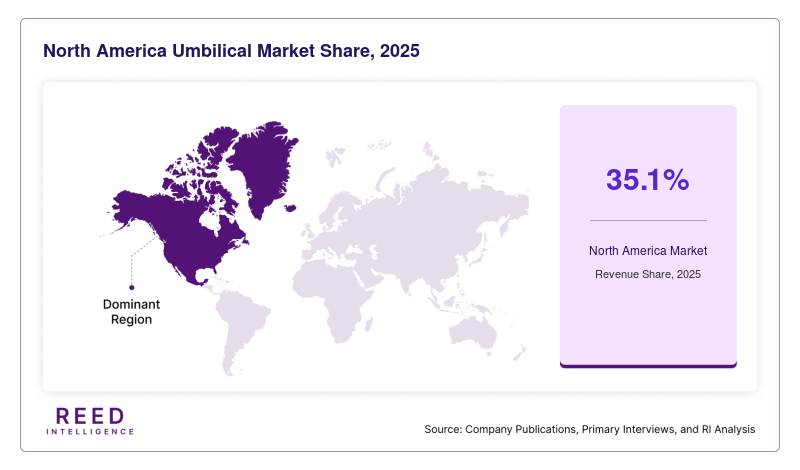
North America accounted for 35.1% of the global Umbilical Market share in 2025 and is expected to maintain stable growth during the forecast period with a CAGR of 8.7%. The region benefits from advanced healthcare infrastructure, high healthcare expenditure, and widespread awareness regarding stem cell preservation services. Hospitals and private cord blood banks continue investing in automated storage systems and advanced neonatal monitoring technologies. Favorable reimbursement frameworks and ongoing clinical trials related to regenerative medicine are also supporting market development across the United States and Canada.
The United States remained the dominant country in the regional market due to strong biotechnology research capabilities and a well-established network of private and public cord blood banks. The country has experienced rising adoption of prenatal diagnostic procedures and advanced maternity care technologies. Increasing collaboration between research universities and biotechnology firms has strengthened stem cell therapy development. In addition, high consumer awareness regarding future medical applications of preserved stem cells continues to drive long-term demand for umbilical-related services.
Europe
Europe represented 27.4% of the global Umbilical Market share in 2025 and is projected to expand at a CAGR of 8.4% through 2034. The region benefits from structured healthcare systems, rising investments in regenerative medicine, and supportive public healthcare initiatives focused on maternal wellness. Several European countries have established national guidelines for cord blood collection and storage, improving operational consistency among healthcare providers. Increasing demand for advanced prenatal diagnostics and minimally invasive neonatal procedures is also contributing to regional market growth.
Germany emerged as the leading country within the European Umbilical Market due to its strong medical research infrastructure and growing investments in stem cell therapy development. Hospitals and biotechnology companies in Germany are expanding collaborations related to regenerative medicine research programs. The country also benefits from a high concentration of specialized maternity hospitals equipped with advanced neonatal care systems. Rising public awareness regarding stem cell preservation and increasing participation in public cord blood donation programs continue supporting steady market expansion.
Asia Pacific
Asia Pacific held 22.6% of the global Umbilical Market share in 2025 and is expected to record the fastest CAGR of 11.6% during the forecast period. Rapid population growth, increasing birth rates, and expanding healthcare access are driving strong demand for maternal and neonatal healthcare solutions across the region. Governments are increasing investments in hospital modernization programs and digital healthcare infrastructure to improve prenatal care quality. The expansion of private healthcare providers and growing disposable income levels are also contributing to higher adoption of cord blood banking services.
China remained the dominant country in the Asia Pacific market due to its large patient population and rapid expansion of biotechnology research capabilities. Healthcare institutions in China are investing heavily in stem cell research laboratories and advanced maternity care facilities. Government support for regenerative medicine innovation has encouraged partnerships between academic institutions and private healthcare companies. In addition, rising awareness regarding prenatal health management and improved insurance coverage for maternity services are supporting continued growth in umbilical-related procedures and technologies.
Middle East & Africa
The Middle East & Africa region accounted for 8.1% of the global Umbilical Market share in 2025 and is projected to grow at a CAGR of 9.2% during the forecast period. Increasing investments in healthcare infrastructure and rising demand for specialized maternity services are contributing to regional market development. Several Gulf countries are establishing advanced women and child healthcare centers equipped with modern neonatal intensive care technologies. Improvements in healthcare accessibility and increasing medical tourism activities are also supporting the adoption of advanced umbilical care systems.
The United Arab Emirates emerged as the leading country in the regional market due to its rapidly developing healthcare sector and strong focus on medical innovation. Private hospitals in the country are introducing comprehensive maternity care packages that include stem cell preservation services and prenatal diagnostic programs. The UAE government is also supporting biotechnology research initiatives and healthcare digitalization projects. These efforts, combined with rising expatriate populations and growing awareness regarding preventive healthcare, continue to strengthen demand for umbilical-related products and services.
Latin America
Latin America represented 6.8% of the global Umbilical Market share in 2025 and is expected to expand at a CAGR of 8.9% during 2026–2034. The region is witnessing gradual improvements in maternal healthcare infrastructure and increasing adoption of advanced neonatal care technologies. Governments are implementing healthcare reforms aimed at reducing infant mortality and improving access to institutional delivery services. Private healthcare providers are also expanding maternity care facilities and introducing advanced prenatal diagnostic programs to meet rising patient expectations.
Brazil dominated the Latin American Umbilical Market due to its large healthcare network and increasing investments in regenerative medicine research. Hospitals and private cord blood banks in Brazil are strengthening partnerships to improve stem cell preservation accessibility. Rising urbanization and expanding middle-class populations are encouraging demand for premium maternity healthcare services. In addition, awareness campaigns related to prenatal wellness and neonatal care are improving patient engagement, creating favorable conditions for continued market expansion across the country.
Competitive Landscape
The Umbilical Market remains moderately consolidated, with global companies focusing on strategic partnerships, technology expansion, and regenerative medicine research initiatives to strengthen market presence. Leading participants are investing in automated stem cell processing technologies, digital healthcare integration, and geographically diversified storage facilities. Competitive strategies increasingly emphasize service quality, long-term storage reliability, and advanced prenatal healthcare support.
Cord Blood Registry maintained a leading position in the market due to its extensive storage network, advanced cryogenic preservation systems, and strong partnerships with maternity healthcare providers. The company recently expanded its laboratory automation capabilities to improve processing efficiency and enhance sample tracking transparency for consumers. Other major companies are also strengthening research collaborations with biotechnology firms and academic institutions to accelerate stem cell therapy innovation.
Market participants continue focusing on emerging economies where healthcare infrastructure modernization and rising consumer awareness are creating new growth opportunities. Companies are introducing flexible subscription models, mobile enrollment platforms, and integrated prenatal education services to improve customer acquisition. Increasing competition among private and public banking providers is expected to encourage innovation in sample preservation technologies and neonatal healthcare solutions.
Key Players
- Cord Blood Registry
- ViaCord
- Cryo-Cell International
- LifeCell International
- StemCyte
- Americord Registry
- Smart Cells International
- Virgin Health Bank
- CryoHoldco
- China Cord Blood Corporation
- Cells4Life
- Vita 34 AG
- FamiCord Group
- Cordlife Group Limited
- Future Health Biobank
Recent Developments
- In February 2025, Cord Blood Registry introduced an upgraded automated stem cell processing platform designed to improve preservation efficiency and reduce sample handling time.
- In July 2025, Cordlife Group Limited expanded its maternity hospital partnership network across Southeast Asia to strengthen cord blood collection accessibility.
- In November 2024, Cryo-Cell International announced a new research collaboration focused on exploring umbilical stem cell applications for neurological disease therapies.
- In March 2025, Vita 34 AG launched a digital prenatal counseling platform to improve patient education regarding stem cell preservation and regenerative medicine.
Umbilical Market Segments
Product Type
- Umbilical Cord Blood Banking Services
- Stem Cell Processing Systems
- Collection and Storage Equipment
- Monitoring and Diagnostic Devices
Application
- Regenerative Medicine
- Neonatal Surgical Applications
- Prenatal Diagnostics
- Research Applications
End Use
- Hospitals and Maternity Centers
- Biotechnology Research Institutes
- Cord Blood Banks
- Specialty Clinics
By Region
- North America
- Europe
- APAC
- Middle East and Africa
- LATAM