Undescended Testicle Market Size, Share Demand Report By Treatment Type (Surgical Treatment, Hormonal Therapy), By Diagnosis Method (Physical Examination, Ultrasound Imaging, MRI), By End-Use (Hospitals, Specialty Pediatric Clinics, Ambulatory Surgical Centers), By Region & Segment Forecasts, 2025–2034
USD 3950
Market Overview
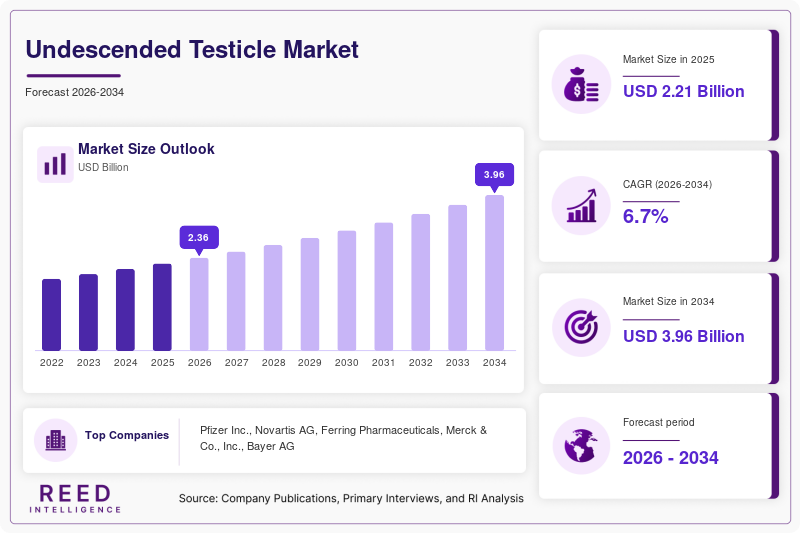
The global Undescended Testicle Market size was estimated at USD 2.21 billion in 2025 and is projected to reach USD 3.96 billion by 2034, expanding at a CAGR of 6.7% from 2025 to 2034. Growth in the market is linked to rising awareness of pediatric urological conditions and the importance of early diagnosis and treatment of cryptorchidism. Healthcare systems worldwide have increasingly prioritized early childhood screening programs, which has improved detection rates and accelerated treatment adoption.
Undescended testicle, also known as cryptorchidism, is a congenital condition in which one or both testicles fail to descend into the scrotum before birth. If untreated, it may lead to complications such as infertility or testicular cancer later in life. As a result, medical guidelines emphasize early surgical correction, typically during infancy or early childhood. This clinical emphasis has supported demand for orchiopexy procedures, hormonal therapies, and specialized pediatric urology services.
Key Highlights
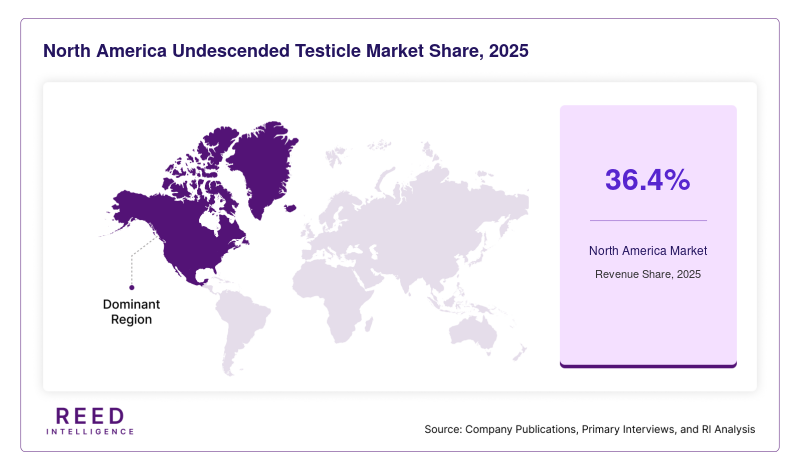
- North America accounted for 36.4% of the Undescended Testicle Market share in 2025, while Asia Pacific is projected to record the fastest CAGR of 7.9% during the forecast period.
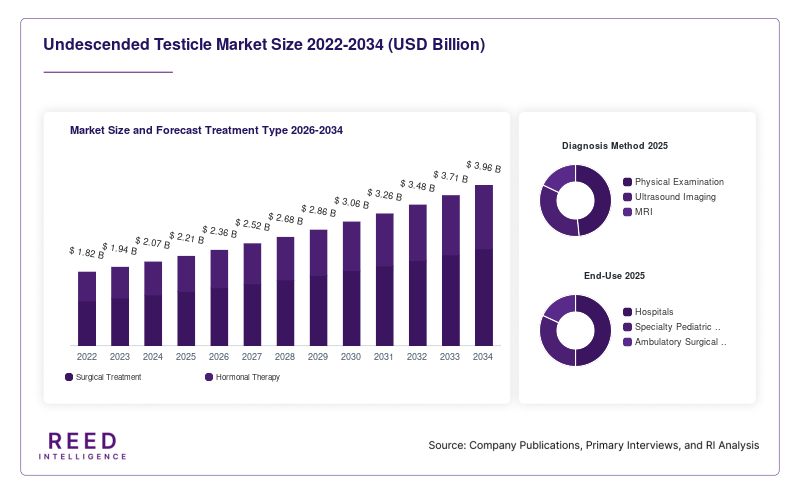
- Surgical treatment led the treatment segment with 63.2% share in 2025, while hormonal therapy is expected to grow at a CAGR of 7.4% through 2034.
- Hospitals dominated the end-use segment with 58.7% share in 2025, while specialty pediatric clinics are projected to expand at a CAGR of 7.6%.
- The United States led the market with USD 690 million in 2025 and is estimated to reach USD 728 million in 2026.
Market Trends
Growing Adoption of Minimally Invasive Pediatric Surgery
Minimally invasive surgical techniques have increasingly influenced the Undescended Testicle Market. Pediatric surgeons are adopting laparoscopic orchiopexy procedures that involve smaller incisions, reduced postoperative pain, and shorter recovery periods. These techniques improve patient outcomes while enabling hospitals to handle higher procedure volumes. Hospitals and surgical centers have invested in advanced laparoscopic systems and pediatric surgical tools to enhance treatment efficiency. The trend is particularly visible in developed healthcare markets where surgical innovation adoption remains strong.
Expansion of Pediatric Urology Specialty Clinics
Another notable trend in the Undescended Testicle Market is the expansion of dedicated pediatric urology clinics. Healthcare providers have recognized the importance of specialized care for congenital urological disorders. These clinics offer integrated diagnostic imaging, hormonal assessment, and surgical treatment under a single care pathway. As awareness of cryptorchidism increases among parents and pediatricians, referrals to specialty clinics have grown. This trend supports earlier treatment interventions and improves patient outcomes, particularly in urban healthcare systems.
Market Drivers
Rising Incidence of Congenital Urological Disorders
The increasing prevalence of congenital urological conditions has contributed to the expansion of the Undescended Testicle Market. Undescended testicle occurs in approximately 3–5% of full-term male infants and a higher proportion of premature births. As neonatal survival rates improve globally, healthcare providers encounter more cases requiring medical evaluation and treatment. This trend has increased the need for surgical procedures, diagnostic tests, and follow-up care.
Healthcare institutions have responded by expanding pediatric urology departments and surgical capacity. Additionally, pediatricians and neonatologists have strengthened screening protocols during early childhood examinations. These developments have supported consistent demand for treatment services in hospitals and specialized clinics.
Improved Diagnostic Screening in Early Childhood
Another important driver in the Undescended Testicle Market is the growing emphasis on early diagnostic screening. Pediatric guidelines recommend routine examination during newborn checkups and follow-up visits in infancy. Healthcare professionals increasingly rely on ultrasound imaging and clinical assessments to confirm diagnosis.
Early detection helps prevent complications such as infertility and malignancy risk, which encourages timely surgical intervention. The integration of diagnostic imaging technology in hospitals and pediatric centers has improved detection accuracy and strengthened treatment rates.
Market Restraint
Limited Awareness and Late Diagnosis in Developing Regions
A significant restraint affecting the Undescended Testicle Market is limited awareness and delayed diagnosis in several developing regions. In many low- and middle-income countries, routine neonatal screening practices remain inconsistent. As a result, cases of undescended testicle may remain undiagnosed until later childhood or adolescence.
Delayed diagnosis complicates treatment pathways because early surgical intervention is typically recommended within the first 18 months of life. Late detection often requires more complex medical management and may increase the risk of long-term complications.
Healthcare infrastructure disparities also contribute to the challenge. Rural healthcare facilities may lack specialized pediatric urology services, diagnostic imaging tools, or trained surgeons capable of performing orchiopexy procedures. Consequently, patients may need to travel to urban hospitals for treatment, which may reduce overall treatment rates.
While global health organizations and pediatric societies continue to promote awareness initiatives, the gap in early detection remains a constraint that influences the growth outlook of the Undescended Testicle Market.
Market Opportunities
Development of Pediatric Surgical Centers in Emerging Economies
Emerging economies are witnessing increasing investments in pediatric healthcare infrastructure, which creates opportunities within the Undescended Testicle Market. Governments and private healthcare providers are expanding children’s hospitals and specialized surgical centers to address congenital disorders.
These facilities improve access to pediatric surgeons and diagnostic technologies, enabling earlier treatment interventions. As healthcare infrastructure improves, demand for orchiopexy procedures and related diagnostic services is expected to rise across developing regions.
Advancements in Hormonal Therapy Research
Another opportunity in the Undescended Testicle Market lies in ongoing research into hormonal therapy treatments. Hormonal medications such as human chorionic gonadotropin (hCG) and gonadotropin-releasing hormone (GnRH) have been used as non-surgical options in selected cases.
Pharmaceutical research is exploring improved dosing strategies and combination therapies that may enhance treatment success rates. Continued clinical research and regulatory approvals for optimized therapies could expand treatment choices and provide alternatives to surgery in certain patient groups.
Segmental Analysis
By Treatment Type
The surgical treatment segment dominated the Undescended Testicle Market in 2025 and accounted for 63.2% of the market share. Orchiopexy procedures represent the standard treatment approach for undescended testicle cases, particularly when the condition persists beyond infancy. Hospitals and pediatric surgical centers widely perform the procedure because it allows surgeons to reposition the testicle into the scrotum and secure it in place. Surgical intervention remains a preferred treatment because it offers a high success rate and reduces the long-term risk of infertility and testicular complications.
The hormonal therapy subsegment will likely record the fastest growth and is projected to expand at a CAGR of 7.4% during the forecast period. Hormonal therapies such as human chorionic gonadotropin and gonadotropin-releasing hormone are used in selected clinical cases where the testicle is located close to the scrotum. Continued research into improved treatment protocols and dosing strategies will likely support growth in this segment.
By Diagnosis Method
The physical examination segment represented the dominant diagnostic method in the Undescended Testicle Market and held 54.8% of the market share in 2025. Pediatricians and neonatologists commonly rely on routine physical examinations during newborn and infant checkups to detect the presence or absence of the testicle in the scrotum. Physical examination remains the first-line diagnostic method because it is simple, cost-effective, and widely accessible in primary healthcare settings.
The ultrasound imaging segment will likely experience the fastest growth and is expected to expand at a CAGR of 7.1% during the forecast period. Ultrasound imaging helps healthcare providers determine the precise location of undescended testicles, particularly when they are located within the abdominal cavity or inguinal canal. The growing availability of diagnostic imaging equipment in hospitals and specialty clinics will likely support adoption of this technology.
By End-Use
The hospitals segment dominated the Undescended Testicle Market in 2025 and accounted for 58.7% of the market share. Hospitals serve as primary treatment centers for pediatric surgical procedures and maintain the infrastructure required for orchiopexy operations. Large hospitals often include pediatric urology departments and surgical teams capable of handling complex congenital cases.
The specialty pediatric clinics segment is projected to register the fastest growth with a CAGR of 7.6% through 2034. These clinics focus on pediatric urology and provide integrated diagnostic and treatment services for congenital conditions. The expansion of urban healthcare networks and referral pathways from pediatricians to specialized clinics will likely support growth in this segment.
Regional Analysis
North America
North America accounted for 36.4% of the Undescended Testicle Market share in 2025 and represented the largest regional market. The region will likely expand at a CAGR of 6.1% from 2025 to 2034. A well-established healthcare system and structured neonatal screening programs contributed to the region’s strong position in the global market. Pediatric healthcare services across the United States and Canada have integrated routine examinations for congenital conditions, including cryptorchidism, which supported consistent diagnosis rates. Hospitals and children’s medical centers across the region maintain specialized pediatric urology departments capable of performing orchiopexy procedures with advanced surgical technologies.
The United States represented the dominant country in the regional market. One major factor influencing growth in the country is the extensive network of children’s hospitals and academic medical centers specializing in pediatric surgery. These facilities perform high volumes of orchiopexy procedures each year and maintain strong clinical training programs. Additionally, health insurance coverage for pediatric surgical procedures has improved treatment accessibility for many families, supporting sustained market demand.
Europe
Europe represented 27.8% of the Undescended Testicle Market share in 2025. The regional market will likely expand at a CAGR of 6.3% through 2034. Healthcare systems across Western and Northern Europe maintain well-structured maternal and neonatal healthcare services, which has historically supported early diagnosis of congenital conditions. Pediatric healthcare programs in countries such as Germany, France, and the United Kingdom emphasize routine infant examinations that help identify undescended testicle cases during early developmental stages.
Germany held a leading position within the regional market. One notable growth factor in the country is the integration of pediatric surgical care within university hospital networks. These hospitals maintain specialized pediatric urology departments equipped with laparoscopic surgical systems and diagnostic imaging capabilities. Research collaboration between hospitals and medical institutions has also improved clinical guidelines related to pediatric urology care, contributing to a stable treatment environment in the country.
Asia Pacific
Asia Pacific accounted for 21.9% of the Undescended Testicle Market share in 2025. The region will likely register the fastest CAGR of 7.9% from 2025 to 2034. Healthcare systems across the region are undergoing transformation with increasing investments in pediatric medical services. Countries such as China, India, Japan, and South Korea are expanding hospital infrastructure and surgical capabilities to support growing patient populations.
China represented the dominant country in the regional market. A significant factor influencing growth in the country is the expansion of urban pediatric hospitals and specialized surgical centers. Government healthcare reforms have increased hospital capacity and introduced pediatric screening programs across major cities. As access to healthcare improves, more cases of undescended testicle are diagnosed during early childhood examinations, contributing to the demand for treatment services.
Middle East & Africa
The Middle East & Africa accounted for 7.2% of the Undescended Testicle Market share in 2025. The regional market will likely expand at a CAGR of 6.5% through 2034. Healthcare systems in several Middle Eastern countries have invested in specialized hospitals and advanced surgical infrastructure, which has improved treatment accessibility for congenital conditions.
The United Arab Emirates emerged as a leading country in the region. A distinct factor supporting growth in the country is the expansion of private healthcare institutions offering pediatric surgical services. Several hospitals have introduced specialized pediatric departments that provide diagnostic imaging, hormonal therapy evaluation, and surgical treatment for cryptorchidism. These healthcare investments have strengthened treatment availability within the country.
Latin America
Latin America represented 6.7% of the Undescended Testicle Market share in 2025. The market in the region will likely grow at a CAGR of 6.4% from 2025 to 2034. Public healthcare systems across several Latin American countries provide pediatric surgical care through government-funded hospitals, which has contributed to treatment accessibility for congenital disorders.
Brazil held the dominant position in the regional market. A major growth factor influencing the country is the presence of a large pediatric population requiring healthcare services. Government initiatives supporting maternal and child healthcare have expanded neonatal screening programs in public hospitals. These programs enable earlier detection of undescended testicle conditions and increase referral rates for surgical treatment.
Competitive Landscape
The Undescended Testicle Market includes several medical device manufacturers, pharmaceutical companies, and healthcare providers involved in surgical treatment technologies and hormonal therapies. Companies in the market focus on improving pediatric surgical instruments, diagnostic imaging technologies, and hormone-based treatment products.
One leading participant in the market is Pfizer Inc., which maintains a strong presence in hormonal therapy treatments used in pediatric endocrinology. The company has continued to invest in clinical research focused on hormone-based treatment protocols for congenital conditions.
Other companies operating in the market include pharmaceutical manufacturers that produce hormonal therapies as well as medical device companies that provide surgical instruments for pediatric procedures. Market participants continue to explore collaborations with hospitals and research institutions to improve treatment outcomes for pediatric patients.
Key Players
- Pfizer Inc.
- Novartis AG
- Ferring Pharmaceuticals
- Merck & Co., Inc.
- Bayer AG
- Sanofi
- Teva Pharmaceutical Industries Ltd.
- AbbVie Inc.
- Eli Lilly and Company
- Johnson & Johnson
- Medtronic plc
- Becton, Dickinson and Company
- Olympus Corporation
- Cook Medical
- Boston Scientific Corporation
Recent Developments
- Several pediatric hospitals introduced advanced laparoscopic surgical systems designed for minimally invasive orchiopexy procedures.
- Pharmaceutical companies initiated clinical research programs exploring optimized dosing strategies for hormonal therapy treatments used in cryptorchidism management.
- Healthcare providers in emerging economies expanded pediatric surgical centers to support the treatment of congenital urological conditions.
Undescended Testicle Market Segments
Treatment Type
- Surgical Treatment
- Hormonal Therapy
Diagnosis Method
- Physical Examination
- Ultrasound Imaging
- MRI
End-Use
- Hospitals
- Specialty Pediatric Clinics
- Ambulatory Surgical Centers
By Region
- North America
- Europe
- APAC
- Middle East and Africa
- LATAM