Unitards Market Size, Share, Growth & Industry Analysis Report By Material Type (Spandex Blends, Polyester Fabrics, Cotton Blends, Recycled Performance Fabrics, Nylon-Based Fabrics), By Application (Sports and Fitness, Dance and Performance Wear, Gymnastics, Yoga and Pilates, Recreational Wear), By Distribution Channel (Offline Retail Stores, Specialty Sportswear Stores, Brand Outlets, Online Retail Platforms, Direct-to-Consumer Channels) Global Forecast 2026–2034
USD 3950
Market Overview
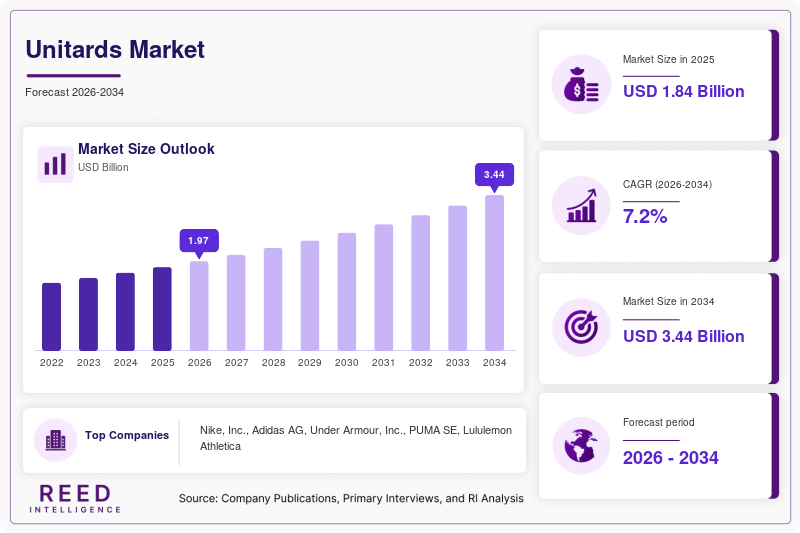
The global Unitards Market size was valued at USD 1.84 billion in 2026 and is projected to reach USD 3.21 billion by 2034, expanding at a CAGR of 7.2% during the forecast period from 2026 to 2034. The market is witnessing stable growth due to rising participation in dance, gymnastics, fitness training, yoga, stage performances, and athleisure fashion worldwide. Increasing consumer preference for stretchable, body-contouring apparel with comfort-oriented fabrics has accelerated demand across professional and recreational applications. Unitards are increasingly adopted by athletes, performers, and fitness enthusiasts because they provide flexibility, durability, and moisture-management capabilities during intensive physical activities.
The growing influence of digital fitness platforms and social media-based activewear trends has further supported market expansion. Fitness influencers, dance academies, and athletic organizations continue to promote coordinated performance apparel, increasing product visibility among younger demographics. Manufacturers are introducing sustainable textiles, compression-based fabrics, and customizable designs to differentiate offerings in a competitive apparel landscape. Demand from women consumers remains strong, while men’s performance wear and children’s gymnastics apparel are emerging as profitable categories.
Key Highlights
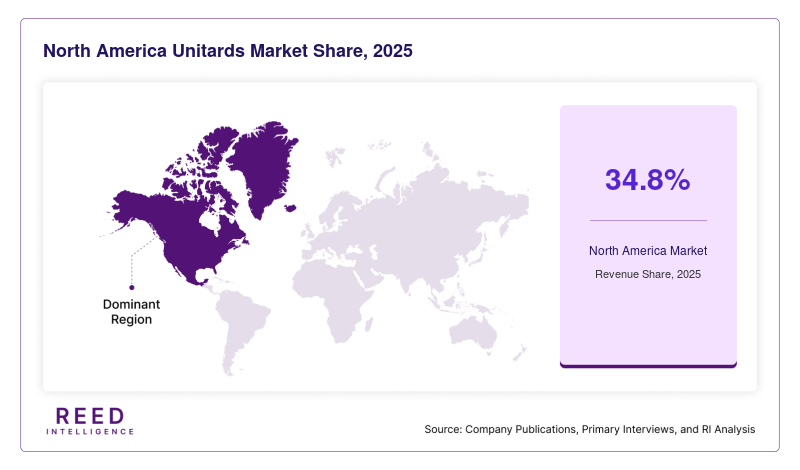
- North America dominated the market with a 34.8% share in 2025.
- Asia Pacific is expected to grow at the fastest CAGR of 9.4% during 2026–2034.
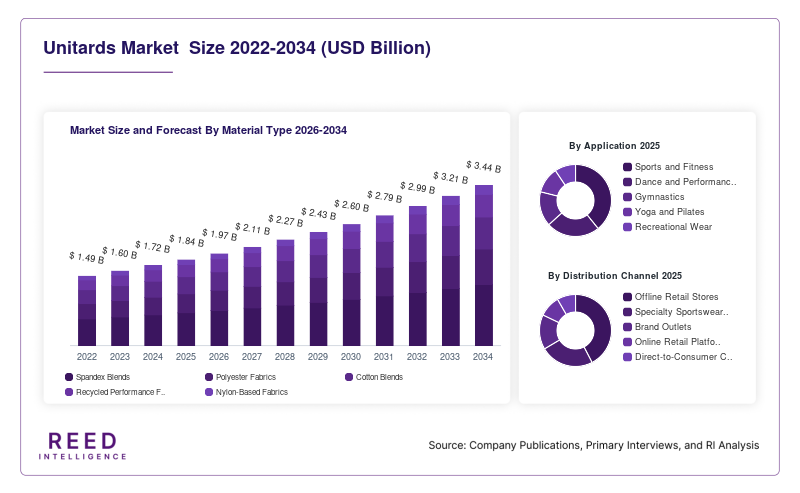
- By material type, spandex-blended fabrics accounted for the largest share of 42.6%, while recycled performance fabrics are projected to grow at a CAGR of 10.1%.
- By application, sports and fitness activities led with a 39.4% share, whereas dance and performance wear is expected to expand at a CAGR of 8.9%.
- The United States remained the dominant country, with market values of USD 420 million in 2024 and USD 455 million in 2025.
Market Trends
Rising Adoption of Athleisure-Based Performance Apparel
The increasing overlap between fashion and activewear is shaping demand patterns across the Unitards Market. Consumers are no longer purchasing unitards only for gymnastics or dance performances, as athleisure trends have expanded their use into yoga, home workouts, cycling, and casual fashion applications. Modern consumers prefer versatile apparel that combines flexibility, comfort, and visual appeal. Apparel brands are therefore integrating seamless stitching, breathable fabrics, and ergonomic designs into unitard collections to attract broader customer groups. Social media promotion by fitness influencers and athletes has amplified consumer awareness regarding fitted activewear styles. Urban consumers, especially millennials and Gen Z buyers, are driving demand for stylish and multifunctional performance clothing. This trend has encouraged manufacturers to launch seasonal collections, fashion-oriented color palettes, and limited-edition collaborations that support recurring purchases and stronger brand engagement.
Growing Demand for Sustainable and Recycled Fabric Solutions
Sustainability has become a major trend influencing product innovation within the Unitards Market. Consumers increasingly prefer environmentally responsible apparel produced using recycled polyester, organic cotton blends, and low-impact dyeing technologies. Brands are responding by introducing eco-friendly product lines that reduce textile waste and carbon emissions. Sustainable production practices are particularly important in Europe and North America, where environmentally conscious consumers actively evaluate product sourcing and manufacturing transparency. Manufacturers are also investing in moisture-wicking biodegradable fabrics and recyclable packaging solutions to improve brand positioning. The trend is further supported by regulatory pressure encouraging sustainable textile manufacturing practices. Premium consumers are willing to pay higher prices for ethically produced activewear products, encouraging companies to expand sustainable inventories. This transition toward eco-friendly materials is expected to create long-term differentiation opportunities across premium and mid-range market segments.
Market Drivers
Expansion of Fitness and Wellness Participation Worldwide
The rapid growth of global fitness participation continues to support demand growth across the Unitards Market. Increasing awareness regarding physical health, wellness routines, and preventive healthcare has encouraged consumers to engage in gym training, yoga, pilates, aerobics, and dance-based fitness programs. Unitards are widely preferred in these activities because they provide unrestricted movement, compression support, and lightweight comfort. The rise of boutique fitness studios and online training subscriptions has further strengthened the market for performance apparel. Consumers increasingly seek apparel products that combine durability with fashionable aesthetics. Fitness clubs and professional academies also encourage standardized apparel use for branding and training consistency. Rising female workforce participation and increasing spending on wellness products are additionally supporting demand growth. Emerging economies are witnessing higher enrollment in sports and recreational activities, contributing to expanding customer bases for affordable and premium unitard products.
Increasing Participation in Dance, Gymnastics, and Stage Performance Activities
The growing popularity of dance competitions, gymnastics programs, theatrical performances, and performing arts education has become another important driver for the Unitards Market. Educational institutions, sports organizations, and entertainment companies increasingly require specialized performance apparel that enhances flexibility and visual presentation. Unitards are preferred because they provide full-body coverage while supporting mobility during complex routines and athletic movements. Children and teenagers represent a significant consumer segment, particularly in gymnastics and ballet schools. The expansion of televised talent competitions and digital performance content has increased visibility for professional dancewear and performance clothing globally. Manufacturers are also introducing customizable team apparel with advanced stretch fabrics and enhanced durability for repeated use. Growing investments in sports infrastructure and performing arts training centers across Asia Pacific and Latin America are expected to support sustained demand for specialized unitard products over the forecast period.
Market Restraint
Volatility in Raw Material Costs and Intense Price Competition
Fluctuating prices of synthetic fibers, including polyester, nylon, and spandex, remain a major challenge for companies operating in the Unitards Market. Performance apparel manufacturing depends heavily on petroleum-based textile inputs, making production costs vulnerable to global supply chain disruptions and raw material inflation. Smaller manufacturers often struggle to maintain stable profit margins due to rising transportation expenses and increasing labor costs. In addition, the market faces intense price competition from regional and unorganized apparel producers that offer low-cost alternatives. This pricing pressure affects premium brands attempting to maintain product quality and sustainable manufacturing standards. Counterfeit sportswear and imitation activewear products also reduce brand differentiation in developing economies. Retailers frequently offer discounts and promotional pricing to remain competitive, further compressing margins across the industry. These cost-related challenges may limit product innovation investments and delay expansion strategies for mid-sized manufacturers operating in price-sensitive consumer markets.
Market Opportunities
Expansion of E-Commerce and Direct-to-Consumer Retail Models
The increasing penetration of e-commerce platforms presents strong growth opportunities for the Unitards Market. Online retail channels allow manufacturers to reach wider consumer audiences while reducing dependency on physical store networks. Consumers increasingly prefer digital shopping experiences because they provide size comparison tools, customization options, customer reviews, and convenient delivery services. Direct-to-consumer strategies are enabling apparel companies to strengthen brand loyalty while improving profit margins through reduced intermediary costs. Online-exclusive product launches and subscription-based fitness apparel services are also supporting recurring revenue generation. Small and emerging brands are using social commerce platforms and influencer marketing campaigns to establish visibility in competitive markets. Personalized recommendations driven by artificial intelligence and consumer analytics are further enhancing online conversion rates. As smartphone penetration and digital payment adoption continue to rise globally, e-commerce expansion is expected to become a significant opportunity for both established and emerging unitard manufacturers.
Rising Demand for Inclusive and Adaptive Apparel Designs
The growing focus on body inclusivity and adaptive clothing solutions is creating new opportunities within the Unitards Market. Consumers increasingly expect apparel brands to provide extended size ranges, gender-neutral designs, and products suitable for diverse body types. Inclusive marketing campaigns have encouraged companies to expand product accessibility and improve representation across advertising platforms. Adaptive unitards designed for individuals with physical limitations or sensory sensitivities are also gaining attention within specialized consumer segments. Manufacturers are incorporating adjustable closures, seamless construction, and skin-friendly fabrics to improve comfort and usability. This trend is particularly relevant in North America and Europe, where consumers increasingly prioritize personalization and inclusive fashion practices. Brands that successfully address underserved demographics are likely to strengthen customer loyalty and expand their market presence. Growing awareness regarding accessibility in sportswear and performance apparel is expected to create long-term commercial opportunities across multiple regional markets.
Segmental Analysis
By Material Type
Spandex-blended fabrics accounted for the largest share of the Unitards Market in 2024, contributing approximately 42.6% of total revenue. These materials remain highly preferred because they provide superior elasticity, body support, moisture management, and durability during physical activities. Professional athletes, dancers, and fitness enthusiasts increasingly select spandex-based unitards due to their flexibility and comfort during extended performance sessions. Manufacturers are continuously improving fabric technologies by integrating breathable mesh structures, antibacterial coatings, and compression-support features into spandex apparel products. Premium apparel brands also prefer these materials because they allow ergonomic shaping and enhanced fit customization. The widespread use of spandex blends in gymnastics, dancewear, and fitness apparel applications has strengthened their dominance across both professional and recreational market segments globally.
Recycled performance fabrics are projected to witness the fastest CAGR of 10.1% during the forecast period due to increasing consumer demand for sustainable activewear products. Manufacturers are increasingly using recycled polyester derived from plastic waste and textile recycling processes to reduce environmental impact. Eco-conscious consumers are prioritizing apparel brands that demonstrate sustainable sourcing practices and transparent production methods. Regulatory pressure related to textile waste reduction is also encouraging companies to invest in environmentally friendly fabric technologies. Several international brands have launched sustainable unitard collections featuring biodegradable packaging and low-water dyeing processes. The growing popularity of circular fashion initiatives and resale platforms is further supporting demand for recyclable activewear materials. These developments are expected to create strong growth opportunities for sustainable fabric manufacturers and premium sportswear brands.
By Application
Sports and fitness activities represented the dominant application segment in the Unitards Market in 2024, accounting for nearly 39.4% of total market share. Rising gym memberships, fitness awareness campaigns, and participation in yoga and aerobics programs continue to drive demand within this segment. Consumers increasingly prefer unitards for high-mobility workouts because they provide compression support, comfort, and unrestricted movement during exercise routines. Fitness studios and wellness centers frequently recommend coordinated activewear to improve performance and brand identity. Apparel manufacturers are also developing temperature-regulating fabrics and seamless construction technologies to enhance user experience. The rapid expansion of digital fitness programs and home-based workouts has further contributed to demand for practical and versatile performance apparel. Women consumers continue to dominate this application segment, although demand among male fitness participants is gradually increasing.
Dance and performance wear is anticipated to record the fastest CAGR of 8.9% during 2026–2034 due to growing participation in stage performances, ballet programs, and entertainment-based competitions. Unitards remain essential in dance applications because they offer full-body flexibility while enhancing visual presentation during performances. Educational institutions, theatrical organizations, and professional dance academies increasingly require standardized performance apparel for students and performers. Manufacturers are introducing customized designs featuring decorative finishes, advanced stretch fabrics, and enhanced durability to address evolving performance requirements. The expansion of televised dance competitions and social media content creation has further increased consumer interest in professional dancewear. Demand from children and teenagers participating in recreational dance education is also expected to support long-term segment growth across developed and emerging markets.
By Distribution Channel
Offline retail channels held the dominant share of the Unitards Market in 2024, contributing around 58.1% of total revenue. Specialty sportswear stores, department stores, and branded retail outlets continue to attract consumers seeking physical product evaluation before purchase. Customers often prefer offline channels because they allow direct assessment of fabric quality, fit accuracy, comfort, and product durability. Professional athletes and performers particularly value in-store consultations and personalized fitting services when selecting performance apparel products. Established sportswear brands maintain strong retail networks in metropolitan areas to strengthen customer engagement and brand visibility. Seasonal promotions, exclusive collections, and loyalty programs also contribute to strong consumer traffic in physical stores. Despite increasing digital commerce adoption, offline channels remain important for premium apparel purchases and professional sportswear customization services.
Online retail platforms are projected to register the fastest CAGR of 9.7% throughout the forecast period due to increasing digital shopping adoption and expanding e-commerce infrastructure worldwide. Consumers are increasingly purchasing unitards online because of wider product selection, convenient delivery services, and competitive pricing. Brands are investing heavily in artificial intelligence-driven size recommendation tools, virtual fitting technologies, and personalized shopping experiences to improve customer satisfaction. Social media marketing campaigns and influencer partnerships are further accelerating digital product visibility. Online-exclusive product launches and direct-to-consumer business models are also helping companies strengthen profit margins while reducing intermediary dependence. Emerging economies are witnessing rapid growth in smartphone penetration and digital payment systems, creating favorable conditions for online apparel sales. These factors are expected to significantly enhance the role of e-commerce within the global unitards industry.
Regional Analysis
North America
North America accounted for 34.8% of the global Unitards Market share in 2025 and is expected to maintain stable growth throughout the forecast period. The regional market is projected to expand at a CAGR of 6.8% between 2026 and 2034. Strong participation in fitness activities, dance programs, and gymnastics competitions continues to support product demand. Consumers in the region demonstrate high spending capacity for premium activewear products featuring moisture-wicking fabrics, sustainable textiles, and ergonomic designs. The strong presence of international sportswear brands and advanced retail infrastructure further contributes to market development.
The United States dominated the regional market due to high consumer engagement in fitness culture and organized sports participation. The country benefits from extensive gym memberships, dance academies, and professional athletic programs that support recurring demand for specialized performance apparel. Growing adoption of athleisure clothing among urban consumers has further expanded product usage beyond professional sports applications. In addition, social media-driven fashion trends and celebrity endorsements continue to influence purchasing behavior across younger demographic groups in the country.
Europe
Europe represented a significant share of the Unitards Market in 2025 and is anticipated to grow at a CAGR of 6.5% during the forecast period. Demand for sustainable activewear products has emerged as a major growth contributor across regional markets. Consumers increasingly prefer apparel manufactured using environmentally responsible materials and transparent production practices. Fitness participation rates across Germany, France, Italy, and the United Kingdom continue to support demand for premium unitards used in yoga, dance, and studio training applications. The expansion of wellness-focused lifestyles has also strengthened demand for multifunctional activewear.
Germany remained the dominant country within the European market due to its strong sportswear retail network and increasing consumer interest in fitness-oriented lifestyles. The country benefits from advanced textile manufacturing capabilities and rising demand for sustainable apparel products. Local consumers increasingly seek durable performance clothing with recyclable fabric components and high-quality construction. The presence of organized sports associations and rising participation in indoor fitness activities continue to strengthen product sales across both online and offline retail channels in Germany.
Asia Pacific
Asia Pacific is projected to register the fastest CAGR of 9.4% during 2026–2034 in the global Unitards Market. Rapid urbanization, rising disposable income, and increasing awareness regarding health and fitness are driving regional demand growth. Countries including China, India, Japan, and South Korea are witnessing expanding participation in yoga, dance training, gymnastics, and fitness center activities. Younger consumers in metropolitan areas are increasingly adopting athleisure-inspired apparel styles, encouraging market expansion. International brands are also increasing investments in regional e-commerce and retail distribution networks.
China dominated the Asia Pacific market due to its large consumer base and expanding sportswear manufacturing ecosystem. The country benefits from strong textile production capabilities and increasing domestic demand for performance apparel. Rising government initiatives supporting sports participation and youth athletic programs are encouraging apparel consumption across educational institutions and sports academies. In addition, the rapid growth of live-stream commerce and digital retail platforms has improved product accessibility for consumers across urban and semi-urban areas in China.
Middle East & Africa
The Middle East & Africa region is witnessing gradual growth in the Unitards Market and is expected to expand at a CAGR of 5.9% during the forecast period. Increasing health awareness, urban fitness culture, and rising female participation in recreational activities are contributing to demand growth across the region. Countries in the Gulf Cooperation Council are investing in sports infrastructure, wellness programs, and entertainment industries that support demand for performance apparel. International sportswear brands are also expanding retail presence in metropolitan shopping centers and digital commerce platforms.
The United Arab Emirates emerged as the dominant country within the regional market due to strong investments in fitness and lifestyle industries. The country benefits from a growing expatriate population with high purchasing power and increasing participation in wellness-oriented activities. Premium gyms, dance academies, and sports clubs are encouraging adoption of specialized athletic apparel among consumers. In addition, the country’s retail sector continues to attract international activewear brands seeking expansion opportunities within the Middle Eastern consumer market.
Latin America
Latin America accounted for a moderate share of the Unitards Market in 2025 and is projected to experience consistent growth through 2034. The regional market is expected to expand at a CAGR of 6.2% during the forecast period. Rising awareness regarding fitness, dance education, and recreational sports participation continues to support apparel demand. Countries across the region are experiencing increasing urbanization and greater adoption of active lifestyles among younger populations. Affordable sportswear collections and expanding e-commerce penetration are also improving consumer access to performance apparel products.
Brazil remained the dominant country in the Latin American market due to its strong cultural emphasis on dance, fitness, and sports participation. The country benefits from a large youth population actively engaged in athletic and recreational activities. Local manufacturers are increasingly producing affordable unitards suitable for dance schools, gymnastics centers, and fitness clubs. Social media-driven fashion trends and increasing celebrity influence have also encouraged consumers to adopt fitted activewear styles for both exercise and casual use applications.
Competitive Landscape
The Unitards Market is moderately fragmented, with international sportswear companies, dancewear specialists, and regional apparel manufacturers competing through product innovation, sustainability initiatives, and digital retail expansion. Companies are increasingly investing in ergonomic fabric technologies, seamless construction, and customization capabilities to improve product differentiation. Strategic partnerships with fitness influencers, dance academies, and athletic organizations are also supporting brand visibility and customer engagement across global markets.
Nike, Inc. remains one of the leading companies in the market due to its strong global distribution network, advanced textile research capabilities, and extensive activewear portfolio. The company recently expanded its sustainable performance apparel collection using recycled polyester materials and low-emission manufacturing processes. Other major companies are focusing on e-commerce expansion and inclusive sizing strategies to strengthen market positioning. Adidas AG continues to emphasize sustainable product development, while Under Armour, Inc. is investing in moisture-management technologies for high-performance apparel. Capezio and Bloch remain influential within the dancewear category through specialized product collections targeting ballet and theatrical performance applications.
Key Players
- Nike, Inc.
- Adidas AG
- Under Armour, Inc.
- PUMA SE
- Lululemon Athletica
- Capezio
- Bloch
- GK Elite Sportswear
- Mirella
- ASICS Corporation
- Decathlon S.A.
- Champion
- Reebok International Ltd.
- Athleta
- Danskin
Recent Developments
- In February 2026, Lululemon Athletica launched a sustainable unitard collection featuring recycled nylon fabrics and moisture-control technology for yoga and fitness consumers.
- In August 2025, Nike, Inc. expanded its women’s performance apparel line with customizable compression-based unitards designed for dance and training applications.
- In November 2025, Adidas AG partnered with fitness influencers across Asia Pacific to strengthen digital sales of athleisure and performance apparel products.
- In April 2026, Capezio introduced enhanced stretch-fabric dance unitards targeting professional ballet academies and theatrical performance institutions.
Unitards Market Segments
By Material Type
- Spandex Blends
- Polyester Fabrics
- Cotton Blends
- Recycled Performance Fabrics
- Nylon-Based Fabrics
By Application
- Sports and Fitness
- Dance and Performance Wear
- Gymnastics
- Yoga and Pilates
- Recreational Wear
By Distribution Channel
- Offline Retail Stores
- Specialty Sportswear Stores
- Brand Outlets
- Online Retail Platforms
- Direct-to-Consumer Channels
By Region
- North America
- Europe
- APAC
- Middle East and Africa
- LATAM