Unmanned Aerial Vehicle Landing Gear Market Size, Share & Demand Report By Type (Fixed Landing Gear, Retractable Landing Gear), By Application (Defense, Commercial, Industrial), By End-Use (OEM, Aftermarket) By Region & Segment Forecasts, 2025–2034
USD 3950
Market Overview
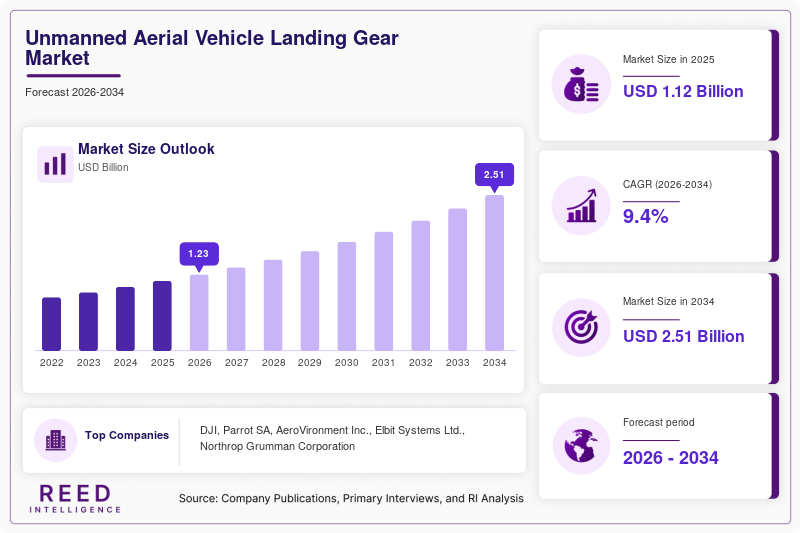
The Unmanned Aerial Vehicle Landing Gear Market size was estimated at USD 1.12 billion in 2025 and is projected to reach USD 1.24 billion in 2026, with continued momentum expected to drive the market to approximately USD 2.78 billion by 2034. This reflects a compound annual growth rate (CAGR) of 9.4% during 2025–2034. The demand for durable, lightweight, and adaptable landing gear systems is increasing due to advancements in drone technologies and expanding operational use cases.
One of the primary growth factors is the rising adoption of UAVs in defense and surveillance operations. Military agencies require robust landing gear systems capable of operating in harsh terrains and extreme environmental conditions. Another major factor is the rapid growth of commercial drone applications such as delivery services, agriculture monitoring, and infrastructure inspection, which demand reliable landing gear solutions to ensure safe takeoffs and landings. Additionally, technological innovations in materials such as carbon fiber composites and advanced alloys are enabling the development of lightweight yet strong landing gear systems, improving UAV efficiency and payload capacity.
Key Highlights
- Market size valued at USD 1.12 billion in 2025, reflecting the growing adoption of UAV systems across multiple industries. The increasing deployment of drones in both commercial and defense applications continues to support steady market expansion.
- Expected to reach USD 2.78 billion by 2034, driven by advancements in UAV technologies and rising demand for efficient landing solutions. Continuous innovation in design and materials is expected to contribute to long-term market growth.
- CAGR of 9.4% from 2025 to 2034 indicates consistent and sustainable expansion over the forecast period. This growth rate highlights increasing investments and broader adoption of UAV platforms globally.
- Strong growth driven by defense and commercial UAV adoption, as governments and private sectors expand drone usage. Applications such as surveillance, delivery, and inspection are significantly boosting demand for landing gear systems.
- Increasing focus on lightweight and high-durability materials is shaping product development strategies. Manufacturers are emphasizing advanced composites and alloys to enhance performance, reduce weight, and improve operational efficiency.
Market Trends
Increasing Adoption of Lightweight Composite Materials
A notable trend in the Unmanned Aerial Vehicle Landing Gear Market is the growing use of lightweight composite materials such as carbon fiber and reinforced polymers. These materials offer high strength-to-weight ratios, which are critical for improving UAV efficiency and flight endurance. Manufacturers are shifting away from traditional metal-based landing gear systems to composites that reduce overall drone weight without compromising durability. This transition also enables better fuel efficiency and extended operational range, particularly in long-endurance UAV missions. The use of advanced materials further enhances resistance to corrosion and environmental stress, making landing gear more suitable for diverse applications such as maritime surveillance and agricultural monitoring.
Integration of Smart and Shock-Absorbing Landing Systems
Another emerging trend is the integration of smart landing gear systems equipped with sensors and advanced shock-absorption mechanisms. These systems are designed to improve landing precision and reduce structural stress during impact. Sensors embedded in landing gear can provide real-time data on ground conditions, enabling UAVs to adjust landing strategies accordingly. This is particularly useful in autonomous drone operations where human intervention is minimal. Additionally, the development of retractable and adaptive landing gear systems is gaining traction, as they help improve aerodynamics and reduce drag during flight. This trend is expected to play a key role in enhancing UAV safety and operational efficiency.
Market Drivers
Expansion of Commercial Drone Applications
The rapid expansion of commercial drone applications is a major driver of the Unmanned Aerial Vehicle Landing Gear Market. Industries such as logistics, agriculture, construction, and media are increasingly using UAVs for various tasks including aerial mapping, crop monitoring, and package delivery. These applications require reliable landing gear systems to ensure safe operations in diverse environments. As commercial drones are often used repeatedly throughout the day, the demand for durable and low-maintenance landing gear is increasing. This trend is encouraging manufacturers to develop innovative solutions that can withstand frequent use while maintaining performance standards.
Rising Defense and Surveillance Investments
Increasing defense budgets and the growing importance of surveillance technologies are significantly driving market growth. Military UAVs are widely used for reconnaissance, intelligence gathering, and combat operations. These drones often operate in challenging terrains, requiring landing gear systems that can handle uneven surfaces and harsh conditions. Governments across the globe are investing heavily in UAV technologies to enhance national security capabilities. This has led to increased demand for advanced landing gear systems that offer high durability, stability, and shock absorption. The focus on mission-critical performance is pushing manufacturers to innovate and deliver high-quality solutions.
Market Restraint
High Cost of Advanced Landing Gear Systems
One of the primary restraints in the Unmanned Aerial Vehicle Landing Gear Market is the high cost associated with advanced landing gear systems. The use of premium materials such as carbon fiber composites and the integration of smart technologies significantly increase production costs. This can be a barrier for small and medium-sized UAV manufacturers who operate with limited budgets. Additionally, the need for precision engineering and quality assurance adds to the overall expense, making it challenging for companies to maintain competitive pricing.
The high cost also impacts the adoption rate in emerging markets, where affordability is a key concern. For example, agricultural drone operators in developing regions may opt for basic UAV models with simpler landing gear systems to reduce costs. This limits the penetration of advanced landing gear technologies in cost-sensitive markets. Furthermore, maintenance and replacement costs can be high, particularly for sophisticated systems with integrated sensors. As a result, manufacturers need to focus on cost optimization strategies to make advanced landing gear solutions more accessible.
Market Opportunities
Growth in Drone Delivery Services
The increasing adoption of drone delivery services presents a significant opportunity for the Unmanned Aerial Vehicle Landing Gear Market. E-commerce companies and logistics providers are exploring UAVs for last-mile delivery to improve efficiency and reduce delivery times. These operations require landing gear systems that can handle frequent takeoffs and landings in urban environments. The need for stability and precision in confined spaces is driving demand for advanced landing gear designs. Manufacturers can capitalize on this trend by developing solutions tailored for delivery drones, including compact and shock-absorbing systems that enhance performance.
Advancements in Autonomous UAV Technologies
Advancements in autonomous UAV technologies are creating new opportunities for landing gear innovation. As drones become more autonomous, the need for intelligent landing systems is increasing. Landing gear equipped with sensors and automation capabilities can enhance operational safety and efficiency. These systems can adapt to different terrains and environmental conditions, making them suitable for a wide range of applications. The integration of artificial intelligence and machine learning in UAV systems is expected to further drive demand for advanced landing gear solutions. This presents a lucrative opportunity for manufacturers to develop next-generation products.
Segmental Analysis
By Type
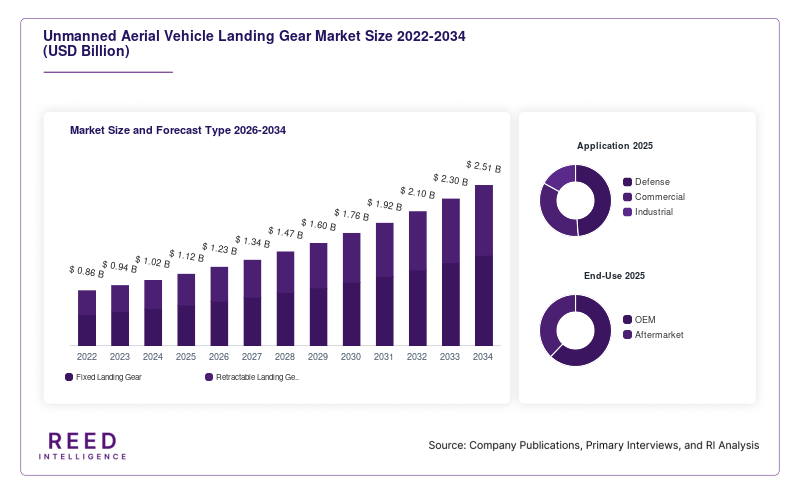
The fixed landing gear segment dominated the market in 2024, accounting for approximately 58% of the total share. Fixed landing gear systems are widely used due to their simplicity, durability, and lower cost compared to retractable systems. These systems are commonly found in small and medium-sized UAVs used for commercial and recreational purposes. Their robust design makes them suitable for operations in rough terrains, where reliability is critical. Additionally, fixed landing gear requires minimal maintenance, making it a preferred choice for cost-sensitive applications. The widespread use of fixed systems in entry-level drones further supports their dominance in the market.
The retractable landing gear segment is expected to be the fastest-growing, with a projected CAGR of 10.6% during the forecast period. This growth is driven by increasing demand for high-performance UAVs that require improved aerodynamics and reduced drag. Retractable systems enhance flight efficiency and are commonly used in advanced drones for military and commercial applications. The growing focus on long-endurance missions is also contributing to the adoption of retractable landing gear. Manufacturers are investing in innovative designs that combine lightweight materials with advanced mechanisms to improve performance and reliability.
By Application
The defense segment held the largest share in 2024, accounting for approximately 46% of the market. UAVs are extensively used in defense applications for surveillance, reconnaissance, and combat missions. These operations require landing gear systems that can withstand extreme conditions and provide stability during landings. The demand for durable and high-performance landing gear is driven by the need for mission reliability. Additionally, increasing defense budgets and technological advancements are supporting the growth of this segment. The focus on enhancing UAV capabilities is encouraging the development of advanced landing gear solutions.
The commercial segment is expected to grow at the fastest rate, with a CAGR of 11.4% during the forecast period. The expansion of drone applications in industries such as logistics, agriculture, and media is driving this growth. Commercial UAVs require landing gear systems that are lightweight, durable, and capable of handling frequent operations. The increasing adoption of drone delivery services is also contributing to demand. Manufacturers are developing specialized landing gear solutions tailored to commercial applications, which is expected to support segment growth.
By End-Use
The OEM segment dominated the market in 2024, holding a share of approximately 62%. Original equipment manufacturers play a crucial role in the integration of landing gear systems into UAVs. The demand for high-quality and customized solutions is driving growth in this segment. OEMs are focusing on developing innovative designs that meet specific application requirements. The increasing production of UAVs across various industries is also contributing to the dominance of this segment. Additionally, partnerships between UAV manufacturers and landing gear suppliers are enhancing product development.
The aftermarket segment is projected to grow at a CAGR of 9.8% during the forecast period. This growth is driven by the need for maintenance, repair, and replacement of landing gear systems. As UAV usage increases, the demand for aftermarket services is rising. Operators are seeking cost-effective solutions to extend the lifespan of their drones. The availability of advanced replacement components and repair services is supporting market growth. Manufacturers are also expanding their aftermarket offerings to cater to this demand.
Regional Analysis
North America
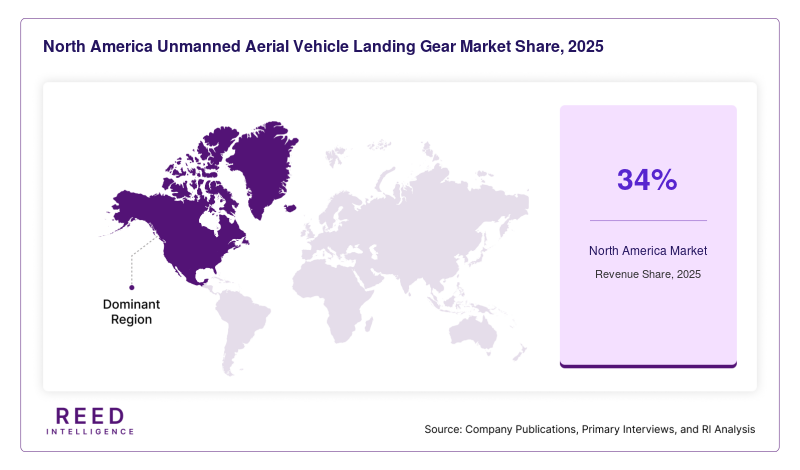
North America held a significant share of the Unmanned Aerial Vehicle Landing Gear Market in 2025, accounting for approximately 34% of the global market. The region is expected to maintain steady growth with a projected CAGR of 8.7% during the forecast period. The presence of established aerospace manufacturers and strong defense investments contribute to market growth. Additionally, increasing adoption of UAVs in commercial applications supports demand for advanced landing gear systems.
The United States dominates the regional market due to its extensive use of UAVs in defense and commercial sectors. A key growth factor is the high level of investment in research and development, which drives innovation in landing gear technologies. The focus on enhancing UAV performance and safety further supports market expansion.
Europe
Europe accounted for around 26% of the market share in 2025 and is expected to grow at a CAGR of 8.9% through 2034. The region benefits from strong regulatory frameworks that support UAV integration into civilian airspace. Increasing adoption of drones in industries such as agriculture and infrastructure inspection is driving demand for landing gear systems.
Germany leads the European market, supported by its advanced manufacturing capabilities. A unique growth factor is the emphasis on sustainable materials and eco-friendly production processes. This focus is encouraging the development of lightweight and recyclable landing gear components.
Asia Pacific
Asia Pacific is the fastest-growing region, holding a market share of 24% in 2025 and projected to grow at a CAGR of 11.2%. Rapid industrialization and increasing investments in drone technologies are driving market growth. The region is witnessing strong demand for UAVs across commercial and defense sectors.
China dominates the Asia Pacific market due to its large-scale production of UAVs. A key growth factor is the expansion of the e-commerce sector, which is driving the adoption of delivery drones. This, in turn, increases demand for efficient landing gear systems.
Middle East & Africa
The Middle East & Africa region accounted for approximately 9% of the market share in 2025, with a projected CAGR of 7.8%. The market is supported by growing adoption of UAVs in surveillance and security applications. Investments in smart city projects also contribute to market growth.
The United Arab Emirates is a leading country in this region. A unique growth factor is the increasing use of drones in oil and gas inspections. This application requires durable landing gear systems capable of operating in harsh environments.
Latin America
Latin America held a market share of about 7% in 2025 and is expected to grow at a CAGR of 8.1%. The region is gradually adopting UAV technologies across various industries, including agriculture and mining. This is driving demand for landing gear systems.
Brazil leads the regional market due to its large agricultural sector. A key growth factor is the increasing use of drones for precision farming. This application requires reliable landing gear systems for frequent field operations.
Competitive Landscape
The Unmanned Aerial Vehicle Landing Gear Market is moderately competitive, with several global and regional players focusing on innovation and product development. Companies are investing in advanced materials and smart technologies to enhance the performance and durability of landing gear systems. Strategic partnerships and collaborations are common, as manufacturers aim to expand their market presence and strengthen their product portfolios.
A leading player in the market is DJI, which has established a strong position through its wide range of UAV products and integrated component solutions. The company continues to invest in research and development to improve landing gear designs and overall drone performance. A recent development includes the introduction of advanced landing systems for high-end drones, focusing on improved stability and durability.
Other key players are also focusing on expanding their capabilities through acquisitions and new product launches. The competitive landscape is characterized by continuous innovation and efforts to meet the evolving demands of UAV applications.
Key Players
- DJI
- Parrot SA
- AeroVironment Inc.
- Elbit Systems Ltd.
- Northrop Grumman Corporation
- Lockheed Martin Corporation
- Boeing Company
- Israel Aerospace Industries
- General Atomics
- Textron Inc.
- BAE Systems
- Saab AB
- FLIR Systems
- Yuneec International
- Autel Robotics
Recent Developments
- In 2025, DJI introduced an upgraded landing gear system designed for enhanced shock absorption in high-performance drones.
- In 2024, AeroVironment Inc. expanded its UAV component portfolio with lightweight composite landing gear solutions.
- In 2025, Parrot SA announced the development of smart landing gear equipped with sensor-based terrain detection technology.
Unmanned Aerial Vehicle Landing Gear Market Segments
Type
- Fixed Landing Gear
- Retractable Landing Gear
Application
- Defense
- Commercial
- Industrial
End-Use
- OEM
- Aftermarket
By Region
- North America
- Europe
- APAC
- Middle East and Africa
- LATAM