Upper Respiratory Tract Infection Treatment Market Size, Share & Demand Report By Drug Class (Analgesics & Antipyretics, Antihistamines, Decongestants, Antibiotics, Antiviral Drugs), By Infection Type (Common Cold, Sinusitis, Pharyngitis, Laryngitis), By Distribution Channel (Hospital Pharmacies, Retail Pharmacies, Online Pharmacies), By Region & Segment Forecasts, 2025–2034
USD 3950
Market Overview
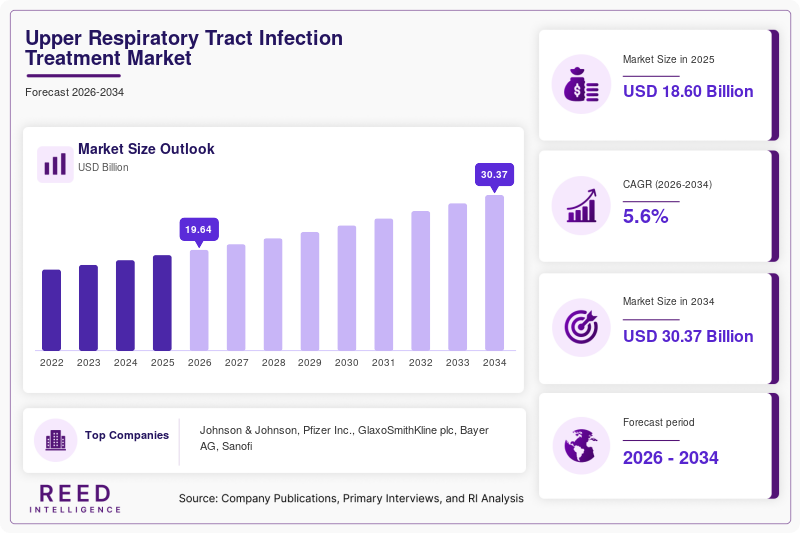
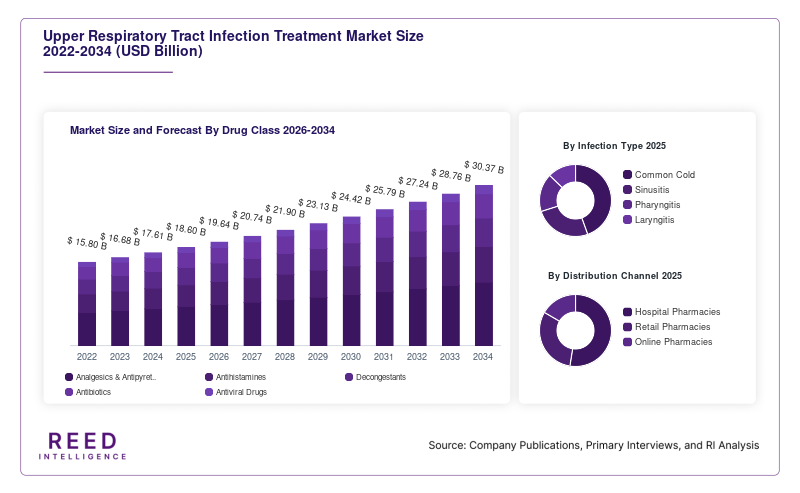
The Upper Respiratory Tract Infection Treatment Market size was valued at USD 18.6 billion in 2024 and is projected to reach USD 29.8 billion by 2033, expanding at a compound annual growth rate (CAGR) of 5.6% from 2025 to 2034. The market growth is supported by rising incidences of seasonal respiratory infections, increasing awareness regarding early treatment, and improvements in pharmaceutical formulations aimed at symptomatic relief. Upper respiratory tract infections (URTIs) include conditions such as the common cold, sinusitis, pharyngitis, and laryngitis, which continue to affect a large portion of the global population annually.
A global factor that supported market growth has been the increasing accessibility of over-the-counter medications and improved healthcare infrastructure in emerging economies. Pharmacies and online healthcare platforms have expanded treatment availability, enabling faster diagnosis and medication access for patients experiencing mild to moderate respiratory infections.
Key Highlights
- North America dominated the market with 36% share in 2025, while Asia Pacific will register the fastest CAGR of 6.9% during the forecast period.
- In the drug class segment, analgesics and antipyretics accounted for 31% share in 2024, while antiviral medications are projected to grow fastest at a CAGR of 6.8%.
- Within distribution channels, retail pharmacies held the largest share of 44%, while online pharmacies will expand at a CAGR of 7.3%.
- The United States accounted for USD 5.8 billion in 2024 and USD 6.1 billion in 2025 in the global market.
Market Trends
Increasing Adoption of Combination Drug Therapies
Pharmaceutical manufacturers are increasingly developing combination medications that treat multiple symptoms of upper respiratory tract infections simultaneously. Products combining antihistamines, decongestants, and analgesics are becoming widely available in both prescription and over-the-counter formats. This trend is shaping the Upper Respiratory Tract Infection Treatment Market trends by improving treatment convenience and patient compliance. Combination formulations also reduce the need for multiple medications, simplifying treatment regimens and improving therapeutic outcomes. Additionally, pharmaceutical companies are focusing on improved dosing forms such as extended-release tablets and multi-symptom syrups designed for pediatric and adult populations.
Expansion of Digital Pharmacy and Telemedicine Services
The integration of digital healthcare services is transforming how patients access treatment for respiratory infections. Online consultations and digital prescription platforms are enabling faster diagnosis and medication access, particularly for mild respiratory conditions. Telemedicine platforms allow healthcare providers to prescribe medications remotely, reducing the need for physical hospital visits. This trend is strengthening the Upper Respiratory Tract Infection Treatment Market growth by expanding access to healthcare services in remote areas. Furthermore, digital pharmacies provide doorstep medication delivery, improving convenience and encouraging early treatment initiation.
Market Drivers
Rising Global Prevalence of Seasonal Respiratory Infections
Seasonal respiratory infections remain one of the most common health conditions globally, affecting individuals across all age groups. Climate variations, urbanization, and increased population density have contributed to the spread of viral respiratory infections. As a result, demand for medications such as antihistamines, analgesics, and decongestants continues to increase. The growing incidence of common colds and influenza-like illnesses has supported steady demand within the Upper Respiratory Tract Infection Treatment Market, especially during peak seasonal periods. Healthcare providers are also emphasizing early treatment to reduce complications and minimize productivity losses among the working population.
Advancements in Pharmaceutical Formulations
Ongoing innovation in pharmaceutical formulations has enhanced treatment effectiveness and patient adherence. Manufacturers are developing improved drug delivery formats including fast-dissolving tablets, liquid suspensions for pediatric use, and sustained-release medications. These advancements help ensure rapid symptom relief and improved patient experience. Additionally, pharmaceutical research is focusing on targeted antiviral therapies that address specific viral pathogens responsible for respiratory infections. These developments are expected to contribute to the long-term expansion of the Upper Respiratory Tract Infection Treatment Market size by introducing more effective treatment options.
Market Restraint
Growing Concerns Regarding Antibiotic Resistance
One of the major restraints affecting the Upper Respiratory Tract Infection Treatment Market is the increasing concern over antibiotic resistance. A significant proportion of upper respiratory infections are caused by viruses rather than bacteria, yet antibiotics are frequently prescribed or misused in treatment. Excessive or inappropriate antibiotic usage has contributed to the development of antimicrobial resistance, prompting healthcare authorities to implement stricter prescribing guidelines.
Governments and healthcare organizations worldwide are promoting antibiotic stewardship programs to reduce unnecessary prescriptions. While these initiatives are essential for public health, they can limit the growth of antibiotic-based treatment segments within the market. Additionally, healthcare providers are increasingly recommending symptomatic treatments instead of antibiotics for viral infections, shifting treatment preferences toward non-antibiotic medications.
Another impact of antibiotic resistance concerns is the increased regulatory scrutiny surrounding new drug approvals. Pharmaceutical companies must demonstrate safety and effectiveness while also addressing resistance risks, which can extend development timelines and increase costs. These factors collectively create challenges for manufacturers operating within the Upper Respiratory Tract Infection Treatment Market, particularly in segments traditionally dominated by antibiotic therapies.
Market Opportunities
Expansion of Over-the-Counter Medication Markets
The global expansion of over-the-counter (OTC) medication markets presents a significant opportunity for the Upper Respiratory Tract Infection Treatment Market. Many countries are expanding OTC drug availability to reduce pressure on healthcare systems and encourage self-care for mild illnesses. Pharmaceutical companies are responding by introducing new OTC formulations targeting symptoms such as nasal congestion, sore throat, and fever.
The growing consumer preference for self-medication, supported by improved health awareness and digital health information platforms, is likely to create new revenue streams for OTC product manufacturers.
Growth Potential in Emerging Healthcare Markets
Emerging economies are presenting substantial growth opportunities for the market due to expanding healthcare infrastructure and increasing pharmaceutical access. Countries in Asia Pacific, Latin America, and parts of the Middle East are witnessing improvements in pharmacy networks and distribution systems. These developments are enabling broader availability of respiratory infection treatments across urban and rural populations.
Rising healthcare expenditure and government initiatives aimed at improving primary healthcare services are also expected to support market expansion. As a result, manufacturers focusing on affordable treatment options and localized distribution strategies may benefit from the evolving Upper Respiratory Tract Infection Treatment Market forecast.
Segmental Analysis
By Drug Class
Analgesics and antipyretics dominated the Upper Respiratory Tract Infection Treatment Market in 2024, accounting for 31% share. These medications are widely used to reduce fever, body aches, and throat discomfort associated with respiratory infections. Their broad availability in both prescription and over-the-counter formats contributed to strong market demand. Additionally, these drugs are commonly recommended as first-line treatment options for managing URTI symptoms.
Antiviral medications will represent the fastest-growing subsegment with a projected CAGR of 6.8% during the forecast period. The growth of this subsegment will be supported by increased research focused on therapies targeting viral pathogens responsible for respiratory infections. Pharmaceutical companies are expected to introduce improved antiviral drugs designed to shorten illness duration and reduce viral transmission.
By Infection Type
The common cold segment held the largest share of the Upper Respiratory Tract Infection Treatment Market in 2024, accounting for 38% share. This dominance was attributed to the high prevalence of the common cold worldwide, affecting millions of individuals annually. The widespread availability of medications aimed at relieving congestion, fever, and cough symptoms supported the segment’s leading position.
The sinusitis treatment segment will experience the fastest growth with a CAGR of 6.5%. This growth will be supported by increasing diagnosis rates and improved treatment protocols for chronic sinus conditions. Medical professionals are expected to adopt targeted treatment approaches combining nasal sprays, antihistamines, and anti-inflammatory medications to improve symptom management.
By Distribution Channel
Retail pharmacies represented the dominant distribution channel in 2024, holding 44% share of the global Upper Respiratory Tract Infection Treatment Market. The extensive presence of community pharmacies in both developed and emerging countries has enabled convenient access to respiratory infection medications. Pharmacists also provide recommendations for over-the-counter products, strengthening the role of retail pharmacies in treatment distribution.
Online pharmacies will grow at the fastest CAGR of 7.3% during the forecast period. The increasing use of digital healthcare platforms and e-commerce services will support the growth of this segment. Online pharmacy services are expected to offer convenient medication purchasing, competitive pricing, and home delivery options, encouraging wider adoption among consumers.
Regional Analysis
North America
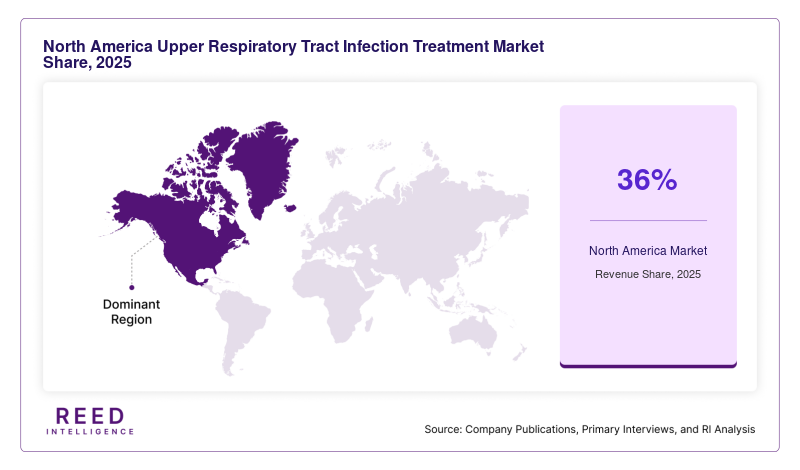
North America accounted for 36% of the global Upper Respiratory Tract Infection Treatment Market share in 2025 and will grow at a CAGR of 5.1% during 2025–2034. The region represented the largest market due to widespread availability of pharmaceutical products, high consumer awareness regarding respiratory health, and extensive pharmacy distribution networks. Over-the-counter medication accessibility and the presence of well-established pharmaceutical manufacturers supported the region’s market leadership.
The United States remained the dominant country in the region. One distinct factor supporting growth in the country is the widespread use of retail pharmacy clinics offering quick treatment for common respiratory illnesses. These clinics provide rapid diagnosis and medication prescriptions for patients experiencing mild respiratory infections. The convenience and accessibility of these services have contributed to steady demand for URTI treatment medications.
Europe
Europe held 27% share of the Upper Respiratory Tract Infection Treatment Market in 2025 and will register a CAGR of 5.3% through 2034. The region maintained a significant presence due to established healthcare systems, widespread use of symptomatic medications, and consistent pharmaceutical research activities. Many European countries also emphasize responsible medication use and patient education, influencing treatment approaches.
Germany dominated the European market. A distinct growth factor in the country is the high utilization of pharmacy-based consultation services. Community pharmacists play an active role in recommending medications for respiratory symptoms and guiding patients toward appropriate treatments. This pharmacist-led consultation model has strengthened the market presence of non-prescription medications for respiratory infections.
Asia Pacific
Asia Pacific captured 23% market share in 2025 and will experience the fastest CAGR of 6.9% between 2025 and 2034. Rapid urbanization, expanding healthcare infrastructure, and increasing population density are contributing to higher demand for respiratory infection treatments across the region. The availability of both modern pharmaceuticals and traditional remedies further shapes the regional market dynamics.
China led the regional market. A unique growth factor in China is the integration of traditional herbal remedies with modern respiratory treatments. Many healthcare providers recommend herbal formulations alongside pharmaceutical drugs to relieve symptoms such as cough and throat irritation. This integrated treatment approach has expanded the range of therapeutic options available to patients.
Middle East & Africa
The Middle East & Africa represented 8% of the global market share in 2025 and will grow at a CAGR of 5.8% during the forecast period. Healthcare infrastructure improvements and increasing pharmaceutical distribution networks have supported the development of the respiratory infection treatment market in the region.
Saudi Arabia emerged as the leading country. A key factor supporting growth in the country is the expansion of hospital pharmacies and specialized respiratory clinics. These facilities provide diagnostic services and treatment recommendations for respiratory conditions, increasing the adoption of pharmaceutical therapies for upper respiratory infections.
Latin America
Latin America accounted for 6% share of the Upper Respiratory Tract Infection Treatment Market in 2025 and will grow at a CAGR of 5.6% through 2034. The market in the region has been supported by expanding pharmacy networks and increased availability of affordable medications for common illnesses.
Brazil dominated the regional market. One distinct factor supporting growth in Brazil is the strong presence of community pharmacies in both urban and semi-urban areas. These pharmacies frequently serve as primary healthcare access points for individuals experiencing respiratory symptoms, encouraging widespread use of symptomatic treatments.
Competitive Landscape
The Upper Respiratory Tract Infection Treatment Market is moderately competitive, with global pharmaceutical companies and regional drug manufacturers participating in the industry. Market participants focus on expanding product portfolios, improving medication formulations, and strengthening distribution networks.
One leading company in the market is Johnson & Johnson, which maintains a strong presence in the over-the-counter respiratory medication segment. The company has expanded its multi-symptom cold and flu product range to address evolving consumer demand for convenient treatment options.
Other key companies include Pfizer Inc., GlaxoSmithKline plc, Bayer AG, and Sanofi, which have established respiratory medication portfolios and global distribution networks. These companies continue to invest in research and development aimed at improving drug efficacy and delivery methods.
Strategic partnerships with healthcare providers and pharmacy chains also remain an important competitive strategy, enabling pharmaceutical companies to expand market reach and strengthen brand visibility.
Key Players List
- Johnson & Johnson
- Pfizer Inc.
- GlaxoSmithKline plc
- Bayer AG
- Sanofi
- Novartis AG
- AstraZeneca plc
- Reckitt Benckiser Group plc
- Procter & Gamble Company
- Sun Pharmaceutical Industries Ltd.
- Cipla Limited
- Hikma Pharmaceuticals plc
- Dr. Reddy’s Laboratories Ltd.
- Teva Pharmaceutical Industries Ltd.
- Perrigo Company plc
Recent Developments
- Pharmaceutical companies expanded multi-symptom cold medication product lines to improve patient convenience and treatment adherence.
- Several manufacturers introduced pediatric-friendly liquid formulations designed for easier dosing and improved patient acceptance.
- Online pharmacy platforms increased partnerships with healthcare providers to support digital prescription fulfillment.
- Pharmaceutical firms invested in antiviral research targeting respiratory viruses associated with upper respiratory infections.
- Retail pharmacy chains expanded in-store consultation services to provide treatment recommendations for respiratory symptoms.
Upper Respiratory Tract Infection Treatment Market Segments
By Drug Class
- Analgesics & Antipyretics
- Antihistamines
- Decongestants
- Antibiotics
- Antiviral Drugs
By Infection Type
- Common Cold
- Sinusitis
- Pharyngitis
- Laryngitis
By Distribution Channel
- Hospital Pharmacies
- Retail Pharmacies
- Online Pharmacies
By Region
- North America
- Europe
- APAC
- Middle East and Africa
- LATAM