Urethral Bulking System Market Size, Share & Demand Report By Product Type (Injectable Bulking Agents,Synthetic Polymer Bulking Systems, Hydrogel Bulking Systems), By Application (Stress Urinary Incontinence, Post-Prostatectomy Incontinence,Other Urological Disorders), By End Use (Hospitals, Specialty Clinics, Ambulatory Surgical Centers, Academic and Research Institutes), By Region & Segment Forecasts, 2026–2034
USD 3950
Market Overview
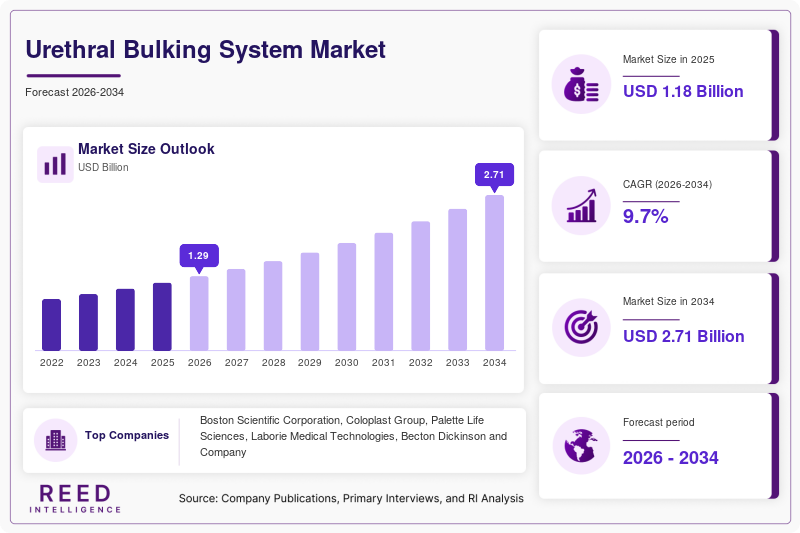
The global Urethral Bulking System Market size was valued at approximately USD 1.18 billion in 2026 and is projected to reach nearly USD 2.47 billion by 2034, expanding at a CAGR of 9.7% during the forecast period from 2026 to 2034. The market continues to gain momentum due to the rising prevalence of stress urinary incontinence among women and aging populations across developed and emerging economies. Increasing awareness regarding minimally invasive treatment options has also supported broader patient adoption of urethral bulking procedures in hospitals, specialty clinics, and ambulatory surgical centers.
Healthcare systems across several countries are focusing on improving women’s health services and pelvic floor disorder management. This factor has accelerated the demand for advanced urethral bulking systems that provide shorter recovery times and lower procedural complications compared to traditional surgical interventions. Manufacturers are investing in biocompatible injectable materials, enhanced delivery devices, and image-guided systems to improve procedural precision and long-term outcomes. In addition, the expansion of outpatient treatment infrastructure has created favorable conditions for market growth.
Key Highlights
- North America dominated the market with a 34.2% share in 2025.
- Asia Pacific is expected to grow at the fastest CAGR of 11.6% during 2026–2034.
- By product type, injectable bulking agents accounted for the largest share of 46.8%.
- while synthetic polymer bulking systems are projected to grow at a CAGR of 12.1%.
- By application, stress urinary incontinence led with a 58.3% share, whereas post-prostatectomy incontinence is expected to expand at a CAGR of 10.8%.
- By end use, hospitals represented the dominant segment with a 49.5% share, while ambulatory surgical centers are forecast to grow at a CAGR of 11.4%.
- The United States remained the dominant country, with market values of USD 412 million in 2024 and USD 448 million in 2025.
Market Trends
Growing Preference for Minimally Invasive Incontinence Procedures
The growing shift toward minimally invasive urological treatments is one of the most visible trends shaping the Urethral Bulking System Market. Patients increasingly prefer procedures that reduce hospitalization periods, lower post-operative pain, and allow faster recovery. Urethral bulking procedures have gained acceptance because they can often be completed in outpatient settings with limited anesthesia requirements. Healthcare providers are also recommending these procedures for elderly patients and individuals who are not suitable candidates for invasive surgeries. Technological improvements in injectable biomaterials and delivery systems have enhanced treatment durability and procedural safety. This trend is expected to continue as hospitals and clinics seek cost-efficient treatment pathways that reduce inpatient admissions and improve patient satisfaction rates.
Expansion of Women’s Health and Pelvic Care Programs
Healthcare providers across developed and emerging economies are increasingly investing in women’s health programs focused on pelvic floor disorders and urinary incontinence management. This trend has created new opportunities for urethral bulking system manufacturers to collaborate with specialty clinics and gynecology centers. Educational campaigns led by healthcare organizations have improved diagnosis rates and reduced the stigma associated with urinary incontinence conditions. As awareness rises, more women are seeking early-stage treatment instead of delaying clinical intervention. The integration of advanced diagnostic imaging, personalized treatment planning, and follow-up monitoring has further strengthened procedural outcomes. In addition, digital health platforms are enabling broader patient engagement, increasing consultations related to stress urinary incontinence and supporting market expansion across urban healthcare systems.
Market Drivers
Rising Prevalence of Stress Urinary Incontinence Among Aging Populations
The increasing prevalence of stress urinary incontinence among aging populations remains a major growth driver for the Urethral Bulking System Market. Elderly women are particularly vulnerable to urinary leakage conditions due to hormonal changes, weakened pelvic floor muscles, obesity, and chronic diseases. The rising global geriatric population has significantly increased demand for effective and low-risk treatment solutions. Urethral bulking systems are often considered suitable for older patients because they offer minimally invasive treatment options with reduced recovery times. Healthcare providers are increasingly adopting these procedures as part of broader pelvic floor disorder management programs. Growing patient willingness to seek medical intervention instead of relying on lifestyle adjustments has also contributed to stronger procedural volumes in hospitals and specialty clinics worldwide.
Increasing Technological Advancements in Injectable Biomaterials
Continuous innovation in injectable biomaterials and delivery systems is supporting the long-term expansion of the Urethral Bulking System Market. Manufacturers are focusing on the development of advanced synthetic polymers, collagen-based materials, and durable bulking agents that improve tissue compatibility and procedural success rates. Newer products are designed to minimize migration risks, enhance patient comfort, and provide longer-lasting clinical outcomes. These improvements have increased physician confidence and expanded adoption across outpatient treatment centers. Companies are also integrating precision-guided injection systems that improve placement accuracy and procedural efficiency. The combination of research investments, favorable regulatory approvals, and strategic partnerships between medical device firms and healthcare providers has accelerated commercialization activities and strengthened market penetration across both developed and emerging healthcare markets.
Market Restraint
High Procedure Costs and Limited Reimbursement in Developing Economies
The relatively high cost associated with urethral bulking procedures continues to restrict broader adoption in price-sensitive healthcare markets. Many developing countries face reimbursement limitations for minimally invasive urinary incontinence treatments, making procedures less accessible for middle-income patient populations. Hospitals and specialty clinics often require investments in advanced imaging systems, injectable biomaterials, and trained healthcare professionals, increasing the overall treatment expense. In several regions, patients continue to rely on conservative therapies or low-cost alternatives due to affordability concerns.
Limited awareness among primary care physicians and delayed diagnosis of urinary incontinence conditions further affect market growth. Smaller healthcare facilities in emerging economies may also lack specialized urology departments capable of performing advanced bulking procedures. In addition, repeat treatments may be necessary for some patients, creating additional financial burdens and discouraging long-term adoption. These challenges can slow commercialization efforts for manufacturers attempting to expand into underserved regions. Despite ongoing technological improvements, pricing pressure and inconsistent reimbursement frameworks remain important barriers for sustained market penetration.
Market Opportunities
Rising Adoption of Outpatient and Ambulatory Surgical Centers
The rapid expansion of outpatient healthcare infrastructure is creating significant opportunities for the Urethral Bulking System Market. Ambulatory surgical centers are increasingly performing minimally invasive urology procedures due to lower operational costs and improved patient convenience. These facilities provide shorter admission times and streamlined treatment pathways, making urethral bulking procedures more accessible for working-age and elderly patients. Healthcare systems are also encouraging outpatient procedures to reduce hospital overcrowding and optimize healthcare spending. Manufacturers are responding by developing compact delivery systems and simplified procedural kits designed specifically for ambulatory settings. As healthcare providers continue to prioritize cost-effective treatment models, the demand for urethral bulking technologies within outpatient environments is expected to accelerate steadily throughout the forecast period.
Emerging Market Expansion Through Awareness Campaigns
Emerging economies present substantial growth opportunities due to increasing healthcare awareness and improving access to specialized urological treatments. Governments and healthcare organizations are expanding educational programs focused on women’s health and urinary incontinence management. These initiatives are helping reduce social stigma and encouraging patients to seek clinical diagnosis at earlier stages. Rising healthcare investments in countries across Asia Pacific and Latin America are also supporting the establishment of specialized urology centers equipped with minimally invasive treatment technologies.
International medical device companies are strengthening their distribution networks and forming partnerships with regional healthcare providers to improve market accessibility. Training programs for physicians and surgeons are increasing procedural expertise in previously underserved areas. Growing middle-class populations and improving insurance coverage are further supporting patient affordability for advanced treatment options. As awareness and healthcare infrastructure continue to improve, emerging markets are expected to become major revenue contributors for urethral bulking system manufacturers over the next decade.
Segmental Analysis
By Product Type
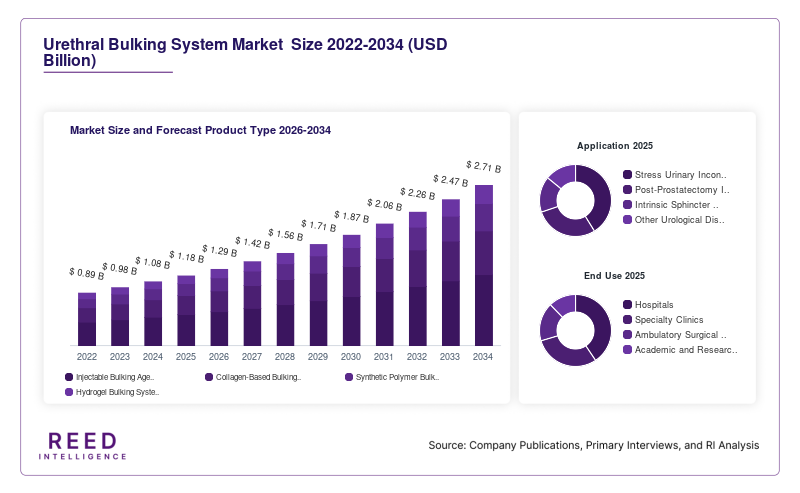
Injectable bulking agents represented the dominant product type segment in the Urethral Bulking System Market and accounted for approximately 46.8% of total revenue in 2024. These products remain widely used due to their ability to improve urethral closure and provide minimally invasive treatment for stress urinary incontinence. Healthcare providers often prefer injectable bulking agents because they can be administered through outpatient procedures with limited recovery requirements. Collagen-based and hydrogel materials have gained popularity due to improved biocompatibility and reduced complication risks. The segment has also benefited from increasing physician familiarity with injectable treatment techniques and greater patient demand for alternatives to invasive surgery. Rising adoption across specialty clinics and ambulatory centers continues to strengthen the market position of injectable bulking agents worldwide.
Synthetic polymer bulking systems are expected to register the fastest growth within the product type category, expanding at a CAGR of 12.1% through 2034. These systems are gaining traction because they provide enhanced durability and longer-lasting treatment outcomes compared to traditional materials. Manufacturers are investing heavily in research activities focused on improving tissue integration and minimizing migration risks associated with synthetic formulations. Hospitals and specialty clinics are increasingly adopting advanced polymer systems to reduce repeat procedures and improve patient satisfaction. Growing regulatory approvals for innovative biomaterials are also accelerating commercialization activities. Furthermore, the expansion of minimally invasive treatment programs in emerging economies is expected to create favorable demand conditions for advanced synthetic urethral bulking technologies during the forecast period.
By Application
Stress urinary incontinence remained the leading application segment in the Urethral Bulking System Market and accounted for nearly 58.3% of global revenue in 2024. The high prevalence of stress urinary incontinence among women, particularly elderly patients, has significantly contributed to segment dominance. Pregnancy, obesity, menopause, and pelvic muscle weakening are major factors increasing the incidence of this condition worldwide. Healthcare providers are increasingly recommending urethral bulking procedures for patients seeking minimally invasive treatment options with shorter recovery periods. Growing awareness campaigns related to women’s pelvic health have also improved diagnosis rates and treatment adoption. In addition, advancements in injectable materials and imaging-assisted procedures have enhanced procedural effectiveness, supporting continued demand for urethral bulking systems in stress urinary incontinence management.
Post-prostatectomy incontinence is projected to emerge as the fastest-growing application segment, expanding at a CAGR of 10.8% during the forecast period. Rising numbers of prostate cancer surgeries and improving post-operative diagnosis rates are increasing demand for effective urinary incontinence management solutions among male patients. Urethral bulking procedures are becoming more widely utilized because they offer minimally invasive treatment alternatives for individuals experiencing urinary leakage following prostate surgery. Technological improvements in bulking materials have enhanced clinical outcomes and improved physician confidence in treating male incontinence conditions. In addition, growing healthcare awareness among aging male populations and the expansion of specialized urology centers are expected to support rapid growth in this application segment over the coming years.
By End Use
Hospitals accounted for the largest share of the Urethral Bulking System Market in 2024, contributing approximately 49.5% of total revenue. Large hospitals continue to dominate because they possess advanced diagnostic infrastructure, experienced urology specialists, and access to comprehensive patient care services. Many patients prefer hospital-based treatment due to the availability of multidisciplinary healthcare teams and broader insurance coverage. Hospitals also remain key centers for complex urinary incontinence management, particularly among elderly patients with multiple chronic conditions. In addition, ongoing investments in minimally invasive surgical technologies and image-guided treatment systems have strengthened hospital adoption of urethral bulking procedures. The increasing number of women’s health departments and pelvic care clinics within hospital networks further supports sustained segment growth.
Ambulatory surgical centers are anticipated to witness the fastest growth within the end-use segment, registering a CAGR of 11.4% during the forecast period. These facilities are gaining popularity because they offer cost-effective procedures, shorter waiting times, and faster patient discharge compared to traditional hospital environments. The growing preference for outpatient treatment pathways has encouraged healthcare providers to perform minimally invasive urethral bulking procedures in ambulatory settings. Manufacturers are also introducing portable and simplified procedural systems designed specifically for these facilities. Rising healthcare pressure to reduce inpatient treatment costs and improve operational efficiency continues to support this trend. As reimbursement support for outpatient procedures improves across several regions, ambulatory surgical centers are expected to become increasingly important contributors to overall market revenue.
Regional Analysis
North America
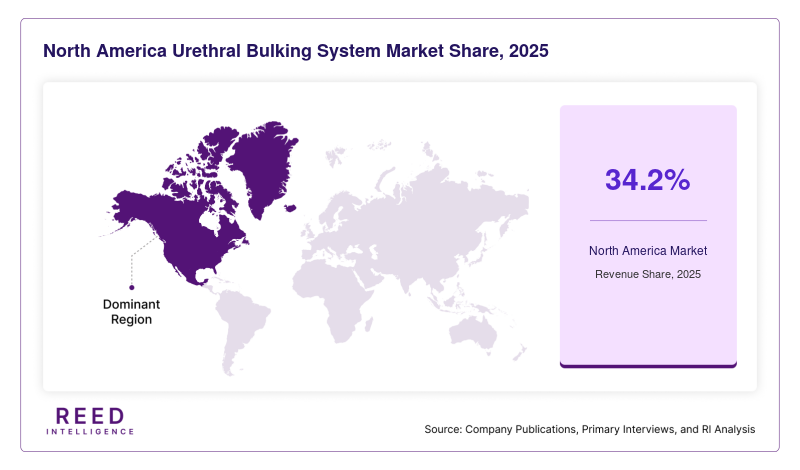
North America accounted for the largest share of the Urethral Bulking System Market in 2025, representing approximately 34.2% of global revenue. The region is expected to maintain steady growth at a CAGR of 8.9% through 2034 due to advanced healthcare infrastructure and high awareness regarding urinary incontinence treatment options. Strong reimbursement support for minimally invasive procedures and widespread availability of specialized urology centers continue to support market demand. The increasing elderly population in the United States and Canada has also contributed to higher procedural volumes. Furthermore, healthcare providers in the region are actively adopting advanced injectable biomaterials and image-guided technologies.
The United States remains the dominant country within North America due to strong healthcare spending and high diagnosis rates for stress urinary incontinence. The country benefits from a large network of ambulatory surgical centers and specialty clinics offering minimally invasive urological procedures. One unique growth factor is the increasing collaboration between medical device companies and women’s health organizations focused on improving early-stage diagnosis. Clinical research activities and product commercialization initiatives have further strengthened innovation across the domestic market, supporting continued adoption among both physicians and patients.
Europe
Europe held a significant share of the global Urethral Bulking System Market in 2025 and is forecast to expand at a CAGR of 8.5% during the assessment period. The region benefits from growing healthcare awareness, favorable government healthcare programs, and increasing demand for minimally invasive procedures among elderly populations. Countries across Western Europe are witnessing rising adoption of outpatient urology treatments due to pressure on hospital resources and the need for cost-efficient healthcare delivery. Manufacturers are also expanding their product portfolios in the region through regulatory approvals and partnerships with hospital networks.
Germany represents the leading country market within Europe due to its advanced medical technology ecosystem and strong hospital infrastructure. The country has a high concentration of specialized urology clinics that actively utilize innovative injectable bulking materials for urinary incontinence treatment. A unique growth factor in Germany is the integration of digital patient monitoring systems into post-procedure care management. These systems improve follow-up efficiency and patient outcomes, supporting greater physician confidence in urethral bulking procedures and encouraging broader treatment adoption across the national healthcare system.
Asia Pacific
Asia Pacific is expected to register the fastest growth in the Urethral Bulking System Market, with a projected CAGR of 11.6% from 2026 to 2034. Rising healthcare investments, expanding medical tourism, and increasing awareness regarding women’s pelvic health disorders are major contributors to regional expansion. Countries such as China, Japan, South Korea, and India are improving access to minimally invasive treatment procedures through healthcare modernization initiatives. Urban hospitals are increasingly investing in advanced urology departments and diagnostic technologies. In addition, rising disposable income levels are supporting greater patient willingness to seek specialized treatment options.
China remains the dominant country market in Asia Pacific due to its large patient population and expanding healthcare infrastructure. The country is experiencing rapid growth in private hospitals and specialty clinics that offer minimally invasive urological procedures. One unique growth factor is the strong expansion of domestic medical device manufacturing capabilities. Local manufacturers are introducing cost-competitive urethral bulking systems that improve treatment accessibility across secondary and tertiary healthcare facilities. Government healthcare reforms and broader insurance coverage are also contributing to higher diagnosis and treatment rates within the country.
Middle East & Africa
The Middle East & Africa region is gradually emerging as a developing market for urethral bulking systems, supported by increasing healthcare investments and rising awareness regarding urinary incontinence management. The market is projected to grow at a CAGR of 7.8% through 2034. Gulf countries are investing heavily in modern healthcare facilities and specialized medical services, creating favorable conditions for advanced urological treatments. Growing medical tourism activity and the expansion of private hospital networks are also supporting market penetration. Although adoption rates remain lower compared to developed regions, healthcare modernization efforts continue to improve market prospects.
Saudi Arabia dominates the regional market due to increasing healthcare expenditure and government-led hospital development programs. The country has been expanding women’s healthcare services as part of broader healthcare transformation initiatives. A unique growth factor is the rapid increase in specialized training programs for urologists and gynecologists. These educational initiatives are improving physician expertise in minimally invasive procedures and strengthening patient access to advanced treatment options. In addition, rising awareness campaigns focused on women’s health conditions are contributing to greater acceptance of urethral bulking therapies.
Latin America
Latin America continues to witness moderate growth in the Urethral Bulking System Market and is expected to expand at a CAGR of 8.1% during the forecast period. Increasing healthcare awareness, urbanization, and expanding access to private healthcare services are supporting regional demand. Brazil, Mexico, and Argentina are among the major contributors to market development due to growing investments in hospital infrastructure and minimally invasive surgical technologies. Healthcare providers are also focusing on improving diagnosis rates for urinary incontinence conditions through patient education campaigns and specialized treatment programs.
Brazil represents the dominant country market within Latin America due to its large healthcare network and expanding medical device distribution channels. The country has experienced increased demand for outpatient procedures that reduce treatment costs and recovery times. One unique growth factor is the growing role of private insurance providers in covering minimally invasive urological treatments. Improved reimbursement accessibility is encouraging more patients to pursue advanced procedures instead of delaying treatment. As healthcare infrastructure continues to improve, Brazil is expected to remain a major regional contributor to future market growth.
Competitive Landscape
The Urethral Bulking System Market is moderately consolidated, with global and regional medical device companies competing through product innovation, strategic collaborations, and geographic expansion initiatives. Leading market participants are focusing on developing advanced injectable biomaterials with improved safety profiles and long-term clinical effectiveness. Companies are also strengthening physician training programs and expanding their distribution partnerships to improve product accessibility across emerging healthcare markets.
Boston Scientific Corporation remains one of the leading companies in the market due to its broad urology product portfolio and extensive global distribution network. The company recently expanded its minimally invasive pelvic health product offerings through investments in advanced biomaterial technologies. Other prominent players are also increasing research activities related to synthetic polymers and precision-guided delivery systems to improve procedural outcomes.
Key Players
- Boston Scientific Corporation
- Coloplast Group
- Uroplasty Inc.
- Palette Life Sciences
- Cogentix Medical
- Contura International A/S
- Laborie Medical Technologies
- Becton Dickinson and Company
- Teleflex Incorporated
- Medtronic plc
- Olympus Corporation
- Johnson & Johnson MedTech
- Cook Medical
- Karl Storz SE & Co. KG
- Stryker Corporation
Recent Developments
- Boston Scientific Corporation introduced an upgraded urethral bulking delivery platform in 2025 designed to improve injection precision and reduce procedure time in outpatient settings.
- Coloplast Group expanded its pelvic health product distribution network across Asia Pacific in 2024 to strengthen access to minimally invasive urinary incontinence treatment technologies.
- Palette Life Sciences announced the development of a next-generation synthetic bulking biomaterial in 2025 focused on enhancing long-term durability and reducing repeat treatment requirements.
- Laborie Medical Technologies partnered with regional urology clinics in Europe during 2024 to improve physician training programs related to minimally invasive urethral bulking procedures.
Urethral Bulking System Market Segments
Product Type
- Injectable Bulking Agents
- Collagen-Based Bulking Systems
- Synthetic Polymer Bulking Systems
- Hydrogel Bulking Systems
Application
- Stress Urinary Incontinence
- Post-Prostatectomy Incontinence
- Intrinsic Sphincter Deficiency
- Other Urological Disorders
End Use
- Hospitals
- Specialty Clinics
- Ambulatory Surgical Centers
- Academic and Research Institutes
By Region
- North America
- Europe
- APAC
- Middle East and Africa
- LATAM