Urine Flow Meters Market Size, Share & Demand Report By Product Type (Standalone Urine Flow Meters, Portable Urine Flow Meters), By Application (Urology Diagnostics, Home Care Monitoring), By End-Use (Hospitals, Clinics and Ambulatory Surgical Centers, Home Care Settings), By Region & Segment Forecasts, 2026–2034
USD 3950
Market Overview
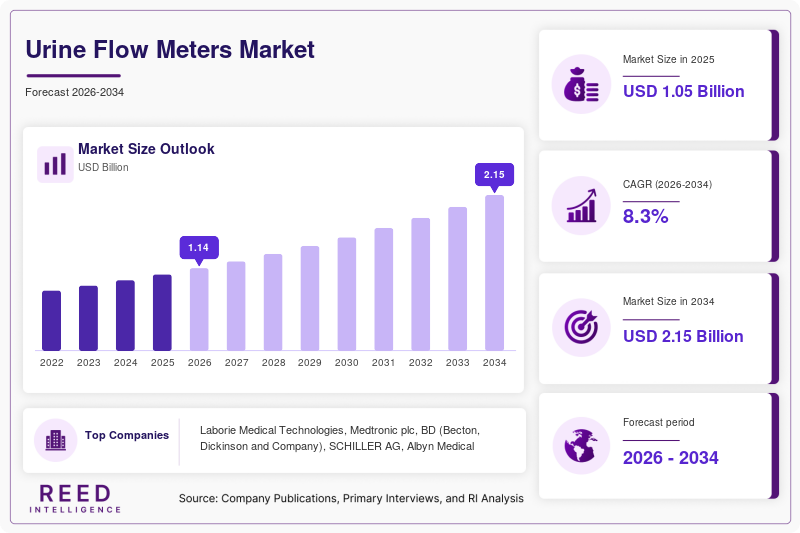
The Urine Flow Meters Market size was valued at approximately USD 1.05 billion in 2026 and is projected to reach USD 1.98 billion by 2034, expanding at a CAGR of 8.3% during the forecast period (2026–2034). The market demonstrates steady growth driven by increasing prevalence of urological disorders such as benign prostatic hyperplasia, urinary incontinence, and kidney-related conditions. Rising geriatric populations worldwide continue to contribute significantly to demand, as aging individuals are more susceptible to urinary tract dysfunctions requiring diagnostic monitoring.
One of the primary global factors supporting market expansion is the growing adoption of non-invasive diagnostic technologies in healthcare systems. Urine flow meters provide a simple, cost-effective, and accurate method for assessing urinary health, making them widely used in hospitals, clinics, and ambulatory care centers. Additionally, technological advancements such as digital uroflowmetry devices and integration with electronic health record systems have improved diagnostic efficiency and patient outcomes.
Key Highlights
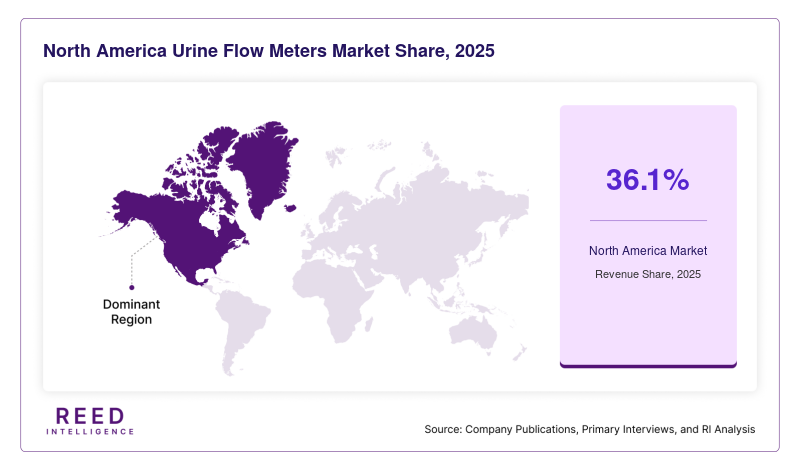
- North America dominated the market with a 36.1% share in 2025.
- Asia Pacific is expected to grow at the fastest CAGR of 9.8% during 2026–2034.
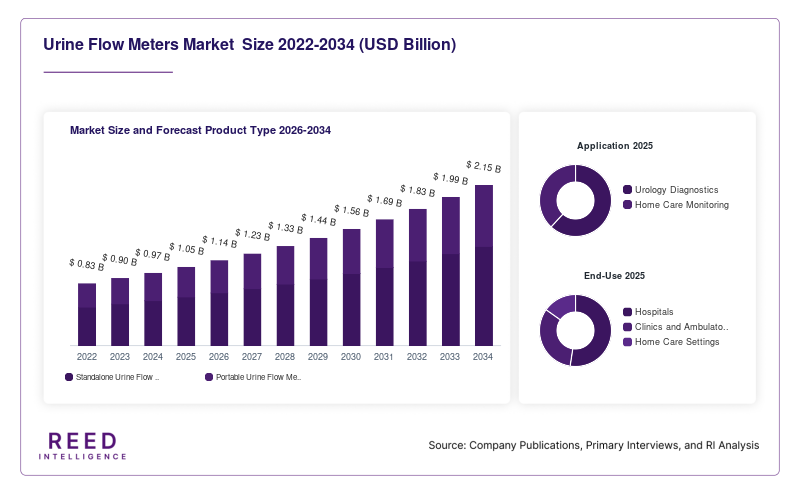
- By product type, standalone urine flow meters accounted for the largest share of 44.3%.
- while portable urine flow meters are projected to grow at a CAGR of 10.2%.
- By application, urology diagnostics led with a 48.7% share, whereas home care monitoring is expected to expand at a CAGR of 9.6%.
- The United States remained the dominant country, with market values of USD 410 million in 2024 and USD 445 million in 2025.
Market Trends
Increasing adoption of digital and connected uroflowmetry devices
The market is experiencing a shift toward digital and connected urine flow meters that integrate with healthcare IT systems. These advanced devices enable real-time data collection, remote monitoring, and seamless sharing of patient information with healthcare professionals. Hospitals and clinics are increasingly adopting such technologies to enhance diagnostic accuracy and workflow efficiency. Digital uroflowmetry devices often include automated data analysis features, reducing human error and improving clinical decision-making. The trend is particularly strong in developed regions where healthcare digitization is well established. Additionally, patients benefit from improved convenience and faster diagnosis, which further supports market growth. The integration of artificial intelligence for pattern recognition in urinary flow data is also gaining traction, offering predictive insights for early detection of urological conditions.
Growing demand for portable and home-use urine flow meters
Another notable trend is the increasing demand for portable and home-use urine flow meters. As healthcare systems shift toward patient-centric and home-based care models, the need for compact, easy-to-use diagnostic devices has grown significantly. Portable urine flow meters allow patients to monitor their urinary health in a comfortable environment, reducing the need for frequent hospital visits. This trend is particularly relevant for elderly patients and individuals with chronic urological conditions who require regular monitoring. Manufacturers are focusing on developing user-friendly devices with intuitive interfaces and wireless connectivity. The rise of telehealth services further supports this trend, enabling healthcare providers to remotely analyze patient data and provide timely interventions.
Market Drivers
Rising prevalence of urological disorders and aging population
The increasing incidence of urological disorders is a major factor driving the growth of the urine flow meters market. Conditions such as urinary tract infections, bladder dysfunction, and prostate enlargement are becoming more common due to lifestyle changes and aging demographics. The global population aged 60 years and above is expanding rapidly, leading to a higher demand for diagnostic tools that can assess urinary health. Urine flow meters play a critical role in diagnosing and monitoring these conditions, making them indispensable in urology practices. Additionally, early detection of urinary disorders helps prevent complications and reduces healthcare costs, encouraging wider adoption of these devices. The growing awareness among patients about the importance of regular health check-ups is further contributing to market growth.
Technological advancements in uroflowmetry equipment
Continuous technological innovation in urine flow measurement devices is another key driver of market expansion. Modern urine flow meters are equipped with advanced sensors, digital displays, and automated reporting features that enhance accuracy and usability. Innovations such as wireless connectivity, cloud-based data storage, and integration with mobile applications have improved patient engagement and clinical outcomes. These advancements make it easier for healthcare providers to track patient progress and adjust treatment plans accordingly. Furthermore, manufacturers are investing in research and development to introduce compact, portable, and cost-effective devices, which are particularly beneficial in resource-limited settings. The availability of technologically advanced products is encouraging healthcare facilities to upgrade their diagnostic equipment, thereby boosting market demand.
Market Restraints
High cost of advanced devices and limited access in developing regions
Despite steady growth, the urine flow meters market faces challenges related to the high cost of advanced devices and limited accessibility in certain regions. Digital and connected urine flow meters often involve significant upfront investment, which can be a barrier for small clinics and healthcare facilities with constrained budgets. In developing countries, limited healthcare infrastructure and lack of trained professionals further restrict the adoption of these devices. Additionally, reimbursement policies for diagnostic procedures may vary across regions, affecting the affordability of urine flow measurement tests. This restraint impacts market penetration, particularly in low-income and rural areas where access to specialized urology care is limited. As a result, manufacturers must focus on cost-effective solutions and strategic partnerships to expand their presence in underserved markets.
Market Opportunities
Expansion of telehealth and remote patient monitoring
The rapid expansion of telehealth services presents a significant opportunity for the urine flow meters market. Remote patient monitoring has become increasingly important, especially following the global shift toward digital healthcare solutions. Urine flow meters that can transmit data to healthcare providers enable continuous monitoring of patients with chronic urological conditions. This capability improves treatment outcomes and reduces hospital visits, making healthcare more efficient and accessible. The integration of urine flow meters with telehealth platforms allows clinicians to analyze patient data in real time and provide timely interventions. As telemedicine adoption continues to grow, the demand for connected diagnostic devices is expected to increase, creating new growth avenues for market players.
Emerging markets and healthcare infrastructure development
Emerging economies offer substantial growth opportunities for the urine flow meters market due to improving healthcare infrastructure and increasing healthcare expenditure. Governments in regions such as Asia Pacific, Latin America, and the Middle East are investing in modernizing healthcare facilities and expanding access to diagnostic services. This development is driving the adoption of urine flow meters in hospitals and clinics. Additionally, rising awareness about urological health and increasing disposable incomes are encouraging patients to seek advanced diagnostic solutions. Manufacturers can capitalize on these opportunities by introducing affordable and user-friendly devices tailored to the needs of these markets. Strategic collaborations with local distributors and healthcare providers can further enhance market penetration.
Segmental Analysis
By Product Type
Standalone urine flow meters dominated the market in 2024, accounting for approximately 44.3% of the total share. These devices are widely used in hospitals and diagnostic centers due to their high accuracy and reliability. Standalone systems often include advanced features such as automated data recording and analysis, making them suitable for clinical use. The demand for these devices is driven by the need for precise diagnostic tools in urology. Additionally, healthcare providers prefer standalone systems for their ability to handle a large volume of patients efficiently. The increasing prevalence of urological disorders further supports the adoption of these devices, as they are essential for accurate diagnosis and monitoring.
Portable urine flow meters are emerging as the fastest-growing subsegment, with a projected CAGR of 10.2% during the forecast period. The growth of this segment is driven by the increasing demand for home-based healthcare solutions. Portable devices offer convenience and ease of use, allowing patients to monitor their urinary health outside clinical settings. This is particularly beneficial for elderly patients and those with chronic conditions. The integration of wireless connectivity and mobile applications enhances the functionality of portable urine flow meters, enabling remote monitoring and data sharing with healthcare providers. As telehealth services continue to expand, the demand for portable devices is expected to increase significantly.
By Application
Urology diagnostics held the largest share of the market in 2024, accounting for 48.7%. This segment includes the use of urine flow meters for diagnosing various urological conditions such as bladder dysfunction and prostate disorders. The high prevalence of these conditions and the need for accurate diagnostic tools drive the demand for urine flow meters in this segment. Hospitals and clinics rely on these devices to assess urinary flow rates and identify abnormalities. The increasing focus on early diagnosis and preventive healthcare further supports the growth of this segment.
Home care monitoring is the fastest-growing application segment, with a CAGR of 9.6% during the forecast period. The shift toward patient-centric healthcare models is driving the demand for home-based diagnostic solutions. Urine flow meters designed for home use allow patients to monitor their condition regularly and share data with healthcare providers. This approach improves disease management and reduces the need for frequent hospital visits. The growing adoption of telehealth services and remote monitoring technologies further supports the expansion of this segment.
By End-Use
Hospitals dominated the market in 2024, accounting for approximately 46.5% of the total share. Hospitals are the primary end-users of urine flow meters due to the high volume of patients and the availability of advanced diagnostic facilities. These institutions require reliable and accurate devices to diagnose and monitor urological conditions. The presence of skilled healthcare professionals and access to advanced technologies further support the adoption of urine flow meters in hospitals. Additionally, increasing healthcare expenditure and the expansion of hospital infrastructure contribute to the growth of this segment.
Ambulatory surgical centers and clinics represent the fastest-growing end-use segment, with a CAGR of 9.1% during the forecast period. The growth of this segment is driven by the increasing preference for outpatient care and minimally invasive procedures. Clinics and ambulatory centers are adopting urine flow meters to provide efficient diagnostic services. These facilities offer cost-effective and convenient healthcare solutions, attracting a large number of patients. The rising demand for specialized urology services in outpatient settings further supports the growth of this segment.
Regional Analysis
North America
North America held the largest share of the urine flow meters market in 2025, accounting for approximately 36.1%, and is expected to maintain its dominance throughout the forecast period with a steady CAGR of 7.9%. The region benefits from advanced healthcare infrastructure, high adoption of digital diagnostic technologies, and strong presence of key market players. Increasing prevalence of urological disorders and rising healthcare expenditure further contribute to market growth. The availability of reimbursement policies for diagnostic procedures also supports the widespread use of urine flow meters in clinical settings.
The United States remains the dominant country in North America, driven by a well-established healthcare system and high awareness regarding urological health. One unique growth factor in the country is the increasing adoption of home-based diagnostic devices, supported by telehealth expansion. Patients are increasingly using portable urine flow meters for regular monitoring, which reduces hospital visits and improves disease management. This trend is expected to continue, further strengthening the market in the region.
Europe
Europe accounted for a significant share of the urine flow meters market in 2025, contributing around 27.4%, and is projected to grow at a CAGR of 7.6% during the forecast period. The region’s growth is supported by a strong focus on early diagnosis and preventive healthcare. Countries across Europe have well-developed healthcare systems and are increasingly adopting advanced diagnostic technologies. Additionally, government initiatives aimed at improving healthcare services are driving the demand for urine flow meters.
Germany leads the European market due to its advanced medical infrastructure and high healthcare spending. A unique growth factor in the country is the increasing integration of digital health technologies in diagnostic procedures. Hospitals and clinics are adopting connected urine flow meters that enable efficient data management and analysis. This trend enhances diagnostic accuracy and supports the overall growth of the market in Europe.
Asia Pacific
Asia Pacific is expected to witness the fastest growth in the urine flow meters market, with a CAGR of 9.8% during 2026–2034, while holding a share of approximately 22.6% in 2025. The region’s growth is driven by increasing healthcare investments, rising population, and growing awareness about urological health. Rapid urbanization and improving healthcare infrastructure are also contributing to the adoption of advanced diagnostic devices.
China dominates the Asia Pacific market due to its large population and expanding healthcare sector. A unique growth factor in the country is the government’s focus on strengthening primary healthcare services. This includes the adoption of cost-effective diagnostic tools such as urine flow meters in community health centers. The increasing prevalence of urological disorders further supports market growth in the region.
Middle East & Africa
The Middle East & Africa region accounted for a smaller share of the urine flow meters market in 2025, approximately 7.1%, but is expected to grow at a CAGR of 8.1% during the forecast period. The market is driven by improving healthcare infrastructure and increasing investments in medical facilities. Rising awareness about urological health and growing demand for diagnostic services are also contributing to market growth.
Saudi Arabia is the leading country in the region, supported by government initiatives aimed at modernizing healthcare systems. A unique growth factor is the increasing number of specialized urology clinics and hospitals. These facilities are adopting advanced diagnostic equipment, including urine flow meters, to enhance patient care. The focus on improving healthcare quality is expected to drive market growth in the region.
Latin America
Latin America held a share of approximately 6.8% in the urine flow meters market in 2025 and is projected to grow at a CAGR of 8.4% during the forecast period. The region is witnessing gradual improvements in healthcare infrastructure and increasing adoption of diagnostic technologies. Rising prevalence of urological disorders and growing healthcare awareness are key factors driving market growth.
Brazil dominates the Latin American market due to its large healthcare sector and increasing investments in medical technology. A unique growth factor in the country is the expansion of private healthcare facilities, which are adopting advanced diagnostic devices to improve patient outcomes. This trend is expected to boost the demand for urine flow meters in the region.
Competitive Landscape
The urine flow meters market is moderately competitive, with several established players focusing on product innovation and strategic collaborations. Leading companies are investing in research and development to introduce advanced and user-friendly devices. The market is characterized by the presence of both global and regional players, each striving to expand their market share.
Laborie Medical Technologies is considered a leader in the market due to its comprehensive product portfolio and strong global presence. The company recently introduced a new digital uroflowmetry system with enhanced data analytics capabilities, aimed at improving diagnostic accuracy. Other companies are also focusing on expanding their product offerings and entering emerging markets. Strategic partnerships, mergers, and acquisitions are common strategies adopted by market players to strengthen their position.
Key Players
- Laborie Medical Technologies
- Medtronic plc
- BD (Becton, Dickinson and Company)
- SCHILLER AG
- Albyn Medical
- Dantec Dynamics
- Cook Medical
- MMS Medical Measurement Systems
- Verathon Inc.
- Cardinal Health
- Hill-Rom Holdings
- SRS Medical Systems
- Elcat GmbH
- Apex Medical Devices
- Medica S.p.A.
Recent Developments
- In 2025, Laborie Medical Technologies launched an advanced digital urine flow meter with cloud-based data integration features.
- In 2024, SCHILLER AG expanded its uroflowmetry product line with portable devices designed for home care monitoring.
- In 2025, Medtronic plc announced a strategic collaboration with healthcare providers to integrate urine flow meters into remote patient monitoring systems.
Urine Flow Meters Market Segments
Product Type
- Standalone Urine Flow Meters
- Portable Urine Flow Meters
Application
- Urology Diagnostics
- Home Care Monitoring
End-Use
- Hospitals
- Clinics and Ambulatory Surgical Centers
- Home Care Settings
By Region
- North America
- Europe
- APAC
- Middle East and Africa
- LATAM