Urodynamics Equipment Disposables Market Size, Share & Demand Report By Product Type (Catheters, Pressure Transducers, Electrodes, Tubing Sets, Flow Sensors, Disposable Procedure Kits), By Application (Urinary Incontinence Testing, Neurogenic Bladder Assessment, Benign Prostatic Hyperplasia Diagnosis, Pelvic Floor Dysfunction Analysis, Pediatric Urodynamic Testing), By End Use (Hospitals, Ambulatory Surgical Centers, Specialty Urology Clinics, Diagnostic Laboratories, Research and Academic Insti
USD 3950
Market Overview
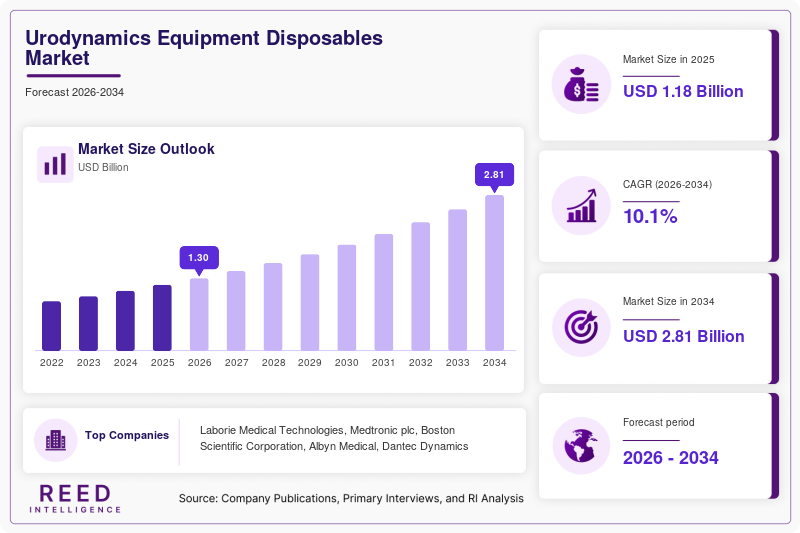
The global Urodynamics Equipment Disposables Market size was valued at USD 1.18 billion in 2026 and is projected to reach USD 2.54 billion by 2034, expanding at a CAGR of 10.1% during the forecast period from 2026 to 2034. The market continues to expand steadily due to the increasing prevalence of urinary incontinence, neurogenic bladder disorders, benign prostatic hyperplasia, and pelvic floor dysfunction across aging populations. Rising awareness regarding early diagnosis of lower urinary tract disorders has also encouraged hospitals and specialty clinics to increase the use of disposable urodynamic accessories and consumables. The growing demand for infection control and patient safety within healthcare facilities has further accelerated the adoption of single-use catheters, pressure transducers, tubing sets, and electrodes.
Healthcare providers are increasingly shifting toward disposable products to reduce the risk of hospital-acquired infections and improve operational efficiency during urodynamic procedures. Technological improvements in urodynamic testing systems have also supported the use of integrated disposable components that provide accurate pressure monitoring and simplified workflow management. Emerging economies are witnessing higher investments in diagnostic infrastructure, which is contributing to greater procedural volumes for urodynamic testing. In addition, favorable reimbursement support in developed economies and expanding outpatient care networks are strengthening market penetration.
Key Highlights
- North America dominated the market with a 35.1% share in 2025.
- Asia Pacific is expected to grow at the fastest CAGR of 11.8% during 2026–2034.
- By product type, catheters accounted for the largest share of 39.4%, while pressure transducers are projected to grow at a CAGR of 12.1%.
- By application, urinary incontinence testing led with a 43.6% share, whereas neurogenic bladder assessment is expected to expand at a CAGR of 11.6%.
- The United States remained the dominant country, with market values of USD 462 million in 2024 and USD 505 million in 2025.
Market Trends
Integration of Disposable Components With Digital Urodynamic Systems
Healthcare providers are increasingly integrating disposable accessories with digitally connected urodynamic systems to improve testing accuracy and workflow efficiency. Hospitals and specialty clinics are adopting advanced urodynamic platforms that support pre-calibrated disposable catheters, sensors, and tubing kits for streamlined procedures. This trend is reducing preparation time, minimizing cross-contamination risks, and improving consistency in pressure measurement results. Manufacturers are also introducing compatible disposable systems that can easily connect with cloud-based patient management software and electronic medical records. The increasing focus on data-driven diagnostics and standardized testing protocols has encouraged healthcare facilities to replace reusable accessories with disposable alternatives. Demand is particularly strong in developed healthcare systems where infection prevention and operational efficiency remain important procurement priorities.
Expansion of Outpatient Urology and Ambulatory Care Services
The rapid growth of outpatient urology centers and ambulatory diagnostic facilities is creating favorable conditions for disposable urodynamics products. Many healthcare systems are moving non-emergency diagnostic procedures away from large hospitals to reduce costs and improve patient convenience. This transition is increasing the demand for portable and easy-to-use disposable consumables that support quick patient turnover and simplified clinical operations. Ambulatory facilities often prefer single-use products because they reduce sterilization requirements and lower maintenance costs associated with reusable equipment. In addition, the increasing number of women’s health clinics and elderly care centers offering bladder dysfunction testing is contributing to higher consumption of disposable urodynamic supplies. Market participants are responding by launching compact procedure kits designed specifically for outpatient and office-based diagnostic settings.
Market Drivers
Rising Prevalence of Urinary Disorders Among Aging Populations
The increasing prevalence of urinary tract dysfunction among aging populations is one of the primary factors supporting the growth of the Urodynamics Equipment Disposables Market. Older adults are more vulnerable to urinary incontinence, bladder outlet obstruction, overactive bladder syndrome, and pelvic floor disorders, which require accurate diagnostic evaluation through urodynamic testing. The global rise in life expectancy has expanded the patient pool requiring long-term urological monitoring and treatment planning. Healthcare systems are consequently increasing investments in diagnostic procedures to improve patient outcomes and reduce complications associated with untreated urinary conditions. Disposable catheters, electrodes, and pressure monitoring accessories are widely used during these procedures because they improve hygiene standards and support safe patient handling. Growing geriatric populations across North America, Europe, China, and Japan are expected to maintain strong demand for disposable urodynamics products during the forecast period.
Increasing Emphasis on Infection Prevention and Sterile Diagnostics
Healthcare facilities are placing greater emphasis on infection prevention strategies, leading to higher adoption of single-use urodynamics disposables. Reusable diagnostic accessories require extensive cleaning and sterilization processes, which can increase operational burden and create contamination risks if not properly managed. Disposable products provide a practical alternative by supporting sterile procedures and reducing patient exposure to healthcare-associated infections. Regulatory authorities and hospital accreditation bodies are also strengthening guidelines related to infection control practices in diagnostic departments. This has encouraged healthcare providers to replace reusable accessories with sterile disposable kits and procedure-specific consumables. In addition, patient awareness regarding safe diagnostic practices has increased significantly following global public health concerns in recent years. Manufacturers are therefore focusing on producing latex-free, biocompatible, and eco-efficient disposable components to align with evolving hospital procurement requirements.
Market Restraint
High Procedure Costs and Limited Access in Developing Healthcare Systems
The high cost associated with urodynamic testing procedures and advanced disposable consumables continues to restrict broader market adoption in several developing economies. Many healthcare facilities in low-income and middle-income countries operate under budget limitations and often prioritize essential treatment services over specialized diagnostic procedures. Urodynamic testing systems require trained personnel, dedicated clinical infrastructure, and recurring expenditure on disposable accessories, which can increase operational costs for hospitals and outpatient centers. In some regions, limited reimbursement coverage for diagnostic procedures further discourages patients from undergoing urodynamic evaluations. Smaller clinics may also continue using reusable accessories to reduce procurement expenses, thereby limiting the transition toward disposable products. The lack of awareness regarding bladder dysfunction diagnosis in rural populations additionally constrains procedural volumes. These factors collectively create uneven market penetration across emerging healthcare systems despite rising patient demand for urological care.
Market Opportunities
Growing Healthcare Investments Across Emerging Asian Economies
Rapid healthcare infrastructure development across emerging Asian economies presents substantial growth opportunities for manufacturers operating in the Urodynamics Equipment Disposables Market. Countries such as India, China, Indonesia, Thailand, and Vietnam are expanding public healthcare programs and increasing investments in specialty diagnostic services. Rising urbanization and improving access to private healthcare facilities are encouraging greater adoption of advanced urological testing procedures. Many hospitals in these regions are modernizing diagnostic departments with technologically advanced equipment that requires compatible disposable components. Increasing awareness campaigns related to urinary disorders among women and elderly populations are also expected to improve testing volumes. International manufacturers are entering these markets through partnerships with local distributors and hospital networks to strengthen regional presence. Cost-effective disposable kits tailored for price-sensitive healthcare systems are expected to support long-term market expansion.
Product Innovation in Eco-Friendly and Patient-Centric Disposable Solutions
Manufacturers are increasingly investing in sustainable and patient-centric product innovation, creating new opportunities for revenue growth in the market. Hospitals are seeking disposable products that reduce environmental impact while maintaining high safety and performance standards. This has encouraged the development of recyclable packaging materials, low-waste catheter systems, and biocompatible disposable accessories. Companies are also focusing on improving patient comfort through softer catheter materials, ergonomic designs, and simplified insertion mechanisms. Such innovations are helping healthcare providers improve patient satisfaction during diagnostic procedures while supporting operational efficiency. The growing use of customized procedure kits that include all necessary disposable components in a single package is another emerging opportunity area. These integrated kits reduce preparation time and inventory management complexity, making them attractive for high-volume hospitals and ambulatory diagnostic centers.
Segmental Analysis
By Product Type
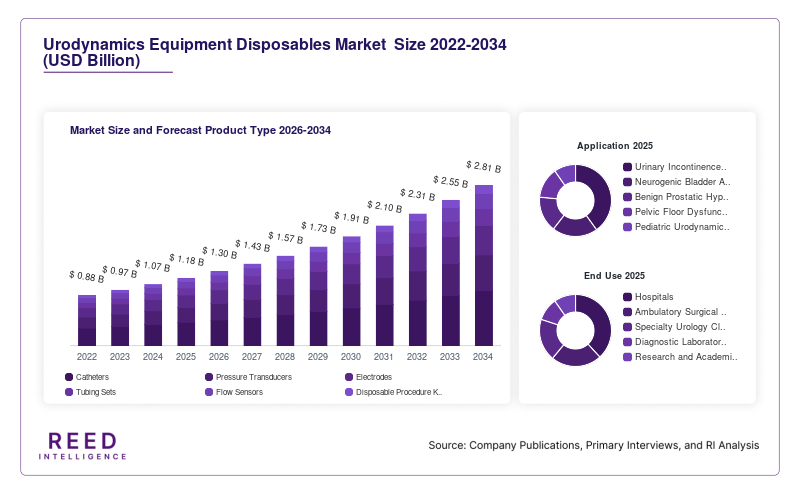
Catheters represented the dominant subsegment within the Urodynamics Equipment Disposables Market in 2024, accounting for approximately 39.4% of total revenue. The high share of this subsegment is primarily attributed to the extensive use of disposable catheters during cystometry, uroflowmetry, and pressure-flow studies. Hospitals and specialty clinics prefer single-use catheters because they support sterile procedures and reduce the risk of cross-contamination. Increasing patient volumes associated with urinary incontinence and neurogenic bladder disorders have further contributed to strong product demand. Manufacturers are continuously improving catheter flexibility, material compatibility, and patient comfort to strengthen adoption rates. The growing shift toward outpatient diagnostic procedures has also increased the demand for easy-to-use disposable catheter systems that simplify workflow management. In addition, favorable regulatory standards supporting infection prevention continue to encourage healthcare providers to prioritize disposable catheter usage.
By Application
Urinary incontinence testing accounted for the largest share of the market in 2024, representing approximately 43.6% of total revenue. The dominance of this subsegment is linked to the increasing prevalence of stress urinary incontinence, overactive bladder syndrome, and pelvic floor dysfunction among elderly and female populations. Healthcare providers are expanding diagnostic screening programs to improve early detection and treatment planning for urinary disorders. Disposable accessories such as catheters, electrodes, and tubing sets are widely utilized during these procedures to maintain sterility and improve operational efficiency. Growing awareness regarding bladder health and the social impact of untreated incontinence has also encouraged higher procedural adoption rates. In addition, favorable reimbursement structures in developed economies continue to support increasing utilization of urodynamic testing for urinary incontinence assessment across hospitals and specialty clinics.
By End Use
Hospitals accounted for the dominant share of the Urodynamics Equipment Disposables Market in 2024, contributing nearly 47.2% of global revenue. Large hospitals continue to perform a significant proportion of urodynamic testing procedures because they possess advanced diagnostic infrastructure and specialized urology departments. High patient inflow, availability of trained healthcare professionals, and strong procurement capabilities support greater utilization of disposable accessories in hospital settings. Hospitals increasingly prefer single-use products because they reduce sterilization requirements and improve compliance with infection prevention standards. The rising number of bladder dysfunction cases among elderly populations has also increased procedural volumes within tertiary care centers. In addition, hospitals are rapidly integrating advanced digital urodynamic systems that require compatible disposable consumables to ensure accurate testing outcomes and improved workflow efficiency.
Regional Analysis
North America
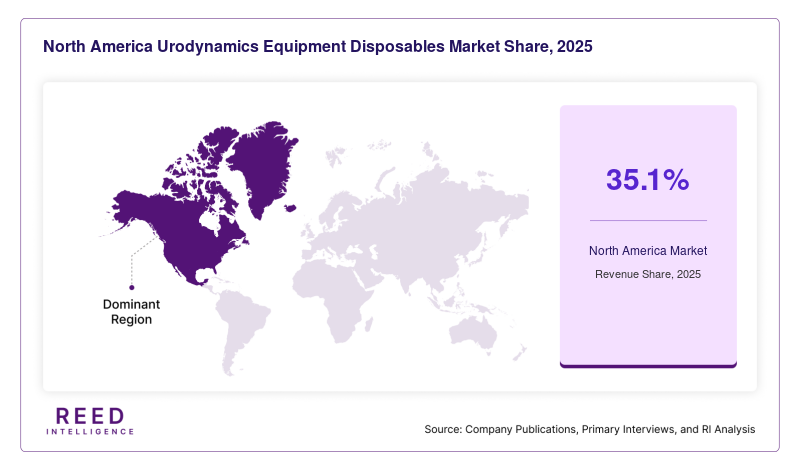
North America accounted for the largest share of the Urodynamics Equipment Disposables Market in 2025, representing approximately 35.1% of global revenue. The regional market is expected to expand at a CAGR of 9.4% during the forecast period due to increasing demand for advanced urological diagnostics and strong healthcare spending. The presence of established reimbursement systems and widespread adoption of minimally invasive diagnostic procedures continue to support regional growth. Hospitals and ambulatory surgical centers are increasingly adopting disposable accessories to improve patient safety and reduce infection risks. The growing prevalence of urinary incontinence among elderly populations is also contributing to higher procedural volumes.
The United States remained the dominant country within the regional market due to strong healthcare infrastructure and high awareness regarding bladder health disorders. The country recorded significant growth in outpatient urology procedures, particularly among women and aging patients. Increasing integration of digital urodynamic systems with disposable consumables has further strengthened demand across hospitals and specialty clinics. Healthcare providers are also investing in infection prevention strategies that favor the use of sterile disposable kits. In addition, the growing presence of domestic manufacturers and product innovation activities continues to support long-term market expansion in the country.
Europe
Europe represented a significant share of the global Urodynamics Equipment Disposables Market in 2025 and is projected to witness stable growth throughout the forecast period at a CAGR of 8.9%. The regional market benefits from strong public healthcare systems and increasing awareness regarding urinary dysfunction diagnosis. Countries across Western Europe continue to invest in specialized urology departments and diagnostic modernization programs. Demand for disposable accessories is increasing as healthcare providers seek to improve clinical efficiency and reduce contamination risks associated with reusable equipment. The expansion of geriatric healthcare services and rising incidence of pelvic floor disorders among women are also contributing to regional demand.
Germany remained the dominant country in the European market due to advanced hospital infrastructure and strong adoption of diagnostic technologies. The country has witnessed rising procedural volumes for bladder function testing within both public and private healthcare settings. German healthcare providers increasingly prefer disposable catheters and pressure monitoring accessories because they reduce sterilization burden and improve workflow efficiency. In addition, the presence of leading medical device manufacturers and favorable regulatory standards for patient safety continue to support market growth. The increasing focus on preventive diagnostics in aging populations further strengthens the regional outlook.
Asia Pacific
Asia Pacific is expected to register the fastest growth in the Urodynamics Equipment Disposables Market, expanding at a CAGR of 11.8% from 2026 to 2034. The region is witnessing rapid healthcare infrastructure development, increasing healthcare expenditure, and growing awareness regarding urinary tract disorders. Rising urbanization and improved access to specialty diagnostic services are contributing to greater procedural adoption across both public and private healthcare institutions. Hospitals in emerging economies are increasingly transitioning toward disposable consumables to improve hygiene standards and align with international infection control practices. The expanding elderly population and rising prevalence of diabetes-related bladder dysfunction are also supporting market growth.
China emerged as the dominant country in the Asia Pacific market due to large patient volumes and ongoing healthcare modernization initiatives. The country continues to invest heavily in hospital infrastructure and advanced diagnostic capabilities across urban healthcare centers. Increasing awareness regarding women’s urological health and the growing availability of outpatient diagnostic facilities are supporting higher consumption of disposable accessories. Domestic manufacturers are also expanding production capacities to provide cost-effective consumables tailored for local healthcare providers. In addition, rising medical tourism and increasing private healthcare investments are expected to strengthen long-term market demand in the country.
Middle East & Africa
The Middle East & Africa region is experiencing gradual growth in the Urodynamics Equipment Disposables Market and is projected to expand at a CAGR of 8.1% during the forecast period. Healthcare reforms and increasing investments in specialty medical services are contributing to market development across several countries. Hospitals and diagnostic centers are adopting disposable urodynamics products to improve infection control standards and reduce operational complexity. The growing burden of chronic diseases, including diabetes and neurological disorders, is increasing the need for bladder function testing across the region. In addition, rising healthcare awareness and government initiatives focused on improving diagnostic access are supporting market expansion.
Saudi Arabia remained the dominant country within the regional market due to substantial healthcare investments and expanding hospital infrastructure. The country is actively modernizing healthcare facilities and strengthening specialty care services under long-term healthcare development programs. Increasing demand for advanced diagnostic procedures among aging populations and patients with chronic illnesses is supporting higher procedural volumes. Private hospitals are also introducing technologically advanced urodynamic systems that rely on compatible disposable accessories. Furthermore, the expansion of medical training programs and international partnerships with medical device suppliers continues to strengthen the market environment.
Latin America
Latin America accounted for a moderate share of the global Urodynamics Equipment Disposables Market in 2025 and is expected to grow at a CAGR of 8.4% through 2034. The regional market is supported by improving healthcare infrastructure and increasing awareness regarding urinary tract disorders. Public healthcare institutions and private hospitals are gradually increasing investments in specialty diagnostics and minimally invasive testing procedures. Disposable consumables are gaining acceptance because they reduce sterilization costs and simplify clinical operations. The increasing prevalence of obesity-related urinary dysfunction and aging demographics are also contributing to higher demand for urodynamic testing procedures across the region.
Brazil dominated the Latin American market due to its large healthcare sector and expanding access to specialized urological services. The country has witnessed rising adoption of outpatient diagnostic procedures, particularly within urban healthcare networks. Growing awareness campaigns related to urinary incontinence and pelvic health are encouraging earlier diagnosis and treatment. Healthcare providers are increasingly adopting disposable accessories to align with patient safety requirements and improve procedural efficiency. In addition, the presence of regional medical device distributors and increasing investments in private healthcare facilities continue to support market growth across Brazil.
Competitive Landscape
The Urodynamics Equipment Disposables Market is moderately consolidated, with several global and regional medical device manufacturers competing through product innovation, strategic partnerships, and geographic expansion initiatives. Companies are increasingly focusing on the development of sterile, user-friendly, and cost-efficient disposable accessories to strengthen market positioning. Competitive strategies also include integration of disposable products with advanced digital urodynamic systems and expansion of distribution networks across emerging healthcare markets.
Laborie Medical Technologies remained one of the leading participants in the market due to its extensive urology diagnostics portfolio and strong global distribution capabilities. The company has focused on expanding disposable catheter and pressure monitoring product lines to support outpatient diagnostic procedures. Other major participants are increasing investments in research and development to improve product compatibility, patient comfort, and infection control performance.
Key Players
- Laborie Medical Technologies
- Medtronic plc
- Boston Scientific Corporation
- Albyn Medical
- Dantec Dynamics
- Verathon Inc.
- CooperSurgical Inc.
- The Prometheus Group
- MEDICA S.p.A.
- Cook Medical
- Coloplast A/S
- Digitimer Ltd.
- Neomedix Systems Pty Ltd.
- Kendle Healthcare Products
- HC Italia Srl
Recent Developments
- In February 2025, Laborie Medical Technologies introduced a new single-use pressure catheter system designed for high-volume outpatient urodynamic procedures.
- In July 2025, Coloplast A/S expanded its urology consumables manufacturing capacity in Asia Pacific to support increasing regional demand for disposable diagnostic accessories.
- In November 2024, Boston Scientific Corporation partnered with regional distributors in Latin America to strengthen the availability of disposable urodynamic testing kits across specialty clinics.
- In March 2025, CooperSurgical Inc. launched an upgraded disposable tubing and electrode package aimed at improving infection prevention standards in hospital-based urodynamic testing.
Urodynamics Equipment Disposables Market Segments
Product Type
- Catheters
- Pressure Transducers
- Electrodes
- Tubing Sets
- Flow Sensors
- Disposable Procedure Kits
Application
- Urinary Incontinence Testing
- Neurogenic Bladder Assessment
- Benign Prostatic Hyperplasia Diagnosis
- Pelvic Floor Dysfunction Analysis
- Pediatric Urodynamic Testing
End Use
- Hospitals
- Ambulatory Surgical Centers
- Specialty Urology Clinics
- Diagnostic Laboratories
- Research and Academic Institutes
By Region
- North America
- Europe
- APAC
- Middle East and Africa
- LATAM