US Salivary Gland Infection Market Size, Share & Demand Report By Infection Type (Bacterial Infections, Viral Infections, Fungal Infections), By Treatment (Antibiotics, Antiviral Medications, Minimally Invasive Procedures, Surgical Interventions), By End-Use (Hospitals, Specialty Clinics, Ambulatory Surgical Centers) & Segment Forecasts, 2026–2034
USD 3950
Market Overview
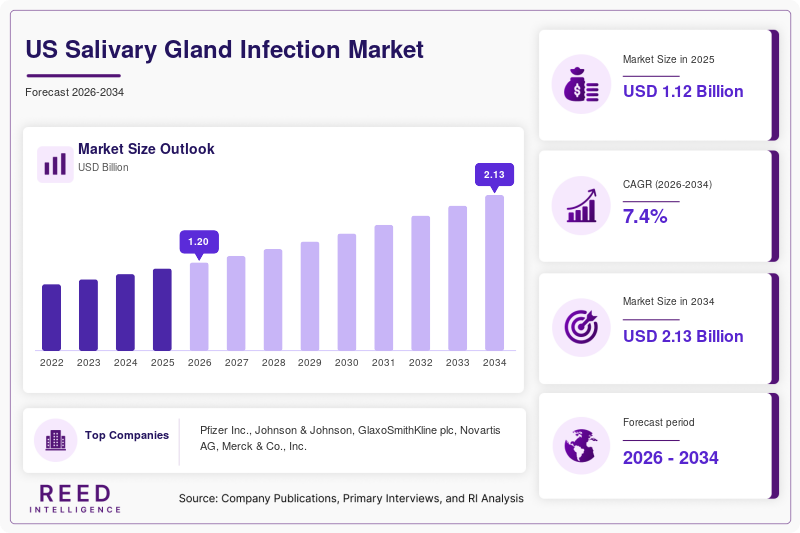
The US Salivary Gland Infection Market size was valued at approximately USD 1.12 billion in 2026 and is projected to reach USD 1.98 billion by 2034, expanding at a CAGR of 7.4% during the forecast period (2026–2034). The market growth is supported by the increasing prevalence of oral and dental infections, particularly among aging populations and individuals with compromised immune systems. Rising awareness regarding early diagnosis and treatment of salivary gland disorders has also contributed to steady demand for therapeutic interventions, including antibiotics, surgical procedures, and minimally invasive treatments.
A key global factor driving the market is the expansion of healthcare infrastructure and improved access to diagnostic technologies. Advancements in imaging techniques such as ultrasound and MRI have enabled more accurate detection of salivary gland infections, encouraging timely medical intervention. Additionally, the growing burden of chronic conditions such as diabetes and autoimmune disorders has increased susceptibility to infections, further influencing market expansion.
Key Highlights
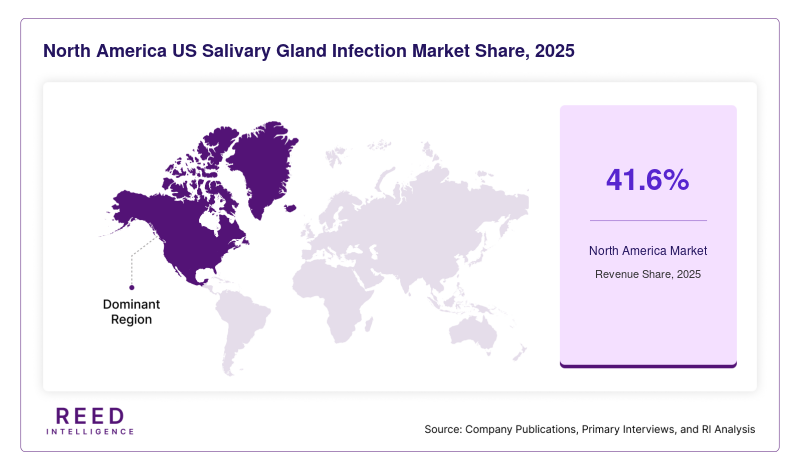
- North America dominated the market with a 41.6% share in 2025.
- Asia Pacific is expected to grow at the fastest CAGR of 8.9% during 2026–2034.
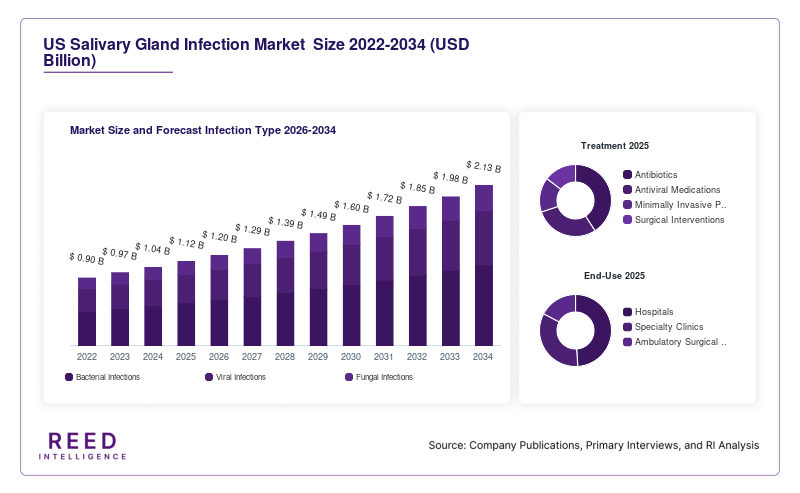
- By infection type, bacterial infections accounted for the largest share of 52.3%, while viral infections are projected to grow at a CAGR of 8.1%.
- By treatment, antibiotics led with a 46.7% share, whereas minimally invasive procedures are expected to expand at a CAGR of 9.3%.
- The United States remained the dominant country, with market values of USD 1.05 billion in 2024 and USD 1.09 billion in 2025.
Market Trends
Increasing adoption of minimally invasive treatment techniques
The market is witnessing a shift toward minimally invasive procedures for managing salivary gland infections. Techniques such as sialendoscopy have gained traction due to their ability to diagnose and treat obstructions and infections without requiring extensive surgical intervention. These procedures reduce recovery time, minimize complications, and improve patient outcomes, making them increasingly preferred by healthcare providers. Hospitals and specialty clinics are investing in advanced endoscopic equipment to enhance procedural efficiency. Additionally, patients are becoming more aware of these options through digital health platforms, contributing to increased adoption. This trend is expected to influence the overall treatment landscape by reducing reliance on traditional surgical approaches and supporting outpatient care models.
Rising integration of diagnostic imaging and AI-based tools
Another notable trend is the growing integration of advanced diagnostic imaging and artificial intelligence in clinical workflows. Imaging modalities such as high-resolution ultrasound and MRI are being combined with AI-based analytical tools to improve diagnostic accuracy and reduce interpretation time. These technologies help clinicians differentiate between bacterial, viral, and obstructive causes of infection more effectively. Furthermore, AI-driven platforms assist in identifying patterns in patient data, enabling personalized treatment planning. Healthcare providers are increasingly adopting such solutions to enhance efficiency and reduce diagnostic errors. This trend is expected to drive innovation in diagnostic services and support the expansion of precision medicine approaches in the salivary gland infection market.
Market Drivers
Growing prevalence of oral and systemic health conditions
The increasing incidence of oral infections, dental diseases, and systemic conditions such as diabetes is a significant driver of the US Salivary Gland Infection Market. Individuals with chronic illnesses often have weakened immune systems, making them more susceptible to infections affecting the salivary glands. Additionally, poor oral hygiene and lifestyle factors such as smoking and dehydration contribute to the risk of infection. The aging population further amplifies this trend, as elderly individuals are more prone to salivary gland dysfunction. Healthcare providers are focusing on preventive care and early diagnosis, which has led to increased demand for diagnostic and treatment solutions. This growing patient pool continues to support consistent market expansion.
Advancements in pharmaceutical therapies and treatment protocols
Advancements in pharmaceutical formulations and treatment protocols have improved the management of salivary gland infections. The development of broad-spectrum antibiotics and targeted antiviral therapies has enhanced treatment efficacy and reduced recovery time. Additionally, research efforts are focused on developing drugs with fewer side effects and improved patient compliance. Combination therapies are also gaining popularity, offering more comprehensive treatment approaches. Healthcare providers are increasingly adopting evidence-based protocols to ensure optimal patient outcomes. These advancements not only improve clinical success rates but also encourage patients to seek timely treatment, thereby driving market growth.
Market Restraint
Limited awareness and delayed diagnosis in certain patient groups
Despite advancements in healthcare, limited awareness and delayed diagnosis remain key challenges in the market. Many patients tend to overlook early symptoms such as swelling, pain, or dry mouth, leading to progression of the infection. In some cases, symptoms are misinterpreted as minor dental issues, delaying appropriate medical intervention. This results in more complex cases requiring intensive treatment, increasing healthcare costs and affecting patient outcomes. Additionally, disparities in healthcare access across different regions contribute to delayed diagnosis. Rural populations, in particular, may face challenges in accessing specialized care and diagnostic services. These factors collectively restrain market growth by limiting early-stage treatment opportunities and increasing the burden on healthcare systems.
Market Opportunities
Expansion of telehealth and remote diagnostic services
The expansion of telehealth services presents a promising opportunity for the US Salivary Gland Infection Market. Remote consultations enable patients to seek medical advice without the need for in-person visits, improving access to care. Telehealth platforms are increasingly incorporating diagnostic tools and symptom assessment features, allowing early identification of potential infections. This is particularly beneficial for patients in remote or underserved areas. Healthcare providers are leveraging digital platforms to offer follow-up care and monitor treatment progress, enhancing patient engagement. The integration of telehealth with electronic health records further supports efficient data management and continuity of care. This trend is expected to create new growth avenues in the market.
Increasing investment in research and development
Rising investment in research and development is creating opportunities for innovation in the market. Pharmaceutical companies and research institutions are focusing on developing novel therapies and diagnostic tools to improve treatment outcomes. Studies exploring the role of microbiome imbalances in salivary gland infections are gaining attention, opening new avenues for targeted therapies. Additionally, advancements in biotechnology are enabling the development of personalized treatment approaches. Government funding and private sector investments are supporting clinical trials and product development initiatives. These efforts are expected to enhance the availability of advanced treatment options and drive long-term market growth.
Segmental Analysis
By Infection Type
Bacterial infections represent the dominant subsegment, accounting for approximately 52.3% of the market share in 2024. These infections are the most common cause of salivary gland disorders, often resulting from blocked ducts or reduced saliva flow. The high prevalence of bacterial infections is attributed to factors such as poor oral hygiene, dehydration, and underlying health conditions. Healthcare providers rely heavily on antibiotic therapies to manage these cases effectively. The availability of a wide range of antibiotics and established treatment protocols further supports the dominance of this subsegment. Additionally, increasing awareness of oral health and early diagnosis contributes to sustained demand for bacterial infection treatments.
Viral infections are emerging as the fastest-growing subsegment, with a projected CAGR of 8.1% during the forecast period. This growth is driven by the rising incidence of viral diseases that affect salivary glands, such as mumps. Advances in diagnostic technologies have improved the detection of viral infections, enabling timely intervention. Furthermore, increasing research into antiviral therapies is expanding treatment options for patients. Public health initiatives aimed at vaccination and disease prevention also play a role in shaping this segment. The growing focus on understanding viral infection mechanisms is expected to drive continued growth in this subsegment.
By Treatment
Antibiotics dominate the treatment segment, holding a 46.7% share in 2024. These medications are widely used as the first line of treatment for bacterial salivary gland infections. Their effectiveness in controlling infection and preventing complications makes them a preferred choice among healthcare providers. The availability of both oral and intravenous formulations ensures flexibility in treatment approaches. Additionally, ongoing research into new antibiotic formulations aims to address issues such as resistance and side effects. The widespread use of antibiotics, combined with established clinical guidelines, supports the dominance of this subsegment.
Minimally invasive procedures are the fastest-growing subsegment, with a CAGR of 9.3%. Techniques such as sialendoscopy are gaining popularity due to their ability to treat infections and obstructions with minimal discomfort. These procedures offer advantages such as shorter recovery times, reduced hospital stays, and improved patient outcomes. The increasing availability of advanced medical equipment and trained professionals is driving adoption. Additionally, patient preference for less invasive treatment options is contributing to the growth of this subsegment. Continued advancements in technology are expected to further enhance procedural efficiency and expand their use.
By End-Use
Hospitals represent the dominant end-use segment, accounting for a significant share of the market in 2024. These facilities are equipped with advanced diagnostic and treatment capabilities, making them the primary choice for managing complex cases. Hospitals also provide access to specialized healthcare professionals and comprehensive care services. The high patient volume and availability of resources contribute to the dominance of this segment. Additionally, hospitals play a key role in conducting research and clinical trials, further supporting market growth.
Specialty clinics are the fastest-growing end-use segment, with a projected CAGR of 8.7%. These clinics focus on providing targeted care for specific conditions, including salivary gland infections. The growing demand for personalized treatment and shorter waiting times is driving patients toward specialty clinics. These facilities often offer advanced diagnostic tools and minimally invasive procedures, enhancing patient experience. The expansion of outpatient care services and increasing investment in specialized healthcare facilities are expected to drive growth in this segment.
Regional Analysis
North America
North America held the largest share of the US Salivary Gland Infection Market in 2025, accounting for approximately 41.6% of the global market. The region is expected to maintain its dominance, with a steady CAGR of 7.1% during the forecast period. This growth is driven by well-established healthcare infrastructure, high awareness levels, and widespread access to advanced diagnostic technologies. The presence of leading pharmaceutical companies and ongoing research initiatives further support market expansion in the region.
The United States remains the dominant country within North America, driven by high healthcare spending and a strong focus on early diagnosis and treatment. One unique growth factor is the increasing adoption of outpatient procedures, which reduces hospital burden and improves patient convenience. Additionally, government initiatives aimed at improving oral healthcare contribute to sustained market growth.
Europe
Europe accounted for a significant share of the market in 2025, supported by robust healthcare systems and increasing prevalence of oral health conditions. The region is projected to grow at a CAGR of 6.8% during the forecast period. Countries such as Germany, France, and the United Kingdom are leading contributors, with strong investments in healthcare infrastructure and research activities.
Germany stands out as the dominant country in the European market, driven by advanced medical technologies and a high rate of healthcare utilization. A unique growth factor in the region is the emphasis on preventive healthcare, which encourages early diagnosis and treatment of infections. This approach helps reduce the severity of cases and supports overall market growth.
Asia Pacific
Asia Pacific is expected to witness the fastest growth, with a CAGR of 8.9% during the forecast period. The region’s market share is increasing due to rising healthcare awareness, expanding population, and improving access to medical services. Countries such as China, India, and Japan are experiencing significant growth in healthcare investments and infrastructure development.
China is the dominant country in the Asia Pacific region, driven by a large patient population and increasing government support for healthcare initiatives. A unique growth factor is the rapid expansion of urban healthcare facilities, which enhances access to diagnostic and treatment services. This development is expected to drive substantial market growth in the region.
Middle East & Africa
The Middle East & Africa region is experiencing moderate growth, with a projected CAGR of 6.2% during the forecast period. The market share remains relatively smaller compared to other regions due to limited healthcare infrastructure in certain areas. However, increasing investments in healthcare development and rising awareness are contributing to gradual growth.
Saudi Arabia is the dominant country in the region, supported by government initiatives aimed at improving healthcare services. A unique growth factor is the increasing adoption of advanced medical technologies in urban centers. These developments are expected to enhance diagnostic capabilities and support market expansion.
Latin America
Latin America is showing steady growth, with a CAGR of 6.5% during the forecast period. The region’s market share is supported by improving healthcare infrastructure and increasing awareness of oral health conditions. Countries such as Brazil and Mexico are key contributors to market growth.
Brazil is the dominant country in Latin America, driven by a growing healthcare sector and rising demand for advanced treatment options. A unique growth factor is the expansion of private healthcare facilities, which improves access to specialized care. This trend is expected to support continued market growth in the region.
Competitive Landscape
The US Salivary Gland Infection Market is moderately competitive, with several established pharmaceutical and healthcare companies operating in the space. Leading players focus on product development, strategic collaborations, and expansion of distribution networks to strengthen their market position. One prominent leader in the market is Pfizer Inc., known for its extensive portfolio of antibiotic and antiviral therapies. The company has recently invested in research initiatives aimed at developing advanced treatments for infectious diseases, including those affecting salivary glands.
Other key players are also actively engaged in innovation and strategic partnerships to enhance their offerings. Companies are focusing on improving treatment efficacy and patient outcomes through the development of novel therapies. Additionally, collaborations with healthcare providers and research institutions are helping companies expand their reach and improve market penetration. The competitive landscape is expected to evolve further with the introduction of new technologies and treatment approaches.
Key Players
- Pfizer Inc.
- Johnson & Johnson
- GlaxoSmithKline plc
- Novartis AG
- Merck & Co., Inc.
- AbbVie Inc.
- Sanofi S.A.
- Bayer AG
- Eli Lilly and Company
- Teva Pharmaceutical Industries Ltd.
- Sun Pharmaceutical Industries Ltd.
- Cipla Inc.
- AstraZeneca plc
- Amgen Inc.
- Bristol-Myers Squibb Company
Recent Developments
- Recent advancements in the market include increased investment in research focused on developing targeted antibiotic therapies with reduced resistance risks.
- A major pharmaceutical company announced the expansion of its clinical trials for innovative antiviral treatments aimed at improving outcomes for salivary gland infections.
- Healthcare providers are increasingly adopting advanced diagnostic imaging technologies, enhancing early detection and improving treatment planning for patients.
US Salivary Gland Infection Market Segments
Infection Type
- Bacterial Infections
- Viral Infections
- Fungal Infections
Treatment
- Antibiotics
- Antiviral Medications
- Minimally Invasive Procedures
- Surgical Interventions
End-Use
- Hospitals
- Specialty Clinics
- Ambulatory Surgical Centers
By Region
- North America
- Europe
- APAC
- Middle East and Africa
- LATAM