Utility Scale Electrical Bushing Market Size, Share Demand Report By Insulation Type (Oil-Impregnated Paper Bushings, Resin-Impregnated Paper Bushings, Porcelain Bushings, Composite Bushings), By Voltage Rating (Medium Voltage Bushings, High Voltage Bushings, Ultra-High Voltage Bushings), By End Use (Power Transformers, Switchgear Systems, Renewable Energy Substations, Industrial Utilities) By Region & Segment Forecasts, 2026–2034
USD 3950
Market Overview
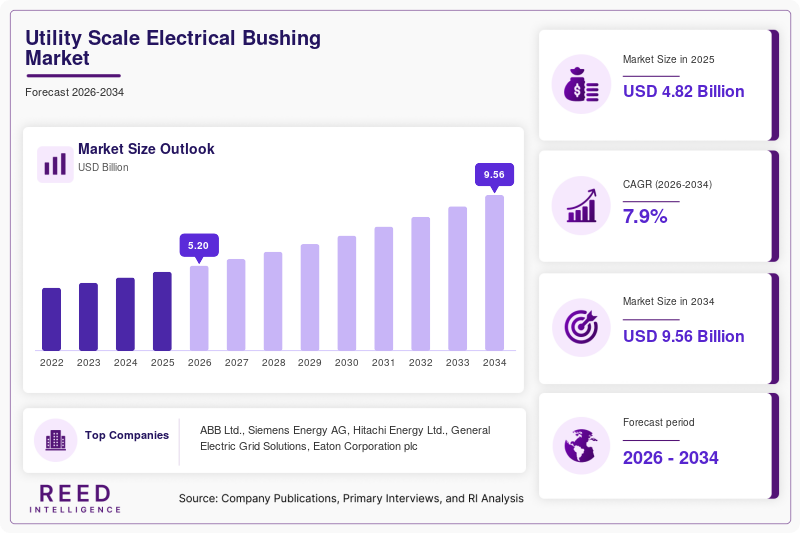
The Utility Scale Electrical Bushing Market size was valued at USD 4.82 billion in 2026 and is projected to reach USD 8.91 billion by 2034, expanding at a CAGR of 7.9% during 2026–2034. Electrical bushings are critical insulation components used in transformers, switchgear, substations, and high-voltage transmission systems to safely conduct electrical current through grounded barriers. Rising global investments in grid modernization, renewable power integration, and aging infrastructure replacement are driving sustained demand for advanced utility-scale bushings. Expanding transmission networks for solar, wind, and hydroelectric projects has created consistent opportunities for porcelain, resin-impregnated paper, and composite bushings in ultra-high-voltage installations. Governments across developed and emerging economies are allocating substantial budgets to transmission efficiency upgrades, particularly as electricity demand rises due to industrial digitalization and electric mobility adoption. Increasing transformer deployment in smart grid ecosystems has further reinforced market expansion. Technological progress in silicone-insulated and condition-monitoring-enabled bushings is improving durability, operational life, and maintenance predictability, making these products increasingly attractive for utility operators focused on reducing downtime and system losses.
Key Highlights
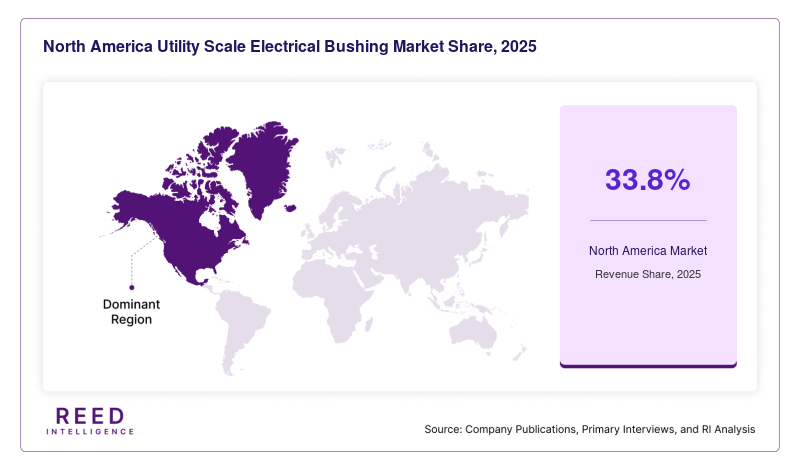
- North America dominated the market with a 33.8% share in 2025.
- Asia Pacific is expected to grow at the fastest CAGR of 9.8% during 2026–2034.
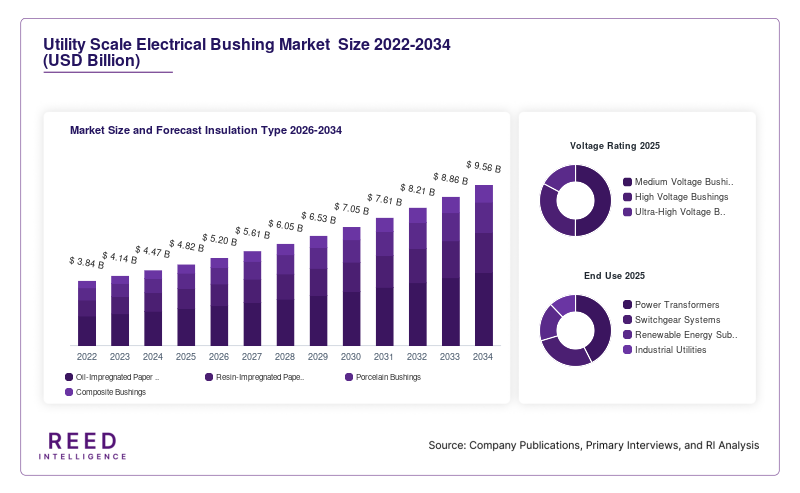
- By insulation type, oil-impregnated paper bushings accounted for the largest share of 42.6%, while resin-impregnated paper bushings are projected to grow at a CAGR of 9.5%.
- By voltage rating, high-voltage bushings led with a 46.9% share, whereas ultra-high-voltage bushings are expected to expand at a CAGR of 10.1%.
- By end use, power transformers dominated with a 51.3% share, while renewable energy substations are forecast to grow at a CAGR of 10.6%.
- The United States remained the dominant country, with market values of USD 1.42 billion in 2024 and USD 1.51 billion in 2025.
Market Trends
Growing transition toward composite and silicone-based bushings
Utilities are increasingly shifting from traditional porcelain bushings toward composite and silicone-insulated alternatives due to their lower weight, improved seismic performance, and stronger contamination resistance. Composite bushings offer operational benefits in coastal, desert, and industrial environments where pollution flashover risks are elevated. Grid operators are prioritizing lightweight installations to reduce maintenance complexity and transportation costs in remote substations. These advanced materials also align with utility resilience strategies because they improve reliability during extreme weather conditions. As climate-related disruptions increase, manufacturers are accelerating production of high-performance bushings with better thermal endurance and reduced failure rates, supporting broader replacement cycles.
Integration of digital monitoring technologies in bushing systems
The market is also witnessing the emergence of intelligent bushings equipped with sensors for partial discharge monitoring, thermal diagnostics, and predictive maintenance analytics. Utility companies are adopting these systems to minimize transformer failures, which can create significant grid instability and financial losses. Digital bushings support asset management strategies by enabling real-time health assessments and maintenance scheduling. This trend is particularly visible in developed regions where grid digitization programs are accelerating. Integration with substation automation platforms enhances fault detection and operational transparency, positioning smart bushings as a strategic investment for utilities seeking long-term efficiency and reduced lifecycle costs.
Market Drivers
Expansion of renewable energy transmission infrastructure
Rapid growth in utility-scale renewable power generation is a central factor driving demand for electrical bushings. Large-scale wind farms, solar parks, and hydroelectric systems require high-capacity substations and transformers to connect generated electricity to national grids. This creates extensive demand for bushings capable of handling higher voltages and variable environmental conditions. Countries investing heavily in decarbonization are simultaneously expanding transmission corridors, increasing equipment procurement. Bushings serve as essential components in ensuring insulation integrity and electrical safety, making them indispensable to grid expansion projects associated with clean energy deployment.
Replacement of aging transmission and distribution assets
Many developed economies are operating with decades-old transformer fleets and substation infrastructure that require modernization. Aging bushings are vulnerable to insulation degradation, leakage, and catastrophic transformer failures, prompting utilities to prioritize replacement investments. Regulatory pressure to improve grid reliability and reduce outage risks is supporting systematic upgrades across transmission networks. Utilities are increasingly replacing older oil-paper bushings with advanced resin or composite alternatives that offer longer service life and lower maintenance burdens. This infrastructure renewal trend is generating consistent baseline demand across mature power markets.
Market Restraint
High installation and maintenance costs associated with advanced utility bushings
Despite strong growth potential, the Utility Scale Electrical Bushing Market faces constraints due to the significant capital expenditure required for advanced bushing systems, especially ultra-high-voltage and digitally monitored variants. Premium materials such as resin-impregnated paper and composite polymers involve higher production costs than conventional porcelain systems. Installation often requires specialized technical expertise, adding project expenses for utilities operating under budget constraints. In emerging economies, utilities may delay modernization due to limited funding or prioritize lower-cost alternatives, even when lifecycle costs are higher. Maintenance complexity can also challenge adoption, particularly in remote transmission corridors where technical support infrastructure is limited. These financial barriers may slow replacement cycles in price-sensitive regions.
Market Opportunities
Rising electrification in emerging economies
Emerging economies across Asia, Africa, and Latin America are expanding transmission and distribution infrastructure to meet industrialization, urbanization, and rural electrification goals. Large-scale investments in power access are creating substantial opportunities for utility-scale bushings across transformers, substations, and interconnection systems. Governments are prioritizing electrification reliability, which supports demand for durable insulation components. As new industrial zones and urban centers emerge, transmission expansion projects are expected to increase procurement volumes, creating long-term opportunities for manufacturers targeting developing power ecosystems.
Growth of HVDC and ultra-high-voltage transmission systems
The global expansion of long-distance power transmission is creating opportunities in HVDC and ultra-high-voltage systems that require specialized bushings with superior thermal and electrical performance. Cross-border energy trade, offshore wind integration, and remote renewable projects are increasing deployment of advanced transmission networks. These projects require highly engineered bushings capable of maintaining insulation integrity under extreme operational conditions. Manufacturers developing products tailored for 400kV+ applications are positioned to benefit from rising infrastructure complexity and premium pricing potential.
Segmental Analysis
By Insulation Type
Oil-impregnated paper bushings dominated the market in 2024 with a 42.6% share due to their extensive deployment in conventional transformer systems and established cost efficiency. These bushings remain widely used in existing grid infrastructure because utilities are familiar with their operational profile, maintenance standards, and procurement economics. Their strong installed base across legacy transmission systems ensures stable demand despite technological evolution.
Resin-impregnated paper bushings are expected to witness the fastest CAGR of 9.5% through 2034. Their superior moisture resistance, reduced fire risk, and lower maintenance profile make them increasingly attractive for modern substations and renewable installations. Utilities focused on safety and lifecycle optimization are accelerating adoption, especially in urban and environmentally sensitive projects.
By Voltage Rating
High-voltage bushings accounted for 46.9% of the market in 2024, supported by broad use across mainstream utility substations and transmission infrastructure. Their balance between performance and cost makes them essential in national grid modernization projects. Continued transformer installations and substation replacements maintain segment leadership.
Ultra-high-voltage bushings are forecast to grow at a CAGR of 10.1% as countries invest in large-scale power transfer systems. Renewable mega-projects, cross-border transmission, and HVDC expansion are increasing need for specialized insulation capable of handling extreme electrical stress. This segment benefits from premium pricing and advanced engineering demand.
By End Use
Power transformers held the dominant 51.3% market share in 2024 due to their universal role in transmission and distribution networks. Transformer modernization, replacement cycles, and industrial expansion continue driving substantial bushing demand. Utility operators prioritize transformer reliability, reinforcing this segment’s scale.
Renewable energy substations are expected to grow at the fastest CAGR of 10.6% through 2034. Utility-scale solar, offshore wind, and hybrid power systems require new substations with advanced insulation technologies. Rising renewable capacity additions and transmission integration needs are creating accelerated opportunities for manufacturers.
Regional Analysis
North America
North America accounted for 33.8% of the global Utility Scale Electrical Bushing Market in 2025 and is projected to grow at a CAGR of 6.8% through 2034. Market maturity is supported by extensive grid modernization spending, transformer refurbishment programs, and renewable interconnection investments. Utilities across the United States and Canada are prioritizing replacement of aging high-voltage infrastructure, which sustains strong demand for both retrofit and new-installation bushings.
The United States remains the dominant market due to large-scale substation modernization and grid resilience programs. Federal infrastructure investments and wildfire-related grid hardening initiatives are supporting deployment of advanced bushings with higher durability. Increasing offshore wind transmission projects are also creating opportunities for specialized high-voltage insulation systems.
Europe
Europe represented 25.6% of the market in 2025 and is expected to expand at a CAGR of 7.2% during the forecast period. Regional demand is supported by decarbonization initiatives, offshore wind expansion, and inter-country grid integration. The modernization of aging substations in Western Europe and increasing renewable interconnectors are creating stable replacement and installation demand.
Germany leads the European market due to its energy transition framework and transmission corridor investments. Expansion of renewable-heavy infrastructure and grid balancing systems is increasing transformer deployment. Cross-border power exchange initiatives are also encouraging demand for ultra-high-voltage bushings across transmission hubs.
Asia Pacific
Asia Pacific held 22.4% of global market share in 2025 and is forecast to register the fastest CAGR of 9.8% through 2034. Rapid urbanization, industrialization, and power demand growth are driving transmission expansion across major economies. Large renewable energy integration projects and government-backed electrification programs are significantly increasing substation investments.
China dominates the region due to its large ultra-high-voltage transmission projects and industrial power demand. Massive grid expansion connecting western renewable generation with eastern industrial centers is creating sustained need for advanced bushings. Domestic manufacturing strength further supports market competitiveness.
Middle East & Africa
Middle East & Africa captured 10.1% of market share in 2025 and is anticipated to grow at a CAGR of 8.3%. Energy diversification strategies, utility modernization, and industrial infrastructure growth are key market contributors. Investments in grid expansion for urban and industrial clusters are supporting bushing demand.
Saudi Arabia leads due to grid upgrades linked to industrial diversification and renewable expansion. Utility operators are expanding transmission capacity to support smart city and industrial megaprojects. Desert climate requirements are also increasing demand for contamination-resistant bushing technologies.
Latin America
Latin America held 8.1% of global share in 2025 and is projected to expand at a CAGR of 7.6%. Regional growth is fueled by hydroelectric infrastructure upgrades, renewable integration, and transmission modernization. Countries are strengthening long-distance power transfer capabilities to improve reliability.
Brazil dominates due to hydroelectric grid dependence and rising wind integration. Transmission expansion connecting remote generation assets to urban centers is increasing demand for durable utility bushings. Regulatory reforms supporting private infrastructure investment are further aiding growth.
Competitive Landscape
The Utility Scale Electrical Bushing Market is moderately consolidated, with major players competing on insulation technology, product durability, voltage specialization, and regional service capabilities. ABB remains a leading participant due to its strong transformer component portfolio, digital monitoring integration, and broad utility partnerships. In 2025, ABB expanded its high-voltage insulation manufacturing capacity to support renewable-heavy transmission projects. Siemens Energy, Hitachi Energy, General Electric Grid Solutions, and Eaton also hold substantial shares through advanced R&D and global supply networks. Companies are emphasizing resin-based systems, condition-monitoring capabilities, and regional manufacturing expansion to strengthen competitiveness. Strategic collaborations with utilities are increasing as infrastructure modernization accelerates globally.
Key Players
- ABB
- Siemens Energy
- Hitachi Energy
- General Electric Grid Solutions
- Eaton
- Hubbell Power Systems
- Mitsubishi Electric
- Schneider Electric
- RIP Bushings Ltd.
- CG Power
- Trench Group
- Nissin Electric
- PFISTERER
- Yash Highvoltage
- Jiangxi Johnson Electric
Recent Developments
- ABB expanded advanced bushing manufacturing for renewable transmission applications in 2025.
- Siemens Energy launched next-generation digital bushings with predictive monitoring integration in 2024.
- Hitachi Energy introduced enhanced resin-impregnated paper bushings for HVDC applications in 2025.
Utility Scale Electrical Bushing Market Segments
Insulation Type
- Oil-Impregnated Paper Bushings
- Resin-Impregnated Paper Bushings
- Porcelain Bushings
- Composite Bushings
Voltage Rating
- Medium Voltage Bushings
- High Voltage Bushings
- Ultra-High Voltage Bushings
End Use
- Power Transformers
- Switchgear Systems
- Renewable Energy Substations
- Industrial Utilities
By Region
- North America
- Europe
- APAC
- Middle East and Africa
- LATAM