Vapor Pressure Analyzer Market Size, Share & Demand Report By Type (Portable Vapor Pressure Analyzers, Benchtop Vapor Pressure Analyzers), By Application (Petroleum & Petrochemical Testing, Environmental Testing, Chemical Processing, Others), By End-Use (Oil & Gas Industry, Pharmaceutical Industry, Chemical Industry, Environmental Laboratories, Others), By Region & Segment Forecasts, 2026–2034
USD 3950
Market Overview
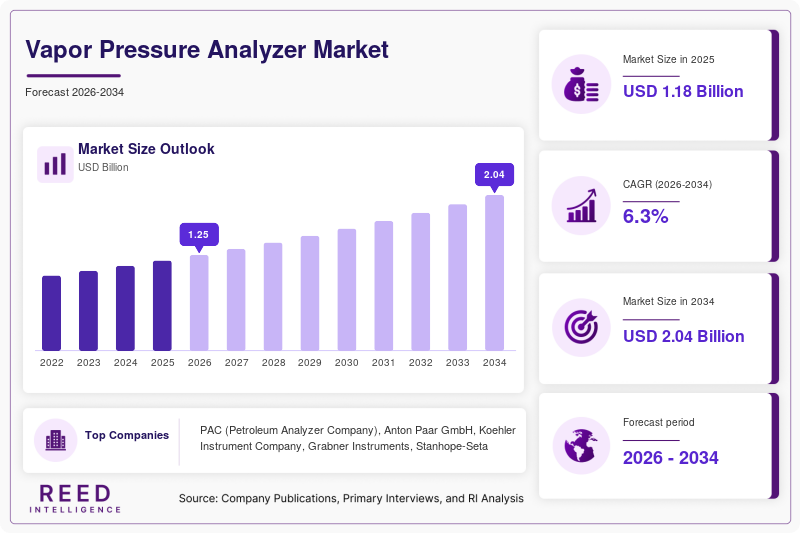
The Vapor Pressure Analyzer Market size was estimated at USD 1.18 billion in 2025 and is projected to reach USD 1.26 billion in 2026. With consistent adoption of automated analytical instruments, the market is forecast to attain approximately USD 2.05 billion by 2034, registering a compound annual growth rate (CAGR) of 6.3% from 2025 to 2034. The growing importance of accurate vapor pressure measurement in quality control processes and regulatory compliance is a major factor supporting this growth trajectory.
One of the primary growth factors includes the rising need for precise fuel quality testing in the oil and gas sector. Vapor pressure analyzers play a critical role in determining the volatility of fuels, which directly impacts engine performance and emissions. Additionally, the expansion of pharmaceutical manufacturing, where vapor pressure analysis ensures chemical stability and safety, is further contributing to market demand. The increasing adoption of laboratory automation and digital instrumentation is also enhancing the efficiency and reliability of vapor pressure measurements, thereby accelerating market growth.
Key Highlights
- The market size reached USD 1.18 billion in 2025 and is projected to reach USD 1.26 billion in 2026. This steady increase reflects consistent demand across key industrial applications and growing adoption of analytical technologies.
- The market is forecast to reach approximately USD 2.05 billion by 2034. This long-term expansion highlights sustained investments in testing infrastructure and industrial quality assurance processes.
- The market is expected to grow at a CAGR of 6.3% from 2025 to 2034. This growth rate indicates stable expansion supported by technological advancements and increasing regulatory requirements.
- Increasing demand from oil & gas and pharmaceutical industries is driving market growth. These sectors rely heavily on precise vapor pressure measurements for safety, quality control, and compliance.
- Rising emphasis on environmental compliance and quality testing is further boosting adoption. Regulatory pressure and sustainability initiatives are encouraging industries to invest in advanced analytical solutions.
Market Trends
Integration of Automation and Digital Technologies
The Vapor Pressure Analyzer Market is increasingly influenced by the integration of automation and digital technologies in laboratory and industrial settings. Modern analyzers are equipped with advanced software interfaces, automated calibration systems, and real-time data monitoring capabilities. This shift is reducing manual intervention, minimizing human error, and improving operational efficiency. Industries are adopting fully automated systems to streamline testing processes and enhance productivity, particularly in high-throughput laboratories. Additionally, the use of cloud-based data storage and analytics is enabling remote monitoring and better decision-making, which is transforming traditional analytical workflows.
Growing Adoption in Environmental Monitoring Applications
Another significant trend is the rising application of vapor pressure analyzers in environmental monitoring. With increasing concerns about air pollution and climate change, there is a growing need to monitor volatile organic compounds (VOCs) and other emissions. Vapor pressure analyzers are being widely used in environmental laboratories to assess compliance with emission standards. Governments and environmental agencies are investing in advanced monitoring infrastructure, which is boosting demand. This trend is further supported by technological advancements that enable portable and field-deployable analyzers, expanding their usage beyond traditional laboratory environments.
Market Drivers
Expansion of the Oil and Gas Industry
The growth of the oil and gas industry is a major driver for the Vapor Pressure Analyzer Market. Vapor pressure measurement is essential in determining fuel volatility, which affects storage, transportation, and combustion efficiency. Refineries and petrochemical plants rely on accurate vapor pressure analysis to ensure product quality and compliance with industry standards. As global energy demand continues to rise, investments in refining capacity and fuel testing infrastructure are increasing. This is leading to higher adoption of advanced analyzers, particularly in regions with expanding oil production activities.
Increasing Demand for Pharmaceutical Quality Control
The pharmaceutical industry is another key driver of market growth. Vapor pressure analyzers are used to evaluate the stability and safety of chemical compounds in drug formulation. With the rising demand for high-quality pharmaceuticals and stringent regulatory requirements, manufacturers are investing in advanced analytical instruments. The growing focus on research and development, along with the expansion of generic drug manufacturing, is further driving demand. Additionally, the need for precise measurement in temperature-sensitive compounds is reinforcing the importance of vapor pressure analysis in pharmaceutical applications.
Market Restraint
High Cost of Advanced Analytical Instruments
One of the primary restraints affecting the Vapor Pressure Analyzer Market is the high cost associated with advanced analytical instruments. Modern vapor pressure analyzers equipped with automation, digital interfaces, and high-precision sensors require significant capital investment. This can be a barrier for small and medium-sized enterprises, particularly in developing regions where budget constraints are more pronounced. The cost of maintenance, calibration, and skilled personnel further adds to the overall expenditure.
This restraint impacts market penetration, especially in emerging economies where adoption of advanced technologies is slower. For example, small-scale laboratories may continue using traditional or less accurate methods due to cost limitations, thereby restricting the growth of the market. Additionally, fluctuations in raw material prices and supply chain disruptions can increase manufacturing costs, which are often passed on to end-users. While technological advancements are improving efficiency, the initial investment required remains a challenge for widespread adoption.
Market Opportunities
Growth in Emerging Economies
Emerging economies present significant growth opportunities for the Vapor Pressure Analyzer Market. Rapid industrialization and increasing investments in infrastructure are driving demand for advanced analytical equipment. Countries in Asia Pacific and Latin America are expanding their manufacturing and energy sectors, which require accurate testing and quality control processes. Governments are also promoting industrial modernization and environmental compliance, creating a favorable environment for market growth. As awareness about the benefits of advanced analyzers increases, adoption rates are expected to rise significantly.
Technological Advancements and Product Innovation
Technological innovation is creating new opportunities in the market. Manufacturers are focusing on developing compact, portable, and user-friendly analyzers that cater to diverse applications. Innovations such as IoT integration, wireless connectivity, and enhanced sensor accuracy are improving the functionality of vapor pressure analyzers. These advancements are enabling real-time monitoring and predictive maintenance, which are highly valued in industrial settings. Additionally, the development of cost-effective solutions is expected to expand the customer base, particularly among small and medium enterprises.
Segmental Analysis
By Type
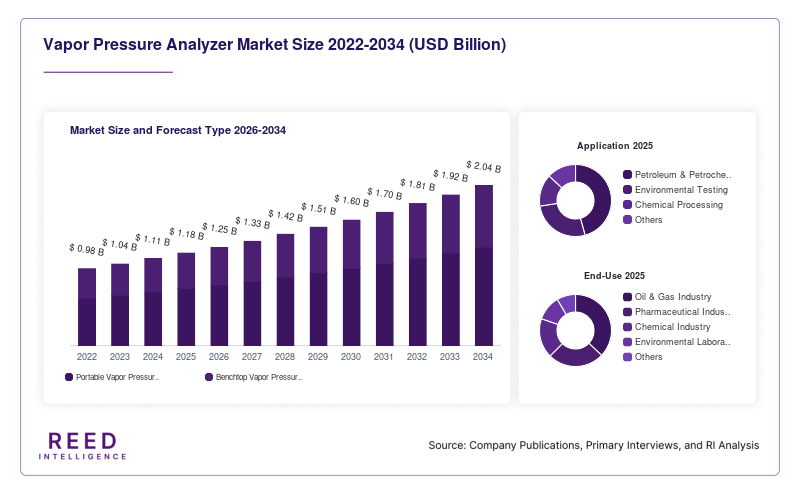
The portable vapor pressure analyzer segment held the dominant share of approximately 58% in 2024. These analyzers are widely used due to their flexibility, ease of use, and suitability for field applications. Industries such as oil and gas and environmental monitoring prefer portable devices for on-site testing, which reduces the need for sample transportation and speeds up analysis. The growing demand for real-time data and rapid decision-making is further supporting the adoption of portable analyzers across various sectors.
The benchtop vapor pressure analyzer segment is expected to witness the fastest growth, with a projected CAGR of 6.9% during the forecast period. These analyzers offer higher accuracy and advanced features, making them suitable for laboratory applications. The increasing focus on research and development, particularly in pharmaceuticals and chemicals, is driving demand. Additionally, advancements in benchtop analyzer technology, including automation and enhanced data processing capabilities, are contributing to their growing adoption.
By Application
The petroleum and petrochemical application segment accounted for the largest share of around 45% in 2024. Vapor pressure analyzers are essential in this sector for determining fuel volatility and ensuring compliance with industry standards. The expansion of refining capacity and increasing demand for high-quality fuels are driving the adoption of these analyzers. Additionally, stringent regulations regarding fuel emissions are further supporting market growth in this segment.
The environmental testing segment is expected to grow at the fastest CAGR of 7.2% during the forecast period. The rising focus on pollution control and environmental sustainability is driving demand for advanced monitoring solutions. Vapor pressure analyzers are increasingly used to measure volatile compounds in air and water samples. Government initiatives and investments in environmental monitoring infrastructure are further contributing to the growth of this segment.
By End-Use
The oil and gas industry dominated the market with a share of approximately 40% in 2024. The need for accurate vapor pressure measurement in fuel production, storage, and transportation is a key factor driving demand. Companies in this sector are investing in advanced analytical equipment to improve efficiency and ensure compliance with regulatory standards. The increasing complexity of fuel formulations is also contributing to the adoption of vapor pressure analyzers.
The pharmaceutical industry is projected to grow at the fastest CAGR of 7.0% during the forecast period. The rising demand for high-quality drugs and stringent regulatory requirements are driving the adoption of advanced analytical instruments. Vapor pressure analyzers are used to ensure the stability and safety of chemical compounds in drug formulation. The expansion of pharmaceutical manufacturing and increasing investment in research and development are further supporting growth in this segment.
Regional Analysis
North America
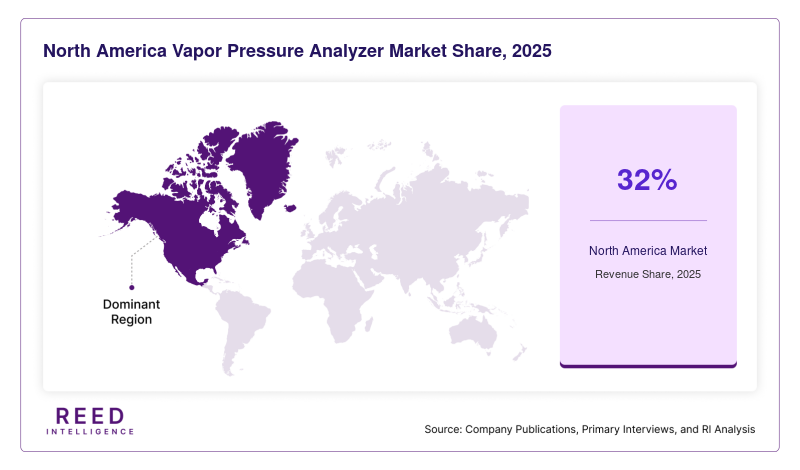
North America accounted for a significant share of the Vapor Pressure Analyzer Market in 2025, contributing approximately 32% of the global revenue. The region is expected to maintain steady growth with a CAGR of around 5.8% during the forecast period. The presence of well-established industries, including oil and gas, pharmaceuticals, and chemicals, is driving demand for advanced analytical instruments. Additionally, stringent environmental regulations and quality standards are encouraging the adoption of vapor pressure analyzers.
The United States dominates the regional market due to its extensive refining capacity and advanced research infrastructure. A unique growth factor in this region is the strong focus on technological innovation and automation. Companies are investing heavily in upgrading their analytical equipment to improve efficiency and comply with evolving regulatory requirements, which is supporting market expansion.
Europe
Europe held a market share of approximately 25% in 2025 and is projected to grow at a CAGR of 5.6% through 2034. The region's growth is supported by strict environmental policies and a strong emphasis on sustainable industrial practices. Industries across Europe are adopting advanced testing solutions to ensure compliance with regulatory standards, particularly in the chemical and pharmaceutical sectors.
Germany is the dominant country in this region, driven by its robust manufacturing base and focus on precision engineering. A unique growth factor is the increasing investment in green technologies and emission monitoring systems. This is encouraging the adoption of vapor pressure analyzers in environmental applications, further boosting market growth.
Asia Pacific
Asia Pacific is the fastest-growing region in the Vapor Pressure Analyzer Market, with a share of around 28% in 2025 and a projected CAGR of 7.5%. Rapid industrialization, urbanization, and expanding energy demand are key factors driving growth. The region is witnessing increased adoption of advanced analytical instruments across various industries, including oil and gas, chemicals, and pharmaceuticals.
China leads the regional market due to its large-scale industrial activities and growing focus on quality control. A unique growth factor is the government's emphasis on environmental protection and pollution control. This is leading to increased investments in monitoring technologies, including vapor pressure analyzers, thereby driving market growth.
Middle East & Africa
The Middle East & Africa region accounted for approximately 8% of the market share in 2025 and is expected to grow at a CAGR of 6.1%. The region's growth is primarily driven by the oil and gas industry, which requires accurate testing of fuel properties. Increasing investments in refining and petrochemical projects are supporting the demand for vapor pressure analyzers.
Saudi Arabia is the dominant country in this region, owing to its extensive oil production and refining activities. A unique growth factor is the expansion of downstream operations and diversification of the energy sector. This is creating opportunities for advanced analytical equipment, including vapor pressure analyzers.
Latin America
Latin America held a market share of around 7% in 2025 and is projected to grow at a CAGR of 6.4% during the forecast period. The region is experiencing steady growth due to increasing industrial activities and investments in energy infrastructure. The adoption of advanced analytical instruments is gradually rising as industries focus on improving quality and efficiency.
Brazil dominates the regional market, supported by its expanding oil and gas sector. A unique growth factor is the increasing focus on regulatory compliance and environmental monitoring. This is driving the demand for vapor pressure analyzers in both industrial and environmental applications.
Competitive Landscape
The Vapor Pressure Analyzer Market is moderately competitive, with several established players focusing on innovation and product development. Leading companies are investing in research and development to enhance the accuracy, efficiency, and usability of their analyzers. Strategic partnerships, mergers, and acquisitions are also common as companies aim to expand their market presence and strengthen their product portfolios.
One of the leading players in the market is PAC (Petroleum Analyzer Company), known for its advanced analytical solutions and strong presence in the oil and gas sector. A recent development includes the launch of a next-generation vapor pressure analyzer with improved automation and data integration features. Other key players are also focusing on introducing compact and portable devices to cater to the growing demand for field applications.
Key Players List
- PAC (Petroleum Analyzer Company)
- Anton Paar GmbH
- Koehler Instrument Company
- Grabner Instruments
- Stanhope-Seta
- Tanaka Scientific Limited
- Vinci Technologies
- Bartec Group
- Eralytics GmbH
- AMETEK Inc.
- Agilent Technologies
- Thermo Fisher Scientific
- Shimadzu Corporation
- Labtron Equipment Ltd.
- Scion Instruments
Recent Developments
- A leading manufacturer introduced a portable vapor pressure analyzer with IoT-enabled real-time monitoring capabilities.
- A major company expanded its production facility to meet increasing demand from the petrochemical sector.
- A new product launch focused on high-precision benchtop analyzers for pharmaceutical applications.
Vapor Pressure Analyzer Market Segments
Type
- Portable Vapor Pressure Analyzers
- Benchtop Vapor Pressure Analyzers
Application
- Petroleum & Petrochemical Testing
- Environmental Testing
- Chemical Processing
- Others
End-Use
- Oil & Gas Industry
- Pharmaceutical Industry
- Chemical Industry
- Environmental Laboratories
- Others
By Region
- North America
- Europe
- APAC
- Middle East and Africa
- LATAM